
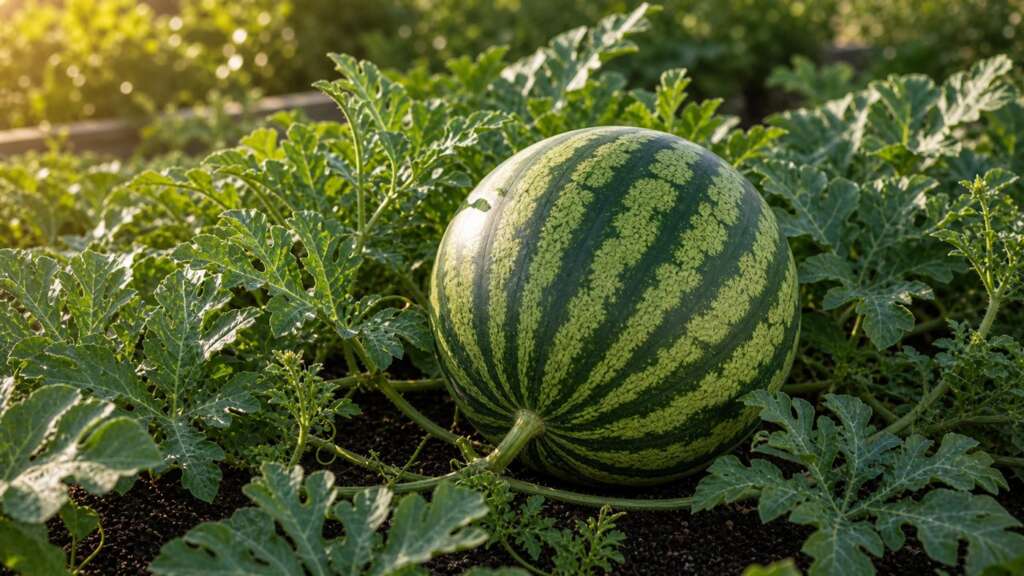
Crimson Sweet is a classic heirloom watermelon grown for large, round, light-green fruit with darker stripes, deep red flesh, and a long history of reliable home-garden performance. Like other watermelons, it is a warm-season vining crop that rewards patience: warm soil at sowing, full sun all season, steady water through vine growth, and enough room for the vines to run.
Quick How-to
Start Crimson Sweet Watermelon indoors about 3 to 4 weeks before your transplant date if your season is short, or direct sow after frost danger has fully passed and the soil has warmed. Sow seed about 1/2 to 1 inch deep into warm, moist soil or seed-starting mix. Expect germination in about 4 to 10 days when soil is around 75 to 90 F. Give plants full sun, generous spacing, and consistent moisture during vine growth and fruit sizing.
Quick Guide
| Fact | Recommendation |
|---|---|
| Best method | Direct sow into warm soil; indoor start works for short seasons |
| Sowing depth | About 1/2 to 1 inch |
| Germination temperature | Best around 75 to 90 F; cool soil greatly slows or stalls germination |
| Days to germination | Often 4 to 10 days under warm conditions |
| Light for germination | Cover seed; strong light is needed immediately after sprouting |
| Spacing | About 3 to 6 feet between plants depending on training and bed layout |
| Sun | Full sun, ideally 8 or more hours |
| Water | Deep, even moisture during vine growth and fruit sizing |
| Harvest | About 85 days under warm conditions; count from planting and use ripeness cues before cutting |
| Plant size | Long-running vines; allow room to spread |
| Fruit size | Commonly about 15 to 25 pounds, with weather and plant load affecting final size |
Before You Sow
Watermelon needs heat, sun, and uninterrupted growth from the start. Pick the warmest, sunniest spot you have, with room for vines to run several feet in each direction. A south-facing bed warms earliest in spring and tends to hold heat best through cool nights.
Work compost or aged organic matter into the bed before sowing so the soil drains well but still holds moisture. Watermelon does not like sitting in waterlogged soil, but it also struggles in dry, lean ground once vines begin to size up fruit. If your spring is unpredictable, pre-warming the soil with a sheet of dark mulch or plastic for a week or two before sowing can help bring the seedbed up to a friendly temperature.
Decide early how you will train or contain the vines. Crimson Sweet is a true vining type, not a compact bush watermelon, so plan on either a generous open patch, a row along a bed edge where vines can wander into a path or lawn margin, or a sturdy trellis with fruit slings for smaller fruit.
Indoor Starting
Indoor starting is optional but useful where the warm season is short. Sow one to two seeds per cell about 1/2 to 1 inch deep in fresh seed-starting mix. Pre-moisten the mix so seed placement is even and the seed has good contact with damp soil. A heat mat that holds the tray around 75 to 90 F speeds and evens out germination.
As soon as seedlings emerge, remove any dome and reduce extra heat. Give them strong overhead light immediately; weak light is the most common reason cucurbit seedlings stretch and flop. If two seedlings come up in a cell, snip the weaker one at the soil line rather than pulling, so the keeper’s roots are not disturbed.
Plan to transplant within about 3 to 4 weeks of sowing. Watermelon dislikes sitting too long in a small cell, and rootbound seedlings often stall after planting out. The target is a sturdy young plant with one to a few true leaves, not the biggest possible plant in the tray.
Direct Sowing
Direct sowing is often the simplest path for watermelon in warm-summer climates. Wait until frost danger has fully passed and the soil is genuinely warm at sowing depth, not just on a sunny afternoon. Cold, wet soil is the most common reason watermelon seed fails to germinate or rots before it sprouts.
Sow in hills or along a row. A traditional hill is a small mound of loosened, amended soil with several seeds placed about 1/2 to 1 inch deep, then thinned later to the strongest one or two plants. Hills warm and drain a little faster than flat ground, which can help in cooler springs. Water gently after sowing so seed is not washed out of place, and keep the surface evenly moist until seedlings emerge.
Protect young direct-sown plants from cold nights, slugs, cucumber beetles, and stray feet. A simple cloche, row cover, or upturned clear container over each hill can buy a few important degrees of warmth in the first weeks.
Transplanting and Spacing
Harden off indoor-started seedlings over 7 to 10 days before planting out. Start with sheltered shade and short outdoor visits, then gradually increase sun, breeze, and time outside. Transplant only after both the air and the soil have settled into warm conditions; chilled roots can leave plants looking stalled for weeks even after the weather improves.
Handle the root ball gently and set transplants at the same depth they grew in the cell. Water them in thoroughly and keep moisture steady while the vines begin to run. Space plants about 3 to 6 feet apart in the row, with even more room between rows if vines will sprawl freely. Closer spacing is workable when training to a trellis or pruning lightly, while wider spacing suits open patches where vines will form a continuous canopy.
Soil, Sun, and Water
Watermelon thrives in full sun, fertile, well-drained soil, and steady moisture. Sandy loam that warms quickly and drains well is a classic match, but watermelon also performs in heavier soils that have been opened up with compost. Avoid low spots where water lingers after rain.
During germination and early growth, keep the surface evenly moist so young roots can establish. Once vines begin to run and fruit begins to size, water deeply and less often, aiming for consistent soil moisture down where the roots live. Big swings from bone-dry to soaked can contribute to cracked fruit and uneven flavor. Mulch with straw, shredded leaves, or grass clippings after the soil has warmed to even out moisture and keep developing fruit clean.
Water at the soil level when possible and avoid wetting the foliage late in the day. Damp leaves overnight invite foliar disease, which can shorten the productive life of the planting.
Top Mistakes
- Planting into cool soil: Watermelon germinates and grows best in genuinely warm conditions. Sowing into cold spring soil often leads to slow, patchy emergence and lost seed. Wait for warmth instead of forcing an early start.
- Rushing transplants outside: Even healthy indoor seedlings can stall for weeks if their roots hit cold soil or if they were not hardened off. Give them time to adjust before planting out.
- Inconsistent watering during fruit sizing: Cycles of dry then suddenly soaked soil are a common trigger for cracking and uneven flavor. Aim for steady, deep moisture once fruit is forming.
- Crowding the vines: Watermelon vines look small at first and run hard later. Plants placed too close compete for water, light, and airflow, which reduces fruit size and increases disease pressure.
- Picking too early: A watermelon that comes off the vine before it is ripe will not finish sweetening on the counter. Learn the cues and resist the temptation to pick the first big fruit you see.
Troubleshooting by Symptom
| Symptom | Likely causes | What to do next |
|---|---|---|
| No sprouts after 10 to 14 days | Soil too cold, seed planted too deep, surface dried and crusted, or seedbed kept saturated | Confirm soil warmth, resow at correct depth, water gently to keep the surface evenly moist, and wait for stable warm conditions |
| Seedlings stall after transplant | Cold soil, rough handling, rootbound start, or a sudden cool spell | Protect from chilly nights, water deeply, mulch once soil is warm, and give plants time to recover once weather settles |
| Vines grow strong but flowers do not set fruit | Early male-only flowering, too few pollinators, very hot or very cool weather | Wait for female flowers to open alongside males, support pollinator activity, and avoid spraying anything that harms bees |
| Small or misshapen fruit | Poor pollination, drought stress, crowding, or low fertility | Keep moisture consistent, side-dress lightly with balanced fertilizer if soil is lean, and thin or train vines for better airflow |
| Fruit cracks or splits | Sudden heavy watering or rain after a dry stretch during fruit sizing | Water more evenly, mulch to buffer moisture swings, and pick ripe fruit promptly before the next big rain |
| Powdery white coating on leaves | Powdery mildew, often worsened by crowding and damp foliage | Improve spacing and airflow, water at soil level, and remove the worst affected leaves |
| Yellowing leaves and wilting vines | Heat stress, root disease in wet soils, or pest pressure at the crown | Check soil drainage, scout for pests, and avoid overwatering plants that already look stressed |
Germination Diagnostics
When watermelon seed is slow to emerge, check the seed environment in order before changing too many things at once. First, confirm depth. Seed buried much deeper than about an inch may have moisture but not enough stored energy to reach the surface, especially in heavier soil.
Next, check temperature. Watermelon is a warm-soil crop and rarely performs in cool, wet ground. If a soil thermometer reads cooler than the recommended range at sowing depth in the morning, the seedbed is likely too cold for confident germination.
Moisture is the next checkpoint. The seed zone should feel evenly damp, like a wrung-out sponge, not shiny wet and not powder dry. A crusted surface after heavy watering or rain can keep tiny seedlings from breaking through even when seed underneath has begun to sprout. Lightly scratching the crust open or sowing through a thin layer of fine compost can help.
Finally, look at light and airflow after emergence. Seedlings that come up well but stretch, pale, or collapse usually need stronger overhead light, more airflow, less crowding, or a less saturated mix.
Harvest
Watermelon ripeness is judged by several cues together rather than any single sign:
- Tendril check: The small curly tendril nearest the fruit stem typically dries and turns brown when the melon is ripe.
- Ground spot: The patch where the fruit rests on the soil shifts from white or pale green to a creamy yellow as the melon matures.
- Rind appearance: The skin often dulls slightly and loses some of its glossy shine.
- Sound and feel: A ripe watermelon tends to give a deeper, more hollow thump when tapped, and may feel heavy for its size.
Use these cues together rather than relying on only one. Cut the fruit from the vine with pruners or a knife instead of twisting it off, which can damage the vine and nearby developing fruit. Crimson Sweet is normally ready when the ground spot has turned creamy yellow, the nearest tendril is brown and dry, and the rind has lost its bright gloss.
Seed Saving
Crimson Sweet is generally considered an open-pollinated heirloom, which makes it a reasonable candidate for home seed saving when grown in isolation from other watermelon varieties. Bees move readily between watermelon plants, so seed saved from a garden with several varieties nearby may not come true to type.
Save seed from fully ripe, healthy fruit from strong, well-formed plants. Scoop out the seed, rinse it clean of pulp, spread it in a single layer to dry thoroughly on a plate or screen, and label clearly with the variety name and year. Once fully dry, store in a sealed container.
Storing Leftover Seed
Keep unused Crimson Sweet Watermelon seed in its labeled packet inside a sealed container in a cool, dry, dark indoor location. Avoid garages, sheds, greenhouses, and sunny windowsills, where temperature and humidity swing sharply. Label home-saved seed with the variety and harvest year before storing it.
FAQ
Should I start Crimson Sweet indoors or direct sow?
Either approach works. Direct sowing into warm soil is often the simplest path in warm-summer regions because watermelon does not love being disturbed. Indoor starting helps in shorter seasons by giving plants a head start, but keep the indoor period brief so seedlings transplant before they become rootbound.
Why are there flowers but no melons?
Watermelon usually produces male flowers first, and female flowers, which form the small swelling that becomes a melon, follow a little later. Until female flowers open and are pollinated, no fruit will set. Extreme heat, cold snaps, and low pollinator activity can also reduce fruit set, even when both flower types are present.
Can I grow Crimson Sweet in containers?
A full-size vining watermelon like Crimson Sweet is a stretch for containers because the vines are long and the fruit is large. If you want to try, use the biggest container you reasonably can, plan for daily watering in hot weather, and consider training the vine onto a sturdy support with slings for the fruit. Compact bush-type watermelons are usually a better match for small spaces.
How much water does a watermelon really need?
Aim for steady, deep watering rather than frequent shallow sprinkles. The goal is consistent soil moisture from establishment through fruit sizing, then easing back slightly as fruit nears ripeness so flavor can concentrate. Avoid letting plants wilt repeatedly and avoid sudden heavy soakings after long dry stretches.
Do I need more than one plant for pollination?
Watermelon flowers are pollinated by bees, and having more than one plant generally improves fruit set. A single plant can still produce fruit, but a small patch with a few plants and active pollinators tends to set more melons more reliably.