
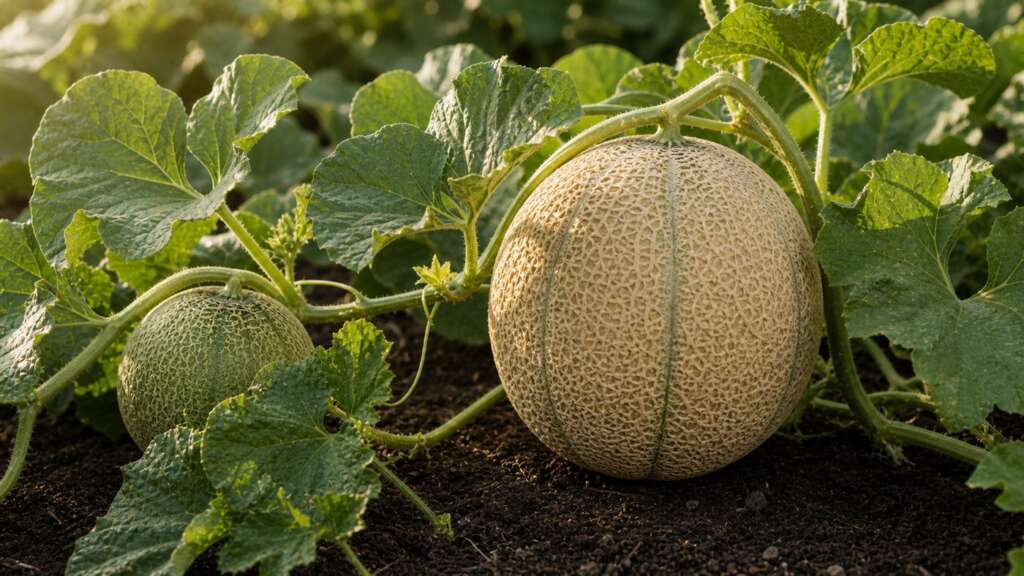
Hale’s Best is a classic heirloom muskmelon grown for fragrant, salmon-orange flesh, a finely netted rind, and the unmistakable garden-ripe sweetness that store melons rarely match. Like all cantaloupes, it is a warm-season vining crop that rewards patience: warm soil, even moisture, full sun, and enough room for the vines to stretch. Done right, a single plant can produce several softball- to small-melon-sized fruits per season.
Quick How-to
Start Hale’s Best Cantaloupe seeds indoors about 3 to 4 weeks before your last spring frost, or direct sow outdoors after frost danger has passed and the soil has warmed thoroughly. Sow 1/2 to 1 inch deep, keep the mix around 75 to 90 F, and expect sprouts in roughly 4 to 10 days. Transplant carefully without disturbing the roots, give vines room to run, and water deeply and evenly through flowering and fruit sizing.
Quick Guide
| Fact | Recommendation |
|---|---|
| Best method | Indoor start for short seasons; direct sow once soil is warm |
| Sowing depth | 1/2 to 1 inch |
| Germination temperature | About 75 to 90 F for fast, even emergence |
| Days to germination | Often 4 to 10 days under warm conditions |
| Light for germination | Cover seed; strong light needed immediately after sprouting |
| Spacing | About 2 to 3 feet between plants; 4 to 6 feet between rows or hills |
| Sun | Full sun, ideally 8 or more hours |
| Water | Deep, even moisture; ease off slightly as fruit ripens |
| Days to harvest | Commonly around 80 to 90 days from sowing, depending on soil warmth and summer heat |
| Plant size | Vigorous trailing vines; allow generous space to run |
| Fruit | Oval, heavily netted melons with aromatic orange flesh, commonly around 4 to 5 pounds |
Before You Sow
Cantaloupes are warm-soil crops. They do not like cold feet, and an early sowing into damp, cool ground often produces worse results than waiting an extra week or two for stable warmth. Pick the sunniest, best-drained spot you have. Sandy loam enriched with compost is ideal; heavy clay holds too much water and slows root growth.
A few practical preparations help before any seed goes in the ground:
- Warm the bed with black plastic or a row cover for a week or two before planting if your spring is slow to settle.
- Work in finished compost or a balanced organic amendment so vines have steady fertility once they take off.
- Plan for the run. A single Hale’s Best plant can easily cover 6 to 10 square feet, so set it where it won’t smother shorter neighbors.
- Have row cover, cloches, or wall-of-water style protection ready if cool nights are still possible.
For indoor starts, use fresh seed-starting mix, clean cells (ideally larger cells or pots since melons resent root disturbance), and labels with the variety and sowing date.
Indoor Starting
Sow one or two seeds per cell, 1/2 to 1 inch deep, into a pre-moistened, light seed-starting mix. Press lightly so seed makes contact with the mix and cover with a thin layer. A heat mat that holds the mix in the 75 to 85 F range will give you the fastest, most even germination. A humidity dome can help retain moisture; remove it as soon as sprouts appear.
Once seedlings emerge, move them under strong overhead light right away. Cantaloupe seedlings stretch quickly when warmth is high but light is weak, and stretched seedlings transplant poorly. Reduce extra bottom heat after germination and aim for cooler, bright conditions. If two seedlings come up in one cell, snip the weaker one at the soil line rather than pulling it out, so you don’t disturb the keeper’s roots.
Keep the indoor period short. Three to four weeks is usually plenty. A melon seedling sitting in a small cell for six or seven weeks is rarely worth more than one started later and grown straight through.
Direct Sowing
Direct sowing is often the most reliable method in regions with long, warm summers. Wait until nighttime lows are consistently in the 50s F and daytime soil at 2 inches deep reads close to 70 F or warmer. Sow in hills or rows: two to three seeds per spot, 1/2 to 1 inch deep, spots set 2 to 3 feet apart in rows 4 to 6 feet apart.
Water gently after sowing so seed is not washed too deep or exposed. Once seedlings have a true leaf or two, thin to the strongest plant per spot. Crowded melon seedlings look fine in their first week but quickly compete for light, water, and root room.
Cool nights or unexpected late chills can stall direct-sown seedlings even when they have already germinated. A floating row cover keeps the microclimate a few degrees warmer and protects against early cucumber beetles, which can damage seedlings just as they emerge.
Transplanting and Spacing
Harden off indoor-grown seedlings over 7 to 10 days. Begin with an hour or two of sheltered shade and gradually increase sun, wind exposure, and time outdoors. Cantaloupes are sensitive to root disturbance, so avoid teasing roots apart at transplant time. Slide the entire root ball out and set it at the same depth it grew in the cell.
Space plants about 2 to 3 feet apart in rows 4 to 6 feet apart, or 3 to 4 feet apart in hills with two to three plants per hill. Water in deeply and, if cool weather threatens, keep row cover or cloches handy for the first week or two. Pull the row cover off once flowers begin to open so bees and other pollinators can do their job.
Soil, Sun, and Water
Hale’s Best wants full sun, fertile soil with good drainage, and consistent moisture. A balanced compost-rich bed before planting usually beats heavy fertilizing later; too much nitrogen produces beautiful leaves and disappointing fruit. A side dressing of compost or a balanced fertilizer when vines begin to run can support fruit set.
Water deeply and infrequently rather than often and lightly. Aim for soaking the root zone, then letting the top inch dry slightly before watering again. Drip irrigation or soaker hoses work better than overhead sprinklers because they keep leaves dry and reduce mildew pressure.
As fruit approaches ripeness, many growers reduce watering slightly to concentrate sugars. Sudden drought is not the goal; gentle, steady water with a modest pullback in the final week or so is what helps flavor develop.
Top Mistakes
- Planting into cold soil. Cantaloupe seed sitting in cool, wet ground often rots before it sprouts. Wait for soil warmth, not just frost-free air.
- Disturbing roots at transplant. Melons resent root damage. Use larger cells, slide the root ball out intact, and water in immediately.
- Inconsistent watering during fruit sizing. Big swings from dry to soaked encourage cracking and uneven ripening. Steady, deep watering produces cleaner fruit.
- Crowding vines. Two melon plants jammed into one square yard will yield less than one given proper room. Thin and space generously.
- Picking too early. Hale’s Best tells you when it is ready; ignoring the signals leads to flat-tasting fruit.
Troubleshooting by Symptom
| Symptom | Likely causes | What to do next |
|---|---|---|
| No sprouts after 10 to 14 days | Soil too cool, seed planted too deep, or mix dried out | Check soil temperature, resow 1/2 to 1 inch deep, and keep the seed zone evenly moist and warm |
| Seedlings stall after transplant | Cold soil, root disturbance, or wind exposure | Protect with row cover, water in well, and wait for soil to warm before expecting new growth |
| Seedlings tall, pale, and floppy | Weak light, excess warmth after sprouting, or crowded cells | Move under stronger overhead light, lower the heat, and thin to one plant per cell |
| Many flowers, no fruit | Mostly male flowers early in the season, low pollinator activity, or temperature stress | Wait for female flowers (small fruit behind the bloom), encourage pollinators, and avoid heavy pesticide use |
| Misshapen or lopsided fruit | Incomplete pollination | Plant flowers nearby to attract bees; consider hand-pollinating in low-bee conditions |
| Powdery white film on leaves | Powdery mildew, often from crowding, wet foliage, or humid still air | Improve spacing, water at the soil, and remove the worst-affected leaves |
| Sudden wilting of a healthy vine | Possible bacterial wilt (from cucumber beetles), squash vine borer, or root damage | Inspect stems and base; control cucumber beetles early in the season with row cover or other accepted methods |
| Fruit cracks near harvest | Heavy rain or watering after a dry period | Mulch to even out soil moisture and reduce watering pulses as fruit nears ripeness |
| Fruit ripens but tastes bland | Cool summer, too much water near harvest, or picked too early | Ease back on water in the final week and trust the slip, aroma, and color cues |
Germination Diagnostics
When sprouts are slow, change one variable at a time. Start with depth: dig gently to confirm seed is 1/2 to 1 inch down, not buried under an inch of crusted soil. Then check temperature. If a soil thermometer reads under 65 F at planting depth, even good seed will sit and wait. A heat mat indoors or a black plastic mulch outdoors can lift soil temperature into the productive range.
Moisture is next. The seed zone should feel like a wrung-out sponge, not glossy wet and not dusty dry. After germination, look at light and airflow. Seedlings that emerge well but stretch, pale, or topple over are usually telling you that light is too far away, the cell is too warm, or the tray is too crowded.
Container and Small-Space Notes
Hale’s Best is a full-size vining cantaloupe and is not ideal for small containers, but a determined gardener can grow one plant in a generous tub of at least 15 to 20 gallons with a sturdy trellis to support the running vine. If you grow in containers, expect to water more often, feed lightly through the season, and consider supporting individual fruits with cloth slings as they size up.
For tight spaces, training vines vertically up a strong A-frame or cattle panel saves ground area and improves airflow. Place containers in the hottest, sunniest spot you have. Cool, shaded patios do not produce sweet cantaloupe.
Harvest and Use
Hale’s Best is famous for its “full slip” ripeness signal. As fruit ripens, a crack forms where the stem meets the melon, and a fully ripe melon will separate from the vine with only the slightest tug. A few cues, taken together, tell you it is time:
- The background rind color shifts from green to a warmer tan or yellow under the netting.
- The netting becomes more pronounced and corky.
- A strong, sweet, musky aroma develops at the stem end.
- The stem cracks and the fruit slips easily from the vine with gentle pressure.
Pick in the morning if possible, after dew has dried. Ripe cantaloupes hold a few days at room temperature and longer in the refrigerator once cut. Eat soon after picking for the best flavor.
Seed Saving
Hale’s Best is an open-pollinated heirloom, which means seed saved from healthy, ripe fruit can grow true to type, provided no other cantaloupe or melon varieties were flowering nearby. Cantaloupes cross readily with other Cucumis melo varieties, so isolation distance or hand pollination is important if you want stable seed.
Scoop seed from a fully ripe melon, rinse off the pulp in a strainer, and spread the seed on a plate or screen to dry in a well-ventilated spot out of direct sun. Once seed snaps cleanly rather than bending, it is dry enough to store. Label with variety and year.
Storing Leftover Seed
Keep unused Hale’s Best Cantaloupe seed in its labeled packet inside a sealed container in a cool, dry, dark indoor location. Avoid garages, sheds, greenhouses, and sunny windowsills, where temperature and humidity swing sharply. Label home-saved seed with the variety and harvest year before storing it.
FAQ
Should I start Hale’s Best indoors or direct sow?
Both can work. In short-season climates, an indoor start 3 to 4 weeks before transplanting gives the vines a head start. In long, warm summers, direct sowing once soil is warm is simple and avoids transplant shock altogether.
Why are there only male flowers on my plants?
Cantaloupes typically produce male flowers first, sometimes for a week or more before the first female blossoms appear. Female flowers are easy to spot once they arrive: each one has a small, fuzzy ovary (a tiny melon shape) behind the petals. Patience usually solves this.
How do I know when a Hale’s Best is ripe?
Use the slip test together with color, aroma, and netting. A ripe melon develops sweet, musky perfume at the stem end and separates from the vine with very gentle pressure. Underripe melons do not slip and have only a faint smell.
Can I grow Hale’s Best in a container?
Yes, but only in a large container, at least 15 to 20 gallons, with full sun, regular feeding, and either a sturdy trellis or enough open space for the vine to trail. Smaller pots usually produce stressed plants and small fruit.
Do I need more than one plant for pollination?
You do not strictly need a second plant since each plant produces both male and female flowers, but more flowers and active pollinators improve fruit set. Avoid spraying open blossoms with anything that might harm bees.