
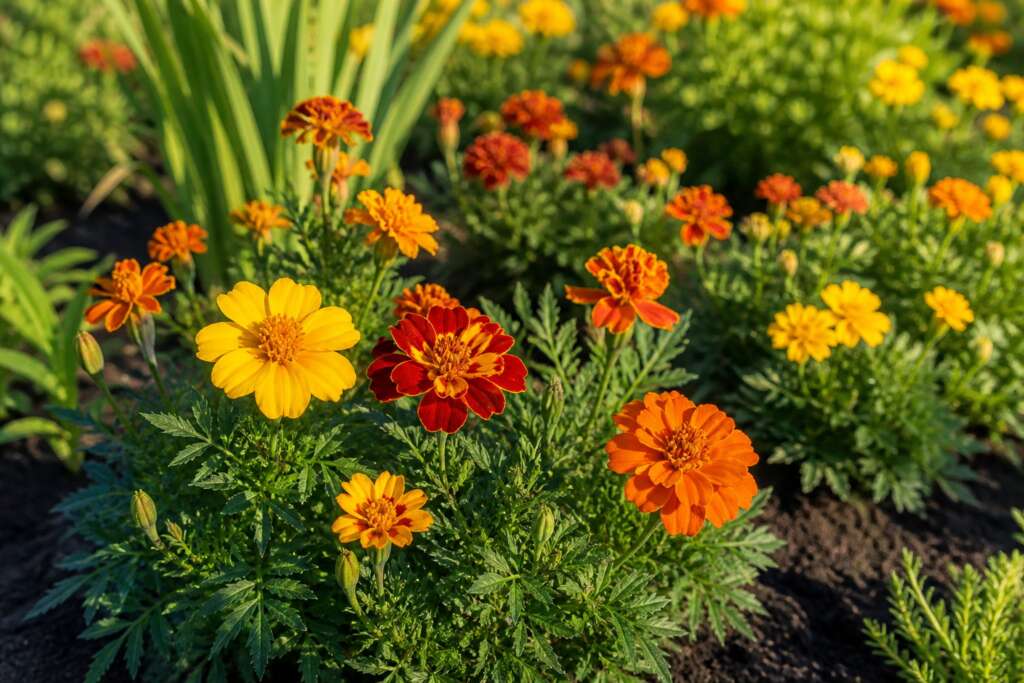
Sparky Mix Marigold (Tagetes patula) is a compact French marigold mix grown for its double and crested blooms in warm tones of gold, orange, and mahogany bicolors. French marigolds are among the most dependable warm-season annuals available: seeds germinate quickly in warm soil, plants bloom early and keep flowering until frost, and the mix of bicolor patterns makes a lively display in beds, borders, and containers. Deadheading regularly extends bloom and keeps the plants tidy across a long season.
Quick How-to
Start Sparky Mix Marigold seeds indoors 4 to 6 weeks before your last expected frost, or direct sow directly in the garden after frost danger has passed and soil has warmed. Press seeds about 1/4 inch deep in moist soil and keep the germination area warm, around 70 to 75 F. Expect sprouts in 5 to 7 days. Thin or transplant to 8 to 10 inches apart once seedlings are established, and deadhead spent blooms regularly to keep the display going through summer and fall.
Quick Guide
| Fact | Recommendation |
|---|---|
| Best method | Direct sow after last frost, or start indoors 4 to 6 weeks before |
| Sowing depth | About 1/4 inch |
| Germination temperature | 70 to 75 F |
| Days to germination | About 5 to 7 days |
| Light for germination | Cover lightly; does not need light exposure to germinate |
| Spacing | 8 to 10 inches apart for compact French marigold habit |
| Sun | Full sun; at least 6 hours daily |
| Water | Moderately moist; tolerates brief dryness but blooms best with even moisture |
| Bloom timing | Often 45 to 55 days from seed; blooms until frost |
| Plant size | Compact, typically 10 to 12 inches tall |
Before You Sow
French marigolds are warm-season plants that need frost-free conditions and warm soil to perform well. Sowing into cold or waterlogged soil delays germination and can cause seeds to rot rather than sprout. The wait for reliably warm conditions is worth it; marigolds in warm soil germinate in days and grow rapidly.
For direct sowing, prepare a sunny bed with well-drained soil. Marigolds tolerate ordinary garden soil, including slightly poor or dry ground, and do not require heavy soil amendment. Overly rich soil or excessive nitrogen tends to produce lush leafy plants with fewer blooms.
For indoor starting, use fresh seed-starting mix in small cells or a plug tray. Marigolds develop quickly, so an indoor start of 4 to 6 weeks is sufficient; longer indoor time without adequate light leads to stretchy seedlings.
Direct Sowing
After the last frost date when soil has warmed above 65 F, sow Sparky Mix seeds about 1/4 inch deep and a few inches apart in rows or scattered across a bed. Press seeds in gently for good soil contact. Water with a gentle spray and keep the surface evenly moist until emergence.
Thin seedlings to 8 to 10 inches apart once they have two to three sets of leaves. Crowded French marigolds compete for airflow and can develop powdery mildew in humid weather. Even at their compact size, Sparky Mix plants perform better with adequate room to branch out and display their full spread of blooms.
Indoor Starting
Sow 4 to 6 weeks before the last frost date. Plant seeds 1/4 inch deep in individual cells, keep the mix warm around 70 to 75 F, and expect sprouts within a week. Once seedlings emerge, move them immediately into strong light to prevent stretching. A windowsill is often not sufficient; supplement with a grow light positioned close to the seedlings if needed.
Pinch the growing tip once when seedlings reach about 3 inches tall to encourage branching. This is optional but produces bushier plants with more bloom stems.
Harden off seedlings over about a week before transplanting. Start with sheltered outdoor exposure in mild conditions and gradually increase sun and wind time. Transplant after frost risk has completely passed.
Soil, Sun, and Water
Full sun is essential for best flowering. Sparky Mix French marigolds in partial shade become stretchy, produce fewer blooms, and are more prone to disease. At least 6 hours of direct sun daily is the minimum; 8 or more hours is ideal.
French marigolds are adaptable to a range of soil types, including average to slightly poor garden soil. They are more drought-tolerant than many annuals once established, but consistent moisture through flowering and hot weather produces better bloom quality and longer plant life. Allow the top inch of soil to dry between waterings; constant saturation can cause root problems.
Avoid feeding with high-nitrogen fertilizers after plants are established. A light application of a balanced fertilizer at planting is usually all that is needed; excess nitrogen encourages foliage over flowers.
Top Mistakes
- Planting before frost risk has passed: French marigolds tolerate no frost. Even a light freeze damages transplants significantly. Wait until nights are reliably above 40 F before transplanting out.
- Sowing into cold soil: Seeds sown into soil below 60 F germinate slowly or not at all and may rot. Warm soil is the most important factor for fast, even germination.
- Skipping deadheading: Sparky Mix produces blooms prolifically, but plants allowed to form seeds slow down considerably. Remove spent flowers before they set seed to keep the display going.
- Overfeeding with nitrogen: Heavy nitrogen causes lush leafy growth and poor flowering. French marigolds are not heavy feeders and do better in moderate soil than in heavily amended beds.
- Overcrowding: Even compact French marigolds need 8 to 10 inches of space to branch properly. Crowded plants develop mildew issues and produce smaller, fewer flowers.
Troubleshooting by Symptom
| Symptom | Likely causes | What to do next |
|---|---|---|
| No sprouts after 10 days | Soil too cold, seeds sown too deeply, surface dried out, or germination medium too wet | Ensure soil temperature is 70 to 75 F; resow at 1/4 inch depth in fresh moist mix |
| Seedlings are leggy and thin | Insufficient light, too much warmth, or overcrowded tray | Move to stronger light immediately; thin to one seedling per cell |
| Powdery coating on leaves | Powdery mildew; favored by humidity and crowding | Thin plants, improve air circulation, avoid evening watering, and remove affected leaves |
| Few flowers despite healthy foliage | Excess nitrogen, too much shade, or plants not yet deadheaded | Reduce fertilizer, ensure full sun, and remove all spent blooms promptly |
| Flowers fade quickly in heat | Heat stress combined with moisture stress | Water evenly during heat waves and mulch around the base to maintain soil moisture |
| Plants develop yellowed lower leaves | Overwatering, root disease, or nutrient imbalance | Improve drainage, reduce watering frequency, and check for signs of root rot |
Deadheading and Companion Planting
French marigolds like Sparky Mix bloom most heavily when deadheaded regularly. Remove spent flowers by pinching or cutting them at the base of the flower stem, not just the petals. This prevents seed formation, which signals the plant to slow blooming.
Marigolds have a long-established reputation as garden companions, particularly in vegetable gardens. Their roots are cited in extension literature as producing a compound that suppresses certain soil nematodes with prolonged planting, and their flowers attract beneficial insects. For nematode suppression benefits, plant marigolds as a solid block in the affected bed for a full season and then turn them under. Planting just a few plants around the border of a vegetable bed provides pollinator and visual benefit but is not the same as the more intensive practice.
Seed Saving
French marigolds are open-pollinated and will cross with other Tagetes patula varieties growing nearby. For true-to-type saving from a specific bicolor pattern in the mix, isolate the plant from other marigolds during bloom. Allow selected flower heads to fully mature and dry on the plant until the base of the flower head turns papery and dry. Pull the dried head apart to separate the long, slender seeds. Dry seeds further indoors and store in a sealed container.
Because Sparky Mix includes multiple bicolor types, saved seed from mixed plantings will likely produce offspring that show variation in color and pattern from the parents.
Storing Leftover Seed
Keep unused Sparky Mix Marigold seed in its labeled packet inside a sealed container in a cool, dry, dark indoor location. Avoid garages, sheds, greenhouses, and sunny windowsills, where temperature and humidity swing sharply. Label home-saved seed with the variety and harvest year before storing it.
FAQ
How tall do Sparky Mix French marigolds grow?
Sparky Mix plants are compact, typically reaching about 10 to 12 inches in height. This makes them suitable for border edges, container plantings, and window boxes as well as traditional bed use.
Do I need to fertilize my marigolds through the season?
A light balanced fertilizer at planting time is usually sufficient. Heavy or repeated feeding, especially with nitrogen-rich products, pushes leafy growth at the expense of flowers. If plants are growing well and deadheaded consistently, additional feeding is generally not needed.
Can I grow Sparky Mix Marigolds in pots?
Yes. French marigolds do well in containers with a sunny position, good drainage, and regular watering. Use a quality potting mix rather than garden soil, which can compact in pots. Container plants may need more frequent watering and a light feeding more often than in-ground plants.
Are French marigolds frost-hardy?
No. Tagetes patula is frost-sensitive and will be damaged or killed by even a light frost. Do not transplant until frost risk has passed and do not expect plants to survive a fall freeze.