
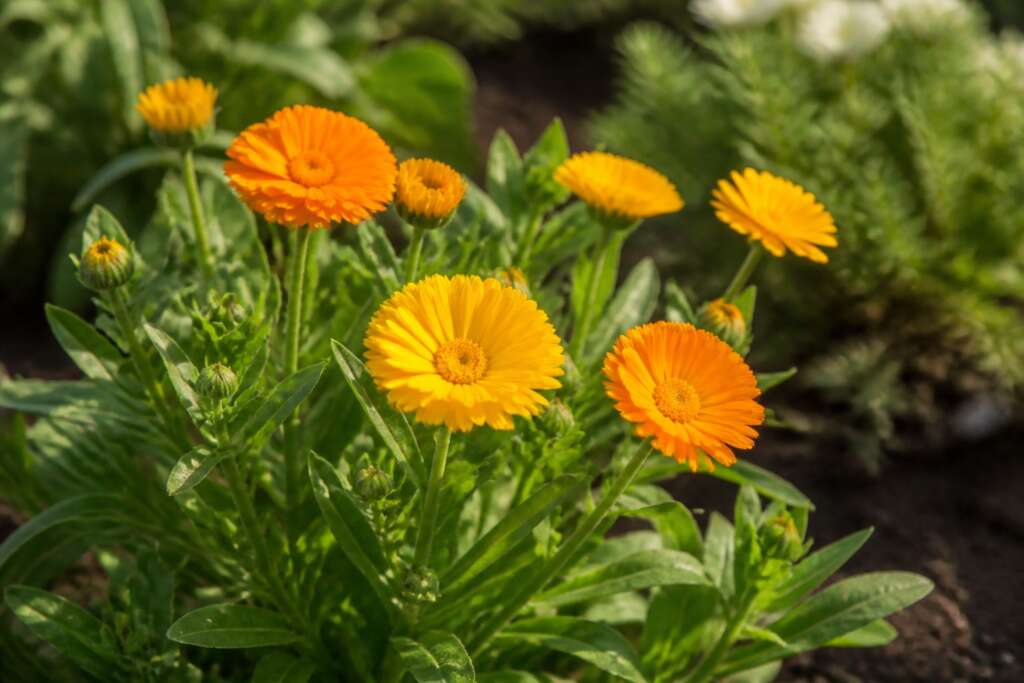
Calendula (Calendula officinalis) is a cool-season annual flower that earns its place in almost any garden. Its bright orange and yellow blooms open reliably from seed, rebloom generously when deadheaded, and attract pollinators across a long season. The petals are edible and used to add color to salads and cooked dishes, making calendula as useful as it is ornamental. It is one of the easier annuals to start from seed and rewards consistent attention with flowers from late spring through the first hard frost.
Quick How-to
Sow calendula seed directly in the garden in early spring once soil reaches about 60 degrees F, or start indoors 4 to 5 weeks before your planned outdoor planting date. Cover seed about 1/4 inch deep, keep the surface evenly moist, and expect sprouts in about 7 to 15 days. Thin seedlings to 8 to 12 inches apart and deadhead consistently to keep blooms coming all season. In mild climates, a late-summer sowing can provide a second flush into fall.
Quick Guide
| Fact | Recommendation |
|---|---|
| Best method | Direct sow preferred; indoor start 4 to 5 weeks before planting out |
| Sowing depth | About 1/4 inch |
| Germination temperature | 60 to 70 F; 70 F gives quickest results |
| Days to germination | About 7 to 15 days |
| Light for germination | Cover lightly; does not need light exposure to germinate |
| Spacing | Thin to 8 to 12 inches apart |
| Sun | Full sun; tolerates light afternoon shade in hot climates |
| Water | Keep evenly moist but not saturated; established plants tolerate brief dry spells |
| Bloom timing | Often 45 to 65 days from sowing; blooms continue until hard frost |
| Plant size | Typically 12 to 24 inches tall depending on growing conditions |
Before You Sow
Calendula is forgiving of ordinary soil but prefers a site with good drainage. Amend heavy clay with compost if needed; soggy roots invite stem rot. Choose a sunny location, though a spot with light afternoon shade is acceptable in climates with hot summers, where too much heat can cause plants to slow temporarily.
For containers, use a pot with drainage holes and a standard potting mix. Calendula grows well in pots or window boxes as long as it gets enough sun and regular water.
Rake the seedbed smooth and remove clods before sowing. Label the area so you can recognize the seedlings, which can look similar to other young plants before true leaves form.
Direct Sowing
Direct sowing is the simplest approach and works well because calendula germinates readily without any special treatment. Sow seeds in early spring as soon as the soil can be worked and temperatures have climbed to around 60 F. Seeds can even handle a light frost after sowing if the weather turns back cold briefly.
Place seeds 1/4 inch deep, space them a few inches apart in rows or scatter them in a bed, and firm the soil gently for good seed-to-soil contact. Water with a gentle spray to settle the bed without washing seeds out of position. Keep the surface consistently moist until emergence; if the top dries and crusts between waterings, germination becomes uneven.
After seedlings develop their first set of true leaves, thin to about 8 to 12 inches apart. Crowded plants compete for light and air movement, which can slow bloom and make stems weak.
For continuous flowers across the season, make successive small sowings every 2 to 3 weeks through early summer. In climates with mild falls, another sowing in late summer can extend the display well into autumn.
Indoor Starting
Starting indoors is optional for calendula. If your spring weather is still unpredictable, or if you want plants at a specific size for a bed or event, sow 4 to 5 weeks before your planned outdoor planting date. Use individual cells or small pots with a light seed-starting mix, sow at 1/4 inch depth, and keep the mix around 70 F for quickest germination.
Move seedlings into good light as soon as they emerge to prevent stretching. Calendula prefers cool, bright conditions indoors rather than warm and shaded. Harden off over about a week before transplanting, then move out once soil has warmed past 50 F and heavy frost risk has passed.
Calendula transplants reasonably well when handled gently, but direct sowing is easier and just as reliable in most situations.
Soil, Sun, and Water
Full sun brings out the best in calendula: the strongest stems, brightest color, and most consistent rebloom. It tolerates partial shade but stretches in low light and produces fewer flowers.
Calendula prefers moderately fertile, well-drained soil. Rich, heavily amended beds can push leafy growth at the expense of flowering. Ordinary garden soil or a light mix is usually adequate. Established plants are fairly drought-tolerant, but extended dry spells slow flowering, so water when the top inch of soil dries out during active growth.
Once plants are about 8 inches tall, a light mulch around the base helps maintain even soil moisture and keeps roots cool during warm spells, which helps maintain steady flowering into summer.
Top Mistakes
- Sowing into still-cold soil: Calendula can tolerate cool conditions, but planting into soil below 50 F produces very slow, unreliable germination. Wait until the soil has warmed to at least 60 F for consistent results.
- Skipping deadheading: Calendula slows dramatically when it is allowed to go to seed. Removing spent flowers before they set seed is the single most effective way to extend the bloom season by weeks or months.
- Overcrowding seedlings: Leaving plants too close together reduces airflow, contributes to powdery mildew during humid weather, and weakens stem quality. Thin promptly so plants have space to branch out.
- Making only one sowing: A single sowing produces one flush of flowers. Succession sowing every 2 to 3 weeks keeps fresh plants coming into bloom as older plants tire in summer heat.
- Overwatering established plants: Once calendula is growing well, it handles some dryness better than constant moisture. Overwatered plants in cool, wet conditions are more prone to root problems and stem collapse.
Troubleshooting by Symptom
| Symptom | Likely causes | What to do next |
|---|---|---|
| No sprouts after 14 days | Soil too cold, surface dried out, seed buried too deeply, or soil crusted | Check soil temperature, keep the surface evenly moist, and resow shallowly if the bed dried out after sowing |
| Patchy, uneven germination | Inconsistent sowing depth, surface drying between waterings, or poor seed-to-soil contact | Smooth the bed before sowing, firm seeds in gently, and water carefully to avoid washing seeds into low spots |
| Plants flower briefly then stop | Plants allowed to set seed, heat stress, or crowding | Deadhead consistently, provide afternoon shade if temperatures are consistently above 85 F, and thin to improve airflow |
| Powdery white coating on leaves | Powdery mildew, favored by high humidity, poor airflow, and dry-wet cycles | Thin crowded plants, avoid wetting foliage in the evening, and remove badly affected growth; good airflow is the best prevention |
| Stems collapse at the base | Overwatering, damping-off, or very dense planting in cool wet weather | Improve drainage, reduce watering frequency, and remove collapsed plants to prevent spread to nearby seedlings |
| Plants tall and floppy | Too little light, excessive nitrogen, or overly rich soil | Move or transplant to a sunnier spot; avoid high-nitrogen fertilizers, which push leafy growth over sturdy flowering stems |
Bloom Care and Culinary Use
The petals of Calendula officinalis are edible and have a long history of culinary use. Fresh petals can be scattered over salads, stirred into rice dishes for golden color, or mixed into soft cheeses and herb butters. Dried petals can be used to color soups, stews, and baked goods. Use the petals only, not the calyx or stem, which have a resinous, bitter taste that is not pleasant in food.
For cut flowers, harvest blooms when they are about half open. They last several days in a vase with fresh water. Regular cutting counts as deadheading and helps keep the plant producing new buds.
To extend bloom through summer heat, cut plants back by about one-third when flowering slows and give them a light feeding of a balanced fertilizer. Many gardeners find plants rebound and rebloom when temperatures cool again in late summer.
Seed Saving
Calendula self-sows readily in many climates, and volunteer seedlings often appear the following spring. To save seed deliberately, allow selected flower heads to fully mature and dry on the plant. The seeds are curved or comma-shaped and easy to see when dry. Collect them on a dry day, finish drying indoors for a week or two, and store in a labeled, sealed container in a cool, dark location.
Calendula is largely self-pollinating, so saved seed tends to come true to the parent plant. Crossing with other Calendula officinalis varieties in the same bed is possible, so seedlings may show some variation in color from year to year.
Storing Leftover Seed
Keep unused Calendula seed in its labeled packet inside a sealed container in a cool, dry, dark indoor location. Avoid garages, sheds, greenhouses, and sunny windowsills, where temperature and humidity swing sharply. Label home-saved seed with the variety and harvest year before storing it.
FAQ
Can I grow calendula in containers?
Yes. Use a pot with drainage holes, a well-draining potting mix, and a sunny spot. Container plants may need more frequent watering than in-ground plants. Deadhead regularly to extend bloom.
Will calendula come back every year?
Calendula is a cool-season annual, meaning it completes its life cycle in one growing season. It does not overwinter reliably in most climates. However, plants self-sow freely, and volunteer seedlings often emerge the following spring without any effort on your part.
Is calendula the same as a marigold?
No. Calendula is sometimes called “pot marigold” but it is a different genus entirely (Calendula, not Tagetes). The flowers look similar at a glance, but Tagetes marigolds and Calendula officinalis have distinct care requirements, bloom habits, and culinary uses.
When should I stop deadheading if I want seeds?
Allow some of the last blooms of the season to fully mature and dry on the plant. Once seed heads turn brown and the seeds begin to loosen, collect them and store in a cool, dry place for next year’s planting.