
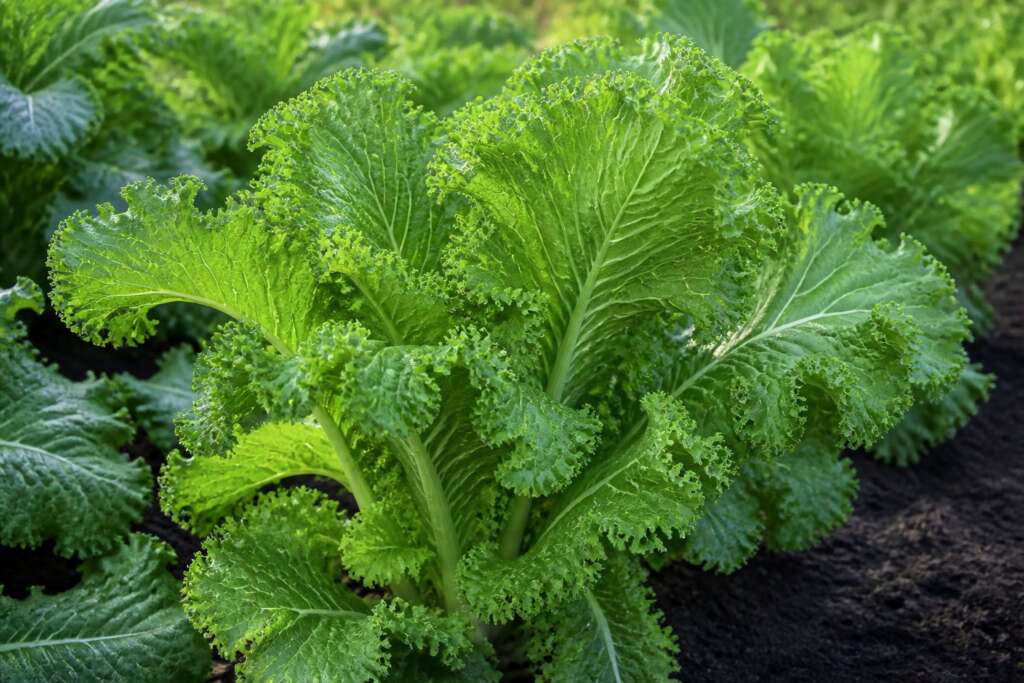
Southern Giant Curled Mustard is a large-leafed, frilly-edged mustard green with a characteristically peppery, pungent flavor that softens with cooking. The plants produce broad, bright-green leaves with pronounced ruffled or curled margins, growing vigorously in cool weather and maturing in as few as 40 to 50 days. It is a fast-cycling crop suited to both spring and fall gardens, though fall plantings are generally easier to manage because cooler temperatures slow the bolting that warm weather triggers. A staple of Southern cooking, Southern Giant Curled Mustard is equally useful raw in salads when young, braised or sauteed when leaves are larger, or added to soups and mixed greens dishes.
Quick How-to
Direct sow Southern Giant Curled Mustard outdoors as soon as the soil is workable in early spring, or in late summer for fall harvest. Sow seeds about 1/4 inch deep in prepared rows, thin seedlings to 6 to 8 inches apart once they are a few inches tall, and harvest outer leaves as needed from as early as 30 to 35 days. Succession sowing every 2 to 3 weeks extends the harvest window through the cool season before heat triggers bolting.
Quick Guide
| Fact | Recommendation |
|---|---|
| Best method | Direct sow outdoors |
| Sowing depth | About 1/4 inch |
| Germination temperature | 45 to 75 F; cool soil acceptable |
| Days to germination | About 4 to 7 days |
| Light for germination | Cover seed; no special light requirement at germination |
| Spacing | Thin to 6 to 8 inches apart |
| Sun | Full sun; tolerates light shade especially in warm climates |
| Water | Even moisture; do not allow soil to dry between waterings |
| Days to harvest | 40 to 50 days to full size; outer leaves harvestable from 30 to 35 days |
| Plant size | Leaves commonly reach 12 to 18 inches long at full development |
Before You Sow
Southern Giant Curled Mustard is among the most forgiving and productive leafy greens for home gardeners, but timing is essential. Cool weather is what makes this crop work. In spring, every week you wait past the ideal sowing window is a week closer to the heat that will cause premature bolting. In fall, the key is allowing enough time for at least 2 to 3 weeks of active harvesting before hard frost ends the season.
Prepare a bed with loose, moderately fertile soil. Mustard greens tolerate a wide range of soils but grow most vigorously in well-drained ground with enough organic matter to hold moisture. A soil pH of 5.5 to 7.0 is acceptable. Work in a thin layer of compost before sowing if the soil is sandy or depleted. Remove large clods and stones, though mustard does not need the deeply worked bed that root crops require.
Unlike many leafy greens, Southern Giant Curled Mustard does not benefit from transplanting. The plants establish quickly from direct-sown seed in cool conditions, and the speed of the crop makes indoor starting unnecessary in most situations.
Direct Sowing
Sow seeds about 1/4 inch deep in prepared rows spaced 12 to 18 inches apart. Sow at roughly 3 to 5 seeds per inch, then thin to 6 to 8 inches apart once seedlings are 2 to 3 inches tall. The thinnings can be used immediately as delicate baby greens.
Water in after sowing with a gentle spray that does not dislodge the seed. Keep the seedbed evenly moist until germination, which is typically rapid in cool soil. Once seedlings are established, the plants are quite resilient, but the soil should not be allowed to dry out between waterings, as drought stress speeds bolting.
For extended harvest, sow short successive rows every 2 to 3 weeks from early spring until temperatures warm consistently above 65 to 70 F. Then shift to a late-summer fall sowing beginning in mid-August through early September, timing harvest for late October and beyond.
Soil, Sun, and Water
Full sun is preferred and produces the most vigorous plants with the most flavorful leaves. Partial shade is tolerable in hot climates where some afternoon protection slows bolting, but in cool-season growing windows, shade primarily reduces growth rate and productivity.
Water consistently throughout the growing period. Irregular moisture causes leaves to develop tough, fibrous texture and pushes the plant toward bolting. In fall, natural rainfall often covers water needs well, but monitor the bed during dry stretches and irrigate if soil dries more than an inch down.
Fertilize lightly if leaves show signs of slow growth or yellowing. Mustard greens are not heavy feeders, but they grow rapidly and appreciate a small boost of nitrogen partway through a long harvest period.
Hydroponic Growing
Southern Giant Curled Mustard can be highly productive hydroponically, but the heavily frilled leaves form a wide canopy. Use deep-water culture, a media-based flood-and-drain bed, or a channel wide enough that roots cannot obstruct circulation. Move seedlings from clean plugs when true leaves are established and keep the crown dry.
A leafy-green nutrient around EC 1.4 to 2.0 mS/cm and pH 5.8 to 6.2 is a practical starting range. Keep the reservoir cool to moderate, shaded, and well aerated. Warmth intensifies mustard flavor and encourages flowering, so use cooler conditions when tender leaves are the goal.
Give mature plants about 10 inches and strong light. The curled surface holds droplets, so airflow and dry foliage are essential. Harvest the largest outer leaves frequently; this keeps the center open and reduces the humid pockets that encourage leaf spotting.
If new leaves emerge small and very hot, lower temperature and verify that roots are not crowded. Pale growth calls for a pH and light check before adding fertilizer. Burned margins with clean roots may indicate excessive EC. Gray or spotted tissue deep in the curls points to stagnant air or wet foliage; remove it promptly and improve canopy spacing.
Top Mistakes
- Waiting too long in spring: Southern Giant Curled Mustard is a cool-season crop. Once daytime temperatures push consistently above 70 to 75 F, the plant shifts toward flowering and the leaves become tougher and hotter in flavor. Sow as early as the soil permits, not after other warm-season crops are established.
- Sowing too thickly and skipping thinning: A dense row of mustard greens produces competition for light and nutrients that pushes plants upward and toward early bolting. Thin to 6 to 8 inches apart to give each plant room for the broad leaf development this variety is known for.
- Harvesting whole plants early and replanting: Cut-and-come-again outer leaf harvesting extends production much longer than uprooting entire plants. Leave the growing center intact and harvest the outer leaves regularly to keep the plant productive.
- Ignoring the fall window: Many gardeners think of mustard greens as only a spring crop, but fall plantings are often more productive, easier to manage, and provide better flavor. The cooling fall temperatures slow bolting, the leaves develop more slowly and hold longer, and light frost actually mellows the peppery bite.
- Planting where other brassicas have recently grown: Like all Brassica juncea crops, Southern Giant Curled Mustard benefits from crop rotation. Planting in the same bed repeatedly builds up soil pests and disease pressure, particularly clubroot and cabbage root maggot populations.
Troubleshooting by Symptom
| Symptom | Likely causes | What to do next |
|---|---|---|
| Plants bolt within 3 to 4 weeks of planting | Warm or variable temperatures, late spring sowing, or cold-vernalized seedlings responding to warming | Resow in fall; for spring, sow earlier and accept that the window is short in warm climates |
| Leaves are very tough and extremely hot | Overly mature plants, heat stress, or drought | Harvest younger, smaller leaves; flavor is significantly milder in young leaves and cool-season plantings |
| Sparse germination | Surface dried too quickly, seed too deep, or cold wet soil | Keep surface moist, sow at 1/4 inch depth only, and resow if germination is below 50 percent |
| Holes in leaves, particularly round ones | Flea beetle feeding; very common on brassica seedlings | Use row cover immediately after sowing or apply a barrier; pressure diminishes as plants grow larger |
| Aphid colonies on young leaves | Common in warm weather and when plants are stressed | Knock off with a firm water spray; harvest affected leaves promptly; rotate sowing to a fresh area |
| Yellowing lower leaves | Normal aging, nitrogen deficiency, or waterlogged soil | Check drainage; remove aging lower leaves; light fertilization if overall growth is slow |
Harvest
Begin harvesting outer leaves once plants are 6 to 8 inches tall. Cut individual outer leaves with scissors or a knife, leaving the central growing rosette intact. The plant will continue producing new leaves from the center as long as temperatures stay cool. This approach allows 4 to 6 weeks of productive harvesting from a single planting.
For a cooking green harvest, pick leaves when they are 8 to 12 inches long and before the midrib becomes very thick and woody. For salads, harvest leaves at 4 to 6 inches when they are still tender with a milder peppery bite. Young leaves straight from a cool morning garden need little beyond a rinse.
Once the plant sends up a central seed stalk, further leaf production declines and the remaining leaves become increasingly tough and bitter. At that point, pull the plant and either compost it or, if you intend to save seed, leave selected plants to complete flowering.
Seed Saving
Southern Giant Curled Mustard is an annual that flowers and sets seed in its first season. It is insect-pollinated and crosses with other Brassica juncea varieties, including Florida Broadleaf Mustard. Isolate by at least 300 feet from other Brassica juncea plants in bloom if you want seed that is reliably true to type. Allow seed pods to mature and dry on the plant, then harvest before pods shatter. Finish drying indoors, thresh, and store in an airtight container with a label.
Storing Leftover Seed
Keep unused Southern Giant Curled Mustard seed in its labeled packet inside a sealed container in a cool, dry, dark indoor location. Avoid garages, sheds, greenhouses, and sunny windowsills, where temperature and humidity swing sharply. Label home-saved seed with the variety and harvest year before storing it.
FAQ
How hot is Southern Giant Curled Mustard compared with other mustard greens?
Southern Giant Curled is considered moderately peppery among mustard greens. Young leaves harvested in cool weather have a pleasant, lively heat. Mature leaves or leaves from heat-stressed plants are significantly more pungent. Blanching or cooking reduces the intensity considerably, which is why cooked mustard greens taste milder than raw ones.
Can Southern Giant Curled Mustard tolerate frost?
Yes. Established plants can handle light frost with minimal damage. A light freeze often improves flavor slightly by mellowing the bite. Hard freezes below about 25 F will damage or kill the plants, but they are among the more cold-tolerant leafy greens available for the home garden.
Can I grow mustard greens in containers?
Yes. Use a container at least 8 to 10 inches deep with good drainage. Sow directly into the container, thin to 2 to 3 plants, and keep the mix consistently moist. Container plants may need more frequent watering than in-ground plantings, especially in windy or sunny locations.
Is there a way to reduce the bitterness or heat of the leaves?
Harvest early when leaves are young and temperatures are cool for the mildest flavor. Blanching briefly in boiling salted water before cooking is the most effective way to reduce heat in mature leaves. Combining cooked mustard greens with fat, such as olive oil or bacon drippings, is a traditional technique that also softens the sharpness.