
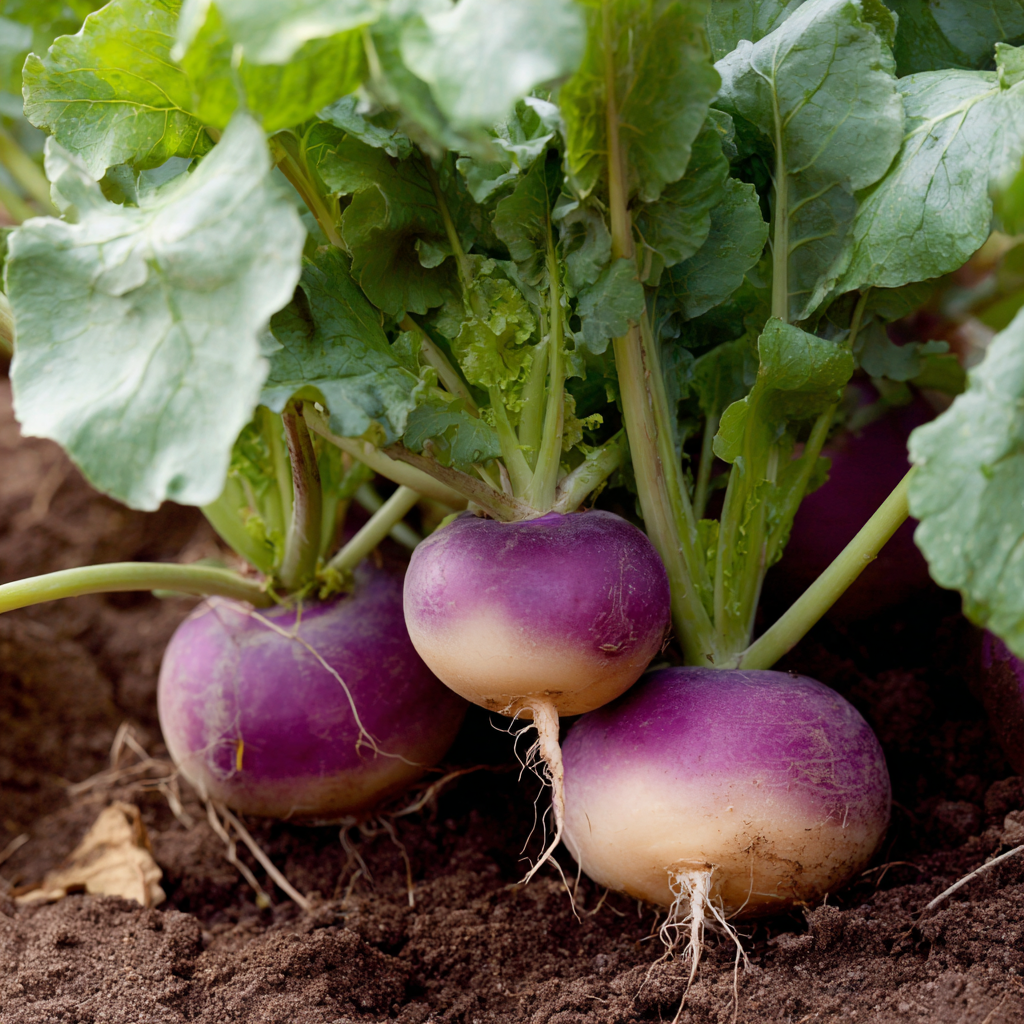
Purple Top White Globe turnip is one of the most widely grown heirloom root vegetables in North America, valued for both its globe-shaped white roots with vivid purple shoulders and the tender greens the plants produce early in the season. It is a fast-maturing cool-season crop, ready to harvest in roughly 50 to 58 days, making it an excellent choice for spring gardens and especially for fall plantings, when cooler temperatures push the highest-quality, sweetest roots. The dual harvest potential, roots and greens from the same planting, makes it a practical and efficient garden crop.
Quick How-to
Direct sow Purple Top White Globe turnip seeds outdoors in early spring as soon as the soil can be worked, or in late summer for a fall crop. Scatter seed thinly in rows and cover about 1/4 to 1/2 inch deep. Thin seedlings to 4 to 6 inches apart once they are a few inches tall, using the thinnings as greens. Fall sowings are best timed about 60 days before your average first frost, allowing roots to mature and sweeten as temperatures drop.
Quick Guide
| Fact | Recommendation |
|---|---|
| Best method | Direct sow outdoors |
| Sowing depth | 1/4 to 1/2 inch |
| Germination temperature | 50 to 70 F; cool soil is fine |
| Days to germination | About 5 to 10 days |
| Light for germination | Cover seed lightly; darkness not required |
| Spacing | Thin to 4 to 6 inches apart |
| Sun | Full sun; tolerates light shade |
| Water | Consistent moisture; do not allow to dry out between waterings |
| Days to harvest | 50 to 58 days for roots; greens can be cut earlier |
| Root size at harvest | Best flavor at 2 to 3 inches in diameter |
Before You Sow
Turnips are one of the simplest vegetables to direct sow and do not benefit from indoor starting. They establish quickly in cool conditions, and transplanting root crops introduces unnecessary root disturbance. Prepare the bed by loosening soil to at least 8 to 10 inches deep, since compact or rocky soil produces misshapen, forked roots.
Turnips grow in a wide range of soils but prefer a slightly acidic to neutral pH of 6.0 to 6.8. Work in finished compost if the soil is thin or sandy, but avoid fresh manure or high-nitrogen amendments immediately before sowing, as excess nitrogen pushes leafy growth at the expense of root development. Remove stones, large clods, and debris that would obstruct root expansion.
The real advantage of Purple Top White Globe is its speed and adaptability. You can direct sow it as one of the first seeds of the spring season and have a harvest before warm weather sets in, then sow again in late summer for fall roots that genuinely improve after frost.
Direct Sowing
Sow seeds thinly, about 1/4 to 1/2 inch deep, in rows spaced at least 12 inches apart. Good seed-to-soil contact and consistent surface moisture are the two most important factors at this stage. After sowing, press the soil gently to firm it around the seed and water in with a fine spray.
Once seedlings are 2 to 3 inches tall, thin to 4 to 6 inches apart. Crowded turnips do not produce usable roots. Thinning is non-negotiable. The plants you pull can be eaten immediately as tender turnip greens, so no thinnings go to waste.
For succession plantings, sow a new row every 2 to 3 weeks in spring, then shift to a single larger fall planting in late summer. Fall is the preferred season for roots intended for the table, as cool soil produces firmer, denser, more flavorful globes than summer-heat-stressed plants.
Soil, Sun, and Water
Full sun is preferred, but Purple Top White Globe tolerates light afternoon shade in hot climates without major impact on root quality. Soil should be loose, well-drained, and moderately fertile. Avoid high-clay soils unless amended, because they compact around developing roots and restrict their growth.
Water consistently from germination through harvest. Turnips that experience dry spells produce woody, pithy roots with off flavors. The goal is evenly moist soil throughout the growing period, neither waterlogged nor allowed to dry out between waterings. In fall plantings, natural rainfall often provides adequate moisture, but monitor the bed and supplement if there are dry stretches.
Top Mistakes
- Sowing too thickly and not thinning: Turnip seed is small and easy to oversow. A crowded row may produce abundant greens but virtually no usable roots. Thin aggressively and early. If you do not thin to 4 to 6 inches, do not expect quality roots.
- Growing in summer heat: Turnips planted in summer and harvested in high heat are more likely to be pithy, bitter, and fibrous. The fall crop is almost always superior. If you want the best roots from Purple Top White Globe, plan for late-summer sowing and fall harvest.
- Harvesting roots too large: Roots allowed to grow beyond 3 inches in diameter become increasingly woody and harsh-tasting. Check root size regularly once 50 days has passed and harvest promptly.
- Skipping greens harvest: Purple Top White Globe is a dual-use crop. The young leaves are flavorful greens worth harvesting from the time of thinning through the early weeks of growth. Treating it as a root-only crop wastes half its value.
- Rocky or compacted soil: Poor soil preparation is the most common cause of forked, misshapen, or stunted roots. Loose, well-worked soil down to 8 to 10 inches is essential for well-shaped roots.
Troubleshooting by Symptom
| Symptom | Likely causes | What to do next |
|---|---|---|
| No germination after 10 days | Surface dried out, seed too deep, or cold saturated soil | Keep the seedbed surface evenly moist; check depth; in very cold soil, germination may take longer but should still occur |
| Forked or misshapen roots | Rocks, clods, compacted layers, or transplant stress | Prepare soil more deeply before next sowing; do not transplant root crops |
| Pithy or bitter roots | Harvesting too late, summer heat, drought stress, or overly mature plants | Harvest at 2 to 3 inches in diameter; prioritize fall sowing for best quality |
| Plants bolt to seed quickly | Vernalized seedlings exposed to a cold spell, or extended heat causing premature bolting | Avoid sowing too early in spring in cold climates; prioritize fall plantings for roots |
| Yellowing lower leaves | Normal as plants age, nitrogen deficiency, or soil pH issue | Test soil pH; side-dress with a balanced fertilizer if overall plant color is poor |
| Small round holes in young leaves | Flea beetle feeding, very common on turnip seedlings | Row cover immediately after sowing provides effective protection; flea beetle pressure eases as plants grow |
Harvest: Roots and Greens
Greens: Begin harvesting outer leaves as soon as plants are a few inches tall. Cut individual leaves rather than removing the whole plant, allowing the root to continue developing. Turnip greens are best when young and tender; leaves from mature or heat-stressed plants become tough and strongly flavored.
Roots: Check root diameter starting around 50 days after sowing. Push aside the soil around the shoulder of the root to judge size. Harvest when roots are 2 to 3 inches across, firm, and showing the characteristic purple coloring on the upper portion above the soil line. Pull roots by grasping the base of the leaves and pulling upward, or loosen with a garden fork if the soil is compacted. Twist off the tops about an inch above the root for storage.
Fall roots sweetened by frost are noticeably more flavorful than summer roots. Roots can remain in the ground through light frosts without damage and are often left in the garden until needed, particularly in mild-winter climates.
Seed Saving
Purple Top White Globe is open-pollinated, but turnip is biennial and normally must experience winter cold before it flowers and sets seed in its second season. In mild climates, protect several healthy roots in place; in colder regions, lift selected roots before severe freeze, store them cold and humid without freezing, and replant in spring. Turnip crosses readily with flowering bok choy, Chinese cabbage, broccoli raab, and other Brassica rapa crops. For reliable purity, separate varieties by 800 feet to one-half mile, or grow only one B. rapa seed crop. Let pods dry on the stalk and collect them just before they begin to shatter.
Storing Leftover Seed
Keep unused Purple Top White Globe Turnip seed in its labeled packet inside a sealed container in a cool, dry, dark indoor location. Avoid garages, sheds, greenhouses, and sunny windowsills, where temperature and humidity swing sharply. Label home-saved seed with the variety and harvest year before storing it.
FAQ
Why is the top of the turnip purple?
The purple coloring on the shoulder of Purple Top White Globe develops on the portion of the root that is exposed to sunlight above the soil line. The lower, buried portion stays white. This is a natural pigmentation response, not a cultivar defect or indication of overmaturity.
Can I eat turnip greens from Purple Top White Globe?
Yes. The young leaves are flavorful and nutritious. They can be eaten raw in salads when very young, or cooked like other brassica greens. Older leaves become more strongly flavored and are best cooked briefly or in soups and stews.
When is the best time to sow turnips for the tastiest roots?
Late summer, timed so roots mature in cool fall weather. Sow about 60 days before your expected first frost. Roots that experience cool temperatures and a light frost or two before harvest are noticeably sweeter and more tender than those grown under summer heat.
How do I store harvested turnip roots?
Trim the greens to about an inch above the root, brush off loose soil, and store in a cool, humid location such as a refrigerator crisper drawer or a root cellar. Turnip roots keep well for several weeks under cool storage conditions.