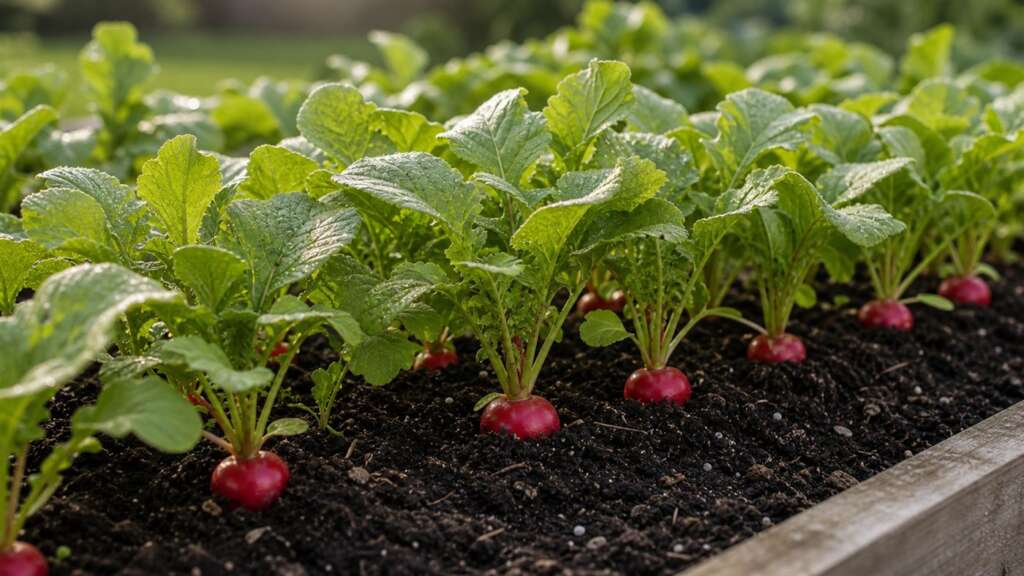
Cherry Belle is a classic round, cherry-red radish with a crisp white interior and a mild, slightly sweet bite. It is one of the most beginner-friendly vegetables in the garden because it grows quickly, asks for little, and shows results almost immediately. Like most spring radishes, Cherry Belle is a cool-season crop that is direct sown shallowly into prepared soil, kept evenly moist, and harvested promptly before warm weather changes the texture of the roots.
Quick How-to
Direct sow Cherry Belle Radish seed about 1/4 to 1/2 inch deep into loose, smooth soil as soon as the ground can be worked in spring, and again in late summer for a fall crop. Keep the seedbed evenly moist. Expect germination in about 3 to 7 days when soil is roughly 45 to 75 F. Thin promptly to about 1 to 2 inches apart, then harvest roots when they reach about an inch across, usually within 22 to 30 days from sowing.
Quick Guide
| Fact | Recommendation |
|---|---|
| Best method | Direct sow; indoor starting is not recommended for round spring radishes |
| Sowing depth | About 1/4 to 1/2 inch |
| Germination temperature | About 45 to 75 F, with steadier results in the cool middle of that range |
| Days to germination | Often 3 to 7 days |
| Light for germination | Cover seed lightly with fine soil; light is not required to sprout |
| Spacing | Thin to about 1 to 2 inches apart |
| Sun | Full sun while weather is cool; partial afternoon shade can help in late spring |
| Water | Even, steady moisture; avoid swings between dry and saturated soil |
| Harvest window | About 22 to 30 days from sowing |
| Plant size | Compact tops over small round roots about an inch across at harvest |
Before You Sow
A successful radish patch starts with a well-prepared seedbed. Loosen the top 4 to 6 inches of soil and rake out clods, sticks, and stones. Even small obstructions can deflect a developing root and produce forked or oddly shaped radishes. If your soil is heavy clay or compacted, work in a little finished compost to improve texture, but avoid piling on fresh manure or high-nitrogen fertilizer. Excess nitrogen pushes lush tops at the expense of the round, swollen root you actually want.
Plan in small batches rather than one long row. Radishes mature all at once, so a single big sowing tends to produce more than most households can use in a week. Sowing a short row every 7 to 14 days while weather is cool gives you a steady supply without the late, oversized roots that turn pithy on the plant.
Pre-water the bed before sowing so seed does not sink into a dry pocket. Have your labels ready; radish seedlings look very similar to other young brassicas, and a labeled row saves guesswork two weeks later.
Direct Sowing
Cherry Belle is well suited to direct sowing because radishes are quick, shallow-rooted, and resent being moved. Make a shallow furrow about 1/4 to 1/2 inch deep, drop seed every half inch or so, cover lightly with fine soil, and tamp gently for good seed-to-soil contact. Water with a soft spray so the surface stays smooth and seed does not float into clumps.
Keep the top layer of the bed consistently moist until you see seedlings. The seed zone should feel like a wrung-out sponge, not muddy and not dusty. A thin layer of fine compost or seed-starting mix over the row can help prevent crusting on clay or silty soils. If the surface dries and forms a crust, gently break it with the back of a rake or mist it back to softness so the cotyledons can lift through.
Once seedlings have their first true leaves, thin them to about 1 to 2 inches apart. This is the single most important step, and the one most home gardeners skip. Crowded radishes will look lush above ground while producing only thin, stringy roots underneath. Snip extras at the soil line with scissors instead of pulling, which can disturb neighboring seedlings, and add the thinnings to a salad as mild micro-greens.
Indoor Starting
Indoor starting is generally not useful for Cherry Belle or other round spring radishes. The taproot forms quickly and does not tolerate transplant disturbance; moved seedlings often produce forked, stunted, or non-bulbing roots. Direct sowing is faster, simpler, and more reliable. If you garden only in containers or raised beds and want an early start, sow seed directly into the final container rather than starting it elsewhere.
Transplanting and Spacing
Skip transplanting for normal harvest. Use thinning rather than moving plants to set spacing. After thinning to roughly 1 to 2 inches, you can space rows about 6 to 12 inches apart, depending on whether you are growing in narrow beds, wide bands, or container blocks. The goal is room for each root to swell without neighbors pressing against it and enough airflow between tops to discourage damp, fungal-friendly conditions.
Soil, Sun, and Water
Cherry Belle does best in loose, well-drained soil with steady moisture. Full sun is ideal while weather is cool. In late spring, a spot that gets bright morning sun and a little afternoon relief can extend the harvest window by keeping soil temperatures a few degrees lower.
Watering is where many radish problems begin or end. Even moisture produces crisp, mild roots. Cycles of drought followed by deep watering are a common cause of split or cracked roots, and prolonged dry stretches can make roots tough or hot-flavored. A light mulch between rows once seedlings are up helps stabilize soil moisture without burying tiny seedlings.
Avoid heavy feeding. A modest amount of balanced compost worked in before planting is usually enough for a 25-day crop. Side-dressing with nitrogen partway through the cycle tends to push leafy growth right when the plant should be sizing up roots.
Top Mistakes
- Sowing into heat: Cherry Belle is a cool-season crop. Sowing into warm soil or pushing the season into early summer often leads to bitter, hot, or pithy roots and quick bolting. Move sowings into spring and fall windows whenever possible.
- Not thinning: Crowded seedlings look healthy at first but rarely produce round, swollen roots. Thin to 1 to 2 inches as soon as true leaves appear.
- Harvesting late: Radishes do not improve by waiting. Roots left in the ground past maturity quickly turn woody, pithy, or splitcork, especially in warm or dry weather. Harvest at usable size, even if some plants are slightly behind others.
- Inconsistent watering: Letting the bed dry hard and then soaking it is a common cause of cracked or split roots and uneven shapes. Aim for steady, even moisture from sowing through harvest.
- Over-fertilizing with nitrogen: Feeding for big tops costs you the root. Keep nutrition modest and balanced.
Troubleshooting by Symptom
| Symptom | Likely causes | What to do next |
|---|---|---|
| No sprouts after 7 to 10 days | Seedbed dried out, crusted, or seed buried too deep | Mist the surface back to even moisture, gently break any crust, and resow shallowly if rows stay empty |
| Patchy or uneven germination | Cloddy soil, dry pockets, or seed washed into clumps by heavy watering | Smooth and pre-moisten the bed before resowing, then water with a gentle spray |
| Lush tops but no round roots | Crowding, excess nitrogen, too much shade, or sowing into warm weather | Thin to 1 to 2 inches, hold off on nitrogen feeding, and move future sowings to a cooler window |
| Pithy, hollow, or woody roots | Harvested past maturity, heat stress, or prolonged drought | Harvest younger and more often, water more evenly, and avoid summer sowings |
| Split or cracked roots | Sudden heavy watering after a dry stretch | Water on a steadier schedule and consider light mulch to stabilize moisture |
| Hot or harsh flavor | Heat, drought, or delayed harvest | Sow in cool seasons, keep moisture steady, and pick at smaller size |
| Plants bolt to flower instead of forming roots | Heat, long day length, or stressed seedlings | Sow earlier in spring or wait for fall; protect from sudden heat spikes with row cover or temporary shade |
| Forked or twisted roots | Stones, clods, or disturbed soil; also caused by transplanting | Loosen and clear the seedbed before sowing and avoid moving seedlings |
| Holes or trails on leaves | Flea beetles or other leaf-feeding insects | Use lightweight row cover from sowing until thinning; intact tops are not required for a good root harvest, but heavy pressure can stunt plants |
| Seedlings collapse at soil line | Overly wet surface, poor airflow, or damping-off conditions | Water less frequently but more evenly, improve drainage, and avoid sowing into cold, soggy ground |
Germination Diagnostics
If a row is slow or uneven, work through the seed environment in order before changing everything at once. First, check depth. Cherry Belle seed should be just barely covered, around 1/4 to 1/2 inch. Seed pressed too deep into heavy soil may have moisture but not enough reserve energy to push to the surface.
Next, check temperature. Soil in the rough 45 to 75 F range gives steady results, with the cooler half of that range often producing the best stand. Hot soil, dry winds, or a south-facing bed in late spring can stall germination or stress seedlings as soon as they emerge.
Then check moisture. The seed zone should feel evenly damp, not shiny wet and not dusty dry. Light, frequent watering during the germination window matters more than deep soaks. If the surface crusts, tiny seedlings can fail underneath even when the seed itself has started to grow; misting the crust soft is usually enough to rescue the row.
Finally, check the bed itself. Compacted soil, buried debris, or thick mulch left over the row can all hold seedlings back. A clean, smooth seedbed pays off quickly with a crop this fast.
Timing and Climate Notes
Treat Cherry Belle as a cool-window crop. In most climates, the strongest harvests come from early spring sowings made as soon as the soil can be worked, and from late summer to early fall sowings made once peak heat begins to ease. Mild-winter regions can often sow through fall and into early winter.
When days lengthen and temperatures climb, switch to smaller successions, sow in slightly cooler microclimates (east-facing beds, the shaded side of taller crops), and harvest aggressively. Once true heat sets in, pause sowings entirely. Pushing radishes through hot weather usually produces frustration, not radishes.
Container and Small-Space Notes
Cherry Belle is well suited to containers, raised beds, and small spaces. Its short taproot is happy in any container at least about 6 inches deep with drainage holes. Use a quality potting mix rather than heavy garden soil, which tends to compact in pots.
Containers dry out faster than ground beds, so plan to check soil moisture daily during germination and during warm weather. A wide, shallow container with a thinned grid of plants produces a tidy block harvest that fits naturally into salad rotations. Containers also let you chase the season by moving plants into morning sun and afternoon shade as spring warms up.
Harvest and Kitchen Use
Harvest as soon as roots reach roughly an inch across. Gently brush soil aside at the top of a few plants to gauge size before pulling the row. Cherry Belle is at its best when picked young, when the flesh is crisp and the flavor is mild and slightly sweet. Twist or pull straight up from the base of the leaves to lift the whole plant.
Trim tops promptly after harvest so they do not pull moisture out of the roots in storage. The greens are edible when young and tender and can be used like other peppery brassica leaves. Stored in a sealed container with a damp paper towel in the refrigerator, trimmed roots typically hold their crisp texture for one to two weeks.
In the kitchen, Cherry Belle shines raw: sliced into salads, served with butter and flake salt, pickled for sandwiches, or shaved thin over tacos and toasts. A quick roast or saute also softens the bite if you have a surplus from a successful succession.
Seed Saving
Saving radish seed is possible but takes planning. Radishes are biennial-tending and outcrossing, and they cross readily with other radish varieties grown nearby, including wild radish. To save true-to-type seed, isolate Cherry Belle from other flowering radishes by distance or timing, let selected plants bolt and flower, and allow the resulting seed pods to dry on the plant. Harvest pods when they are tan and brittle, then finish drying indoors before threshing and storing. Label seed clearly with the variety and year. Because of the cross-pollination risk, most home gardeners buy fresh radish seed each season and save other crops instead.
Storing Leftover Seed
Keep unused Cherry Belle Radish seed in its labeled packet inside a sealed container in a cool, dry, dark indoor location. Avoid garages, sheds, greenhouses, and sunny windowsills, where temperature and humidity swing sharply. Label home-saved seed with the variety and harvest year before storing it.
FAQ
Why did I get big leaves but no round roots?
The most common causes are crowding, too much nitrogen, too much shade, or sowing into weather that was already too warm. Thin firmly to 1 to 2 inches, hold off on extra fertilizer, and aim future sowings at cooler windows.
How often should I sow Cherry Belle?
Small succession sowings every 7 to 14 days during cool weather give a steady supply without producing more radishes than you can use at once. Pause sowings during summer heat and resume in late summer for a fall crop.
Can Cherry Belle grow in containers?
Yes. Any container at least about 6 inches deep with drainage works well. Use a good potting mix, water more often than you would in the ground, and thin just as you would in a garden bed.
Why are my roots pithy or hollow inside?
Pithy, spongy roots usually mean the radish was left in the ground too long, hit a hot stretch, or went through a drought. Harvest at usable size as soon as the row is ready, and water steadily through the cycle.
Do I need to start radish seed indoors?
No. Cherry Belle and other round spring radishes do best when direct sown where they will grow. Transplanting tends to produce forked or stunted roots.
Are the leaves edible?
Yes. Young radish greens are edible and have a mild peppery flavor. Use them fresh, wilted into eggs, or stirred into soups.