
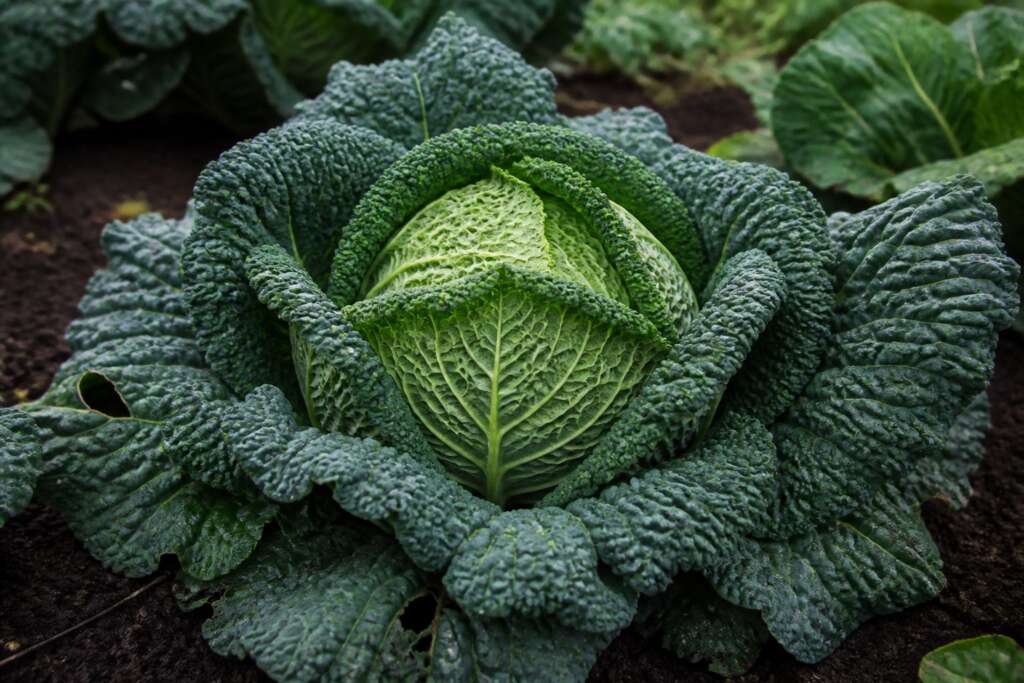
Savoy cabbage is a heading brassica distinguished by its deeply crinkled, savoyed leaves and notably tender texture compared with smooth-leaf cabbage types. It forms a loose to moderately tight head and is prized in kitchens for its milder flavor and the way its ruffled leaves hold sauces and stuffings. Savoy types are among the most cold-hardy cabbages, tolerating frost and light freezes that would damage many other vegetables, making them an excellent late-season garden staple.
Quick How-to
Start Savoy cabbage seeds indoors 6 to 8 weeks before your target outdoor transplant date. Sow about 1/4 inch deep in moist seed-starting mix and keep the trays at a moderate room temperature, not on a heat mat. Transplant outdoors after hardening off, spacing plants 15 to 18 inches apart in fertile, well-drained soil. Time plantings so heads develop and mature during cool weather, either as a spring crop or, for the best flavor and cold tolerance, as a fall crop that matures into the first frosts.
Quick Guide
| Fact | Recommendation |
|---|---|
| Best method | Start indoors, then transplant |
| Sowing depth | About 1/4 inch |
| Germination temperature | 65 to 75 F; avoid high heat |
| Days to germination | About 5 to 10 days |
| Light for germination | Cover seed; strong light needed immediately after sprouting |
| Spacing | 15 to 18 inches apart in the row |
| Sun | Full sun |
| Water | Consistent moisture; about 1 inch per week |
| Days to harvest | 70 to 100 days from transplant depending on variety |
| Plant size | Heads typically 3 to 5 pounds; outer spread of 18 to 24 inches |
Before You Sow
Savoy cabbage is a cool-season crop that performs best when transplants go into the ground in early spring or midsummer, depending on your target harvest. For a fall crop, start seeds indoors 6 to 8 weeks before your planned transplant date in midsummer, so heads mature during the natural cool-down of September through November.
Use sterile seed-starting mix, individual cells, and clean labels. Avoid heat mats; cabbage germination is reliable at normal indoor temperatures without them, and excess warmth produces soft, leggy seedlings. Plant in a fresh location each season — cabbages, like all brassicas, benefit from rotation away from ground that has grown related crops in the past 2 to 3 years.
Indoor Starting
Sow Savoy cabbage seeds about 1/4 inch deep, cover gently, and press lightly for good soil contact. Keep the mix evenly moist. Germination generally occurs within 5 to 10 days under normal indoor conditions. Remove any humidity dome promptly when seedlings emerge to improve airflow and reduce the risk of damping off.
Provide strong overhead light from the moment seedlings appear. Cabbage seedlings grown in insufficient light develop pale, stretched stems that do not produce vigorous plants. Thin to the best seedling per cell once the first true leaf is fully expanded. If seedlings become rootbound before transplant time, pot them up into larger containers rather than leaving them cramped.
Hardening Off and Transplanting
Harden off seedlings gradually over 7 to 10 days before moving them to the garden. Begin with short periods in a sheltered location and progressively increase sun exposure and outdoor time. Cabbage is quite cold-tolerant once established, so established seedlings can handle outdoor exposure earlier than warm-season crops.
Transplant on a cool or cloudy day, ideally in the evening. Set plants at the same depth they grew indoors. Space them 15 to 18 inches apart to allow adequate air circulation as heads develop. Closer spacing produces smaller heads; wider spacing allows larger development. Water in immediately after planting. Apply mulch around the base of each plant to stabilize soil moisture and suppress weeds through the growing season.
Soil, Sun, and Water
Savoy cabbage grows best in full sun, though it tolerates a small amount of afternoon shade better than many other vegetables. Soil should be fertile, well-drained, and able to retain moisture. Work in 1 to 2 inches of finished compost before planting. A soil pH of 6.0 to 7.0 supports strong growth and helps prevent certain nutrient issues.
Water cabbage consistently, aiming for roughly 1 inch per week from rain or irrigation. Irregular watering causes heads to crack as they size up, because sudden water uptake after a dry spell pushes rapid expansion that splits the head. This is especially common in mature heads just before harvest. Harvest on time if cracking is a concern in your climate.
Avoid high-nitrogen fertilization once heads begin forming; excess nitrogen at that stage promotes leafy growth at the expense of compact heading.
Top Mistakes
- Letting seedlings overheat indoors: Heat mat use is not needed and frequently produces leggy, soft brassica seedlings. Standard room temperature and strong light is the better combination for sturdy transplants.
- Transplanting into poor, compacted soil: Cabbage roots need loose, fertile soil to develop fully. Compacted or nutrient-thin soil produces stunted heads or plants that stall shortly after transplanting.
- Allowing heads to over-mature on the plant: Savoy heads that remain on the plant past their harvest window will begin to crack or split, especially after rainfall. Check heads regularly once they feel firm under gentle pressure.
- Skipping crop rotation: Growing cabbage in the same area year after year builds up soil pathogens, including clubroot, and attracts persistent populations of cabbage root maggot. Rotate brassicas to a new bed every 2 to 3 years.
- Ignoring caterpillar scouting: Imported cabbage worm is one of the most damaging pests on cabbage. The green caterpillars blend perfectly into the foliage, and by the time feeding damage is obvious, populations may already be large. Check the undersides of leaves weekly throughout the growing season.
Troubleshooting by Symptom
| Symptom | Likely causes | What to do next |
|---|---|---|
| Seedlings collapse at soil line | Damping off from overly wet, poorly aerated mix | Remove affected seedlings, improve airflow, water from below, and start fresh in clean mix if needed |
| Plants stall after transplanting | Root disturbance, insufficient hardening off, or cold soil | Water regularly, protect from hard frost in spring, and give the plant 1 to 2 weeks to resume growth |
| Heads crack before harvest | Overmaturity, uneven watering, or sudden heavy rain after dry spell | Harvest promptly once heads are firm; consider making a partial root cut in soil to slow water uptake if rain is coming |
| Yellow V-shaped patches on outer leaves | Black rot infection, a bacterial disease common on brassicas | Remove affected leaves; avoid overhead watering; practice crop rotation; do not compost infected plant material |
| Soft or foul-smelling center | Bacterial soft rot, often following physical damage or insect entry | Discard affected plants; check remaining plants for entry wounds from caterpillar damage or slugs |
| Small, round holes in leaves | Flea beetle feeding; most common on young transplants | Use row cover at transplant; flea beetle pressure usually declines as plants grow larger |
Harvest
Press the head gently with the heel of your hand; a ready Savoy head feels firm and solid, though it will be somewhat looser than a smooth-leaf cabbage head. Cut the stem at or just below the base of the head with a sharp knife, leaving the outer wrapper leaves intact for brief storage. Savoy cabbage stores well in a refrigerator crisper drawer for up to 2 to 4 weeks, though the outer leaves may loosen over time.
Savoy types are notably cold-tolerant once mature heads are formed, routinely surviving frosts that would damage other vegetables. This makes fall-harvested Savoy an excellent choice for gardeners who want a vegetable that hangs on as the garden season winds down.
Seed Saving
Cabbage is insect-pollinated and crosses freely with other Brassica oleracea varieties including broccoli, kale, Brussels sprouts, and cauliflower. Plants are biennial and must overwinter to produce flowers and seeds the following year. Saving reliably true-to-type seed from Savoy cabbage in a home garden setting requires either isolation of at least 300 to 500 feet from other Brassica oleracea, or controlled hand pollination. Most home gardeners do not attempt seed saving from heading brassicas.
Storing Leftover Seed
Keep unused Savoy Cabbage seed in its labeled packet inside a sealed container in a cool, dry, dark indoor location. Avoid garages, sheds, greenhouses, and sunny windowsills, where temperature and humidity swing sharply. Label home-saved seed with the variety and harvest year before storing it.
FAQ
What makes Savoy cabbage different from regular green cabbage?
The most visible difference is the deeply crinkled, savoyed texture of the leaves, which results from a genetic trait that causes the leaf surface to expand faster than the underlying structure. This gives Savoy its characteristic ruffled appearance. The flavor is generally considered milder and less sulfurous than flat-leaf types, and the texture is more tender, which makes it popular for raw use and quick cooking.
When is the best time to grow Savoy cabbage?
Savoy cabbage is best grown as a fall crop in most regions. Heads that mature in cooler temperatures develop better flavor, the plants tolerate frost with little damage, and fall cabbage is less susceptible to some of the heat-related pest pressure that can affect spring plantings.
Can Savoy cabbage survive frost?
Yes. Savoy is one of the most frost-hardy cabbage types and can tolerate temperatures into the mid-twenties F once the head is fully formed. Light frosts may actually improve flavor slightly. Extended hard freezes below about 20 F will eventually damage outer leaves and the head.
How do I prevent cabbage heads from splitting?
The most reliable approach is to harvest on time before the head becomes over-mature. If a sudden wet spell is coming and your heads are nearly ready, you can do a partial root cut by pushing a spade into the soil about 6 inches from the plant on two sides. This slows water and nutrient uptake temporarily and reduces splitting pressure.