
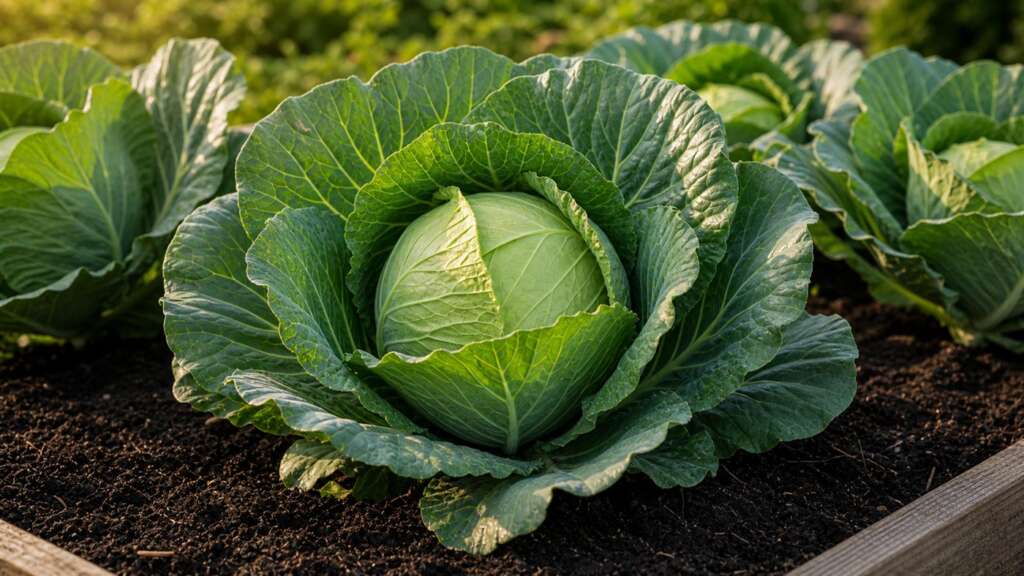
Golden Acre is a compact, early-maturing green cabbage that forms tight, round heads on a short frame. It is a cool-season brassica that performs best when seedlings establish in mild weather, grow steadily without checks, and head up before summer heat sets in. The variety is a favorite for small gardens because the plants take less room than larger storage cabbages and finish faster than most main-season types.
Quick How-to
Start Golden Acre Cabbage indoors about 5 to 7 weeks before your last expected spring frost, or sow again in mid to late summer for a fall crop. Sow seed about 1/4 inch deep in a moist seed-starting mix, keep soil around 65 to 75 F until sprouts emerge, then grow seedlings cool and bright. Harden off and transplant when plants have 4 to 5 true leaves, spacing them 12 to 18 inches apart in rich, well-drained soil. Keep moisture even from transplant through heading, and expect harvest about 60 to 70 days from transplant.
Quick Guide
| Fact | Recommendation |
|---|---|
| Best method | Start indoors and transplant; direct sowing works for fall crops in mild areas |
| Sowing depth | About 1/4 inch, covered lightly with fine mix |
| Germination temperature | Best around 65 to 75 F; cabbage seed will also sprout in cooler soil |
| Days to germination | About 4 to 10 days under steady warmth and moisture |
| Light for germination | Cover seed; provide strong overhead light immediately after sprouting |
| Spacing | About 12 to 18 inches between plants; 18 to 24 inches between rows |
| Sun | Full sun, ideally 6 or more hours |
| Water | Even moisture; about 1 to 1.5 inches per week through heading |
| Harvest | Commonly about 55 to 65 days from transplant when heads feel solid for their size |
| Plant size | Compact; heads typically 3 to 5 pounds with short outer leaves |
Before You Sow
Golden Acre rewards a steady start more than a fast one. Cabbage is a heavy feeder that draws on the soil from the moment it puts out true leaves, so prepare the bed before transplanting day. Work in finished compost or aged manure, and aim for soil that drains well but holds moisture between waterings. A near-neutral pH around 6.5 to 6.8 helps the plant take up calcium and reduces the risk of clubroot in beds that have grown brassicas before.
Plan your timing backward from weather, not forward from the calendar. For a spring crop, count back 5 to 7 weeks from your last frost date for indoor sowing; you want transplants ready when nights are still cool but no longer freezing. For a fall crop, count back about 12 to 14 weeks from your first fall frost. Fall cabbage often produces the sweetest heads because cooler nights firm up the leaves and concentrate sugars.
If a brassica has grown in the same bed within the last two or three years, rotate to a different spot. Cabbage roots leave behind residues and pathogens that build up with continuous planting, and rotation is the single most useful prevention step for brassica problems.
Indoor Starting
Sow Golden Acre seed in clean cells or a shallow tray of fresh seed-starting mix. Pre-moisten the mix until it holds together when squeezed without dripping, then press seed 1/4 inch deep and cover lightly. One or two seeds per cell is plenty; thin to the strongest seedling once true leaves appear so the keeper is not competing for light or root space.
Cabbage seed sprouts willingly in a wide temperature range, but the steadiest emergence comes around 65 to 75 F. A heat mat can speed things along, especially if your starting area runs cool. Remove the mat as soon as sprouts show; seedlings held on bottom heat after germination stretch quickly and develop weak stems.
Light is the next decision and the one most home growers underestimate. Cabbage seedlings need bright overhead light within hours of emergence, not days. A grow light a few inches above the leaves for 14 to 16 hours produces stocky transplants. A bright windowsill alone is rarely enough in late winter, and weak light is the most common reason brassica seedlings lean, pale, and topple before transplant.
Keep the growing area cool once seedlings are up. Room temperatures in the low 60s F produce stronger, more compact transplants than 70s F warmth. Water from below when possible, allow the surface to dry slightly between waterings, and start light liquid feeding once true leaves develop.
Direct Sowing
Direct sowing is a practical option for fall crops in regions where summer heat lifts before late August. Loosen the bed, smooth the surface, and place seed about 1/4 inch deep in shallow furrows. Water gently to avoid washing seed into clumps, and cover the row with light shade cloth or a board until sprouts emerge if the surface is prone to drying or crusting.
Thin in stages. First thin to about 4 to 6 inches when seedlings have a couple of true leaves; then thin to final spacing of 12 to 18 inches once plants are clearly the strongest of the row. Leftover thinnings transplant easily if moved while the roots are small.
Direct sowing in spring is harder to time well. Soil that is cold enough to feel safe for a brassica is often too cold for fast emergence, and warming soil tempts gardeners to sow into beds that will turn hot before heading. For spring plantings, indoor starts almost always produce a more reliable crop.
Hardening Off and Transplanting
Harden off transplants over 7 to 10 days before they go in the ground. Begin with an hour or two of filtered outdoor light in a sheltered spot, then add direct sun, wind exposure, and overnight time gradually. Skip this step and seedlings often check sharply after transplant, sometimes pausing for a week or more before resuming growth.
Transplant when seedlings show 4 to 5 true leaves, ideally on a cloudy afternoon or in the evening. Set plants at the same depth they grew in the cell, or slightly deeper if the stem is leggy. Water in thoroughly so the root ball makes contact with surrounding soil. A light collar of cardboard, foil, or a cut paper cup around the stem deters cutworms during the vulnerable first week.
Frost down to about 28 to 30 F is usually tolerated by hardened cabbage transplants, but a sudden hard freeze on tender seedlings can stunt them. If a cold snap is forecast right after transplant, cover plants with row cover or cloches overnight.
Soil, Sun, and Water
Golden Acre wants steady conditions. The bed should drain well after a heavy rain but hold moisture between waterings. About 1 to 1.5 inches of water per week is a useful starting target; raise that during dry weeks and reduce it when rainfall covers the demand. Even moisture matters most as heads form. Sharp swings from dry soil to deep watering are the main cause of split heads, which can ruin an otherwise finished crop overnight.
Mulch helps once the soil has warmed. Straw, shredded leaves, or grass clippings keep moisture in, suppress weeds, and reduce splash that can spread leaf disease. Hold mulch back from the stem by an inch or two so it does not trap dampness against the plant.
Feed lightly but consistently. A balanced fertilizer or compost side-dressing two to three weeks after transplant supports the leaf growth that fills out the head. Cabbage needs adequate calcium and boron for solid head formation; these are usually present in healthy garden soil and rarely need special supplementation unless a soil test points to a deficit.
Top Mistakes
- Sowing too late for the season: Golden Acre is early, but it still needs to mature before sustained summer heat. Spring crops that head up in July often bolt or grow loose, papery heads instead of firm ones.
- Underestimating light during indoor starting: Cabbage seedlings on a windowsill stretch and lean. Get strong overhead light on them within a day of emergence and keep the lamp close to the leaves.
- Skipping hardening off: Greenhouse-soft seedlings move outside and stall. A real 7-to-10-day transition makes the difference between plants that take off and plants that sit for two weeks.
- Letting moisture swing during heading: Cabbages that go dry and then get soaked often split. The fix is consistent watering and mulch, not a sudden deep soaking when heads look thirsty.
- Replanting where brassicas just grew: Disease and pest pressure compound in repeat plantings. Rotate to a new bed when possible.
Troubleshooting by Symptom
| Symptom | Likely causes | What to do next |
|---|---|---|
| No sprouts after 10 to 14 days | Mix too cold or too dry, seed buried too deep, or seed has aged | Confirm soil warmth, keep mix evenly damp, and resow at 1/4 inch under steady 65 to 75 F |
| Tall, leaning seedlings | Weak light, overcrowded cells, or extra warmth after germination | Lower the grow light closer to leaves, increase hours of light, thin to one seedling per cell, and move trays off heat |
| Seedlings collapse at the soil line | Damping-off from saturated mix and weak airflow | Improve air circulation, water from below, allow the surface to dry between waterings, and restart in clean fresh mix |
| Small holes in leaves with a shotgun pattern | Flea beetles, especially in warm, dry weather | Cover transplants with insect netting or floating row cover from planting day; remove only briefly for weeding |
| Chewed leaves with green caterpillars or droppings | Cabbage worms or cabbage loopers | Hand-pick caterpillars; if needed, use a Btk product specifically labeled for the crop and target pest, following every application and pollinator-protection direction |
| Plants form leaves but never head, or send up flower stalk | Heat stress, drought, long days at heading, or transplant check | Mulch and water consistently, shade during heat waves, and shift the next planting earlier in spring or later in summer |
| Heads split open as they finish | Sudden water uptake after dry weather, or heads left past maturity | Harvest at firmness, water more evenly through heading, and twist mature plants a quarter turn to break some roots and slow water uptake if rain is imminent |
| Yellow, wilted lower leaves with stunted plant | Possible fusarium yellows, root maggots, or clubroot in repeat brassica beds | Pull and discard affected plants, avoid composting roots, and rotate brassicas to a new bed for the next season |
| Loose, open heads instead of firm ones | Wide spacing combined with heat, weak feeding, or late planting into hot weather | Tighten spacing slightly, side-dress with compost or balanced fertilizer, and shift timing into a cooler window |
Harvest and Kitchen Use
Cut Golden Acre when the heads feel firm to a gentle squeeze and have reached about softball to small-cantaloupe size, typically 3 to 5 pounds. Slice the head from the stem with a sharp knife, leaving a few wrapper leaves attached. If you leave the stump and lower leaves in the ground, small secondary heads sometimes form from the leaf axils and make a useful second harvest in cool weather.
The compact size suits whole-head recipes well. Golden Acre is tender enough for fresh slaws and salads and dense enough to hold up to braising, sauerkraut fermentation, or short-term refrigerator storage. Heads keep for several weeks in a cold, humid refrigerator drawer; loosely wrap in a damp cloth or perforated bag rather than sealing tight.
Seed Saving
Cabbage is a biennial and does not produce seed in its first growing season. Plants need to be carried through a cool period (vernalization) before bolting to flower and setting seed the following year. Brassica oleracea also crosses freely with broccoli, kale, cauliflower, kohlrabi, Brussels sprouts, and other cabbages, so isolated plantings are required to keep a variety true.
For most home gardeners, saving Golden Acre seed is a multi-year project that requires overwintering selected heads, controlling crosses by distance or caging, and managing pollinators. Growing it as an annual eating crop is the simpler path unless controlled seed saving is itself the goal.
Storing Leftover Seed
Keep unused Golden Acre Cabbage seed in its labeled packet inside a sealed container in a cool, dry, dark indoor location. Avoid garages, sheds, greenhouses, and sunny windowsills, where temperature and humidity swing sharply. Label home-saved seed with the variety and harvest year before storing it.
FAQ
Is Golden Acre a good cabbage for small gardens?
Yes. It was bred as an early, compact variety and takes less space than larger storage cabbages. Plants spread roughly 12 to 18 inches across, which suits raised beds, square-foot layouts, and tight rows.
Can I grow Golden Acre in a container?
It is possible but demanding. Use a container with strong drainage and at least 3 to 5 gallons of soil per plant, water more often than you would in the ground, and feed regularly. Container cabbage dries out fast in warm weather, which can stress heads at the worst time.
How do I keep cabbage worms off the plants?
Insect netting or floating row cover from transplant day is the most reliable defense because it stops cabbage-white butterflies and moths from laying eggs. If caterpillars are already present, hand-pick what you can see. When further control is warranted, choose a Bacillus thuringiensis subsp. kurstaki (Btk) product whose label lists both the crop and target caterpillar, apply it to young larvae exactly as directed, avoid open flowers and non-target insects, and repeat only when the label permits.
What if my spring crop is heading right as the weather turns hot?
Harvest as soon as heads feel firm, even if they are smaller than expected. A slightly small, solid head is better than a split or bolted one. For the next year, shift indoor sowing earlier so transplants can take advantage of more cool weather.
Why are my outer leaves huge but the head is loose?
Loose heads typically come from heat at the heading stage, late planting, or too much nitrogen without enough other nutrients. Tighten spacing slightly, balance feeding, and plan the next crop for a cooler window.