
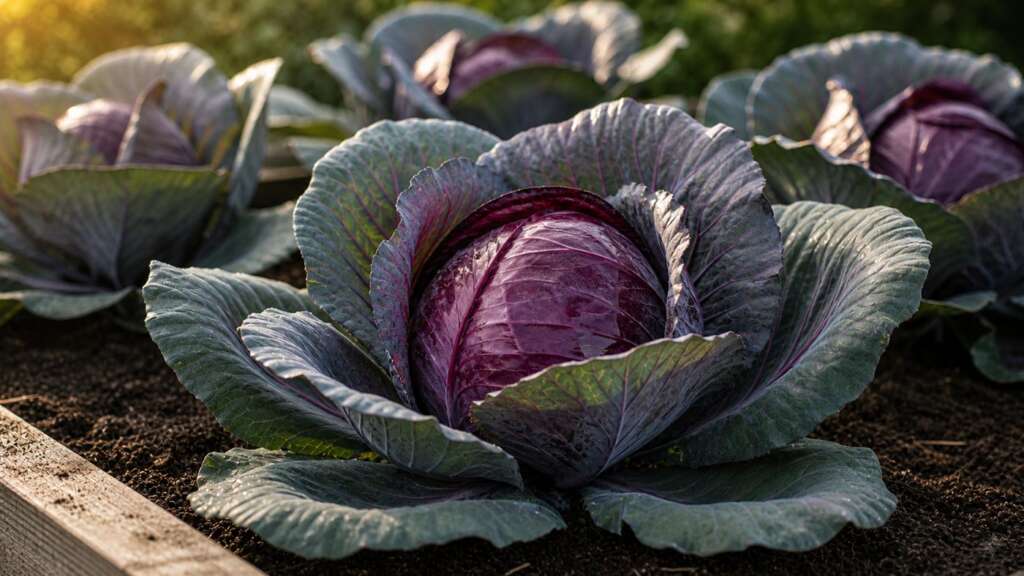
Red Acre is a compact, early heirloom cabbage prized for its deep reddish-purple heads, dense round shape, and reliable performance in smaller gardens. It is a cool-season crop, which means it sizes up best in mild spring or fall weather and tends to struggle through hot, dry midsummer stretches. Most home growers get the best results by starting seed indoors for transplants, although a direct-sown fall crop also works in many climates.
Quick How-to
Start Red Acre Cabbage indoors about 4 to 6 weeks before your intended transplant date, sowing seed about 1/4 inch deep in a fresh seed-starting mix. Keep the mix evenly moist and warm enough for steady germination, around 65 to 75 F, and expect sprouts in about 4 to 10 days. Move seedlings under strong overhead light immediately after emergence, harden off before transplanting, and set young plants out into cool, settled weather with even moisture and full sun.
Quick Guide
| Fact | Recommendation |
|---|---|
| Best method | Start indoors for spring transplants; direct sow or transplant for a fall crop |
| Sowing depth | About 1/4 inch |
| Germination temperature | About 65 to 75 F for steady emergence; tolerates cooler soil more slowly |
| Days to germination | About 4 to 10 days under good conditions |
| Light for germination | Cover seed; strong overhead light is needed as soon as seedlings emerge |
| Spacing | 12 to 18 inches apart in rows 24 to 36 inches apart |
| Sun | Full sun in cool weather; light afternoon shade can help in late-spring heat |
| Water | Even moisture throughout growth; avoid dry-wet swings |
| Days to maturity | About 70 to 80 days from transplant under steady cool-season growth |
| Plant size | Compact heirloom type that produces small, firm heads suited to home gardens |
Before You Sow
Red Acre rewards a steady, unbroken growing season more than almost any other input. The plant builds frame leaves first, then draws on them to fill out the head, so anything that checks growth early, dry trays, crowded cells, sudden cold, or a hot spell, can show up later as loose heads, splits, or smaller cabbages.
Begin with fresh, fluffy seed-starting mix and clean cells or small pots with drainage. Pre-moisten the mix so it holds its shape when squeezed but does not drip, then fill cells and tap to settle. Label each tray or row right away. Brassica seedlings, including cabbage, broccoli, kohlrabi, and kale, look very similar in their first true leaves, and mistakes at the tray stage are hard to untangle later.
Plan backward from your transplant date. For a spring crop, count back 4 to 6 weeks from the date you expect mild, settled weather, not from your last frost; young cabbage transplants tolerate cool nights but resent warm trays followed by cold soil. For a fall crop, count back from the date you want to be harvesting, then add the maturity time plus a few weeks of buffer for shorter autumn days.
Indoor Starting
Sow Red Acre Cabbage seed about 1/4 inch deep, one or two seeds per cell, and press the mix gently so the seed has firm contact. Cover lightly and water with a fine spray to avoid washing seed out of place. A clear humidity dome can help maintain even moisture for the first few days; remove it as soon as sprouts appear so airflow improves and trays do not stay swampy.
Steady warmth speeds germination, but cabbage does not need the high heat that tomatoes or peppers prefer. A spot around 65 to 75 F is comfortable for both germination and early seedling growth. If you use a heat mat, take seedlings off it once most have emerged so they do not stretch.
As soon as sprouts show, give them strong, close overhead light for long days. A bright windowsill alone is rarely enough; weak light is the most common reason cabbage seedlings turn pale, stretch, and topple. Keep grow lights only a few inches above the leaves and raise them as plants grow. Cool, bright, and a little breezy from a small fan produces the stocky, deep-colored seedlings that transplant well.
Thin to one plant per cell when seedlings have their first true leaves. Snip the weaker seedling at the soil line rather than pulling, which can disturb the keeper’s roots. Pot up only if roots fill the cell before transplant weather arrives.
Hardening Off and Transplanting
Harden off seedlings over 7 to 10 days before planting out. Start with an hour or two in sheltered shade, then gradually extend time outside and expose plants to more direct sun and breeze. Skip or shorten outdoor sessions on windy or cold days. A rushed transition is one of the most common reasons cabbage transplants stall in the garden.
Transplant into cool, settled weather. Cabbage tolerates light frost once hardened, and cool soil is actually preferable to a warm planting bed. Loosen the soil, set each transplant slightly deeper than it grew in the cell, firm gently, and water in well. Space plants about 12 to 18 inches apart in the row, with wider rows for easy access. Closer spacing can produce smaller heads on purpose; wider spacing gives larger heads where the season allows.
If flea beetles or cabbage caterpillars are an issue in your area, set lightweight floating row cover over the bed immediately at transplant and tuck the edges in. Covering early, before pests find the plants, is far more effective than reacting later.
Direct Sowing
Direct sowing is most useful for fall cabbage in milder climates. Sow shallowly, about 1/4 inch deep, in a prepared bed with even moisture and broken-up clods. Place a few seeds every 12 to 18 inches and thin to the strongest seedling per spot once true leaves form. Keep the surface evenly damp until emergence; a crust over the seed can stop tiny brassica sprouts from breaking through.
In spring, direct sowing is workable but trickier, because cabbage needs enough cool weather to size up before summer heat. In most spring gardens, transplants give a more dependable result.
Soil, Sun, and Water
Red Acre prefers full sun, fertile well-drained soil, and consistent moisture. Work finished compost into the bed before planting, and avoid heavy nitrogen pushes once heads begin to form, which can promote soft leaf growth instead of dense, firm heads.
Water at the soil line when possible, and aim for the wrung-out-sponge feel that brassica roots prefer. Even moisture matters most as heads start to fill out. Big swings from dry soil to a heavy soaking can cause the developing head to grow faster than the outer wrapper leaves, which is a common cause of cracking and splitting near harvest.
Mulch lightly once soil has warmed slightly and plants are established. A thin layer of straw, shredded leaves, or grass clippings stabilizes moisture and keeps the soil cooler as spring tips toward summer. In hot climates, light afternoon shade in late spring can extend the cool window.
Top Mistakes
- Starting too late for a spring crop: Cabbage builds its frame in cool weather and finishes heads as warmth arrives. Late spring sowings often run into heat before heads size up and may bolt or stay loose.
- Letting indoor seedlings stretch under weak light: Warm trays plus dim light produce tall, pale, floppy seedlings that struggle to recover after transplant. Strong overhead light and cooler temperatures protect against this.
- Skipping or rushing hardening off: Sheltered indoor plants set straight into wind, sun, and cold soil often stall. A gradual 7 to 10 day transition pays back several times over in transplant vigor.
- Inconsistent watering near maturity: A dry stretch followed by heavy rain or irrigation is the classic trigger for head splitting in red cabbage. Steady soil moisture and mulch are the best defenses.
- Ignoring flea beetles and cabbage caterpillars: Damage often starts before plants look obviously chewed. Row cover at planting and regular inspection are simpler than rescue spraying.
Troubleshooting by Symptom
| Symptom | Likely causes | What to do next |
|---|---|---|
| No sprouts after 10 to 14 days | Seed buried too deep, mix dried out, soil crusted, or trays kept too cold | Resow shallowly into fresh mix, keep evenly moist, and provide steady warmth around 65 to 75 F |
| Seedlings are tall, pale, and flopping | Weak light, too much warmth indoors, or crowded cells | Move grow lights closer, lengthen day length, thin to one plant per cell, and reduce extra heat |
| Seedlings collapse at the soil line | Saturated mix, poor airflow, or damping-off conditions | Improve airflow, water less often, use fresh seed-starting mix for restarts, and avoid soggy trays |
| Holes chewed in young leaves | Flea beetles, cabbage worms, slugs, or grasshoppers | Inspect undersides of leaves, use row cover at planting, and pick caterpillars by hand as needed |
| Plants grow large frame leaves but no head forms | Heat stress, irregular moisture, low fertility, or crowded spacing | Mulch to cool roots, water evenly, side-dress with balanced fertilizer, and confirm spacing |
| Heads stay loose or soft | Heat at heading, crowding, or inconsistent watering | Aim for cooler-window timing, thin to recommended spacing, and keep moisture steady |
| Heads split before harvest | Sudden water uptake after a dry period, or harvest delayed past maturity | Harvest mature heads promptly, keep soil moisture even, and twist plants gently to slow root uptake when splitting threatens |
| Lower leaves yellow and drop | Older bottom leaves naturally aging, low nitrogen, or root stress | Remove yellow leaves, side-dress lightly if growth slows, and check that beds drain well |
Harvest and Kitchen Use
Cut Red Acre heads when they feel firm and dense to a squeeze. The variety is known for tight, compact heads in a deep reddish-purple, often slightly smaller than supermarket green cabbages, which makes them a comfortable size for a single household meal. Use a sharp knife to slice the head from the stem, leaving the outer wrapper leaves and root in the ground.
Leaving the root and a few wrapper leaves in place sometimes produces a small flush of secondary mini-heads from the cut stem, especially in mild fall weather. These will not match the main head in size but can be a small bonus harvest before frost.
Red cabbage holds well in cool storage and is excellent for slaws, quick pickles, braised dishes, and ferments. Wrap whole heads loosely and store in the crisper drawer; well-grown heads often keep for several weeks.
Seed Saving
Red Acre is an open-pollinated heirloom, but cabbage is biennial and will not produce seed until its second season after vernalization, a sustained cool period that triggers flowering. It also crosses freely with other Brassica oleracea crops grown nearby, including broccoli, cauliflower, kale, kohlrabi, Brussels sprouts, and other cabbages. Practical, true-to-type seed saving requires isolation, overwintering plants, and patience.
For most home growers, treating Red Acre as an annual eating crop is simpler than managing a biennial seed project. If you want to attempt seed saving, plan a dedicated isolation row and consult a detailed seed-saving reference for biennial brassicas.
Storing Leftover Seed
Keep unused Red Acre Cabbage seed in its labeled packet inside a sealed container in a cool, dry, dark indoor location. Avoid garages, sheds, greenhouses, and sunny windowsills, where temperature and humidity swing sharply. Label home-saved seed with the variety and harvest year before storing it.
FAQ
Can I direct sow Red Acre Cabbage instead of starting indoors?
You can, especially for fall plantings in mild climates, but transplants are more reliable for a spring crop in most regions. Indoor starts let you protect young plants from flea beetles, slugs, and unpredictable spring weather while they build a strong root system.
Why are my cabbage heads splitting?
Splitting almost always traces back to uneven water. A dry stretch followed by heavy rain or deep irrigation pushes a sudden growth surge inside the head, while the wrapper leaves cannot stretch fast enough. Steady moisture, mulch, and prompt harvest of mature heads are the simplest fixes. If you see early signs of splitting, twisting the plant gently to break some feeder roots can slow water uptake briefly.
How do I keep cabbage worms off Red Acre?
Lightweight floating row cover set in place at transplant, with edges tucked in, blocks the moths that lay eggs on the leaves. If covers are not practical, inspect plants every few days and remove caterpillars by hand. Many home growers also use approved Bacillus thuringiensis (Bt) products, which target caterpillars specifically; follow label directions.
Will Red Acre tolerate frost?
Yes, once hardened off, young plants tolerate light frost, and mature plants can take significant cold. Many growers consider a touch of cold near harvest a positive, since it tends to deepen the color and sweetness of red cabbage heads.
Can I grow Red Acre in containers?
Yes, given a large enough container, at least a few gallons per plant, with strong drainage and a quality potting mix. Water and feed more attentively than in-ground plants, because containers dry and lose nutrients faster.