
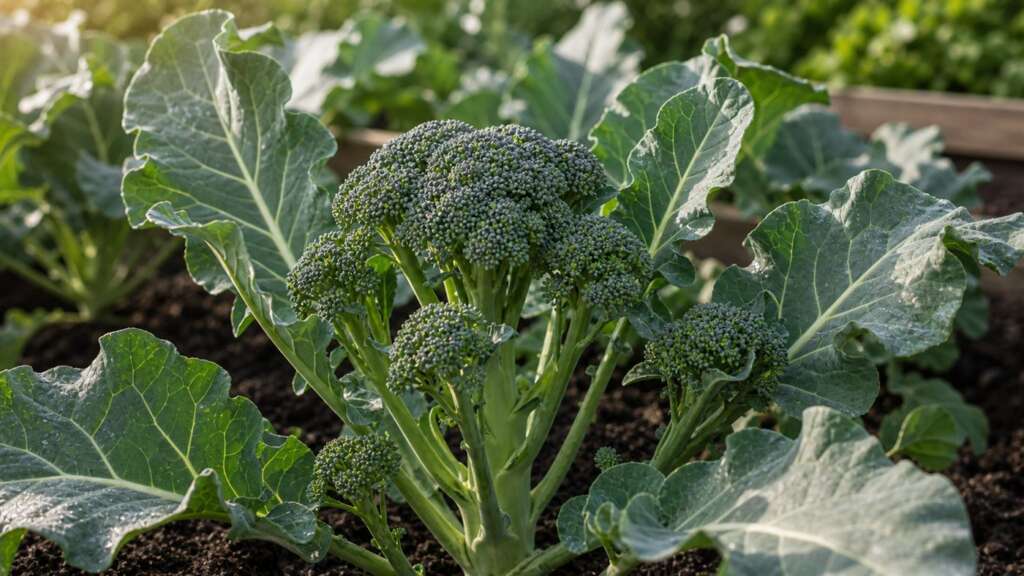
Di Cicco is an Italian heirloom sprouting broccoli grown for a modest central head followed by a long, generous run of tender side shoots. It is a cool-season vegetable that does best when seedlings are started indoors for a clean transplant, or direct sown into cool, settled soil. The plant rewards steady growth: even moisture, fertile soil, full sun in mild weather, and timely harvest before flower buds open.
Quick How-to
Start Di Cicco seed indoors about 4 to 6 weeks before transplanting out, or direct sow shallowly once soil is workable in spring or in late summer for a fall crop. Sow about 1/4 to 1/2 inch deep, keep the mix evenly moist, and aim for soil around 65 to 75 F for steady germination. Expect sprouts in about 5 to 10 days. Transplant or thin to roughly 18 inches apart, harvest the central head while buds are tight and tightly clustered, then keep cutting the side shoots that follow for several more weeks.
Quick Guide
| Fact | Recommendation |
|---|---|
| Best method | Indoor start for clean transplants; direct sowing also works in cool seasons |
| Sowing depth | About 1/4 to 1/2 inch |
| Germination temperature | About 65 to 75 F is ideal; broader range possible |
| Days to germination | About 5 to 10 days under steady warmth and moisture |
| Light for germination | Cover lightly; strong light is essential right after sprouting |
| Spacing | Thin or transplant to about 18 inches apart, with rows around 24 to 30 inches |
| Sun | Full sun in cool weather; light afternoon shade can help in warmer spells |
| Water | Even, steady moisture; avoid drought-then-flood cycles |
| Days to harvest | Often about 48 to 60 days from transplant for the central head, followed by side shoots |
| Plant size | Often about 24 inches tall, with an open branching habit that produces repeated side shoots |
Before You Sow
Di Cicco is a brassica, and brassicas reward steady growth. The plants struggle when they are stressed early – drought, heat, root disturbance, or crowding all show up later as small heads, premature bolting, or tough flavor. The goal from sowing onward is to keep the plant moving without interruption.
Choose a bed in full sun with fertile, well-drained soil. Working in finished compost before planting is usually a good idea; broccoli is a moderate to heavy feeder and benefits from organic matter that holds moisture without staying soggy. Avoid a bed where other brassicas – cabbage, kale, cauliflower, mustards, turnips – have grown in the last two or three years, since rotating helps reduce shared pests and soilborne issues.
If flea beetles, cabbage moths, or slugs have been a problem in past seasons, plan to have lightweight row cover or insect netting on hand. The most successful broccoli stands often begin under cover from the day they are transplanted or sown, then come out from under it only when plants are large and conditions are calmer.
Indoor Starting
Indoor starting is the most reliable way to get a strong, even Di Cicco stand. Sow about 4 to 6 weeks before your planned transplant date. For a spring crop, that usually means starting indoors in late winter or early spring so transplants can go out a couple of weeks before the last frost, while soil is still cool. For a fall crop, count back from the date when daytime temperatures reliably ease into the 70s.
Use fresh seed-starting mix and clean cells. Pre-moisten the mix so seed placement stays even, then sow one to two seeds per cell at about 1/4 to 1/2 inch deep. Cover lightly, firm gently for soil contact, and water with a soft spray. A humidity dome can help maintain even surface moisture, but remove it once seedlings are up so airflow improves.
Brassicas germinate fastest at warm soil temperatures but grow sturdiest under cooler, brighter conditions. A heat mat under the tray is useful for the first few days; once sprouts appear, move seedlings off the mat and under strong overhead light. Weak light is the most common reason indoor brassica seedlings stretch and lean. Aim for bright light close to the plants, with long days, and cooler air than a typical heated room – the goal is short, thick stems and dark, compact leaves.
Thin to one plant per cell once true leaves appear, snipping rather than pulling to avoid disturbing the keeper. Pot up if roots fill the cell before transplant weather settles. Begin hardening off about 7 to 10 days before setting out: short, sheltered visits outside, gradually building toward full sun and breeze.
Direct Sowing
Direct sowing works well for Di Cicco when the weather is on your side – cool, moist soil in spring or settling temperatures in late summer for a fall crop. Smooth the bed, water it lightly before sowing so the surface is evenly damp, and sow seed about 1/4 to 1/2 inch deep. Space seed thinly along the row; you will thin again once seedlings are up.
Keep the seedbed evenly moist until emergence. The surface can dry surprisingly fast in spring wind or late-summer sun, so check daily. If the soil crusts, gently break the crust with a rake or your fingers so tiny seedlings can lift through. Thin in two passes: first to a few inches apart when seedlings have a couple of true leaves, then to about 18 inches between final plants once you can tell which ones are strongest.
For a steady kitchen supply, succession sow small blocks every two to three weeks during the cool window rather than putting in one big planting all at once.
Transplanting and Spacing
Transplant Di Cicco after hardening off, into a moist, well-prepared bed. Set plants at about the depth they grew in their cells, water in deeply, and firm the soil gently around the root ball. Aim for roughly 18 inches between plants, with rows about 24 to 30 inches apart. Closer spacing tends to produce smaller central heads and pushes plants toward earlier side-shoot production, while wider spacing yields a larger main head and more spread per plant.
If insect pressure is likely, lay row cover or netting at the time of transplant, before pests find the bed. Mulch lightly after the soil has warmed slightly to keep moisture steady and reduce splashing during heavy rain.
Soil, Sun, and Water
Di Cicco wants full sun during cool weather. As the season warms, light afternoon shade can help slow bolting in marginal climates without robbing the plant of the light it needs. Soil should be fertile and well drained, with a steady moisture level – even, never soggy, and never bone dry between waterings.
Water at the soil level when you can. Brassicas dislike going from drought to deep watering and back; that pattern stresses the plant, can encourage early bolting, and may toughen the head. A light side-dressing of compost or a balanced organic feed a few weeks after transplant supports steady growth, but avoid pushing heavy nitrogen, which can produce loose, leafy plants with weak heads.
Top Mistakes
- Planting into heat: Di Cicco is a cool-season crop. Spring sowings that catch a hot stretch and late-spring transplants that bake under high sun often bolt before the central head sizes up. Time the crop into the cool window on both sides of summer.
- Letting moisture swing: Brassicas form heads best under even moisture. Repeated cycles of dry soil followed by deep watering can stunt the head, encourage bitterness, or trigger bolting.
- Crowding seedlings: Plants that look fine at the four-leaf stage will outcompete each other quickly. Thin or transplant to final spacing early rather than waiting until leaves overlap.
- Skipping pest cover early: Flea beetles and cabbage caterpillars often find young brassicas before gardeners notice. Row cover from transplant day is far easier than rescuing chewed plants later.
- Waiting too long to harvest: The central head of Di Cicco is naturally smaller than a hybrid grocery-store head. Waiting for it to grow larger usually means waiting until buds open, which sacrifices both quality and the steady side-shoot harvest that follows.
Troubleshooting by Symptom
| Symptom | Likely causes | What to do next |
|---|---|---|
| No sprouts after 10 to 14 days | Seed buried too deeply, dry pockets in the mix, soil too cold or too hot, or crusted surface | Resow shallowly, keep the surface evenly moist, and aim for soil around 65 to 75 F |
| Seedlings are tall, pale, and leaning | Weak light, too much warmth indoors, or crowded cells | Move lights closer with long days, get seedlings off the heat mat once sprouted, and thin to one per cell |
| Seedlings collapse at the soil line | Saturated mix, poor airflow, or damping-off conditions | Reduce watering frequency, increase airflow, and use fresh seed-starting mix for any restarts |
| Holes in young leaves | Flea beetles, slugs, or cabbage caterpillars | Cover with row cover or insect netting, hand-pick caterpillars, and check undersides of leaves regularly |
| Plants bolt before forming a head | Heat, drought stress, transplant shock, or sowing too late into warm weather | Time future sowings into the cool window, keep moisture even, and transplant before plants become rootbound |
| Central head is very small or loose | Heat stress, irregular moisture, low fertility, or crowding | Check spacing, water consistently, side-dress with compost, and harvest the head before buds open |
| Yellowing lower leaves | Nitrogen deficiency, waterlogging, or root stress | Improve drainage if needed and side-dress with a balanced organic feed; avoid sudden heavy feeding |
| Yellow flowers appearing on the head | Head was left too long before harvest | Cut immediately, then keep watering and feeding so side shoots can develop |
Harvest and Side Shoots
Di Cicco is a sprouting type, which is its defining trait. The central head is typically modest – often only a few inches across – and it is meant to be cut early, while the buds are still tight, dark green, and tightly clustered. If you see the buds starting to loosen, swell, or show any hint of yellow, harvest right away. Cut the head with a clean, slanted cut on the stem several inches below the head so water sheds off the cut and side shoots have room to emerge.
Once the central head is harvested, the plant shifts energy into producing side shoots from leaf axils along the main stem. These smaller florets keep coming for several weeks if plants are watered, fed lightly, and picked regularly. Cut shoots while buds are still tight; the more often you cut, the more the plant produces. The side-shoot phase is where Di Cicco earns its reputation – total yield from a well-tended plant often exceeds the single head of a typical hybrid broccoli.
Hot weather, drought, or neglect will eventually push the plant into full flowering. When most shoots are opening into yellow blooms faster than you can cut them, the productive run is over. Pull the plant or leave it for pollinators, depending on your beds and bee traffic.
Container and Small-Space Notes
Di Cicco can grow in a large container if you commit to consistent watering and good drainage. Choose a pot at least 12 inches deep and wide per plant, fill with a quality potting mix amended with compost, and plan to water more often than you would in the ground. Containers heat up faster than garden soil, so place them where they can catch full sun in cool weather but receive light afternoon shade as temperatures climb. One healthy plant per container usually outperforms two crowded ones.
Seed Saving
Di Cicco is an open-pollinated heirloom, so seed saving from healthy plants can produce seedlings that grow true to type. However, broccoli is biennial and crosses readily with other Brassica oleracea crops – cabbage, kale, cauliflower, kohlrabi, Brussels sprouts, and collards – so meaningful seed saving requires overwintering the plant and isolating it from related crops in flower. For most home gardens, intentional broccoli seed saving is an advanced project. If you want to try, plan for isolation distance, support the tall flower stalks, and let pods fully dry on the plant before collecting.
Storing Leftover Seed
Keep unused Di Cicco Broccoli seed in its labeled packet inside a sealed container in a cool, dry, dark indoor location. Avoid garages, sheds, greenhouses, and sunny windowsills, where temperature and humidity swing sharply. Label home-saved seed with the variety and harvest year before storing it.
FAQ
Is Di Cicco better as a spring or fall crop?
Both work, but many gardeners find fall sowings produce the cleanest heads and longest side-shoot run because temperatures are dropping into the plant’s preferred range as it sizes up. Spring sowings can be excellent in cooler climates and where transplants go out early enough to mature before summer heat.
Why is the central head so much smaller than a grocery-store broccoli?
Di Cicco is a sprouting type. It is bred for a modest central head followed by a long supply of side shoots, not for a single dense crown. The total harvest from one plant is usually higher than the central head alone suggests.
Can I start Di Cicco directly in the garden?
Yes, especially in cool weather. Direct sowing works well when soil is moist and the season is on your side. Indoor starting is more reliable in short-season areas or when spring weather is unpredictable.
Do I need to support the plants?
Usually not. Di Cicco stays compact enough to stand on its own, although a thick mulch and gentle hilling around the base can help in windy spots.
How long does the side-shoot harvest last?
Often several weeks in cool, steady conditions. The run ends when heat or drought pushes the plant into full flowering faster than you can keep cutting.