
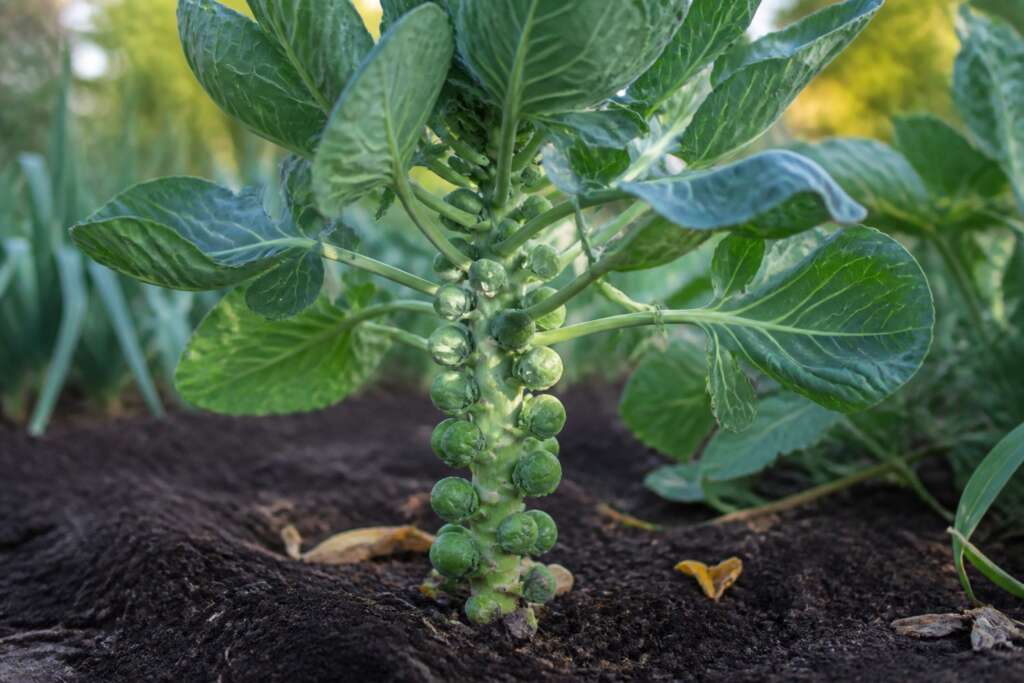
Catskill is a compact heirloom Brussels sprout introduced around 1941, valued for its sturdy, dwarf plant habit and dense clusters of firm, dark-green sprouts. Like all Brussels sprouts, Catskill is a long-season cool-weather vegetable that rewards patience: the season runs roughly 90 to 110 days from transplant, and the sprouts reach their best sweetness after the first hard frosts of autumn.
Quick How-to
Start Catskill Brussels sprout seeds indoors about 4 to 6 weeks before your planned transplant date, which should be timed so plants mature in the cooling days of fall. Sow seeds about 1/4 to 1/2 inch deep in moist seed-starting mix, keep them at room temperature, and transplant outdoors in mid-summer once seedlings are 4 to 6 inches tall and hardened off. Space plants 18 inches apart in fertile, moisture-retentive soil, and expect to harvest firm sprouts starting from the base of the stalk beginning in late fall.
Quick Guide
| Fact | Recommendation |
|---|---|
| Best method | Start indoors, then transplant |
| Sowing depth | 1/4 to 1/2 inch |
| Germination temperature | 60 to 85 F; no bottom heat needed |
| Days to germination | About 5 to 10 days |
| Light for germination | Cover seed; strong light needed after sprouting |
| Spacing | 18 inches apart in rows |
| Sun | Full sun |
| Water | Consistent moisture, about 1 inch per week |
| Days to harvest | 90 to 110 days from transplant |
| Plant size | Compact dwarf habit, typically 24 to 30 inches tall; stake in exposed sites |
Before You Sow
The key to Brussels sprouts is backward planning. In most of the northern US, that means starting seeds indoors in late May or June so transplants go in the ground in July. The goal is for sprouts to mature and size up as temperatures drop in September through November, not during summer heat.
Use fresh seed-starting mix in individual cells or small pots. Pre-moisten the mix before sowing. A heating mat is not necessary and can actually encourage overly soft seedlings; standard indoor temperatures of 65 to 75 F are fine. Label the tray because Brussels sprout seedlings look similar to other brassica starts.
Indoor Starting
Sow Catskill Brussels sprout seeds 1/4 to 1/2 inch deep, one or two seeds per cell. Cover lightly and keep the mix evenly moist. Germination typically occurs within a week under indoor conditions.
As soon as seedlings emerge, provide strong overhead light. Weak or insufficient light produces stretched, thin-stemmed transplants that struggle after planting. Keep plants cool and bright, and thin to the strongest seedling per cell when plants have their first true leaf. Pot up into larger containers if roots become crowded before transplant time.
Hardening Off and Transplanting
Harden off seedlings over 7 to 10 days before setting them in the garden. Begin with brief periods in a sheltered, shaded outdoor spot, then gradually increase sun exposure and time outdoors. Transplant on a cloudy day or in the evening if possible to reduce wilting.
Plant seedlings 18 inches apart. If you are planting in rows, give rows about 24 to 30 inches of space so you can move between plants for harvesting later in the season. Set the transplant at the same depth it grew in the cell, firm the soil around the roots, and water in well.
Soil, Sun, and Water
Catskill Brussels sprout performs best in full sun, with at least 6 to 8 hours of direct light. Soil should be fertile, well-drained but moisture-retentive, with a pH of 6.0 to 7.0. Work in a couple of inches of finished compost before planting. Avoid planting in the same ground where other brassicas grew within the past few seasons to reduce disease and pest pressure.
Water consistently, aiming for about 1 inch per week from rain or irrigation. Uneven moisture causes loose, poorly formed sprouts. Mulching around the base of established plants helps conserve moisture and keeps soil temperatures from swinging dramatically.
Catskill’s compact stalk is more wind-tolerant than many tall open-pollinated types, but in exposed gardens or in areas with strong fall storms, a simple stake or bamboo cane tied to the main stem will keep plants from leaning or tipping.
Top Mistakes
- Starting too late in the season: Brussels sprouts need their full season. Starting seeds in August instead of June in cold climates means sprouts have no chance to size up before hard freezes end the season. Count backward from your first fall frost date and start seeds on time.
- Transplanting into hot summer soil without hardening off: Transplanting direct from an indoor tray into a hot garden bed without a gradual transition leads to wilting, leaf scorch, and weeks of stalled growth. Harden off fully and transplant in the cool of evening.
- Uneven watering: Inconsistent soil moisture is one of the main causes of small, loose, or poorly filled sprouts. If the soil dries out repeatedly between waterings, sprouts develop unevenly. Mulch helps steady moisture between rains.
- Neglecting to remove lower leaves: As sprouts form on the lower stalk, the large fan leaves below them can be removed gradually. This improves airflow, reduces hiding spots for caterpillars, and directs the plant’s energy toward sprout development rather than maintaining aging foliage.
- Not staking in windy locations: Even Catskill’s dwarf stalk can rock in fall wind and rain, loosening roots and disrupting plant growth. A simple stake set at planting time prevents the problem entirely.
Troubleshooting by Symptom
| Symptom | Likely causes | What to do next |
|---|---|---|
| No sprouts after 14 days indoors | Mix temperature too cool, seed buried too deep, or very dry pockets in the mix | Check depth, keep mix evenly moist, verify indoor temp is 65 to 75 F |
| Transplants wilt badly after planting | Insufficient hardening off, root disturbance, or dry root ball at planting | Water deeply, provide temporary shade for 2 to 3 days, and avoid disturbing roots further |
| Plants grow tall with few sprouts | Hot late-season temperatures, too much nitrogen, or starting too late | Plan for next year with earlier timing; reduce high-nitrogen feeding once sprouts begin forming |
| Sprouts are loose and leafy instead of firm | Warm temperatures at sprout development time, uneven moisture, or insufficient fertilization | Keep watering consistent; note that tighter sprouts generally form in cooler fall weather |
| Small holes in leaves | Flea beetle feeding, common on young transplants | Use row cover immediately after transplanting; remove once plants are established and larger |
| Caterpillar damage or chewed leaves | Imported cabbage worm or cabbage looper | Check undersides of leaves; hand-pick eggs and larvae; use row covers or Bt if pressure is heavy |
Harvest
Begin harvesting from the bottom of the stalk when sprouts are firm, round, and about 1 to 1.5 inches in diameter. To remove a sprout, snap it off with a downward twist or cut it cleanly. Harvest the lowest sprouts first and work upward as upper sprouts continue to enlarge.
One of the signature traits of Catskill and all Brussels sprouts is flavor improvement after frost. The cold triggers the plant to convert some starches to sugars, producing the sweeter, more complex flavor that makes late-season Brussels sprouts worth the wait. Leave plants in the garden through light frosts; they can tolerate temperatures down to around 20 F. Once temperatures drop into the mid-twenties consistently, pull plants and store stalks in a cool space.
Seed Saving
Brussels sprouts are pollinated by insects and will cross with other varieties of Brassica oleracea, including cabbage, kale, and cauliflower. Isolate plants by at least 300 to 500 feet from other Brassica oleracea varieties, or by timing, if you want to save seed that reliably matches the parent plant. The plant is biennial in most climates and must overwinter before flowering and setting seed the second year. Saving true-to-type seed from Brussels sprouts in a typical home garden setting is difficult due to cross-pollination risk.
Storing Leftover Seed
Keep unused Catskill Brussels Sprout seed in its labeled packet inside a sealed container in a cool, dry, dark indoor location. Avoid garages, sheds, greenhouses, and sunny windowsills, where temperature and humidity swing sharply. Label home-saved seed with the variety and harvest year before storing it.
FAQ
When should I start Catskill Brussels sprout seeds indoors?
In most of the northern US, start seeds indoors in late May or June. The goal is to get transplants into the ground in July so the plants can develop through summer and produce sprouts during the cooling temperatures of fall.
Do Catskill Brussels sprouts need staking?
Catskill is a compact variety and generally stands more securely than taller open-pollinated types, but in gardens exposed to fall winds and rain, a stake is worth the few minutes it takes to install. Tie the stem loosely to a bamboo cane or similar support when you transplant.
Why do Brussels sprouts taste better after frost?
Cold temperatures cause the plant to convert stored starches into sugars, a process that measurably sweetens the sprouts. Gardeners who harvest before frost often miss this flavor development entirely. Leaving plants through several light frosts produces noticeably better-tasting sprouts.
Can I direct sow Brussels sprout seeds outdoors?
Direct sowing is possible in long-season climates, but it adds several weeks to the time before harvest and makes it harder to control germination conditions. Indoor starting and transplanting gives the crop a head start and is the recommended approach for most home gardens.