
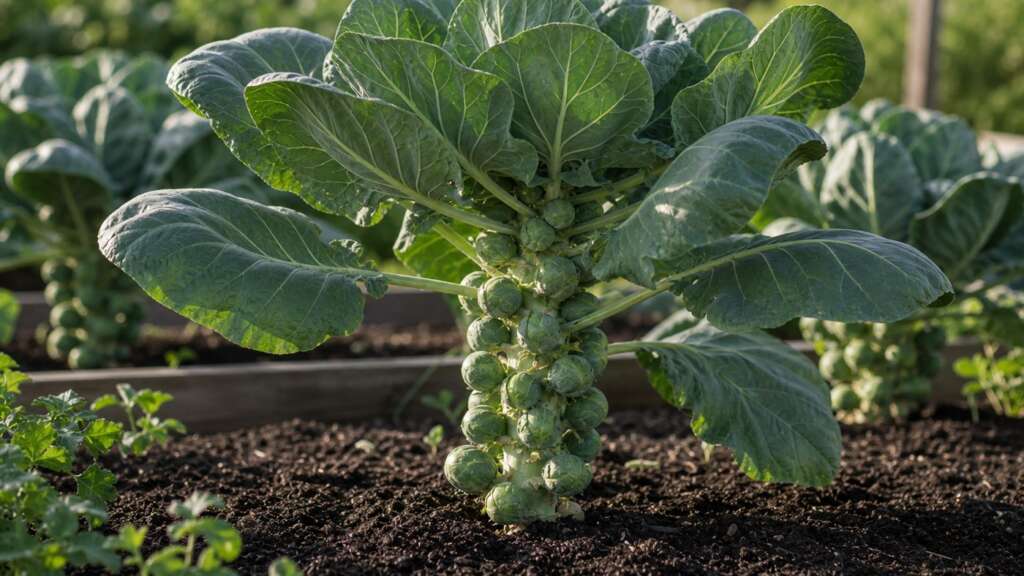
Brussels sprouts are a long-season cool-weather brassica grown for the tight, walnut-sized sprouts that form along a tall central stalk. They reward patience: most strains need roughly three months of steady growth before the first sprouts firm up, and flavor improves noticeably after a light frost. Heirloom varieties like Catskill (a shorter, semi-dwarf type) and Long Island Improved (the classic taller plant) are both grown the same way and shine when timed so the sprouts mature into cool fall weather.
Quick How-to
Start Brussels sprout seeds indoors about 4 to 6 weeks before transplanting. Sow about 1/4 inch deep in pre-moistened seed-starting mix, keep the mix around 70 to 75 F until germination, and expect sprouts in roughly 5 to 10 days. Move seedlings under strong light immediately, harden them off, and transplant into fertile, well-drained soil 18 to 24 inches apart. In most climates, the best harvest comes from a summer-into-fall planting that lets sprouts mature in cool weather; spring sowings work in cool-summer regions but often struggle with mid-summer heat.
Quick Guide
| Fact | Recommendation |
|---|---|
| Best method | Indoor start and transplant; direct sowing works in cool-summer climates |
| Sowing depth | About 1/4 inch, covered lightly with fine mix |
| Germination temperature | About 70 to 75 F is ideal; will germinate from roughly 50 to 85 F |
| Days to germination | About 5 to 10 days under warm, even moisture |
| Light for germination | Cover seed lightly; provide strong overhead light as soon as sprouts emerge |
| Spacing | 18 to 24 inches between plants; 24 to 36 inches between rows |
| Sun | Full sun, ideally 6 or more hours |
| Water | Even, consistent moisture; 1 to 1.5 inches per week including rain |
| Harvest | About 85 to 110 days from transplant, depending on strain and weather |
| Plant size | Typically 24 to 36 inches tall, depending on variety and growing season |
Before You Sow
Brussels sprouts ask for one thing more than anything else: a long, uninterrupted run of cool growing weather while the sprouts form. That single fact drives most planting decisions.
In most of the country, that means planning a fall harvest. Count backward from your first expected fall frost by about 90 to 110 days for transplant date, and another 4 to 6 weeks for indoor sowing. A late spring or early summer indoor sowing usually puts transplants in the ground in mid-summer, with sprouts firming up as nights begin to cool. In regions with mild summers (coastal Pacific Northwest, parts of New England, higher elevations), a very early spring sowing for a summer harvest can also work.
Prepare the bed before transplants are ready. Brussels sprouts are heavy feeders and prefer fertile, well-drained soil with a pH between roughly 6.0 and 7.0. Work in finished compost a few weeks ahead of planting. If your area has clubroot history, aim for the higher end of that pH range and avoid replanting brassicas in the same spot for several years.
Indoor Starting
Start Brussels sprout seeds about 4 to 6 weeks before your intended transplant date. Use clean cells or small pots, fresh seed-starting mix, and labels — Catskill and Long Island Improved seedlings look identical at the cotyledon stage.
Pre-moisten the mix until it feels like a wrung-out sponge. Sow one or two seeds per cell at about 1/4 inch deep, cover lightly, and press to ensure soil contact. A heat mat set around 70 to 75 F speeds germination, but reduce or remove bottom heat once sprouts appear. Continued warmth combined with weak light is the fastest way to produce stretched, floppy seedlings.
Move trays under strong overhead light the moment sprouts break the surface. Brassica seedlings need bright light early or they’ll lean and lengthen within a day or two. A sunny window is rarely enough on its own in late winter or early spring; a basic LED shop light kept a few inches above the leaves makes a clear difference. Aim for 14 to 16 hours of light daily.
When seedlings have one or two true leaves, thin to one plant per cell by snipping the weaker seedling at the soil line. Keep temperatures on the cool side (60 to 70 F daytime, cooler at night) to encourage stocky growth.
Hardening Off and Transplanting
Harden off seedlings over 7 to 10 days before planting out. Start with an hour or two in dappled shade with shelter from wind, then add time, sun, and exposure each day. Brussels sprout seedlings tolerate cool nights well — light frosts in the 28 to 32 F range will not damage hardened transplants — but sudden transitions from a warm indoor shelf to full sun and wind can scorch leaves.
Transplant on a cloudy afternoon or evening if possible. Space plants 18 to 24 inches apart in rows 24 to 36 inches apart; closer spacing crowds the lower leaves and reduces airflow as plants size up. Set transplants slightly deeper than they grew in the cell, water in well, and consider a light starter feeding to push steady early growth.
Brussels sprouts grow tall and top-heavy by mid-season. In windy sites, plan to mound soil around the base or stake larger plants once they pass roughly knee height.
Direct Sowing
Direct sowing works where summers stay mild and the season is long enough. Sow about 1/4 inch deep in pre-moistened soil, water gently, and keep the surface evenly moist until emergence in 5 to 10 days. Thin in stages — first to about 4 inches when seedlings have two true leaves, then to the final 18 to 24 inch spacing once plants are several inches tall.
In hot-summer climates, an outdoor seedbed under shade cloth in mid-summer can produce transplant-sized seedlings for a fall planting without the indoor light setup.
Soil, Sun, and Water
Brussels sprouts want full sun and consistent moisture. Plan on about 1 to 1.5 inches of water per week, including rain, with deeper soakings rather than light daily sprinkles. Mulching after transplants establish helps hold moisture, moderates soil temperature, and reduces splash that can spread disease.
Side-dress with compost or a balanced organic fertilizer about 4 weeks after transplanting, and again as the lower sprouts begin to form. Avoid heavy nitrogen late in the season; pushing leafy growth once sprouts are sizing up can produce loose, leafy sprouts instead of firm ones.
A soil pH around 6.5 helps the plant take up calcium efficiently and discourages clubroot. If a soil test shows a low pH and clubroot is a known regional issue, lime ahead of planting.
Top Mistakes
- Planting for a summer harvest in a hot climate. Sprouts that try to form in heat stay loose, open, and often bitter. Time the crop so sprouts mature in fall cool weather.
- Skipping the long season. Brussels sprouts are not a quick crop. Pulling plants in mid-fall because “nothing happened yet” is common; many strains need a full 90+ days from transplant and finish strongest after the first frosts.
- Letting growth stall. Drought, transplant shock, or sudden heat causes plants to pause. Each pause delays sprout development and can produce uneven, loose heads. Water deeply and consistently.
- Crowding. Plants set closer than 18 inches shade their own lower leaves, reduce airflow, and produce smaller sprouts. Keep plants 18 to 24 inches apart and rows 24 to 36 inches apart.
- Ignoring cabbage worms. Imported cabbageworms and cabbage loopers chew leaves and burrow into developing sprouts. Inspect weekly, hand-pick eggs, or use floating row cover from transplant onward.
Troubleshooting by Symptom
| Symptom | Likely causes | What to do next |
|---|---|---|
| No sprouts emerge after 10 to 14 days | Mix too cold, too dry, or seed buried too deep | Hold the mix around 70 to 75 F, keep it evenly moist, and resow at about 1/4 inch if needed |
| Seedlings stretch and flop | Weak light, warm indoor temperatures after germination, or crowded cells | Move lights closer, lower temperatures into the 60s, and thin to one plant per cell |
| Holes chewed in leaves, green caterpillars on undersides | Imported cabbageworm, cabbage looper, or diamondback moth larvae | Hand-pick, use floating row cover, or apply a Bt-based product labeled for caterpillars on brassicas |
| Tiny shothole holes in young leaves | Flea beetles | Cover transplants with row cover for the first few weeks; established plants usually outgrow the damage |
| Leaves curled, sticky, gray-green clusters on undersides | Cabbage aphids | Spray off with water, encourage beneficial insects, and remove badly infested leaves |
| Plant grows tall but no sprouts form along the stem | Season too short, insufficient cool weather, or excess late nitrogen | Be patient through fall; reduce nitrogen and let cool weather trigger sprout firming |
| Sprouts are loose, leafy, and open instead of tight | Heat stress during sprout formation, over-fertilizing, or crowding | Time the crop for cooler weather, ease off nitrogen, and respect spacing |
| Lower leaves yellow and drop | Normal as plants mature, or nitrogen shortage if widespread | Remove yellowed lower leaves to improve airflow; side-dress if upper growth also looks pale |
| Wilting plant despite moist soil, stunted growth, swollen roots | Clubroot disease | Pull and destroy plants, raise soil pH toward 7.0, and rotate brassicas out of that bed for several years |
| Sprouts split open or burst | Heavy rain after dry spell, or over-mature sprouts left on the stalk | Harvest more frequently and keep moisture even |
Encouraging Uniform Sprouts
Brussels sprouts mature from the bottom of the stalk upward over several weeks. If you want most of the sprouts ready at once — useful for a single big harvest or for freezing — try topping the plant about 3 to 4 weeks before your target harvest. Cut off the growing tip (the rosette of small leaves at the very top) once the lowest sprouts are about 1/2 inch across. The plant redirects energy from new top growth into sizing up the existing sprouts.
For a longer rolling harvest, skip topping and pick sprouts from the bottom up as each one reaches roughly 1 to 1.5 inches in diameter and feels firm.
Harvest and Storage
Pick sprouts by snapping or twisting them off the main stalk. Remove the leaf directly above each sprout once the sprout is harvested — this opens up airflow and signals the plant to keep developing the ones above.
Flavor improves substantially after a light frost. The plant converts some starches to sugars in response to cold, which mellows the cabbage flavor and adds sweetness. Many gardeners deliberately leave plants standing into early winter and harvest as needed. Hardened plants can shrug off temperatures into the low 20s F; severe deep freezes will eventually end the harvest.
For longer storage, cut the entire stalk at the base and keep it in a cool, humid place; sprouts stay firmer on the stalk than picked loose. Loose-picked sprouts keep about a week in the refrigerator and freeze well after a brief blanching.
Seed Saving
Brussels sprouts are biennials that flower in their second year after a cold period. Saving seed requires overwintering selected plants, providing isolation from other Brassica oleracea crops (cabbage, broccoli, kale, kohlrabi, cauliflower, and collards all cross readily), and growing enough plants to maintain genetic diversity. For most home gardeners, growing Brussels sprouts as an annual eating crop is simpler than managing a multi-season isolated seed project.
Storing Leftover Seed
Keep unused Brussels Sprouts seed in its labeled packet inside a sealed container in a cool, dry, dark indoor location. Avoid garages, sheds, greenhouses, and sunny windowsills, where temperature and humidity swing sharply. Label home-saved seed with the variety and harvest year before storing it.
FAQ
When should I plant Brussels sprouts for the best harvest?
In most climates, time the crop for a fall harvest. Count back about 90 to 110 days from your first expected fall frost for transplant date, and 4 to 6 weeks earlier for indoor sowing. The sprouts should be sizing up as nights turn cool.
Do I really need to wait for frost before harvesting?
Frost isn’t required, but it noticeably sweetens the sprouts. Sprouts harvested in warm weather can taste sharply cabbage-like; the same sprouts after a light frost taste milder and sweeter. Many growers wait deliberately.
Can I grow Brussels sprouts in a container?
Yes, but choose a large container — at least 5 gallons per plant, ideally larger — and stay on top of watering and feeding. Container plants dry out faster and need more attentive moisture management than in-ground plants.
Why are my sprouts loose and leafy instead of tight?
Almost always heat or excess nitrogen during sprout formation. Tight sprouts form in cool weather on plants that aren’t being pushed with late-season fertilizer. Time the crop earlier (or later) and ease off feeding once sprouts begin forming.
Should I remove the lower leaves as the plant grows?
Removing leaves directly below sprouts that have already started to size up can help airflow and direct energy upward. Don’t strip leaves indiscriminately — the plant still needs foliage to power growth. Remove yellowing, damaged, or already-harvested-above leaves as you go.