
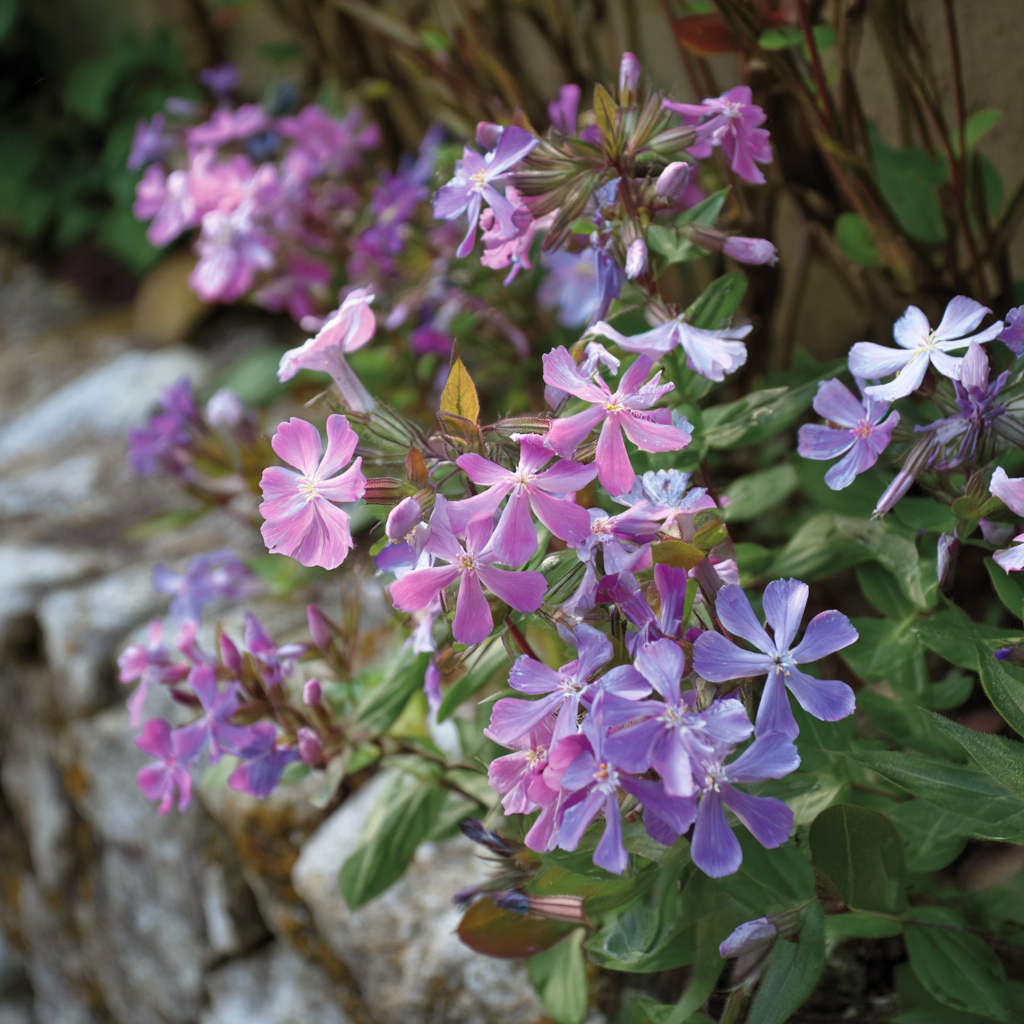
Saponaria Rock Soapwort is a low, mat-forming perennial grown for cascades of small pink flowers over rock walls, gravel beds, border edges, and containers. Unlike tall common soapwort, Saponaria ocymoides stays close to the ground, usually about 6 to 9 inches high while spreading 12 to 24 inches. Its most important requirements are bright sun and fast drainage. Once established, it tolerates dry conditions far better than wet roots.
Quick How-to
Surface sow Rock Soapwort seed or cover it with no more than a very fine dusting of mix, because light helps germination. Start it indoors in late winter or sow in a protected outdoor container in fall so winter weather can provide natural chilling. Keep the seed at about 59 to 68 F and evenly moist, not waterlogged. Sprouts often appear in 14 to 30 days. If a warm sowing remains completely dormant after about four weeks, give the covered container 2 to 4 weeks at 24 to 39 F, then return it to mild warmth and light. Transplant after hardening off into full sun and sharply drained soil, spacing plants about 12 to 16 inches apart.
Quick Guide
| Fact | Recommendation |
|---|---|
| Best method | Start in cells or pots; fall sowing in a protected container is also effective |
| Sowing depth | Surface sow or barely cover with fine vermiculite; seed needs light |
| Germination temperature | Begin around 59 to 68 F |
| Days to germination | Commonly 14 to 30 days; dormant seed may need a cold interval |
| Dormancy backup | After 3 to 4 warm weeks without sprouts, chill 2 to 4 weeks at 24 to 39 F, then return to warmth |
| Light after sprouting | Bright light immediately after emergence |
| Spacing | About 12 to 16 inches apart |
| Sun | Full sun, at least 6 hours of direct light |
| Water | Even moisture while germinating; dry to medium moisture once rooted |
| Soil | Moderately fertile, neutral to alkaline, and very well drained |
| Mature size | About 6 to 9 inches tall and 12 to 24 inches wide |
| Bloom season | Usually late spring into summer, depending on climate and plant age |
Before You Sow
Decide first where a mature spreading plant will have room to trail. Rock Soapwort is well suited to a rock garden, the top of a retaining wall, a gravelly border, or the edge of a container. It is not a lawn substitute and does not tolerate repeated foot traffic. Avoid low pockets where snowmelt or irrigation collects, especially in winter.
Use clean cells or small pots filled with a fine, free-draining seed-starting mix. Pre-moisten the mix and let excess water drain before sowing. The seed is small, so a smooth surface and gentle watering make it easier to keep every seed at the correct shallow depth. Label the container with the species and sowing date; perennial germination can be less synchronized than fast annual flowers.
Rock Soapwort is hardy across a broad range of cold-winter climates, but winter hardiness does not mean it enjoys cold, saturated soil. Drainage is the distinction. A raised or sloped planting position is often more useful than adding fertilizer.
Indoor Starting and Germination
Scatter the seed thinly over the prepared surface. Press it into contact with the mix, then add only the lightest layer of fine vermiculite or sifted mix. Do not bury it as you would a pea or bean. Bottom-water or mist gently so the seed stays in place.
Cover the tray loosely with a clear dome to slow moisture loss, and place it in bright indirect light at about 59 to 68 F. Check daily. The surface should stay moist, but water should not stand in the tray and the mix should not look glossy or saturated. Remove the dome as soon as seedlings begin appearing and provide bright overhead light with airflow.
Many lots germinate within 14 to 30 days. A tray that remains empty after three or four weeks is not automatically a failure. Some Rock Soapwort seed responds to a change in temperature. Seal the still-moist container so it cannot dry out, chill it for 2 to 4 weeks at roughly 24 to 39 F, and then return it to mild warmth and light. Never place a dripping-wet tray into cold storage; saturated mix during chilling encourages decay.
When seedlings have true leaves and are large enough to handle, move them individually into small pots. Hold each seedling by a leaf rather than squeezing its stem. Keep young plants bright and slightly on the dry side between waterings while roots fill the pot.
Direct Sowing and Winter Sowing
Direct sowing can work in a prepared, weed-free bed, but the tiny seed is easier to monitor in a pot. In spring, press seed onto the soil and barely cover it after hard freezes have eased. A thin layer of fine grit can help mark the spot without blocking light. Protect the area from hard rain and keep the surface evenly moist until seedlings establish.
For winter sowing, use a vented container with drainage holes. Sow shallowly in late fall or winter and leave the container exposed to normal cold while protected from animals and washout. The natural cool-warm sequence can release dormancy. Begin watching for seedlings when temperatures moderate, then open the container progressively so tender growth does not overheat on sunny days.
Fall sowing directly in the garden is best reserved for a well-drained site where seedlings will not be smothered by leaves or winter mulch. Mark the area clearly and expect emergence to follow local spring conditions rather than a fixed calendar date.
Hardening Off and Transplanting
Harden indoor-grown seedlings over 7 to 10 days. Begin with a few hours in sheltered shade, then gradually add direct sun, breeze, and outdoor time. Small perennial seedlings can scorch if moved straight from indoor lights into an exposed rock garden.
Transplant after the plants have a useful root ball and severe weather has passed. Set the crown level with the surrounding soil rather than burying it. Space plants 12 to 16 inches apart so the mats can meet without beginning as a damp, crowded clump. Water thoroughly after planting, then allow the upper soil to begin drying before watering again.
Rock Soapwort may spend its first season building roots and framework. Flowering can be modest in the establishment year, especially after a late sowing. That is normal for a perennial and is not a reason to feed heavily.
Soil, Sun, and Water
Full sun produces the densest habit and strongest flowering. Too much shade stretches the stems, opens the center of the mat, and keeps the soil wet longer. In regions with very hot, humid summers, good air movement and lean, gritty soil become especially important.
The ideal soil is neutral to alkaline and drains quickly. Average garden soil is sufficient. If the site is heavy clay, place the plant on a slope or in a raised gravel garden instead of simply mixing a little sand into a wet hole. A pocket of amended soil surrounded by clay can still hold water around the crown.
Keep new seedlings evenly moist while roots establish. Mature plants prefer dry to medium moisture and tolerate short dry periods. Water deeply, then wait until the upper soil has dried. Avoid frequent shallow irrigation that keeps the crown continuously damp. Fertilizer is rarely necessary; rich feeding can produce loose growth that flops over neighboring plants.
Top Mistakes
- Burying the seed: Rock Soapwort seed needs light. A deep layer of mix can prevent the emerging seedling from reaching the surface.
- Giving up before using a temperature change: An ungerminated tray can respond after a short cold interval followed by renewed warmth.
- Planting into a wet pocket: This is a rock-garden perennial, not a moisture-loving ground cover. Poor winter drainage can kill an established crown.
- Overwatering after establishment: The moisture needed for germination is not the watering pattern a mature plant prefers. Let the upper soil dry between deep waterings.
- Skipping the post-bloom trim: Untrimmed plants can become open and untidy. Cutting back after the main bloom encourages denser branching and may prompt additional flowers.
- Confusing it with common soapwort: Saponaria ocymoides is a low ornamental mat. It should not be managed as the taller, spreading Saponaria officinalis.
Troubleshooting by Symptom
| Symptom | Likely causes | What to do next |
|---|---|---|
| No sprouts after 30 days | Seed covered too deeply, surface dried, or physiological dormancy remains | Move the tray into light, restore even moisture, and use a 2-to-4-week cold interval before returning it to 59 to 68 F |
| Green film or mold covers the tray | Mix is saturated, dome stayed closed too long, or airflow is poor | Vent immediately, bottom-water less often, and move healthy seedlings into clean, free-draining mix |
| Seedlings stretch and fall sideways | Light is weak or too far away | Provide stronger overhead light and gently firm mix around stems without burying the crowns |
| Transplants brown after planting | They were not hardened off, roots dried during planting, or sun exposure changed too quickly | Shade temporarily, water the root zone once, and resume gradual sun exposure |
| Mature center turns brown while edges grow | The mat has aged, interior airflow is poor, or the crown stayed wet | Shear after bloom, remove dead material, improve drainage, and divide healthy outer sections if necessary |
| Plant grows loosely with few flowers | Too much shade, overly fertile soil, or no post-bloom pruning | Move toward full sun, stop high-nitrogen feeding, and cut back after flowering |
| Leaves and shoots disappear overnight | Slugs or snails are feeding on tender growth | Inspect at dusk, remove hiding places, and protect young plants with an appropriate barrier or trap |
| Plant declines after winter | Waterlogged soil damaged the crown rather than cold alone | Replant healthy divisions on a raised, sharply drained site and keep winter mulch away from the crown |
Bloom Care and Garden Use
Rock Soapwort forms a low sheet of foliage that becomes covered with pink flowers in late spring and summer. It looks most natural spilling over a stone edge, softening the front of a sunny border, or trailing from a broad container. Its modest height makes it a poor choice behind taller perennials, where it can be shaded out.
After the main flush, shear the plant by roughly one-third to one-half. Remove spent flowering stems but leave healthy basal growth. This keeps the mat compact, encourages branching, and can support lighter rebloom. Do not cut into bare old wood without leaving visible green growth.
The plant can self-sow, though it is not usually considered aggressively spreading. Pull unwanted seedlings while small, or remove most spent flowers before capsules mature. If you want a larger patch, allow a few seed heads to ripen or divide an established mat in spring or summer.
Seed Saving
Leave several healthy flower clusters uncut after bloom. Small capsules will develop as the flowers fade. Watch them closely as they turn tan and dry; mature capsules can release their seed if left through wind or rain. Clip nearly dry stems into a paper bag and finish drying them in an airy indoor location.
Rub or shake the dry capsules to release the seed, then separate coarse chaff with a fine screen or by gently blowing across a shallow tray. Let cleaned seed dry completely before sealing it. Label the envelope with Saponaria ocymoides, the collection year, and flower color. If differently colored forms grow together, saved seedlings may show variation.
Storing Leftover Seed
Keep unused Saponaria Rock Soapwort seed in its labeled packet inside a sealed container in a cool, dry, dark indoor location. Avoid garages, sheds, greenhouses, and sunny windowsills, where temperature and humidity swing sharply. Label home-saved seed with the variety and harvest year before storing it.
FAQ
Does Rock Soapwort seed need cold stratification?
Not every fresh lot requires it. Begin with 3 to 4 weeks of mild warmth, light, and steady moisture. If nothing germinates, a 2-to-4-week cold interval followed by renewed warmth is a practical dormancy treatment.
Can I grow Rock Soapwort in a container?
Yes. Choose a wide pot with excellent drainage and a gritty mix. Full sun and restrained watering are more important than a deep, rich container. The stems can trail attractively over the rim.
Is Rock Soapwort the same plant as common soapwort?
No. Rock Soapwort is Saponaria ocymoides, a low mat-forming ornamental. Common soapwort is Saponaria officinalis, a taller species with a different growth habit. Use the botanical name when buying or labeling seed.
Will Rock Soapwort bloom the first year from seed?
An early sowing may produce some first-year flowers, but a young perennial often devotes much of its first season to roots and crown growth. The fuller display usually comes after the plant has overwintered and established.
Can it be planted between stepping stones?
It can soften the spaces beside stones, but it does not tolerate repeated foot traffic. Plant it where stems can spill around the walking surface rather than directly under regular footsteps.