
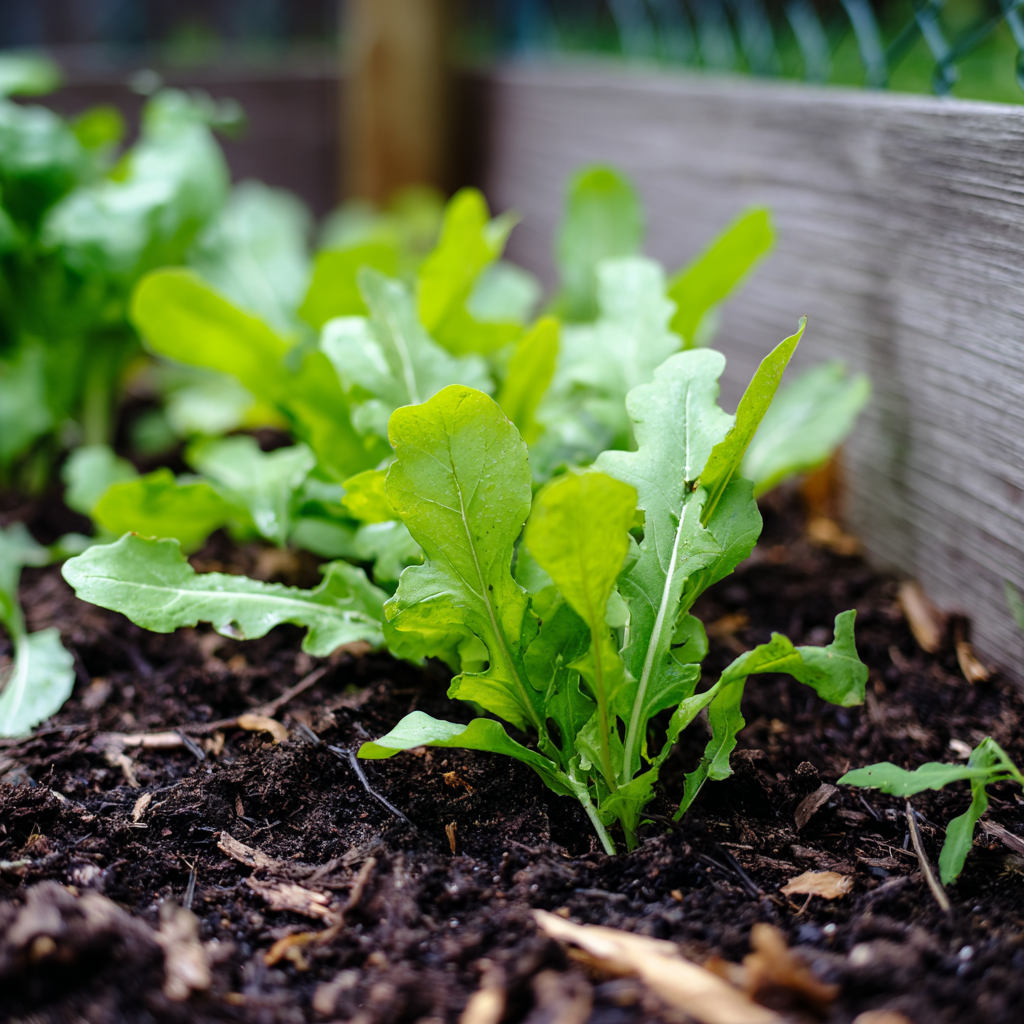
Roquette arugula is the classic garden rocket — the sharp, peppery, deeply lobed salad green that has been eaten around the Mediterranean for centuries. Its flavor is unmistakably bold: a warm, intense, mustard-like heat with a peppery finish that sets it apart from milder salad arugula types. The leaves are characteristically deeply pinnately lobed with several small lateral lobes and a rounded terminal lobe, giving them the jagged, traditional rocket appearance. Roquette grows quickly from seed, thrives in cool spring and fall conditions, and is at its most flavorful when harvested young. It bolts in heat — sending up a flower stalk and shifting its leaf flavor sharper still — so timing and succession sowing are the primary tools for a long season.
Quick How-to
Direct sow Roquette arugula as soon as soil can be worked in spring, or in late summer for a fall harvest. Sow about 1/8 inch deep and keep the seedbed evenly moist. Germination is typically fast — 5 to 7 days in cool to moderate soil. Begin cutting outer leaves when plants are 3 to 5 inches tall, cutting about an inch above the soil line for regrowth. Sow a fresh row every 10 to 14 days to maintain a steady supply through the cool season. Avoid sowing during the hottest weeks of summer, when plants bolt before producing enough to harvest.
Quick Guide
| Fact | Recommendation |
|---|---|
| Best method | Direct sow |
| Sowing depth | About 1/8 inch |
| Germination temperature | Cool to moderate soil; 40 to 65 F optimal; germinates up to low 70s F |
| Days to germination | Typically 5 to 7 days |
| Light for germination | Cover lightly |
| Spacing | 4 to 6 inches for full-size leaves; denser sowing for baby-leaf cut-and-come-again |
| Sun | Full sun in cool weather; afternoon shade helpful when temperatures rise |
| Water | Keep soil evenly moist; arugula dries quickly given its shallow roots |
| Harvest timing | Baby leaf in about 35 to 40 days; full leaf in 40 to 50 days from seeding |
| Plant size | Low rosette, typically 6 to 12 inches tall before bolting |
Before You Sow
Roquette arugula is a cool-season annual in the mustard family. Prepare a well-drained bed by raking the surface smooth and breaking up any large clods. Arugula does not need rich soil — moderate fertility and good drainage are sufficient. Overly fertile or high-nitrogen soil can produce leafy growth that is more susceptible to fungal issues and does not improve flavor.
Plan your spring sowing to begin as early in the season as the soil is workable. In most of the US, that means 4 to 6 weeks before the last expected frost. For fall, count back 50 to 60 days from your first expected frost to determine when to sow the final succession.
Direct Sowing
Roquette arugula is almost always grown by direct seeding — it germinates and establishes quickly enough that transplanting offers no real advantage. Broadcast seed thinly or sow in shallow rows, cover with no more than 1/8 inch of fine soil or vermiculite, and press lightly for good seed-to-soil contact. Water gently with a fine spray immediately after sowing.
The surface layer must stay consistently moist until emergence. Arugula seed sitting in dry soil will stall or emerge very unevenly. Once seedlings are 2 to 3 inches tall, thin to 4 to 6 inches apart if growing for full-size leaves, or leave dense for baby-leaf harvests cut at the 3- to 4-inch stage.
Succession Sowing
Because Roquette arugula bolts relatively quickly in warming weather, succession sowing is the central strategy for a season-long harvest. Sow a small batch every 10 to 14 days through spring until temperatures are consistently above 75 to 80 F during the day. Resume succession sowings in mid to late summer for fall harvests once temperatures begin to moderate. The cool weather of autumn is when roquette is at its best — the flavor is bold but balanced, the leaves are at their most robust, and the plants bolt more slowly as days shorten and cool.
Soil, Sun, and Water
In cool spring and fall weather, Roquette arugula grows in full sun without issue. As temperatures rise, some afternoon shade meaningfully slows bolting and keeps leaves milder in flavor. Full sun throughout a warm day accelerates the bolt cycle and sharpens flavor more quickly than plants grown with some protection from midday heat.
Soil needs only to drain well and have average fertility. Very high nitrogen produces soft, lush growth that may bolt just as quickly while being less flavorful. A light compost amendment at bed preparation is generally all the fertility arugula requires.
Roquette has a shallow root system that dries out faster than deeper-rooted crops. Check soil moisture regularly, particularly during warm or windy stretches, and water when the top half-inch of soil becomes dry. After plants bolt, the leaves that remain are still edible but sharper — the flowers themselves have a pleasant, spicy quality and are edible as a garnish.
Hydroponic Growing
Roquette Arugula adapts readily to NFT, deep-water culture, and flood-and-drain trays. Its deeply lobed leaves and peppery flavor make it useful as either a dense baby-leaf crop or a more widely spaced full rosette. Start in inert plugs and transplant while seedlings are young, with the crown clear of the nutrient film or water line.
Use a complete leafy-green formula around EC 1.2 to 2.0 mS/cm and pH 5.8 to 6.2. Check the reservoir several times a week, keeping it shaded and well aerated. Cooler conditions slow growth slightly but preserve better texture; warm solution and warm air drive Roquette toward an even sharper flavor and early flowering.
Space full plants about 5 to 6 inches apart, or use close plug spacing for a single baby-leaf cut. Harvest before stems lengthen. Roquette can regrow after a high cut, but later flushes become progressively stronger, so staggered new plugs usually give more consistent quality.
Flea beetles are not an indoor hydroponic issue, but damping-off, algae, and root disease can replace them when plugs stay saturated or light reaches the solution. Cover unused openings, keep leaf debris out of the channel, and sanitize between crops. Pale growth calls for a pH and light check; bitter, wiry growth calls for cooler conditions and an earlier harvest.
Top Mistakes
- Sowing too deep: At 1/8 inch, Roquette arugula seed sits very near the surface. Covering more than 1/4 inch deep leads to uneven or failed emergence.
- Not sowing in succession: A single spring sowing produces a brief harvest that ends when the plants bolt. A 10-to-14-day succession schedule turns a short-season crop into a months-long supply.
- Expecting it to taste like Astro arugula: Roquette is genuinely, intensely peppery — especially when leaves are large or weather turns warm. This is a cultivar trait, not a problem. Harvest young for the most balanced flavor.
- Letting the seedbed dry between watering: The very shallow sowing depth means the soil layer where the seed sits can dry out quickly. Surface dryness stalls germination even when soil an inch below is still moist.
- Waiting too long to harvest in spring: Once a flower stalk appears, the basal leaves turn sharper and more bitter quickly. Begin harvesting as soon as leaves are 3 to 4 inches long, and cut regularly to delay the bolt cycle.
Troubleshooting by Symptom
| Symptom | Likely causes | What to do next |
|---|---|---|
| No germination after 7 to 10 days | Seed too deep, surface dried, or soil temperature above 80 F | Verify 1/8 inch depth, keep surface moist, and check soil temperature; very warm soil suppresses germination |
| Leaves are intensely bitter | Heat stress, plant maturity, or post-bolt condition | Harvest earlier in future successions; plant in cooler windows or with afternoon shade; fall plantings resolve the problem |
| Plants bolt with very few harvestable leaves | Warm temperatures accelerating the life cycle | Time sowings for cooler periods; use afternoon shade; sow in fall when bolt pressure is lower |
| Ragged shot holes in leaves | Flea beetle feeding — tiny jumping beetles make small perforations | Row cover at seeding prevents access; established plants tolerate moderate damage; damage is primarily cosmetic |
| Uneven, patchy germination | Cloddy or uneven seedbed, surface crusting after watering, or inconsistent depth | Rake bed smooth before sowing; water gently with fine spray; cover with thin layer of vermiculite to prevent crusting |
| Leaves taste much sharper than expected | Heat or drought stress on the plants | Harvest young; increase soil moisture; try fall sowings for more moderate flavor |
Harvest and Kitchen Use
Roquette arugula is best harvested when leaves are 3 to 6 inches long for baby greens, or up to 8 inches for full-size leaves with more pronounced flavor. Cut about an inch above the soil to encourage regrowth, and the plant will provide 2 to 3 additional cuttings before bolting. The classic use is in salads, particularly with shaved Parmesan, lemon, olive oil, and cracked black pepper. The bold flavor also holds up as a pizza topping added after baking, tossed into warm pasta, or layered into sandwiches with rich cheeses or cured meats. Arugula leaves are at their best fresh; they wilt quickly and are best used within a day or two of harvest for the fullest flavor and texture.
Seed Saving
Roquette arugula will cross with other Eruca vesicaria types — including Astro arugula and Slow Bolt arugula — if they are flowering simultaneously within pollinator range. To save seed that produces plants true to the classic roquette character, grow only one Eruca vesicaria type for seed in a season, or separate by at least 300 feet. Allow pods to dry completely on the plant before harvesting, as they shatter when ripe. Collect on a dry day, finish drying indoors, then thresh and store cool, dry, and sealed.
Storing Leftover Seed
Keep unused Roquette Arugula seed in its labeled packet inside a sealed container in a cool, dry, dark indoor location. Avoid garages, sheds, greenhouses, and sunny windowsills, where temperature and humidity swing sharply. Label home-saved seed with the variety and harvest year before storing it.
FAQ
How is Roquette arugula different from Astro arugula?
Roquette is the classic peppery rocket with deeply lobed, narrow leaves and an intense, sharp, mustard-like heat. Astro is a cultivar selected for milder flavor and broader, less deeply lobed leaves suited to mixed salads where a gentler spice level is preferred. Both are Eruca vesicaria and both bolt in heat, but they are distinctly different in leaf shape, flavor intensity, and typical kitchen use. Neither is the same as Slow Bolt Arugula, which is a separate variety selected specifically for extended bolt resistance.
Can I grow Roquette arugula indoors?
Yes. Arugula can be grown indoors in containers near a sunny south-facing window or under grow lights. Use a shallow tray or pot with drainage, sow shallowly, and provide at least 6 to 8 hours of strong light. Baby-leaf harvests work well in container growing.
Why does my arugula taste so much more peppery as the season progresses?
Heat and plant maturity both intensify the glucosinolate compounds that create arugula’s peppery flavor. Young leaves harvested in cool weather are the mildest. Leaves harvested from plants that are nearing bolt, or grown in warm conditions, are markedly sharper. Harvest young and often to maintain the most balanced flavor.
Should I let some arugula flower?
The flowers are edible — small, white with dark-pink veins, and mildly spicy. If you want seed or a small ornamental effect, letting a plant flower is harmless. But flowering plants stop producing new basal leaves, so once a plant you are counting on for regular harvest begins to bolt, harvest what remains and direct your attention to the next succession.