
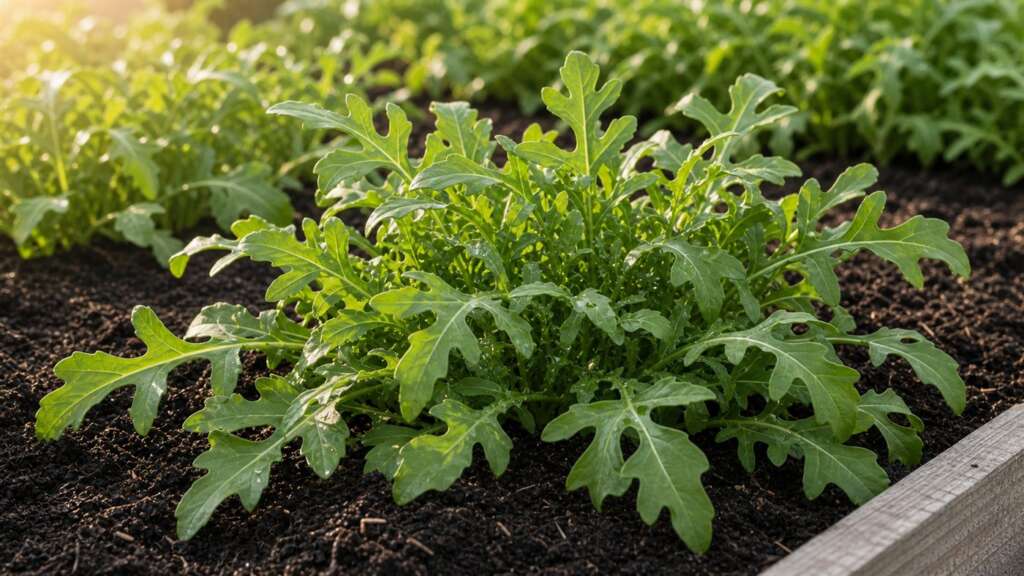
Slow Bolt Arugula is a cool-season leafy green selected to hold its tender, peppery leaves longer before flowering than standard arugula. It is one of the easiest vegetables to direct sow, comes up quickly in cool soil, and rewards small, frequent plantings with weeks of fresh salad greens.
Quick How-to
Direct sow Slow Bolt Arugula as soon as the soil can be worked in early spring, and again from late summer into fall. Sow seed about 1/4 inch deep, keep the surface evenly moist, and expect germination in roughly 5 to 10 days when soil is in the 50 to 65 F range. Thin seedlings early, succession sow every 2 to 3 weeks for a steady supply, and begin cutting outer leaves once plants are 3 to 4 inches tall. The “slow bolt” trait extends the cool-weather harvest window but does not make the plant truly heat-proof; midsummer sowings still benefit from shade and consistent moisture.
Quick Guide
| Fact | Recommendation |
|---|---|
| Best method | Direct sow preferred; brief indoor starts are possible for an early stand |
| Sowing depth | About 1/4 inch, lightly covered |
| Germination temperature | Best around 50 to 65 F; germination becomes less uniform as soil heats |
| Days to germination | About 5 to 10 days in cool, moist soil |
| Light for germination | Cover lightly; not a surface-sown crop |
| Spacing | About 1 inch for baby-leaf cuts; thin to 3 to 6 inches for larger plants |
| Sun | Full sun in cool weather; afternoon shade in heat |
| Water | Even moisture; avoid drought and cycles of wilting |
| Harvest timing | Baby leaves in about 21 to 30 days; larger leaves in about 35 to 45 days |
| Plant size | Low rosette to about 8 to 12 inches before bolting |
Before You Sow
Pick a spot with full sun in spring and fall, or a partly shaded bed if you plan to push into warm weather. Arugula tolerates most garden soils but produces the tenderest leaves in loose, fertile ground with steady moisture. Rake the bed smooth, break up clods, and water it before sowing so the small seed stays where you place it.
If pests like flea beetles have been a problem in past seasons, lay lightweight row cover ready to drape as soon as you sow. Putting it on early is much easier than rescuing chewed seedlings later. Label your row with the variety and date; arugula seedlings look similar to several other young brassica greens, and the date matters once you start succession planting.
Direct Sowing
Direct sowing is the simplest and most reliable way to grow Slow Bolt Arugula. Make a shallow furrow, sprinkle seed thinly, and cover with about 1/4 inch of fine soil. Press gently for good seed-to-soil contact, then water with a soft spray so the seed is not displaced.
How thickly you sow depends on what you want to harvest. For cut-and-come-again baby leaves, sow more densely in a wide band and plan to harvest the whole patch with scissors. For full-size plants, sow more thinly and thin seedlings to about 3 to 6 inches apart once they have true leaves. Keep the surface evenly moist until germination; if a hard crust forms on top, gentle hand watering will usually soften it enough for sprouts to break through.
Start succession sowings every 2 to 3 weeks during cool weather. Arugula bolts faster than most gardeners expect, even a slow-bolt strain, so smaller frequent plantings keep tender leaves on the table for much longer than one big sowing.
Indoor Starting
Arugula is fast and cold-tolerant enough that most gardeners never need to start it indoors. The exception is when you want a very early outdoor stand, or you want to place a few plants in a container. In that case, sow shallowly in cell packs 3 to 4 weeks before transplanting, keep seedlings cool and brightly lit, and move them out before they become rootbound.
Avoid keeping arugula seedlings warm and shaded indoors. Heat plus weak light produces stretched, pale plants that often bolt soon after transplanting. Cool and bright is the goal.
Transplanting and Spacing
Harden off any indoor-started seedlings over about a week, increasing sun and outdoor time gradually. Transplant into cool, settled weather and water in well. Set plants at about 3 to 6 inches apart in rows about 8 to 12 inches apart, adjusting closer for cutting greens and wider for full plants.
After transplanting, keep the soil consistently moist. Any check in growth, especially from drought or root disturbance, can trigger early bolting even in a slow-bolt variety.
Soil, Sun, and Water
Arugula prefers fertile, well-drained soil with steady moisture. A light compost amendment before planting is usually enough; heavy nitrogen feeding pushes soft, bland growth and shortens the harvest window. Full sun produces the strongest plants in spring and fall, but light afternoon shade is helpful as temperatures rise.
Water often enough that the top inch of soil never fully dries out. Drought stress is the single biggest trigger for bitter flavor and early bolting. Drip irrigation or a slow soak at soil level is better than frequent shallow sprinkling, which can crust the surface and encourage shallow roots.
Hydroponic Growing
Slow Bolt Arugula is well suited to hydroponic salad production, especially where a standard arugula flowers too quickly. Grow it in NFT, deep-water culture, or flood-and-drain trays. Start young plugs and transfer before roots circle or seedlings stretch. The variety delays flowering; it does not eliminate the need for a cool, well-managed system.
A complete leafy-green nutrient around EC 1.2 to 2.0 mS/cm and pH 5.8 to 6.2 is a practical range. Keep the reservoir shaded and oxygenated, and monitor it more often as the canopy becomes large. Warm water, high EC, and strong heat at leaf level combine to toughen foliage and erase much of the variety’s bolt resistance.
Allow about 5 to 6 inches for full plants, or plant closer for baby-leaf harvest. Cut above the crown for one or more regrowth cycles, then replace any plant that begins making a central stalk. Maintain gentle airflow through the canopy so densely planted leaves dry after handling or splashing.
If plants bolt while still small, check temperature, root restriction, and interruptions in water flow. If leaves are pale but roots are clean, verify pH and light before feeding harder. Slimy roots or wilt in a full reservoir points to oxygen and sanitation trouble, not drought.
Top Mistakes
- Sowing once and expecting a long harvest: Even Slow Bolt Arugula has a window. Plant small successions every 2 to 3 weeks during cool weather rather than relying on one big planting.
- Letting the seedbed dry out: The top layer can crust quickly in sun and wind. Keep the surface evenly moist from sowing through emergence, then through the seedling stage.
- Pushing into hot weather without shade: Slow-bolt strains extend the cool-window harvest but do not eliminate heat stress. Hot, dry, long days still trigger bolting and sharper flavor.
- Skipping flea beetle protection: Tiny holes in young leaves are the calling card of flea beetles. Row cover from day one is far easier than trying to fix damaged plants.
- Crowding seedlings: Dense baby-leaf patches are fine if you plan to cut them young. For larger plants, thin early so leaves can size up without competing for light and moisture.
Troubleshooting by Symptom
| Symptom | Likely causes | What to do next |
|---|---|---|
| No sprouts after 10 to 14 days | Seedbed dried out, soil crusted, sowing too deep, or soil too hot | Resow shallowly, water gently, and try again in cooler conditions or with light shade over the bed |
| Patchy or uneven stand | Inconsistent watering, seed washed by heavy spray, or cloddy soil | Smooth the bed before sowing, water with a soft setting, and cover seed with a thin even layer |
| Tiny round holes peppering young leaves | Flea beetles, especially in spring | Cover with floating row cover immediately, water and feed to outgrow damage, and rotate planting location next season |
| Leaves chewed in larger pieces | Caterpillars, slugs, or snails | Inspect plants in the evening or early morning, hand-pick, and use row cover or appropriate slug controls |
| Plants bolt early | Heat, long days, drought, or transplant stress | Sow earlier in spring, plan main crop for fall, shade in heat, and keep moisture steady |
| Leaves taste harsh or bitter | Heat stress, drought, or overmature plants | Harvest younger, water more consistently, and shift sowings to cooler weeks |
| Yellowing older leaves | Aging plants, low fertility, or waterlogged soil | Harvest the patch and resow; side-dress lightly only if soil is genuinely lean |
| Seedlings collapse at the soil line | Damping-off from overly wet soil and poor airflow | Improve drainage and airflow, water less often, and use fresh seed-starting mix for indoor sowings |
Harvest
You can begin cutting Slow Bolt Arugula as soon as leaves are large enough to use, often around 3 to 4 inches tall. For cut-and-come-again harvests, snip leaves about an inch above the crown with scissors so the center keeps producing. For larger leaves, take outer leaves first and let the inner rosette continue growing.
Harvest in the cool of the morning when leaves have the best texture and flavor. Rinse, spin dry, and refrigerate promptly. Flavor is mildest on young leaves grown in cool weather and gets noticeably sharper as plants age or temperatures rise. When you see a central flower stalk beginning to stretch, the plant is starting to bolt; you usually have one or two more useful harvests before leaves become too pungent for most palates.
The flowers themselves are edible and have a mild, peppery taste. If you do not plan to save seed, you can pull bolting plants and replace them with the next succession sowing or a warm-season crop.
Seed Saving
Arugula is largely self-incompatible and pollinated by insects, so it will cross with other arugula varieties grown nearby. For seed saving, grow only one variety at a time or isolate plantings by a generous distance. Let selected plants bolt and form seed pods, allow the pods to dry on the plant until tan and brittle, then cut whole stalks and finish drying indoors on a sheet or paper bag.
Thresh the dry pods, winnow away chaff, and store seed in a labeled, sealed container. Healthy plants chosen for slow bolting and good flavor will tend to produce seedlings with similar traits over time.
Storing Leftover Seed
Keep unused Slow Bolt Arugula seed in its labeled packet inside a sealed container in a cool, dry, dark indoor location. Avoid garages, sheds, greenhouses, and sunny windowsills, where temperature and humidity swing sharply. Label home-saved seed with the variety and harvest year before storing it.
FAQ
Does “slow bolt” mean the arugula will not bolt at all?
No. Slow-bolt strains hold their leaves longer in warm weather than standard arugula, but every arugula will eventually flower and set seed, especially under heat and long days. Treat the slow-bolt trait as an extended cool-window crop, not a true heat tolerance.
Can I grow Slow Bolt Arugula in containers?
Yes, and it does well in pots. Use a container at least 6 to 8 inches deep with drainage holes, a quality potting mix, and a watering routine that prevents the soil from drying out completely. Containers heat up faster than garden beds, so move pots to afternoon shade as temperatures rise.
How often should I succession sow?
For a steady supply of tender leaves, sow a small patch every 2 to 3 weeks while weather stays cool. Pause sowings during the hottest weeks of summer, then resume in late summer for a fall and early winter harvest.
Why is my arugula so spicy?
Flavor intensity rises with heat, drought, and plant age. Cool weather, even moisture, and harvesting younger leaves all produce milder flavor. A sharper bite is normal as the plant matures or approaches bolting.
Can I grow arugula through winter?
In mild-winter regions, arugula often overwinters with light protection. In colder zones, a low tunnel, cold frame, or row cover can extend the harvest well into winter, though growth slows dramatically as day length shrinks.