
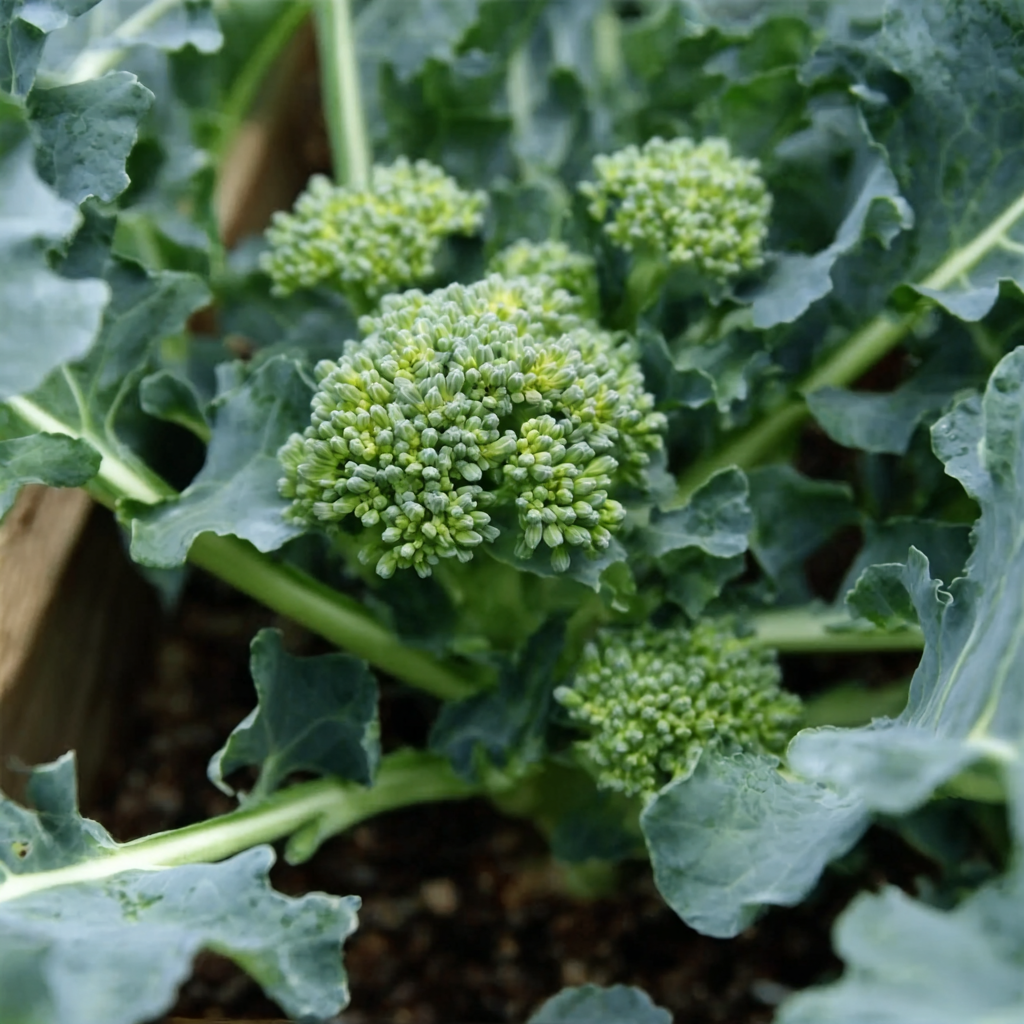
Broccoli raab, also called rapini or broccoli rabe, is not a heading broccoli and should not be grown like one. The edible harvest is the tender stems, small flower buds, and young leaves, all cut before the buds open fully. Its flavor is assertively bitter and peppery, characteristic of Italian cooking traditions where it is blanched, sauteed in olive oil, or used in pasta and braised dishes. Broccoli raab is a fast-maturing cool-season green in the turnip branch of the brassica family, typically ready in 40 to 60 days, and it bolts quickly once warm weather arrives.
Quick How-to
Direct sow broccoli raab seeds outdoors in early spring as soon as the soil is workable, or in late summer for a fall crop. Sow 1/4 to 1/2 inch deep, thin seedlings to 4 to 6 inches apart, and harvest the central shoot along with a length of tender stem and the surrounding buds just before the first flower opens. Cut low on the plant to encourage side shoots that extend the harvest window.
Quick Guide
| Fact | Recommendation |
|---|---|
| Best method | Direct sow outdoors; indoor start possible but less common |
| Sowing depth | 1/4 to 1/2 inch |
| Germination temperature | 50 to 75 F; cool soil acceptable |
| Days to germination | About 5 to 9 days |
| Light for germination | Cover seed; no light required for germination |
| Spacing | Thin to 4 to 6 inches apart in rows 18 to 24 inches apart |
| Sun | Full sun; tolerates light shade |
| Water | Even moisture throughout; do not allow to dry out |
| Days to harvest | 40 to 60 days depending on conditions and variety |
| Plant size | Typically 10 to 20 inches tall at harvest |
Before You Sow
Broccoli raab is a cool-season crop with a short window between sowing and bolting. The entire growing period needs to stay cool. In spring, sow as early as the soil can be worked, knowing that a stretch of warm weather will trigger flowering and end usable harvest. In fall, time the sowing so the bulk of growth happens in temperatures below 65 F. Many gardeners find fall broccoli raab more productive and more predictable than spring plantings.
Prepare a weed-free seedbed with loose, moderately fertile soil. Broccoli raab is not as demanding as heading broccoli, but it does need consistent moisture and enough fertility to support rapid growth. Work in a thin layer of compost if the soil is sandy or thin.
Unlike heading brassicas, broccoli raab does not benefit from transplanting. Direct sowing is the standard approach. The plant establishes quickly from seed in cool soil and responds poorly to root disturbance.
Direct Sowing
Scatter seed thinly in prepared rows or broadcast lightly across a bed, then cover to about 1/4 to 1/2 inch depth. Press the soil gently and water in. Germination is typically fast in cool conditions, often appearing in 5 to 9 days.
Thin seedlings to 4 to 6 inches apart once they reach 2 to 3 inches tall. Crowded broccoli raab produces tall, weak stems and rushes to bolt. Adequate spacing allows each plant to develop a proper central shoot with enough stem and leaf to make harvesting worthwhile.
For extended harvest, sow short successive rows every 2 to 3 weeks during the cool season. Each succession provides a fresh flush before it, too, moves toward flowering.
Soil, Sun, and Water
Full sun is best for rapid, even growth. Broccoli raab in partial shade will grow, but the stems stretch toward light and the overall harvest weight is reduced. Soil should be well-drained and capable of holding moisture; it does not need to be rich, but adequate nitrogen will support the lush leafy growth that makes up most of the edible harvest.
Keep the soil consistently moist throughout the growing period. Drought stress speeds bolting, which is already a risk in this fast-cycling crop. Once the soil surface dries, broccoli raab may push toward flowering faster than expected. Mulching between rows or after thinning helps moderate soil moisture and temperature in both spring and fall.
Top Mistakes
- Waiting to harvest until flowers open fully: The ideal harvest window for broccoli raab is narrow. Once yellow flowers open, the stems become tougher and the flavor intensifies toward unpleasantly bitter. Check plants every day once buds appear and harvest when buds are green and tight.
- Sowing in late spring or summer: Broccoli raab bolts rapidly in warm conditions. A late-spring sowing that runs into June heat will rush through its cycle in days rather than weeks. Stick to early spring and late-summer or early-fall sowings.
- Thinning too late or skipping thinning: Dense plantings push plants to compete for light and nutrients, producing thin, weak stems that bolt quickly. Thin early and decisively to allow proper development.
- Treating it like heading broccoli: Broccoli raab produces no large central head. Gardeners who wait for a heading structure that never comes miss the actual harvest window entirely. The edible product is tender shoots and buds cut before full flowering.
- Not cutting low enough for regrowth: If you harvest only the terminal bud and leave no stem and leaves, regrowth is limited. Cut 4 to 6 inches below the bud cluster, leaving at least 2 leaves on the lower stem, and side shoots will follow.
Troubleshooting by Symptom
| Symptom | Likely causes | What to do next |
|---|---|---|
| Buds opened to yellow flowers before harvest | Temperatures climbed too quickly, or harvest was delayed | Harvest immediately; if flavor is still acceptable, use the plant promptly; plan earlier sowings or fall crop next time |
| Stems are thin and weak | Overcrowding, insufficient light, or nutrient-poor soil | Thin aggressively and ensure full sun exposure; incorporate compost before the next sowing |
| Plants bolt within 2 to 3 weeks of sowing | Young plants were exposed to a hard cold spell and then warming, or the crop was sown as temperatures were already climbing | Do not move seedlings into severe cold; protect established young plants from hard freezes, shift the next spring planting slightly later, or use a late-summer sowing for a cool fall harvest |
| No germination after 10 days | Surface dried, depth too great, or soil temperature below 45 F | Keep seedbed moist; check depth; in cold spring soil germination may be slow but should still occur above 45 F |
| Aphid clusters on growing tips | Common in warm or humid conditions, especially as plants approach flowering | Knock off with water; harvest affected shoots promptly; use row cover on new sowings to delay colonization |
| Leaves are yellowing rapidly | Nitrogen deficiency, waterlogged soil, or aging plant past its harvest peak | Side-dress with a nitrogen fertilizer if plant is young; discard and resow if plant has already bolted |
Harvest
Begin checking plants when they reach about 10 to 15 inches tall and the central bud cluster is visible but the buds remain closed and green. Cut the central shoot with 4 to 6 inches of tender stem below the bud cluster. Harvest in the morning for the best texture. After removing the main shoot, side shoots will develop from leaf axils lower on the stem and can be harvested over the following 2 to 4 weeks, extending the overall window considerably.
Store cut broccoli raab unwashed in a plastic bag in the refrigerator. It holds well for up to 5 days. Blanch and freeze for longer-term storage.
The bitterness of broccoli raab is a feature of the crop, not a flaw. Blanching the greens briefly before the final cooking step softens the intensity. Very young shoots and leaves are somewhat milder than mature plants close to flowering.
Seed Saving
Broccoli raab is in the Brassica rapa species and will cross with other Brassica rapa plants, including turnips, Chinese cabbage, and bok choy. Unlike biennial brassicas, broccoli raab flowers in its first season, making seed saving more straightforward. Allow selected plants to flower and set seed, then harvest the seed pods when they are dry but before they shatter. Isolate from other Brassica rapa varieties by at least 300 feet for reasonably true-to-type seed.
Storing Leftover Seed
Keep unused Broccoli Raab seed in its labeled packet inside a sealed container in a cool, dry, dark indoor location. Avoid garages, sheds, greenhouses, and sunny windowsills, where temperature and humidity swing sharply. Label home-saved seed with the variety and harvest year before storing it.
FAQ
Is broccoli raab the same as regular broccoli?
No. Despite the name, broccoli raab belongs to the turnip branch of the brassica family (Brassica rapa), while common heading broccoli is Brassica oleracea. Broccoli raab produces no large central head; the edible portion is the tender stems, small bud clusters, and young leaves, all harvested before flowering.
Why is broccoli raab so bitter?
The characteristic bitterness comes from glucosinolates, sulfur-containing compounds found in brassicas generally. Broccoli raab has a particularly pronounced level. Blanching in boiling salted water for 1 to 2 minutes before the final cooking step is the standard Italian technique for mellowing the bitterness without eliminating it entirely.
Can I grow broccoli raab in containers?
Yes, in containers that are at least 8 to 10 inches deep and wide. Direct sow into the container in cool weather, thin to 2 to 3 plants, and keep the mix consistently moist. Containers dry out faster than garden beds, so more frequent checking is needed.
How many harvests can I get from one planting of broccoli raab?
After cutting the central shoot, most plants will produce multiple side shoots for 2 to 4 additional weeks before quality declines or the plant flowers out completely. The total production period is relatively short compared with crops like kale, but succession planting every few weeks through the cool season provides a continuous supply.