
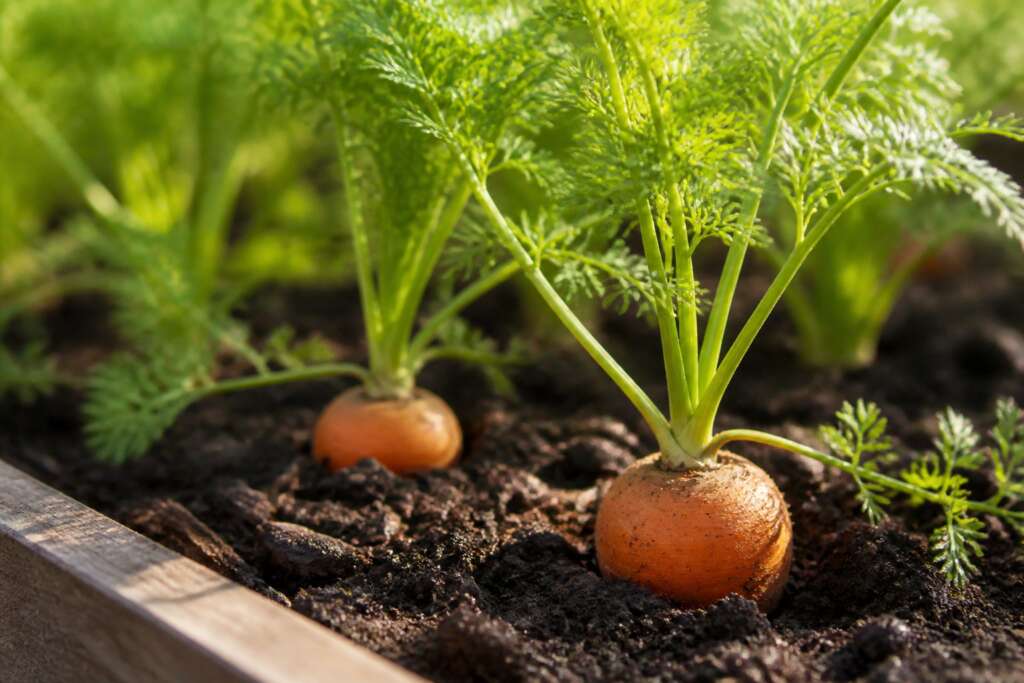
Parisian Carrot is a round, globe-shaped carrot that reaches roughly 1 to 2 inches in diameter at maturity, rather than the tapered, finger-length root of most carrot types. This shape is not a novelty but a practical advantage: the short root barely penetrates the soil, making it the most reliable carrot for containers, raised beds with limited depth, rocky ground, or heavy clay where a long carrot would fork, split, or simply stop growing downward. It has heirloom roots in the Paris market tradition, where compact round roots were sold as snacking and cooking carrots, and it matures in about 55 to 70 days from sowing. Flavor is sweet and tender when harvested at the right size.
Quick How-to
Sow directly into the garden or a container as soon as soil temperature reaches 45 F in spring. Scatter seed thinly over the bed or row, cover with just 1/4 inch of fine soil, and keep the surface consistently moist until germination. Expect seedlings in 10 to 21 days, depending on soil temperature. Thin to about 2 to 3 inches apart when seedlings are 1 to 2 inches tall. Begin checking roots at 55 days by gently parting the soil to see if the round shoulder has reached 1 inch in diameter.
Quick Guide
| Fact | Recommendation |
|---|---|
| Best method | Direct sow; carrot roots are disturbed by transplanting |
| Sowing depth | About 1/4 inch; fine covering of soil only |
| Germination temperature | 55 to 65 F is ideal; soil can be as cool as 45 F but germination slows |
| Days to germination | About 10 to 21 days depending on soil temperature |
| Light for germination | Cover seed; do not leave seed exposed on the surface |
| Spacing | Thin to 2 to 3 inches apart; row spacing 12 inches |
| Sun | Full sun |
| Water | Consistent moisture throughout; avoid both drought and saturated soil |
| Harvest | About 55 to 70 days from sowing; check when shoulder is 1 to 2 inches in diameter |
| Root shape | Round to slightly globe-shaped, typically 1 to 2 inches across |
Before You Sow
For in-ground beds, loosen the top 4 to 6 inches of soil. Parisian Carrot’s short round root rarely needs deep soil, which is the core reason it works where other carrots do not, but the top layer should be free of large clods and debris that could cause the round root to grow unevenly. Rake the surface smooth; this also makes for more even seed covering.
For containers, choose a pot or planter at least 6 to 8 inches deep with good drainage holes. Fill with a light, well-draining mix that does not compact tightly when wet. Parisian Carrot is one of the few carrot varieties genuinely well-suited to container culture.
Remove any obvious rocks or debris from the top layer of the seedbed. Carrot seed is tiny and needs direct contact with fine, firm soil to germinate consistently.
Do not add heavy nitrogen amendments before sowing. Carrots in nitrogen-rich soil may produce lush tops and poor roots, or forked roots, rather than clean round ones.
Direct Sowing
Carrot seed is very small. Sow thinly; oversowing is one of the most common causes of thick, tangled seedling mats that are tedious to thin. Scatter seed along a shallow row or across a bed, cover with about 1/4 inch of fine soil or seed-starting mix, and firm gently.
Water immediately after sowing with a gentle spray that does not wash seed into clumps or expose it on the surface. From this point until germination, the most important task is keeping the surface consistently moist. Carrot seed germinates slowly, and a surface that dries out and crusts can prevent seedlings from pushing through. Covering the bed lightly with floating row cover or damp burlap until the first seedlings appear can help retain moisture; remove the cover as soon as seedlings emerge.
Carrot germinates best when soil temperature is between 55 and 65 F. Below 45 F, germination can take several weeks or not occur at all. Above 75 F, germination becomes irregular.
Thinning
Thinning is essential and cannot be skipped. Carrot seedlings left crowded together compete for space and produce malformed, undersized roots. When seedlings reach 1 to 2 inches tall, thin to 2 to 3 inches apart using scissors to snip unwanted seedlings at soil level. Pulling seedlings risks disturbing the roots of neighbors.
For Parisian Carrot, 2 to 3 inches between plants is sufficient given the compact round root. A slightly tighter spacing than you would use for long-rooted varieties is acceptable but do not skip thinning entirely.
Soil, Sun, and Water
Parisian Carrot is more forgiving of imperfect soil than most carrot types. It tolerates heavier ground and shallower beds that would defeat a Nantes or Imperator variety. That said, the best results still come from soil that drains well and does not stay saturated. Waterlogged conditions cause roots to rot.
Full sun supports steady growth and good root development. Carrots in partial shade grow more slowly and may produce smaller, paler roots.
Water evenly throughout the season. The most important watering window is during active root development in the weeks following thinning. Alternating a dry spell with heavy watering can cause roots to split, while continuously saturated soil invites disease. Do not intentionally taper water as harvest approaches. Instead, keep the root zone moderately and consistently moist and harvest promptly at mature size, especially before a forecast of heavy rain.
Top Mistakes
- Not thinning: This is the most common cause of small, crowded, or misshapen Parisian Carrot roots. The plants look small when you thin them but they need that 2 to 3 inch spacing to develop round roots.
- Letting the surface dry out during germination: Carrot seed germinates slowly, and the seedbed must stay moist the entire time. A few dry days can reset the clock or prevent emergence entirely.
- Harvesting too late: Round carrots peak when they reach 1 to 2 inches in diameter. Left longer, they can crack, develop a tough core, or become pithy. This is not a storage carrot left to size up; harvest at the right window.
- Planting in compacted or debris-filled soil: Even with its short root, Parisian Carrot develops unevenly in compacted ground. Loose, fine-textured soil at the surface gives the best-shaped roots.
- Heavy nitrogen application before sowing: Excess nitrogen favors leaf growth over root development and can contribute to branching or hairy roots. Skip heavy pre-plant feeding.
Troubleshooting by Symptom
| Symptom | Likely causes | What to do next |
|---|---|---|
| No seedlings after 3 weeks | Soil surface dried out; soil too cold; seed covered too deeply | Water consistently; confirm soil is at least 45 F; ensure only 1/4 inch of covering |
| Patchy, uneven germination | Uneven soil covering, inconsistent surface moisture, or crusted surface | Smooth bed before sowing; use gentle watering; floating row cover can maintain surface moisture |
| Tops vigorous but roots very small | Planted too densely; nitrogen too high; harvested too early | Thin to 2-3 inches; skip heavy fertilizer; wait until roots reach 1 inch diameter |
| Roots forked or multi-pronged | Soil obstruction (rock, clod, fresh manure clump); nematode damage | Clear soil of debris before sowing; rotate carrots to a different bed annually |
| Roots cracking at harvest | Irregular watering, or heavy rain after dry period near maturity | Maintain even moisture; harvest promptly when roots reach peak size |
| Green shoulders on roots | Crowns exposed to light as soil settled or shifted | Hill soil around exposed crowns mid-season; green shoulders are edible but mildly bitter |
Harvesting Parisian Carrot
Begin checking roots at around 55 days by gently moving soil away from the crown with your finger. When the round shoulder appears to be 1 to 1.5 inches across, harvest is imminent. Loosen the soil with a fork or trowel inserted a few inches away from the root before pulling, to avoid snapping the root. For a bed of round carrots in containers, you can tip the entire container onto a tarp and sort through the mix.
Flavor is best when roots are harvested at their correct size and used promptly. Parisian Carrot can be stored in the refrigerator for 2 to 3 weeks. For longer storage, keep unwashed roots in damp sand in a cool location, as you would any carrot.
Seed Saving
Carrot (Daucus carota subsp. sativus) is a biennial that does not flower until its second year. Saving seed requires overwintering roots in the ground (in mild climates) or in storage, then replanting in spring and allowing the plant to bolt and flower. Carrot flowers readily cross-pollinate with other carrot varieties and with wild carrot (Queen Anne’s Lace), which is widespread in many regions. Maintaining true-to-type Parisian Carrot seed requires significant isolation from other carrot pollen sources and is not practical for most home gardeners. Treat purchased seed as fresh each season for consistent results.
Storing Leftover Seed
Keep unused Parisian Carrot seed in its labeled packet inside a sealed container in a cool, dry, dark indoor location. Avoid garages, sheds, greenhouses, and sunny windowsills, where temperature and humidity swing sharply. Label home-saved seed with the variety and harvest year before storing it.
FAQ
Why is Parisian Carrot better for containers than standard carrot varieties?
Most carrot varieties need 6 to 12 inches of loose, fine soil depth to develop properly. Parisian Carrot’s round root needs only a few inches, making it the right choice for pots, window boxes, and raised beds with limited fill depth. The shape is not incidental; it is the trait that makes this carrot work where others fail.
Can I leave Parisian Carrot in the ground to harvest over time?
For a short period, yes. But unlike storage-type carrots (such as Chantenay or Danvers types), Parisian Carrot is not bred for extended in-ground storage. Roots left past peak size tend to crack, split, or develop a tougher core. Harvest across 1 to 2 weeks when the roots are at their best rather than leaving them indefinitely.
How deep should a container be for Parisian Carrot?
Six to eight inches of growing medium depth is sufficient for most Parisian Carrot roots. A wider, shallower container works better than a narrow, deep one. Make sure drainage is excellent; standing water in a container causes root rot in all carrot types.
Is the flavor noticeably different from long carrots?
Parisian Carrot is often described as particularly sweet and tender, partly because it is harvested young and round when the sugar content is high. Flavor varies with soil, watering, and growing conditions, but the compact size and quick maturity generally mean less time for the root to develop fibrous texture.