
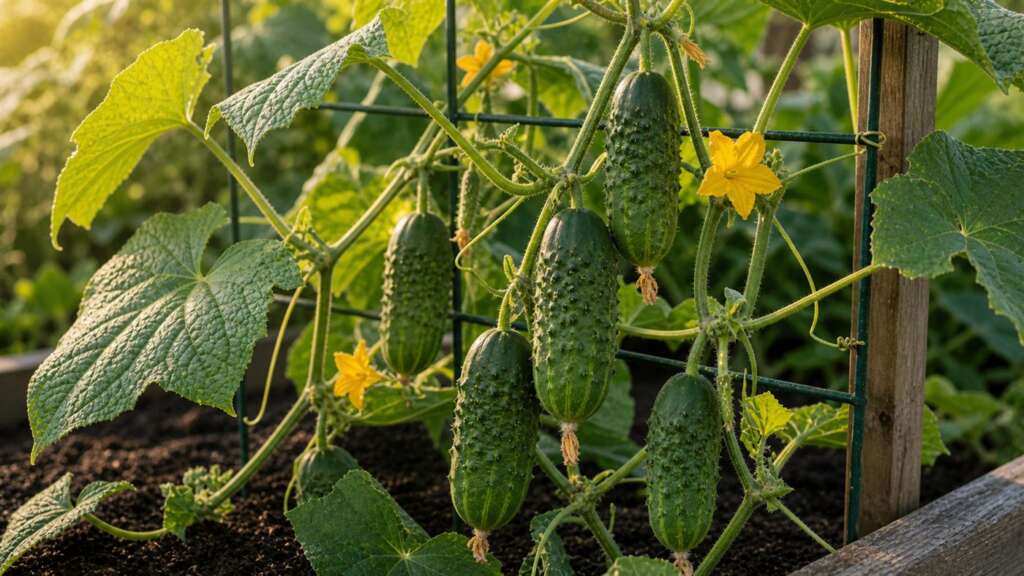
National Pickling Cucumber is a classic American pickling variety bred for short, blocky, medium-green fruit that holds its crunch in brine. It is a warm-season cucurbit vine grown as an annual, and like other cucumbers it rewards patience early in the season: warm soil, steady moisture, and an unhurried start outperform a rushed sowing into cold ground almost every time.
Quick How-to
Direct sow National Pickling Cucumber after the last frost, once daytime soil temperatures hold around 70 F and nights stay mild. Sow about 1/2 to 1 inch deep, water gently, and keep the seedbed evenly moist. Germination is usually quick — often 3 to 10 days in warm soil. If your season is short, start indoors in roomy cells about 2 to 3 weeks before transplanting and move plants out before roots circle the cell. Pick fruit small and often for pickling-grade texture.
Quick Guide
| Fact | Recommendation |
|---|---|
| Best method | Direct sow after soil warms; short indoor start works for short seasons |
| Sowing depth | About 1/2 to 1 inch |
| Germination temperature | Best around 70 to 90 F soil; avoid sowing below about 60 F |
| Days to germination | Often 3 to 10 days in warm soil |
| Light for germination | Cover seed; bright light needed immediately after sprouting |
| Spacing | Roughly 12 inches on a trellis; 18 to 24 inches for sprawling rows or hills |
| Sun | Full sun, ideally 6 or more hours |
| Water | Even, deep moisture; avoid dry-wet swings during fruiting |
| Harvest | Begin checking around 50 days from sowing and pick at 5 to 7 inches for pickling quality |
| Plant size | Vining habit; trains well on a short trellis or fence |
Before You Sow
Cucumbers are happiest in soil that already feels warm to the back of your hand. Cold, soggy ground is the single most common reason a packet of cucumber seed underperforms, so put your effort into timing rather than into starting early. Choose a sunny spot with well-drained soil and work in finished compost a week or two before sowing. A pH near 6.0 to 6.8 suits cucurbits well; very acidic or compacted beds tend to produce slow, pale plants.
Decide on a support system before the seed goes in. National Pickling Cucumber has a true vining habit, and even a short trellis or a length of nylon netting against stakes keeps fruit straight, easier to find, and off damp soil. Trellised plants also dry faster after morning dew, which directly reduces foliar disease pressure later in the season. If you would rather let plants sprawl, plan on wider spacing and a deeper mulch layer beneath the vines.
Have a watering plan in mind too. Cucumbers shift from “drinking lightly” to “drinking a lot” the moment they start setting fruit, and inconsistent moisture is a major source of misshapen, bitter, or hollow cucumbers. A simple soaker hose or drip line under mulch will outperform overhead watering for both yield and disease control.
Direct Sowing
Direct sowing is the most natural method for this crop. Cucumbers resent root disturbance, and seedlings that start where they will grow usually catch up to and surpass transplanted ones in a few weeks.
Wait until your last frost has passed and the soil itself feels warm — a soil thermometer pushed two inches deep should read about 70 F mid-morning before you sow. Loosen the bed, smooth the surface, and water it the day before so the seed is not immediately washed too deep. Sow seed 1/2 to 1 inch deep, either in rows on a trellis or in low hills of 3 to 4 seeds spaced about 24 inches apart. After germination, thin each hill to the two strongest seedlings using scissors at soil level so you do not tug on neighboring roots.
Cover newly sown rows with lightweight floating row cover if cucumber beetles are an issue in your area. Row cover keeps young plants protected during the most vulnerable stretch, but it must come off once flowers open so that bees and other pollinators can reach the blossoms. Without pollination, you will see plenty of flowers and almost no fruit.
Indoor Starting
Indoor starting is optional and best kept short. Cucumbers grow quickly and dislike sitting in a small cell once true leaves appear, so aim for 2 to 3 weeks indoors, not 5 or 6.
Use 3 to 4 inch pots or roomy cells filled with fresh seed-starting mix. Sow one or two seeds per pot at about 1/2 inch deep, water from below, and set the trays on a warm surface — a heat mat targeting around 75 to 85 F works well. Once seedlings emerge, remove any humidity dome immediately and give the plants strong overhead light right away. A bright windowsill is rarely enough; cucumber seedlings stretch fast under weak light.
When two true leaves are present, thin to the strongest plant per pot. Begin reducing watering frequency slightly to harden the root system, but never let the mix go bone dry. Plants are ready for the garden when they have two to four true leaves and white roots showing at the bottom of the pot — not when they have begun to vine or flower indoors.
Hardening Off and Transplanting
Harden off seedlings over 7 to 10 days. Start with an hour or two outside in dappled shade and a sheltered spot, then add direct sun and breeze in small increments. Avoid windy, cold afternoons during this stretch; cucumbers chill easily and may stall.
Transplant on a calm, overcast day or in late afternoon. Dig a hole slightly larger than the root ball, ease the plant out without breaking the soil block, set it at the same depth it grew in the pot, and water in gently but thoroughly. If you used a cell tray, pop seedlings out by pushing from the bottom rather than pulling on stems. Mulch around — not against — the stem once soil has warmed further to hold moisture and moderate soil temperature.
Soil, Sun, and Water
Full sun, fertile soil with good drainage, and consistent moisture are the three things cucumbers reward most. Work compost or a balanced organic amendment into the bed before planting. After flowering begins, a light side-dressing of compost or a moderate balanced fertilizer can support fruit set, but do not push heavy nitrogen — too much leaf, not enough flower, is a common outcome.
Water deeply rather than briefly. The goal is to wet the full root zone and then let the top inch dry slightly before watering again, especially before flowering. Once fruit begins to form, scale up: a flowering, fruiting cucumber vine in warm weather can easily use an inch of water per week, and more in heat. Water at the soil line when possible, and try to water early in the day so foliage dries before evening.
Mulch matters here. A two-inch layer of straw, shredded leaves, or fine bark under the vines stabilizes soil moisture, reduces splash-borne disease, and keeps fruit clean. Apply it after the soil has warmed, not before, so you are not insulating cold ground.
Top Mistakes
- Sowing into cold soil. Cucumber seed sitting in soil below about 60 F often rots before it can sprout. Wait for genuine soil warmth and your germination rate will jump.
- Crowding plants on a trellis. It is tempting to pack vines closely. Give each plant room — roughly 12 inches on a trellis — and airflow will pay you back in fewer mildew problems.
- Watering on a stop-and-go schedule. Cycles of drought followed by heavy watering are a leading cause of misshapen, bitter, or hollow fruit. Aim for even moisture, especially after flowering.
- Letting cucumbers oversize on the vine. Pickling cucumbers are bred to be picked small. Once a single fruit matures and starts to yellow, the plant slows new production sharply. Harvest every day or two during peak season.
- Pulling row cover too late or too early. Leave it on while plants are small, but remove it as soon as flowers open so pollinators can do their job.
Troubleshooting by Symptom
| Symptom | Likely causes | What to do next |
|---|---|---|
| No sprouts after 10 to 14 days | Soil too cold, seed buried too deep, or surface crusted over | Check soil temperature with a thermometer, scratch open any crust, and resow shallowly once the bed reads around 70 F |
| Seedlings sprout then collapse at the soil line | Damping-off from overly wet, cold, or compacted mix | Improve airflow, water from below, and start fresh with clean seed-starting mix if restarting indoors |
| Vines flower heavily but set almost no fruit | Poor pollination, row cover left on too long, or extreme heat | Remove covers when flowers open, plant pollinator-friendly companions nearby, and water deeply during heat |
| Fruit is curved, bottle-shaped, or pinched | Incomplete pollination or inconsistent watering during fruit fill | Encourage pollinators, water evenly, and pick affected fruit so the vine focuses on new sets |
| Fruit tastes bitter | Heat stress, drought, or fruit left to oversize | Harvest younger, water more deeply during heat waves, and mulch to moderate soil temperature |
| White powdery patches on leaves | Powdery mildew, common late in the season | Improve airflow with trellising and wider spacing, water at the base, and remove badly infected leaves |
| Yellowing or wilting starting at the base | Cucumber beetle feeding or bacterial wilt they transmit | Scout for striped or spotted beetles, use row cover early in the season, and remove plants that wilt overnight and do not recover |
| Sudden whole-plant collapse on a hot day | Bacterial wilt or severe root issue | Test a wilting stem by cutting and slowly pulling the cut ends apart; sticky strings between them suggest bacterial wilt and affected plants should be removed |
Harvest and Pickling Use
National Pickling Cucumber is bred for small, blocky fruit, and that is exactly how it should leave the vine. For sweet pickles and gherkin-style pickling, harvest at 2 to 4 inches long. For dills and spears, 4 to 6 inches is the standard range. Pick with pruners or scissors, leaving a short stem on the fruit rather than pulling, which can damage vines.
Check vines every day or two during peak harvest. Fruit left to oversize signals the plant to slow new flowering, so consistent picking is one of the most effective ways to extend the season. Cucumbers are best processed the same day they are picked; their crispness fades quickly in the refrigerator, and brining timing affects final crunch. If you cannot process immediately, refrigerate fruit in a single layer and use within a day or two.
Seed Saving
Cucumbers are insect-pollinated and cross readily with other Cucumis sativus varieties grown nearby, including slicing cucumbers and many pickling types. To save seed that comes true to type, isolate by distance (often a quarter mile or more for casual gardens), by timing, or by hand-pollinating and bagging selected flowers.
Let saved-seed fruit grow well past eating size — typically until the skin turns yellow or orange and feels soft. Scoop the seed and pulp into a jar with a little water and let it ferment at room temperature for about 2 to 4 days, stirring once a day, until the gel coating separates. Rinse, float off hollow seeds, and dry the heavy seeds on a screen or paper in a cool, airy spot for one to two weeks. Label with variety and year before storing.
Storing Leftover Seed
Keep unused National Pickling Cucumber seed in its labeled packet inside a sealed container in a cool, dry, dark indoor location. Avoid garages, sheds, greenhouses, and sunny windowsills, where temperature and humidity swing sharply. Label home-saved seed with the variety and harvest year before storing it.
FAQ
Should I trellis National Pickling Cucumber or let it sprawl?
Either works, but a trellis pays off for this variety. It keeps fruit clean and straight, improves airflow against mildew, and makes the small pickling-size fruit much easier to spot during daily harvest.
How often should I water during fruiting?
Aim for about an inch of water per week before flowering and 1.5 to 2 inches per week once fruit is sizing up, adjusted for rain, mulch, and heat. Deep, infrequent watering beats brief daily sprinkles.
Why are my plants flowering with no cucumbers forming?
The first wave of flowers is usually male, opening before female flowers appear. Wait a week or two. If female flowers (the ones with a tiny cucumber behind the bloom) appear and still fail to set fruit, pollination is the most likely problem — check that row covers are off and that bees can reach the bed.
Can I grow this variety in a container?
Yes, with a large container of at least 5 gallons, full sun, a small trellis, and a watering routine that prevents the pot from drying out. Container cucumbers are more sensitive to heat and drought than in-ground plants, so daily checks are important in summer.
Are National Pickling Cucumbers good for fresh eating?
They are pleasant fresh when picked small, but their texture and thinner skin are tuned for brining. For thick-skinned slicing fruit, a dedicated slicing variety is a better fit.