
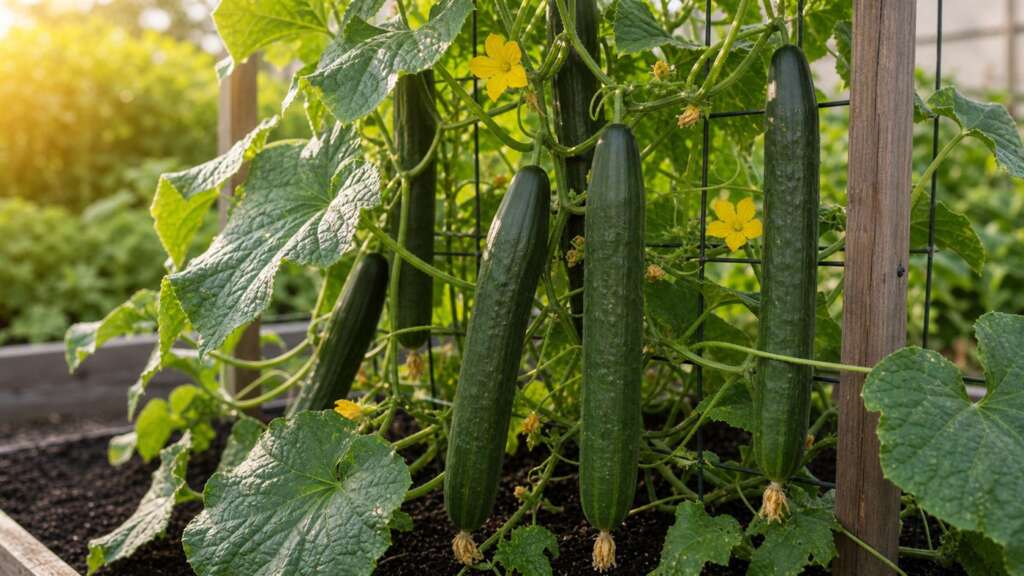
Straight Eight is a classic heirloom slicing cucumber known for straight, uniform, medium-green fruit that grows to about eight inches at harvest size. Like all cucumbers, it is a warm-season vine that resents cold soil and root disturbance, so the most reliable approach is to direct sow once the ground is genuinely warm, or start a small number of plants indoors very briefly and transplant carefully.
Quick How-to
Direct sow Straight Eight Cucumber after your last frost, once soil has warmed to at least 65 to 70 F. Plant seeds about 1/2 to 1 inch deep, two or three per spot, and thin to the strongest seedling. In warm soil, expect germination in about 3 to 10 days. If your season is short, you can start indoors 2 to 3 weeks before transplanting, but keep the indoor period brief so roots stay undisturbed at planting time.
Quick Guide
| Fact | Recommendation |
|---|---|
| Best method | Direct sow into warm soil; short indoor start is optional |
| Sowing depth | About 1/2 to 1 inch |
| Germination temperature | About 70 to 90 F is ideal; soil at least 65 F |
| Days to germination | About 3 to 10 days in warm soil |
| Light for germination | Cover seed; provide strong light immediately after emergence |
| Spacing | About 12 inches on a trellis, or 18 to 24 inches if allowed to sprawl |
| Sun | Full sun, ideally 6 to 8 or more hours |
| Water | Consistent, even moisture; about 1 inch per week once established |
| Harvest | About 55 to 65 days from sowing; pick at roughly 8 inches for straight, tender fruit |
| Plant size | Vining habit; mature vines can reach 4 to 6 feet on a trellis |
Before You Sow
Pick the sunniest spot you have. Cucumbers reward warmth and light, and they sulk in shady or wet corners. Work in a few inches of compost before planting; the plant grows fast and produces heavily, so it benefits from a fertile, well-drained bed.
Decide ahead of time whether you will trellis or let vines sprawl. Trellising gives cleaner, straighter fruit, better airflow, and easier picking, which is part of the reason Straight Eight earned its name. Sprawling works in larger gardens but takes more space and tends to encourage powdery mildew where leaves stay wet on the ground.
If you are sowing into containers, use a roomy pot, at least 5 gallons per plant, with drainage holes and a quality potting mix. Small pots dry out fast in summer heat and can produce stressed, bitter fruit. Label your rows, hills, or pots at sowing time; young cucurbits look alike, and Straight Eight is easy to mix up with squash or melon seedlings.
Direct Sowing
Direct sowing is the most reliable approach for Straight Eight. The seed sprouts quickly in warm ground and the resulting plants do not have to recover from transplant shock. Wait until your last frost has passed and the soil feels warm to the back of your hand a few inches down, not just on the surface.
Sow seeds 1/2 to 1 inch deep, two or three per spot, spaced about 12 inches apart along a trellis or 18 to 24 inches apart in hills. Press the soil gently for good seed-to-soil contact and water with a soft spray so the seed is not washed deeper or floated to the surface. Once seedlings have one or two true leaves, snip the weaker ones at the soil line and keep the strongest plant per spot. Pulling thinned seedlings can disturb the roots of the keeper.
A floating row cover laid over young plants protects against early cucumber beetles and chilly nights. Remove it as soon as flowers appear so bees can reach the blossoms; cucumbers depend on pollinators, and a covered plant in bloom will set little fruit.
Indoor Starting
Indoor starting is optional for Straight Eight and best used only when your season is short or unpredictable. Sow 2 to 3 weeks before your intended transplant date in individual cells or peat-style pots that can be planted intact. Cover the seed about 1/2 inch and keep the mix warm, ideally in the 70s F, and evenly moist until sprouts appear.
Move seedlings under strong overhead light the moment they emerge. Cucumber seedlings stretch quickly under weak window light, and stretched seedlings rarely catch up. Pot up if roots fill the cells before your weather is ready, but do not let them sit indoors for weeks. A short, sturdy seedling transplants far better than a tall, rootbound one.
Hardening Off and Transplanting
Cucumbers dislike root disturbance, so hardening off and a gentle move matter more than usual. Over 5 to 7 days, set seedlings outside in dappled shade, then gradually expose them to longer periods of sun and breeze. Transplant on a calm, cloudy afternoon or in early evening to limit wilt.
Slide the root ball out without breaking it, set the plant at the same depth it was growing, and water in well. If the forecast turns cold, drape row cover or a light cloth over the plants for a few nights. Cold soil after transplant can stall growth for weeks, even when the air feels mild.
Soil, Sun, and Water
Straight Eight wants three things consistently: full sun, fertile well-drained soil, and steady moisture. Aim for about an inch of water per week once plants are established, more during hot or windy weather. Water at the soil line rather than overhead when possible. Wet foliage at night is one of the main triggers for powdery and downy mildew on cucurbits.
Mulch after the soil has warmed. A 2 to 3 inch layer of straw, shredded leaves, or grass clippings holds moisture, evens out soil temperature, and keeps fruit cleaner where vines sprawl. Avoid heavy nitrogen feeding after flowering begins; too much nitrogen pushes leaves at the expense of fruit set.
Top Mistakes
- Sowing into cold soil: Cucumber seed sitting in cool, damp ground often rots before it sprouts. Wait for soil that is genuinely warm, not just air that feels mild.
- Letting young plants dry out and rebound: Repeated wilting stresses the vine and is a common cause of bitter or misshapen fruit later in the season. Aim for steady moisture, not feast-or-famine watering.
- Skipping the trellis: Vines left to sprawl tend to produce curved fruit, more mildew, and harder picking. A simple trellis or A-frame usually pays for itself in straighter cucumbers and healthier leaves.
- Letting fruit get oversized: Once a few cucumbers go to seed on the vine, the plant slows production. Pick often, even if you cannot use every fruit, to keep the plant setting more.
Troubleshooting by Symptom
| Symptom | Likely causes | What to do next |
|---|---|---|
| No sprouts after 10 days | Soil too cold, seed buried too deep, surface crusted, or bed kept saturated | Wait for warmer soil, sow no deeper than an inch, and keep the bed evenly moist rather than soaked |
| Seedlings collapse at the soil line | Damping-off from cold, wet, poorly drained conditions | Improve drainage and airflow, water less often, and start replacements in fresh mix if indoors |
| Vines wilt during the day even when soil is moist | Cucumber beetles spreading bacterial wilt, or root damage from cultivation | Inspect for striped or spotted beetles, use row cover early in the season, and avoid hoeing close to the crown |
| Flowers appear but no fruit forms | First flush is often male only, or low pollinator activity | Wait a week or two for female flowers, plant pollinator-friendly companions, and avoid spraying open blossoms |
| Fruit is curved or pinched | Inconsistent water, poor pollination, or vines tangled on the ground | Water evenly, encourage pollinators, and grow on a trellis so fruit hangs straight |
| Fruit tastes bitter | Heat stress, drought, or harvesting overmature fruit | Mulch to even out soil temperature, water deeply during heat waves, and pick at proper size |
| White powdery patches on leaves | Powdery mildew, common in late summer on cucurbits | Improve airflow, water at the soil level, remove the worst leaves, and consider mildew-tolerant varieties next season |
Germination Diagnostics
If Straight Eight is slow to sprout, work through soil temperature, moisture, depth, and compaction in order. Cucumber seed sown into soil under about 60 F often sits for weeks and may rot. A simple soil thermometer pushed 2 inches into the bed for a few minutes will tell you more than the weather forecast.
Next check depth. Seed buried much deeper than an inch may have moisture but not the energy reserves to push to the surface, especially in cool or crusted ground. Moisture is the third checkpoint: the seed zone should feel like a wrung-out sponge, not muddy and not bone dry. Finally, check airflow and light after emergence. Seedlings that sprout well but stretch, pale, or fall over usually need stronger light, more space, or a less saturated mix.
Container and Small-Space Notes
Straight Eight is a true vining cucumber and is happiest with a trellis, but it can be grown in a large container if you commit to consistent watering. Use a pot of at least 5 gallons, set a sturdy trellis or tomato cage into it at planting time, and check moisture daily once plants are large. Containers heat up and dry out faster than garden beds, so a stressed potted cucumber will often signal trouble through bitter or misshapen fruit. A 1 to 2 inch mulch on top of the potting mix helps moderate temperature swings.
Harvest and Kitchen Use
Straight Eight is named for its uniform, straight, 7 to 8 inch slicing fruit. For best flavor and texture, pick when the fruit is firm, medium green, and roughly that length. Smaller cucumbers are excellent for pickling spears, and the same plant can be harvested at multiple sizes if you check it often.
Cut fruit from the vine with snips or pruners rather than pulling, which can tear the brittle stems. Pick every day or two at peak season. Even one or two cucumbers left to yellow on the vine will signal the plant to slow down, so harvest oversized fruit and compost it if you cannot use it. Store harvested cucumbers in the refrigerator and use within about a week for best crispness.
Seed Saving
Cucumbers are insect-pollinated and cross readily with other cucumber varieties, though they do not cross with squash, melons, or pumpkins despite the common myth. To save seed true to type, grow only one cucumber variety, or isolate Straight Eight by at least several hundred feet from other cucumber plantings.
Let a few well-shaped fruits ripen well past eating stage. They will swell, turn yellow or golden, and feel soft. Scoop out the seeds with the pulp, ferment in a jar of water for 2 to 3 days, then rinse, drain, and dry the seeds on a plate or screen until they snap rather than bend. Label with the variety and year before storing.
Storing Leftover Seed
Keep unused Straight Eight Cucumber seed in its labeled packet inside a sealed container in a cool, dry, dark indoor location. Avoid garages, sheds, greenhouses, and sunny windowsills, where temperature and humidity swing sharply. Label home-saved seed with the variety and harvest year before storing it.
FAQ
Should I direct sow or transplant Straight Eight Cucumber?
Direct sowing is preferred. Cucumbers grow quickly in warm soil and dislike root disturbance, so a direct-sown plant often outpaces a transplanted one within a couple of weeks. Indoor starting is worth the effort mainly in short-season areas.
Do I need to plant more than one cucumber for pollination?
A single plant can produce fruit because both male and female flowers grow on the same vine, but planting two or more plants improves pollination and overall yield. Bees and other pollinators move pollen between blooms, so anything that attracts them to your garden helps.
Why do my cucumbers taste bitter?
Bitterness usually comes from stress, most often heat plus uneven watering. Keep the soil consistently moist, mulch once it warms, and pick fruit at the recommended size. Very oversized cucumbers can also turn bitter as the seeds mature.
Can I grow Straight Eight in a container?
Yes, in a pot of at least 5 gallons with a trellis and steady watering. Containers magnify heat and drought, so plan to check moisture daily during summer.