
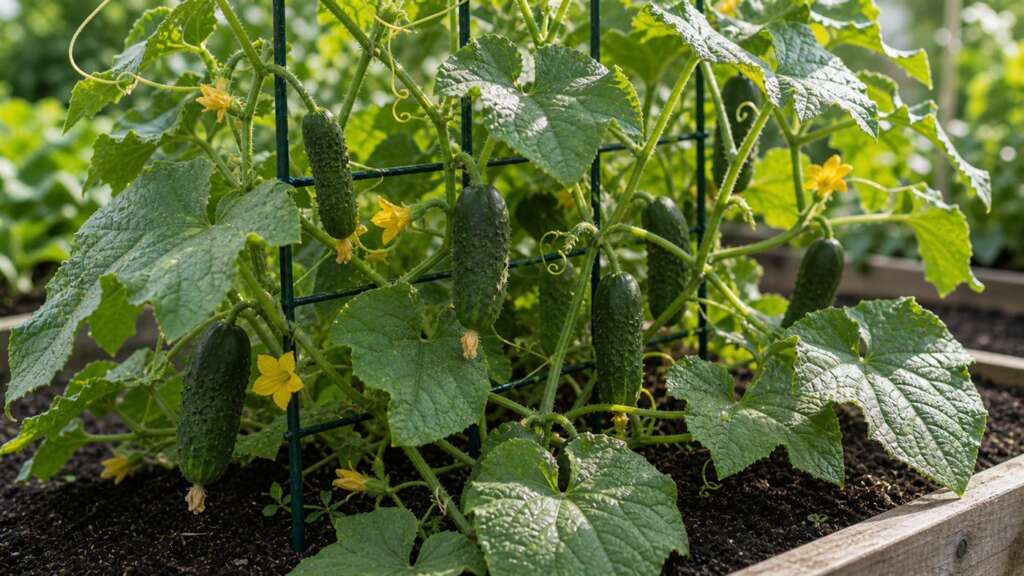
Boston Pickling Cucumber is a classic heirloom cucumber grown for short, crisp, blocky fruit that holds up well in brine. It is a warm-season vining vegetable that does best when sown into warm soil, watered evenly, and harvested young. Most home gardeners get the strongest results by waiting for genuine warmth, sowing shallowly into a loose seedbed, and picking fruit small and often once the vines start producing.
Quick How-to
Direct sow Boston Pickling Cucumber outdoors after the last frost, once the soil has warmed to at least 65 to 70 F. Sow about 1/2 to 1 inch deep, keep the seedbed evenly moist, and expect germination in about 3 to 10 days when conditions stay in the 70 to 90 F range. If your season is short, start a small number indoors 2 to 3 weeks before transplanting and move plants out before roots fill the cell. Pick fruit at 3 to 5 inches long and keep picking; that single habit is what keeps the vines producing.
Quick Guide
| Fact | Recommendation |
|---|---|
| Best method | Direct sow into warm soil; brief indoor start is optional |
| Sowing depth | About 1/2 to 1 inch |
| Germination temperature | About 70 to 90 F soil; minimum around 65 F |
| Days to germination | About 3 to 10 days under warm conditions |
| Light for germination | Cover the seed; provide strong light immediately after sprouting |
| Spacing | About 12 inches on a trellis; 18 to 24 inches or more if sprawling |
| Sun | Full sun, ideally 8 or more hours |
| Water | Steady, even moisture; about an inch a week, more in heat |
| Harvest | About 50 to 60 days from sowing |
| Plant size | Vigorous vining habit; supports save space and improve airflow |
Before You Sow
Cucumbers grow quickly once the weather cooperates, but they have very little patience for cold, soggy starts. They also resent root disturbance, which is why direct sowing is the default and indoor starts are kept short. The most important preparation step is to wait for the right conditions rather than to push an early sowing date.
Choose a site in full sun with loose, well-drained soil. A few weeks before planting, work in finished compost so the bed drains freely and has gentle, slow-release fertility. Avoid heavy nitrogen pushes right at planting; lush early growth without flowers is a common sign that the soil is too rich. If your spring tends to swing between warm and cold, lay down a sheet of dark mulch or a row cover ahead of sowing to lift soil temperature by a few degrees.
Decide early whether you will trellis or let the vines sprawl. Trellising keeps fruit straighter, cleaner, and easier to find, and it lets more air move through the leaves, which matters for disease pressure later in the season. If you are growing in a small bed, a simple A-frame or panel trellis turns a few square feet into a productive vertical strip.
Direct Sowing
Direct sowing is the most natural method for Boston Pickling Cucumber because the plant transplants with reluctance. Wait until the last frost is well behind you and the top few inches of soil feel warm to the touch, not just to the air. A soil thermometer is the most honest test; cucumber seed sown into 55 F soil often rots, while the same seed sown into 70 F soil pops up in under a week.
Sow two or three seeds per spot, about 1/2 to 1 inch deep, then firm the soil to ensure good seed contact. Water with a gentle spray so the seed is not washed sideways or buried deeper. Once seedlings have a true leaf or two, thin to the strongest plant at each spot rather than pulling weak ones out; a quick snip at the soil line avoids disturbing the keeper’s roots.
Space along a trellis about every 12 inches, or about 18 to 24 inches for sprawling rows. If pests like cucumber beetles are common in your area, a lightweight row cover over the bed helps protect young plants during their most vulnerable weeks. Remove the cover once the first female flowers open so pollinators can do their work.
Indoor Starting
Indoor starting is optional and works best as a short head start, not a long one. Sow 2 to 3 weeks before your intended transplant date in individual cells or small pots, never in shared trays where roots will tangle. Use fresh seed-starting mix, pre-moisten it, and sow 1/2 to 1 inch deep.
Warmth is the single biggest factor for clean germination. A heat mat under the tray held in the 75 to 85 F range usually produces fast, even sprouting. Move seedlings under strong overhead light the moment they emerge; a sunny window alone often leaves them tall and pale within a week. Keep the mix evenly moist, not wet, and remove any humidity dome as soon as the first leaves appear so airflow improves.
The goal is a compact young plant with one or two true leaves and a healthy root ball that holds together when slipped from the cell. Once roots begin to circle, the clock is against you.
Transplanting and Spacing
Harden seedlings off over 7 to 10 days. Start with a sheltered, shaded spot for an hour or two and gradually extend their time outside, adding direct sun and breeze as they adjust. Skipping this step is a common reason transplants stall or sunscald in the first week.
Transplant on a calm, mild evening or under light cloud cover. Slip the root ball out without breaking it apart, plant at the same depth it grew in the cell, and water in well. Set spacing at planting time so you do not have to disturb roots later: about 12 inches between plants on a trellis, or 18 to 24 inches in sprawling rows. Install your trellis or support at transplant time, not after the vines begin to run.
Soil, Sun, and Water
Boston Pickling Cucumber needs full sun, fertile and well-drained soil, and consistent moisture. Aim for about one inch of water per week from rain or irrigation, more during heat or once heavy fruiting begins. Steady moisture is what gives you crisp, straight, mild fruit; repeated wilt-and-soak cycles are a leading cause of misshapen or bitter cucumbers.
Water at the soil level when you can. Drip lines or a soaker hose under mulch keeps leaves dry, which helps slow powdery and downy mildew later in the season. Mulch with straw, shredded leaves, or finished compost once the soil has warmed; mulching too early in cold soil keeps the bed cool and slows the plants down.
A light side-dress of balanced fertilizer once vines begin to run can support steady fruiting, but avoid heavy nitrogen, which pushes leaves at the expense of flowers.
Top Mistakes
- Sowing into cold soil: Cucumbers do almost nothing useful below about 60 F. A week of patience for warmer soil typically beats two weeks of guesswork in a cold bed. Use a soil thermometer rather than relying on air temperature.
- Disturbing the roots: Cucumbers transplant grudgingly. Keep indoor starts short, use individual cells, and move plants without breaking the root ball.
- Letting moisture swing: Dry soil followed by heavy watering is the recipe for cracked, curled, and bitter fruit. Aim for steady, even moisture, especially once flowering begins.
- Leaving fruit on the vine too long: Oversized cucumbers signal the plant to slow new flowering. Picking small and often is the single biggest lever for total harvest.
- Skipping pollinator access: Row covers used too long, heavy spraying, or a shortage of bees can leave flowers unfertilized. Open covers when flowers appear and avoid spraying during bloom.
Troubleshooting by Symptom
| Symptom | Likely causes | What to do next |
|---|---|---|
| No sprouts after 10 days | Cold soil, seed sown too deep, soil crusted dry, or seedbed saturated | Check soil temperature, resow 1/2 to 1 inch deep into warm soil, and keep the surface evenly moist |
| Seedlings flop or rot at the soil line | Damping-off from overly wet, cool, or stagnant conditions | Improve airflow, water less often, sow into warmer soil, and use clean mix for indoor restarts |
| Transplants wilt after planting | Root disturbance, insufficient hardening off, or hot dry wind | Shade for a day or two, water in deeply, and time future transplants to mild evenings |
| Lots of flowers but no fruit | Only male flowers open yet, or pollinators are missing | Wait a week or two for female flowers to follow, open row covers during bloom, and avoid spraying during the day |
| Misshapen, curled, or stubby fruit | Incomplete pollination or uneven moisture | Encourage pollinators, water consistently, and keep mulch in place to even out soil moisture |
| Bitter fruit | Heat stress, drought, or fruit left on too long | Harvest at 3 to 5 inches, keep soil evenly moist, and provide afternoon shade in extreme heat where possible |
| White powdery coating on leaves | Powdery mildew from crowding and humidity | Trellis the vines, increase spacing, water at the soil level, and remove badly affected leaves |
| Yellow speckles with fuzzy undersides | Possible downy mildew, especially in humid weather | Improve airflow, avoid wet foliage at night, and remove infected leaves promptly |
| Sudden wilt of one vine | Possible bacterial wilt spread by cucumber beetles | Remove the affected vine, monitor beetles, and use row cover on young plants in seasons where beetles are heavy |
Germination Diagnostics
When Boston Pickling Cucumber is slow to sprout, work through the checklist in order rather than changing everything at once.
Start with temperature. Cucumber seed wants genuinely warm soil; the difference between 60 F and 75 F can mean two weeks versus four days of waiting. Then check depth. Seed buried more than an inch in heavy soil may have plenty of moisture but not enough energy reserves to reach the surface. Resow at 1/2 to 3/4 inch in firm, fine soil if you suspect this.
Look at moisture next. The seed zone should feel like a wrung-out sponge, not glossy wet and not dusty dry. A crusted surface after a hard rain can stop young seedlings cold; break the crust gently with a rake or your fingertips. Finally, check airflow and light once seedlings emerge. Indoor sprouts that stretch, pale, or fall over usually need stronger overhead light, better spacing, or a less saturated mix.
Timing and Climate Notes
Treat Boston Pickling Cucumber as a true warm-season crop. Frost-free dates on the calendar are necessary but not sufficient; what matters is whether the soil has warmed and whether nights are reliably mild. A bed that read 70 F at noon may still drop into the 50s overnight, and that swing is what stalls young plants.
In short-season climates, a brief indoor start plus a black plastic or fabric mulch laid down two weeks before transplanting can buy you the warm window you need. In long, hot climates, a second sowing in midsummer for fall harvest often outperforms a tired spring planting that has been fighting mildew for weeks.
Container and Small-Space Notes
Boston Pickling Cucumber adapts to containers when the pot is large enough to hold steady moisture. Choose at least a 5-gallon pot for a single plant, ideally larger, with drainage holes and a quality potting mix. Set the container in full sun and install a trellis at planting; trying to add support after the vines run is awkward and risks damage.
Container plants dry out faster than in-ground beds and need closer attention to watering, especially during heat. Check daily once the plant is established, and feed lightly with a balanced fertilizer every couple of weeks during heavy production.
Harvest and Kitchen Use
For pickling, harvest fruit at about 3 to 5 inches long, while the skin still has a slight bloom and the seeds inside are small and soft. Smaller fruit holds better crunch when brined, fermented, or processed as quick refrigerator pickles. Check vines every day or two during peak season; cucumbers grow fast, and a missed day can mean oversized fruit.
Cut, rather than pull, the fruit from the vine using pruners or a sharp knife. Pulling can damage stems and shorten the productive run. If a few cucumbers get away from you and grow large, harvest them anyway so the plant returns its energy to new flowers.
Seed Saving
Cucumbers cross readily with other Cucumis sativus varieties grown nearby, so true-to-type seed saving requires either isolation or hand pollination. To save seed, let a few fruits stay on the vine well past the eating stage, until they turn yellow and the skin softens. Scoop out the seeds, ferment them in a little water for two or three days to remove the gel coating, rinse thoroughly, and dry on a plate or screen out of direct sun.
Label each batch with the variety and year, and store dry seed in a cool, dark, sealed container.
Storing Leftover Seed
Keep unused Boston Pickling Cucumber seed in its labeled packet inside a sealed container in a cool, dry, dark indoor location. Avoid garages, sheds, greenhouses, and sunny windowsills, where temperature and humidity swing sharply. Label home-saved seed with the variety and harvest year before storing it.
FAQ
Do Boston Pickling Cucumbers need a trellis?
No, but a trellis usually pays for itself. Trellised vines produce straighter fruit, dry off faster after rain, and are easier to scout for harvest. A trellis is especially helpful in humid climates where powdery and downy mildew become an issue late in the season.
When should I pick cucumbers for pickling?
Pick at about 3 to 5 inches long, when the skin is still firm and bright and the seeds inside are small. Smaller fruit gives crisper pickles. Check the vines daily once they start producing.
Why do I have lots of flowers but no fruit?
Cucumbers typically open male flowers first, sometimes for a week or more, before female flowers appear with their tiny fruit behind the bloom. If female flowers are present but not setting fruit, pollinator activity is usually the missing piece; open row covers during the day and avoid spraying during bloom.
Can I grow Boston Pickling Cucumber in containers?
Yes, with a large enough pot, full sun, and a trellis. Use at least a 5-gallon container, water consistently, and feed lightly through the season.
Why are my cucumbers bitter?
Heat stress, drought, or leaving fruit on the vine too long are the most common causes. Keep moisture even, mulch the soil, and harvest at the intended size.