
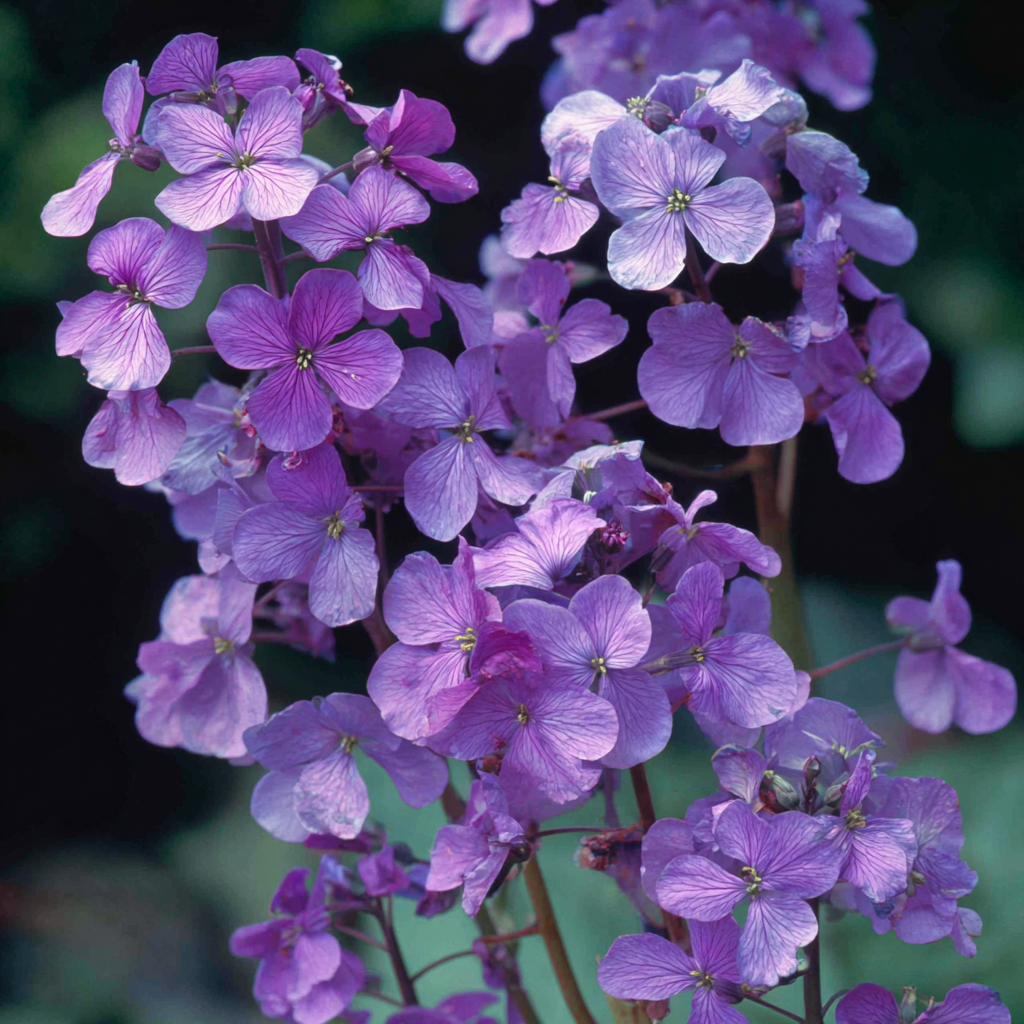
Money Plant (Lunaria annua) is a biennial flower grown primarily for the silvery, translucent seed pods it produces in its second year of growth. These flat, oval pods, commonly called “silver dollars,” are prized for dried floral arrangements, wreaths, and decorative crafts. The plant also produces fragrant purple or white flowers in spring of the second year, making it a double attraction in the garden. Lunaria is not a financial subject or a houseplant; it is a biennial member of the Brassica family grown outdoors for its ornamental pods. Because of its two-year lifecycle, planning the planting correctly is the key to a rewarding harvest.
Quick How-to
Sow Lunaria seeds outdoors in late spring through early summer for bloom and pods the following spring, or start seeds indoors in late winter and transplant out as young plants in spring of the first year. Seeds germinate in about 10 to 20 days when soil is moderately warm. Plants grow as leafy rosettes through the first season, overwinter in most climates, then send up flowering stems in the second spring followed by seed pods. Allow pods to ripen fully before harvesting for dried use.
Quick Guide
| Fact | Recommendation |
|---|---|
| Best method | Direct sow outdoors in late spring to early summer; or start indoors |
| Sowing depth | About 1/4 inch |
| Germination temperature | 60 to 70 F |
| Days to germination | About 10 to 20 days |
| Light for germination | Cover lightly; does not require light exposure |
| Spacing | 15 to 18 inches apart |
| Sun | Full sun to partial shade |
| Water | Evenly moist; established plants tolerate dry spells |
| Bloom timing | Second-year spring flowering; pods ripen by early summer of year two |
| Plant size | Typically 24 to 36 inches tall when in flower |
Understanding the Biennial Lifecycle
Money Plant is a biennial, which means it takes two growing seasons to complete its full cycle:
- Year one: Seeds germinate and plants grow as a low leafy rosette through spring, summer, and fall. The plant overwinters (in most climates) as a sturdy rosette, often surviving temperatures into the low teens F once established.
- Year two: In spring, the plant sends up flowering stems 24 to 36 inches tall bearing clusters of four-petaled purple or occasionally white flowers. After flowering, round flat seed pods develop, gradually drying on the stem through late spring and early summer. When fully ripe, the outer pod walls fall away to reveal the silvery inner septum that gives the plant its common name.
To have Lunaria in bloom and pod every year, the simplest approach is to sow a new batch of seeds each year. Once you have an established colony that self-sows, the planting largely manages itself.
Before You Sow
Lunaria is adaptable to a wider range of conditions than many ornamental plants. It grows in full sun to partial shade and tolerates ordinary to moderately poor soil. It does not need special soil preparation, though good drainage prevents problems in wet winters.
Choose a location where the two-year plants will not be disturbed by digging or renovation. Because plants grow through the fall and overwinter before blooming, they need a stable, undisturbed spot. Decide in advance whether you want a permanent colony that self-sows or a more controlled planting where you remove pods before seeds scatter.
Direct Sowing
The most common method is to sow seeds directly outdoors in late spring to early summer, giving first-year plants the full growing season to establish before winter. In mild climates, sowing can extend into midsummer, though later sowings produce smaller rosettes going into winter and may be less vigorous in the second year.
Prepare a reasonably smooth bed, sow seeds about 1/4 inch deep with light soil coverage, and water in. Keep the seedbed evenly moist until germination, which is typically 10 to 20 days at 60 to 70 F. Once seedlings have their first set of true leaves, thin to 15 to 18 inches apart. Lunaria forms a substantial rosette in the first year, and crowded plants bloom and pod less freely.
Some gardeners also sow Lunaria in the fall, allowing seeds to naturally cold-stratify over winter and germinate the following spring. This can also work, though germination timing is less predictable.
Indoor Starting
Lunaria can be started indoors in late winter or early spring and transplanted out as young seedlings in spring. Use individual cells or small pots to minimize root disturbance. Sow about 1/4 inch deep, keep the mix at 60 to 70 F, and expect germination in 10 to 20 days.
Transplant out after frost risk has passed, handling roots carefully. Young Lunaria plants transplant reasonably well when small. Harden off over about a week before moving outside.
Indoor starting allows you to get first-year plants established in a more controlled way, particularly useful in climates with short spring planting windows before summer heat arrives.
Soil, Sun, and Water
Lunaria is one of the more shade-tolerant of the biennial ornamentals, performing well in partial shade as well as full sun. In hot climates, afternoon shade can actually help sustain it through summer. In cooler climates, full sun is fine and may encourage slightly more vigorous flowering in the second year.
Soil can be ordinary garden soil; very rich soil is not necessary. The plant handles moderately dry conditions once established but performs best with even moisture during active growth phases. Poor drainage in winter can cause root problems in some climates, so avoid low spots that stay waterlogged.
Apply a light mulch around first-year rosettes before winter in climates with harsh freezes, which helps protect the crown and root system through the coldest months.
Top Mistakes
- Expecting bloom or pods in the first year: Lunaria is a biennial. First-year plants produce only foliage. Flowers and pods come in the second spring. Gardeners who sow and pull up plants after one season without results miss the entire payoff.
- Disturbing the planting area after establishing plants: Because Lunaria overwinters as a rosette, digging or planting around established first-year plants can damage or destroy them. Choose the location thoughtfully and leave the area alone through winter.
- Harvesting pods too early: Pods harvested before the outer skins dry naturally may not reveal the silver septum clearly or may be prone to mold. Allow pods to ripen fully on the plant until they begin to dry and pale.
- Removing all plants and preventing self-sowing: Lunaria self-sows reliably and can naturalize itself in a garden bed. If you want a continuing supply without replanting each year, allow at least some pods to fully dry and scatter seed. If you want to control the colony, collect pods before they split.
- Planting in waterlogged spots: Lunaria overwinters as a leafy rosette and is vulnerable to crown rot in persistently wet or poorly drained soil. Good drainage through the winter months is important for survival.
Troubleshooting by Symptom
| Symptom | Likely causes | What to do next |
|---|---|---|
| No germination after 3 weeks | Cold soil, seed too deep, or surface dried | Aim for 60 to 70 F, resow at about 1/4 inch, and keep the seedbed evenly moist |
| First-year plants are small and weak | Late sowing, poor soil, or overcrowding | Thin to 15 to 18 inches, water evenly through summer, and accept that late-sown plants may bloom less freely in year two |
| Plants do not survive winter | Poorly drained site or unusually severe freeze | Improve drainage, mulch crowns in fall, and in cold climates consider protecting with a light row cover |
| Pods are green and damp inside when harvested | Harvested too early | Allow pods to remain on the plant until the outer skin has turned tan and papery; then harvest |
| Pods do not show the silver septum | Outer skin torn or not fully dried | Let pods hang dry further indoors or try rubbing the outer skin off gently after full drying |
| No flowers in the second spring | Plants did not survive winter, or sown too late in summer | Ensure plants are well established before hard frosts arrive; mulch crowns in fall in cold climates |
Harvesting Silver Dollar Pods
The prized seed pod of Lunaria is the flat, oval, coin-shaped inner septum that remains after the outer pod walls dry and fall away. To harvest:
- Allow pods to ripen fully on the plant until the outer skin turns brown and papery, typically by midsummer of the second year.
- Cut stems at the base and hang upside down in a dry, ventilated location to continue drying if needed.
- Once fully dry, gently rub the outer pod walls between your fingers to loosen and remove them, revealing the silver inner septum.
- Use cleaned stems in wreaths, dried arrangements, or as loose pods in bowls and vases.
Alternatively, harvest pods when they are still green for fresh use in arrangements; they will not reveal the silver layer but add a soft, translucent green color to fresh bouquets.
Dried silver dollar stems are extremely long-lasting in arrangements, often remaining attractive for years when kept away from humidity and direct sun.
Seed Saving
Reliable horticultural references describe Lunaria as readily self-sowing but do not support treating every flower as primarily self-pollinated. If maintaining a selected flower color or pod form matters, grow one Lunaria selection to flower or isolate and cage a group rather than assuming nearby plants cannot exchange pollen. For ordinary garden seed, allow several healthy plants to form fully ripe tan pods. Collect the flat brown seeds in a paper bag, finish drying them indoors, and store them cool, dark, dry, and labeled with the selection and year. Open-pollinated seedlings may show some variation.
Because Lunaria self-sows readily, intentional seed saving is often unnecessary; the plant will establish volunteers on its own in suitable spots.
Storing Leftover Seed
Keep unused Money Plant (Lunaria) seed in its labeled packet inside a sealed container in a cool, dry, dark indoor location. Avoid garages, sheds, greenhouses, and sunny windowsills, where temperature and humidity swing sharply. Label home-saved seed with the variety and harvest year before storing it.
FAQ
Is this the same as the houseplant called “money plant” or “money tree”?
No. Lunaria annua (money plant or honesty) is an outdoor biennial grown for its silvery seed pods and is a member of the Brassica family. It is not related to Pilea peperomioides (the pancake plant or Chinese money plant) or Pachira aquatica (the money tree), which are popular houseplants. Lunaria is strictly an outdoor garden plant grown from seed.
Can I grow Lunaria annua as an annual?
Not reliably. As a biennial, it needs two growing seasons to produce its flowers and pods. Attempting to force it into one season by starting very early indoors is generally not successful because the plant requires a cold period and maturation time to flower. Accept the two-year cycle and plan sowing accordingly.
Where should I plant Lunaria in the garden?
It suits a cottage garden, a partially shaded border, or the edge of a woodland garden. The plants are attractive through their first year of growth and stunning in the second spring when in flower. They naturalize well in partially shaded spots where other plants struggle.
Can I bring silver dollar pods indoors while they are still green?
Yes. Green pods can be used in fresh arrangements and are quite ornamental. They will not develop the silver septum, but the translucent green discs have their own charm in mixed arrangements. Only the fully dried and processed pods reveal the classic silver dollar appearance.