
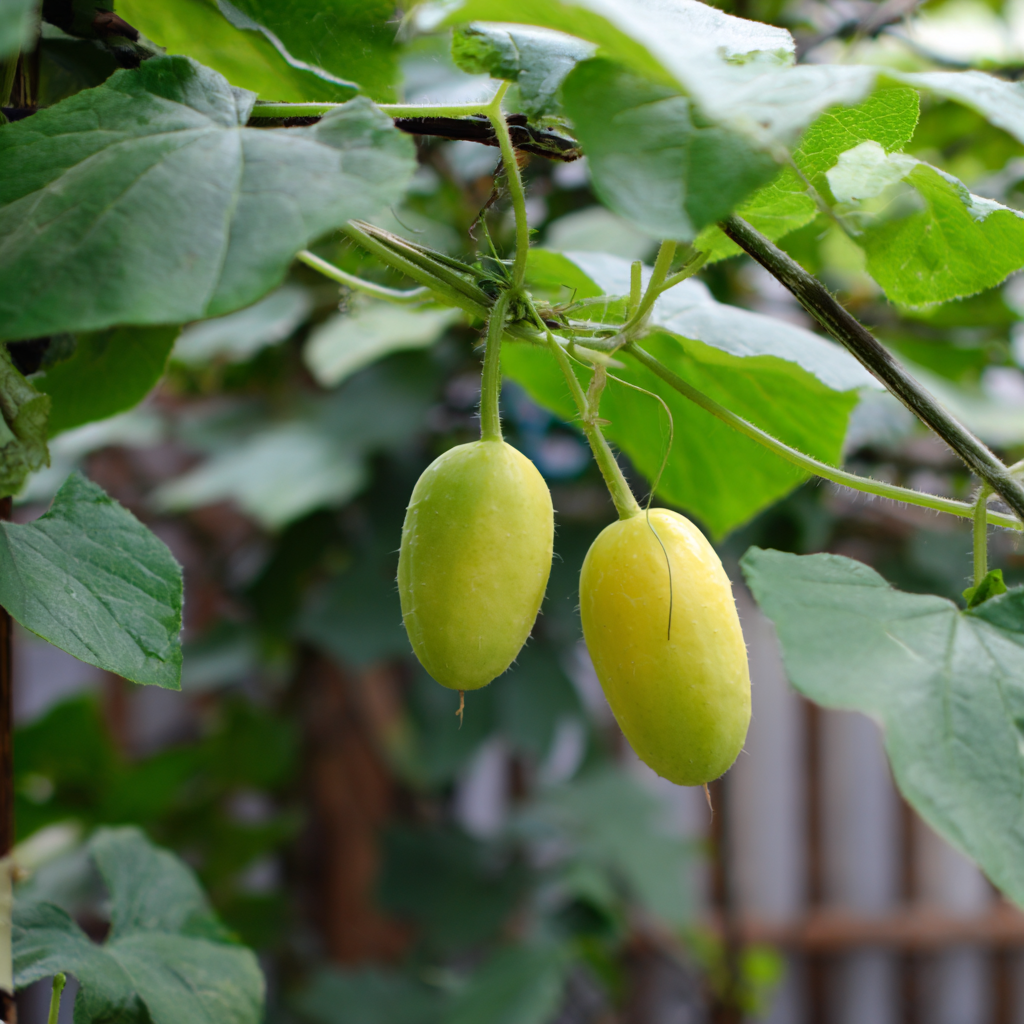
Lemon cucumber is an open-pollinated heirloom variety named for its shape and color, not its flavor. The round, pale-yellow fruit grows to about the size of a tennis ball or small baseball and has a mild, sweet taste with thin, edible skin and a crisp interior. Despite looking nothing like a typical cucumber, it grows the same way — direct sown into warm soil, trellised or left to sprawl, and harvested frequently before the fruit passes peak ripeness.
Quick How-to
Direct sow Lemon Cucumber outdoors once soil temperature reaches 70 F. Sow about 1/2 inch deep, thin seedlings to 12 to 18 inches apart, and provide a trellis or cage. Harvest fruits when they are roughly 2 to 3 inches in diameter and pale yellow. Do not wait for the skin to turn deep yellow or orange — at that point the seeds have hardened and the flavor declines.
Quick Guide
| Fact | Recommendation |
|---|---|
| Best method | Direct sow preferred; indoor start 3 to 4 weeks before transplant date |
| Sowing depth | About 1/2 inch |
| Germination temperature | 70 to 95 F; minimum 65 F soil temperature |
| Days to germination | 7 to 10 days in warm soil |
| Light for germination | Cover seed; strong light immediately after sprouting |
| Spacing | 12 to 18 inches apart in rows; thin hills to 2 plants |
| Sun | Full sun, at least 6 to 8 hours |
| Water | Consistent, even moisture throughout the season |
| Days to harvest | Approximately 60 to 70 days from direct sow |
| Support | Trellis or cage recommended; fruit can rest on soil if sprawling |
Before You Sow
Like all cucumbers, Lemon Cucumber is a warm-season crop with zero frost tolerance. Seeds will sit dormant or rot in cold soil. Check soil temperature at 1-inch depth before sowing — 70 F is the reliable minimum. If you are gardening in a short-season climate, a 3 to 4 week indoor start in individual peat or coir pots gives you a head start without the root disturbance that cucumber transplants dislike.
Prepare the planting area with compost worked into the top 6 to 8 inches. Good fertility and drainage matter more than any other soil factor. Avoid beds that stay waterlogged after rain.
Direct Sowing
Sow 2 to 3 seeds at each planting point, about 1/2 inch deep. Once seedlings develop their first true leaves, thin to the single strongest plant at each location. Space planting points 12 to 18 inches apart along a trellis, or use the hill method — 3 to 4 seeds per hill, hills spaced 5 to 6 feet apart, thinned to 2 plants per hill.
Press the soil gently after sowing for good seed contact and water with a soft spray that does not displace seed. Keep the seedbed evenly moist until emergence. Once seedlings are up, ease off daily watering and let plants develop deeper roots.
Indoor Starting and Transplanting
Start seeds indoors no more than 3 to 4 weeks before your transplant date. Use individual pots — cucumbers do not tolerate bare-root transplanting well. Provide warm temperatures for germination (around 75 to 85 F), then move seedlings to bright light as soon as they emerge to prevent stretching.
Harden off for 5 to 7 days before transplanting. Set plants out after all frost risk has passed and soil is genuinely warm. Transplant gently, disturbing roots as little as possible, and water in well. Stakes or trellis attachment can begin at planting.
Soil, Sun, and Water
Lemon Cucumber performs best in full sun with fertile, well-draining soil at a pH of about 6.0 to 6.8. It is a vigorous grower once established and benefits from a side dressing of balanced fertilizer as vines begin to run. Avoid excessive nitrogen, which can push leafy growth at the expense of fruit set.
Water deeply and consistently. Lemon Cucumber is particularly susceptible to flavor changes when irrigation is uneven — bitter fruit or tough skin often traces back to dry spells followed by heavy watering. Mulching after the soil is warm helps maintain steady moisture and reduces foliar disease from soil splash. Avoid wetting leaves late in the day.
Top Mistakes
- Harvesting too late: The most common error with Lemon Cucumber. The fruit looks appealing when bright yellow or starting to turn orange, but at that stage the seeds are hard, the skin is tough, and the flavor has dropped off. Pick when the fruit is about 2 to 3 inches across and pale creamy yellow.
- Letting overripe fruit stay on the vine: Cucumbers send a signal to stop flowering and fruiting when seeds mature on the plant. A few forgotten oversized fruits can slow the whole plant’s production significantly.
- Skipping a trellis: Sprawling plants produce more misshapen or soil-stained fruit and are harder to scout for harvest. A simple trellis or cage costs little effort and improves yield quality noticeably.
- Sowing too early: Cold soil delays germination and raises the risk of damping-off or seed rot. A week or two of patience for soil to warm pays off in faster, healthier germination.
- Confusing the fruit for unripe: New growers sometimes wait for Lemon Cucumber to look like a “real” cucumber. It does not. The pale, round shape at 2 to 3 inches is exactly what ripe looks like for this variety.
Troubleshooting by Symptom
| Symptom | Likely causes | What to do next |
|---|---|---|
| Seeds do not germinate after 10 to 14 days | Soil below 65 F, seed buried too deep, or waterlogged bed | Check soil temperature; re-sow at 1/2 inch depth once the soil holds 70 F or above |
| Seedlings emerge then collapse at soil level | Damping-off from cool, wet, poorly aerated soil | Improve drainage, thin seedlings to improve airflow, and avoid overhead watering on cloudy days |
| Vines grow well but fruit is bitter | Irregular watering, heat stress, or fruit harvested too large and overripe | Maintain consistent moisture; harvest when fruits reach 2 to 3 inches in diameter; mulch to moderate soil temperature |
| Fruit skin is tough or seedy | Fruit left on the vine too long | Pick at 2 to 3 inches; once skin begins to deepen from pale yellow toward orange the fruit is past its eating peak |
| Powdery white coating on leaves | Powdery mildew, common in warm dry conditions with cool nights | Improve airflow by trellising; avoid overhead watering; remove heavily infected leaves to slow spread |
| Sudden wilting despite adequate soil moisture | Cucumber beetle feeding on stems and roots, potentially spreading bacterial wilt | Inspect plants at soil level for beetle damage; use row covers early in season before flowering; remove covers to allow pollination |
| Few or no fruits despite healthy vines | Lack of pollinator activity, heat above 95 F reducing fruit set, or flowers dropping | Ensure plants are in full sun with bee access; avoid pesticide applications during flowering hours |
Harvest and Kitchen Use
Lemon Cucumber is ready to pick when fruits are 2 to 3 inches in diameter, firm, and pale yellow to creamy white. Fruit harvested at this stage has thin, tender skin you do not need to peel, a mild flavor, and a crisp, watery interior with small, soft seeds. Check plants every day or two during peak production — this variety can go from perfect to overripe quickly in warm weather.
Lemon Cucumber is excellent sliced fresh, added to summer salads, or eaten out of hand. Its mild flavor pairs well with fresh herbs, light vinaigrettes, and yogurt-based dips. It also quick-pickles well when harvested young at 1.5 to 2 inches, similar to a cornichon size. Unlike some cucumbers, it rarely has any bitterness when harvested at the right stage.
Seed Saving
Lemon Cucumber is open-pollinated and can be saved true to type, provided no other cucumber varieties are blooming nearby. Cucumbers are insect-pollinated, and different cucumber varieties will cross readily. To save reliable seed, isolate from all other cucumber varieties by at least a quarter mile, or hand-pollinate designated fruits by bagging male and female flowers before they open, transferring pollen by hand, and rebagging until fertilization is complete.
Allow seed-saving fruits to remain on the vine until they are fully yellow-orange and beginning to soften — well past the eating stage. Remove seeds, ferment in water for 2 to 3 days (this removes the germination-inhibiting gel coating), rinse well, and dry on a non-stick surface for at least a week before storage. Label with variety and year. Store sealed, cool, and dry.
Storing Leftover Seed
Keep unused Lemon Cucumber seed in its labeled packet inside a sealed container in a cool, dry, dark indoor location. Avoid garages, sheds, greenhouses, and sunny windowsills, where temperature and humidity swing sharply. Label home-saved seed with the variety and harvest year before storing it.
FAQ
Is Lemon Cucumber actually related to lemons?
No. The name refers entirely to the shape and color. Lemon Cucumber is a true cucumber (Cucumis sativus) with the same culture and flavor profile as other cucumbers — mild, crisp, and refreshing. It has no citrus flavor or botanical relation to citrus fruit.
When exactly should I pick Lemon Cucumber?
Pick when the fruit is about 2 to 3 inches across and pale yellow to creamy white — roughly the size of a tennis ball. At that point the skin is thin and tender, the seeds are small and soft, and the flavor is at its best. Once it turns deep yellow or starts toward orange, the seeds harden and eating quality declines.
Do Lemon Cucumbers need a trellis?
They do not strictly require one, but trellising makes managing and harvesting the plants much easier and results in cleaner, less misshapen fruit. If you prefer to let them sprawl, use straw or landscape cloth under the vines to keep fruit off bare soil.
Can I grow Lemon Cucumber in a container?
Yes, with a large enough pot. Use a container of at least 5 gallons, provide a small trellis or cage, and water frequently since containers dry out faster than garden beds. Full sun is essential.