
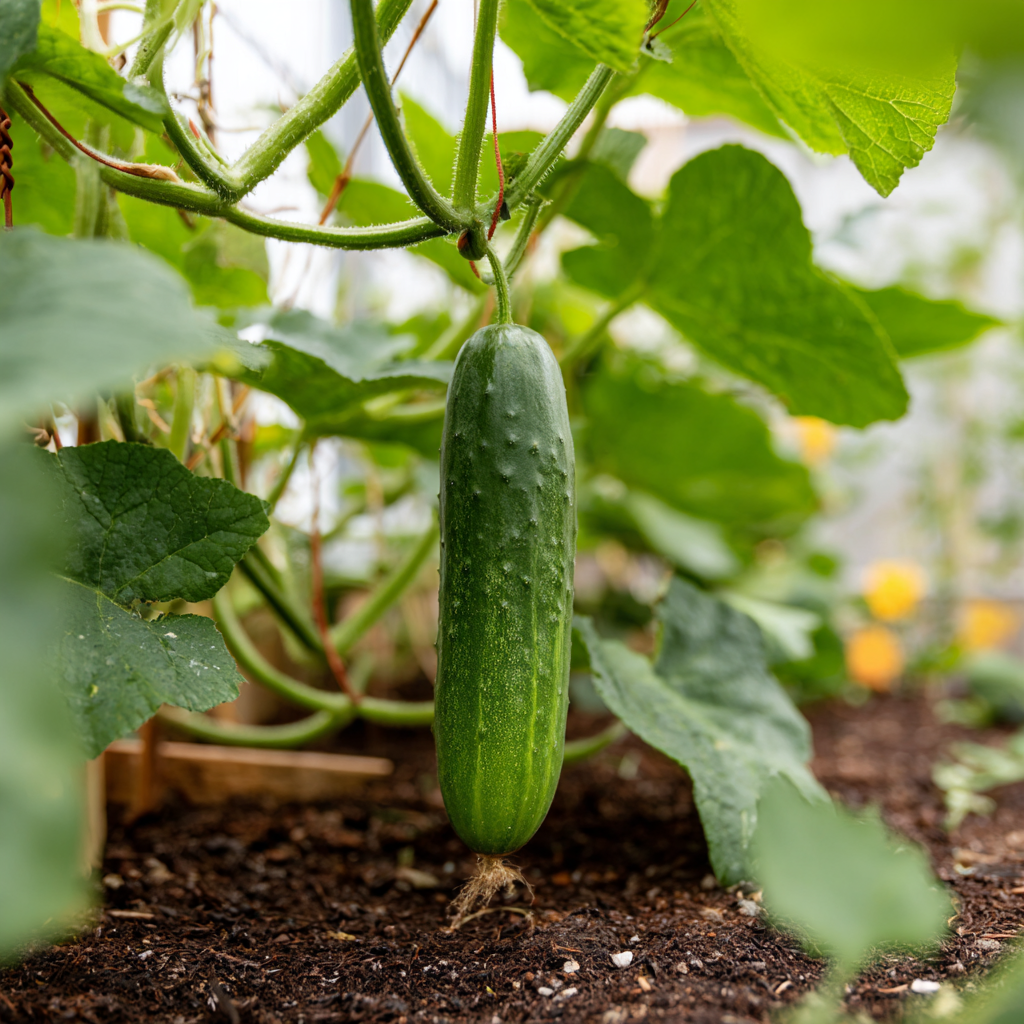
Beit Alpha is a smooth-skinned, thin-walled cucumber developed in Israel and widely grown across the Middle East and Mediterranean. The fruit is picked young at 5 to 7 inches, requires no peeling, and has a mild, nearly seedless interior that makes it equally good for slicing and pickling. Because many Beit Alpha types are parthenocarpic — able to set fruit without pollinator activity — this cucumber adapts well to both outdoor garden rows and protected greenhouse growing.
Quick How-to
Direct sow Beit Alpha cucumber seeds outdoors once soil temperature holds steady at 70 F or above, or start seeds indoors no more than 3 to 4 weeks before your last frost date. Sow about 1/2 inch deep, keep the soil warm and evenly moist, and provide a trellis or support early. Harvest fruits at 5 to 7 inches before the skin begins to lose its glossy green color.
Quick Guide
| Fact | Recommendation |
|---|---|
| Best method | Direct sow after soil warms; short indoor start optional |
| Sowing depth | About 1/2 inch |
| Germination temperature | 70 to 95 F; minimum 65 F soil temperature |
| Days to germination | 7 to 10 days in warm soil |
| Light for germination | Cover seed; strong light needed immediately after sprouting |
| Spacing | 12 to 18 inches in rows; 5 to 6 feet between rows (bush/hill spacing) |
| Sun | Full sun, 6 to 8 hours minimum |
| Water | Even, consistent moisture; avoid dry spells during fruit fill |
| Days to harvest | Approximately 55 to 65 days from direct sow |
| Support | Trellis or cage strongly recommended; vertical training improves fruit quality |
Before You Sow
Cucumbers are warm-season crops that will not germinate reliably in cold soil and will stall or rot if transplanted before conditions are truly warm. Check soil temperature at a 1-inch depth before sowing — 70 F is the practical minimum for Beit Alpha. Anything cooler and germination slows significantly or fails to start.
Prepare the bed with well-rotted compost worked into the top several inches. Beit Alpha prefers fertile, well-draining soil. Rake the surface smooth, and if you plan to use a trellis, set the posts before sowing so you do not disturb seedlings later.
If starting indoors, use individual peat or coir pots that can be transplanted pot-and-all. Cucumber roots are sensitive, and disturbing the root ball during transplanting often sets plants back. Sow no more than 3 to 4 weeks before your transplant date.
Direct Sowing
Sow seeds about 1/2 inch deep. Plant 2 to 3 seeds per location and thin to the strongest seedling once true leaves appear. For rows, space planting points 12 to 18 inches apart. For hill planting, place 3 to 4 seeds per hill with hills 5 to 6 feet apart, then thin to 2 plants per hill after emergence.
Water gently after sowing. Keep the seedbed consistently moist but not waterlogged until germination. Warm soil is more important than frequent watering at this stage — a soil that is moist and warm will germinate faster than one that is cool and wet.
Transplanting (Indoor-Started Plants)
Harden off seedlings for 5 to 7 days before planting out. Move them from sheltered shade to progressively more sun and outdoor air exposure. Transplant on a mild day, disturbing roots as little as possible. Set transplants at the same depth they were growing indoors. Water in thoroughly and provide wind protection for the first few days.
Do not rush transplanting to beat a neighbor’s plants into the ground. Cucumbers transplanted into warm soil consistently outperform those set out early into cold or wet beds.
Greenhouse Culture
Beit Alpha types perform particularly well under cover because many are parthenocarpic — they set fruit without bee activity. In a greenhouse, maintain daytime temperatures of 75 to 85 F and nighttime temperatures above 60 F. Keep humidity between 60 and 70 percent with good air circulation to limit disease pressure.
Train plants vertically on a single-stem cordon using clips or ties to a wire or string system. Remove lateral shoots below the first several nodes to focus early energy on the main stem, then allow laterals to develop above that point. Harvest frequently to keep production active.
Soil, Sun, and Water
Beit Alpha grows best in full sun — at least 6 to 8 hours of direct light daily — in rich, well-draining soil with a pH of roughly 6.0 to 6.8. Work compost into the planting area before sowing. A side dressing of balanced fertilizer once plants are actively growing and beginning to vine can support continued production.
Water consistently and deeply. Cucumbers are mostly water and respond poorly to irregular irrigation. Mulching around the base of plants after the soil is warm helps hold moisture, moderate soil temperature, and keep fruit off bare soil. Avoid wetting foliage when possible, especially in humid conditions.
In very hot weather, brief afternoon shade from a taller crop or shade cloth can help prevent stress. Beit Alpha is somewhat better adapted to heat than some European greenhouse types, but sustained temperatures above 95 F will reduce fruit set.
Top Mistakes
- Sowing into cold soil: Cucumber seeds sit dormant or rot in soil below 65 F. Wait until the soil holds 70 F at 1 inch before sowing outdoors, even if the calendar says it is time.
- Letting fruit mature past prime: Beit Alpha loses its thin, tender skin and mild flavor quickly once it passes peak size. Check plants daily during production and harvest at 5 to 7 inches. Overripe fruit sends a signal to the plant to slow production.
- Skipping the trellis: Plants grown sprawling on the ground produce curved or discolored fruit, have poor airflow, and are harder to harvest. Vertical growing improves nearly every aspect of yield and quality.
- Overwatering young seedlings: Waterlogged soil around cucumber seedlings promotes damping-off and root problems. Keep the soil evenly moist, not saturated, and ensure drainage is adequate before sowing.
- Planting too early indoors: Starting seeds more than 4 weeks before your transplant date produces large, rootbound transplants that stall in the garden. Time indoor starts so transplants go out at 3 to 4 weeks of age.
Troubleshooting by Symptom
| Symptom | Likely causes | What to do next |
|---|---|---|
| No germination after 10 to 14 days | Soil too cold, seed too deep, or waterlogged bed | Check soil temperature; it should be at least 70 F. Resow at 1/2 inch depth in warm, well-drained soil |
| Seedlings emerge and then collapse | Damping-off from overly wet conditions, poor airflow, or cold nights | Improve drainage, thin to improve airflow, avoid overhead watering, and wait for soil to warm |
| Plants vine but produce few or no fruit | Temperature extremes (too hot or a cool spell), insufficient light, or pollinator shortage | Ensure full sun; in greenhouses, temperatures should hold 75 to 85 F. Parthenocarpic types should set fruit without pollinators, but outdoor varieties may need bee activity |
| Fruit is bitter | Heat stress, irregular watering, or picking fruit too large and overmature | Harvest at 5 to 7 inches before skin yellows; maintain even soil moisture; consider brief afternoon shade in peak summer |
| Leaves show yellow spots with fuzzy gray-purple underside | Downy mildew, common in humid conditions | Improve airflow, reduce overhead watering, and remove badly affected leaves. Plant disease-resistant varieties in problem areas |
| Fruit is curved or misshapen | Poor pollination (outdoor plants), uneven moisture, or fruit resting on soil | Trellis plants; water consistently; for outdoor Beit Alpha, ensure pollinators can reach flowers |
| Wilting despite adequate water | Cucumber beetle feeding damaging stems, or bacterial wilt transmitted by beetles | Inspect stems for beetle feeding; use row cover early in the season and remove when flowering begins |
Harvest and Kitchen Use
Beit Alpha cucumber is at its peak when fruits are 5 to 7 inches long, firm, smooth, and glossy green with no yellow blush. The skin is edible and mild — no peeling needed. Harvest every 1 to 2 days during peak production; leaving overripe fruit on the vine signals the plant to stop producing.
Use Beit Alpha sliced fresh in salads, tucked into wraps, or fermented as a quick pickle. The thin skin and nearly seedless interior also make it excellent for Middle Eastern preparations like tzatziki or pickled with dill and garlic in small jars. The mild flavor holds up well whether eaten raw or briefly brined.
Seed Saving
Seed saving from Beit Alpha requires knowing whether your strain is open-pollinated or an F1 hybrid. Many commercial Beit Alpha offerings are hybrids; seed from hybrids will not grow true to the parent type. Confirm your strain’s status before planning to save.
If you are growing an open-pollinated Beit Alpha strain, isolate it from other cucumber varieties by at least a quarter mile, or hand-pollinate by bagging male and female flowers before they open, transferring pollen by hand, then re-bagging. Allow fruit designated for seed saving to remain on the vine until yellow-orange and overripe. Scoop seeds out, ferment in water for 2 to 3 days to remove the gel coating, rinse, and dry thoroughly on a non-stick surface. Store in a labeled, sealed container away from heat and humidity.
Storing Leftover Seed
Keep unused Beit Alpha Cucumber seed in its labeled packet inside a sealed container in a cool, dry, dark indoor location. Avoid garages, sheds, greenhouses, and sunny windowsills, where temperature and humidity swing sharply. Label home-saved seed with the variety and harvest year before storing it.
FAQ
Does Beit Alpha cucumber need a trellis?
It produces acceptable yields without one, but trellising makes a real difference. Vertical plants have better airflow, produce straighter fruit that is easier to spot and harvest, and are far more convenient to manage in a small garden.
Can I grow Beit Alpha in a greenhouse?
Yes, and it is well-suited to greenhouse culture. Many Beit Alpha strains are parthenocarpic, meaning they set fruit without pollinator activity. This makes them reliable under cover where bees do not reach. Maintain temperatures between 75 and 85 F and provide vertical training for best results.
Why does my Beit Alpha taste bitter?
Bitterness in cucumbers usually results from heat stress, irregular watering, or harvesting fruit that has grown past its ideal size. Harvest at 5 to 7 inches, maintain even soil moisture, and consider brief shade during extreme heat.
Can I use Beit Alpha for pickling?
Yes. The thin skin, mild flavor, and nearly seedless interior make it a good pickling cucumber when harvested young at 3 to 5 inches. It holds texture in a quick refrigerator brine and in short-ferment pickling better than thick-skinned slicers.