
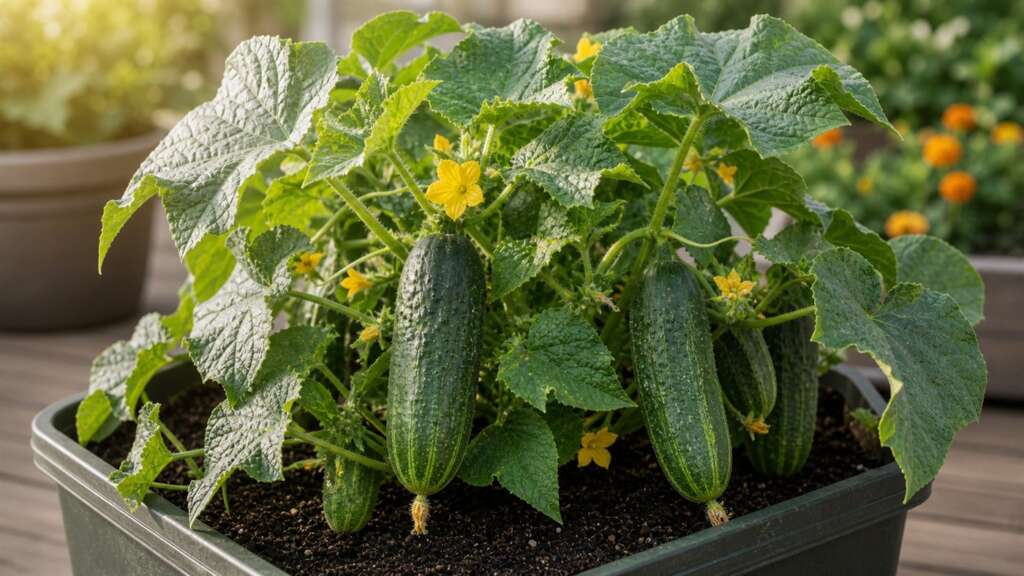
Spacemaster is a compact, bush-habit slicing cucumber bred for gardeners who do not have room for a long sprawling vine. Plants stay short and dense, so the variety fits well in containers, raised beds, balcony gardens, and small backyard plots where a standard cucumber would take over. Like all cucumbers, it is a warm-season crop that rewards patience: wait for warm soil, sow at the right depth, and keep moisture steady, and the rest is mostly a matter of giving it sun and a place to climb or sit.
Quick How-to
Direct sow Spacemaster Cucumber after the last spring frost, once the soil has warmed to at least 65 to 70 F. Cover seed about 1/2 to 1 inch deep, keep the bed evenly moist, and expect sprouts in roughly 3 to 10 days. In short-season climates you can start indoors 2 to 3 weeks before transplant time, but no earlier; cucumbers grow fast and dislike root disturbance, so a short indoor head start works better than a long one. Space this compact bush cultivar 12 to 18 inches apart and begin checking fruit at about 55 days.
Quick Guide
| Fact | Recommendation |
|---|---|
| Best method | Direct sow after soil warms; short indoor start (2 to 3 weeks) in short-season areas |
| Sowing depth | About 1/2 to 1 inch |
| Germination temperature | Best around 70 to 90 F; below 60 F is too cold |
| Days to germination | About 3 to 10 days in warm soil |
| Light for germination | Cover seed; provide strong light immediately after emergence |
| Spacing | About 12 to 18 inches between compact bush plants |
| Sun | Full sun, ideally 6 to 8 hours or more |
| Water | Consistent, even moisture, especially during flowering and fruit set |
| Harvest | About 55 to 65 days from sowing; pick promptly at slicing size |
| Plant size | Compact bush habit, commonly spreading about 2 to 3 feet |
Before You Sow
Cucumbers are a warm-weather crop with shallow roots and a strong dislike for cold, wet soil. Spacemaster is no exception. The single biggest factor in early success is waiting until conditions are actually warm, not just frost-free. Daytime air can feel mild while the soil a few inches down is still cold from spring rain.
Choose a sunny spot with well-drained soil. Mix in a few inches of finished compost before sowing; cucumbers are moderately heavy feeders and respond well to organic matter that holds moisture without staying soggy. Skip high-nitrogen amendments at this stage, since too much nitrogen pushes leafy growth at the expense of flowers and fruit.
Because Spacemaster stays compact, you do not need a tall trellis. A short A-frame, a tomato cage, or even a sturdy ring of stakes is enough to keep fruit off the ground and improve airflow. Cleaner fruit and fewer mildew problems are usually worth a few minutes of setup.
If you are gardening in containers, choose a pot at least 5 gallons in size with drainage holes, and use a good-quality potting mix rather than dense garden soil. Smaller pots dry out quickly and exaggerate every swing in temperature and moisture, which is a common reason container cucumbers underperform.
Direct Sowing
Direct sowing is the most reliable method for cucumbers because they germinate quickly in warm soil and dislike being moved. Wait until your average overnight low is mild and the soil at about a 2-inch depth has reached at least 65 F. A simple soil thermometer takes the guesswork out of this step.
Sow seeds 1/2 to 1 inch deep, pointed end down if you can see it, and firm the soil gently for good contact. For Spacemaster, place two or three seeds every 12 to 18 inches in a row or small hill, then thin to the strongest seedling once true leaves appear. Pulling weaker seedlings rather than transplanting them avoids disturbing the keeper.
Water gently after sowing so seeds are not washed deeper or sideways. Keep the surface evenly moist until emergence. If hot, dry weather arrives during germination, a light layer of straw mulch or a sheet of row cover can keep the seedbed from crusting. Remove any cover once seedlings emerge and definitely before flowers open, so pollinators have access.
Indoor Starting
Indoor starting is optional and best used as a short head start, not a long one. Sow in individual cells or 3- to 4-inch pots about 2 to 3 weeks before your intended transplant date. Use fresh seed-starting mix, sow 1/2 to 1 inch deep, and keep the mix warm. A seedling heat mat helps maintain steady germination temperatures, especially on a cool windowsill.
As soon as seedlings emerge, remove any humidity dome and move them under strong overhead light. Cucumbers stretch quickly under weak light, and a stretched seedling rarely catches up after transplanting. Aim to move plants outdoors when they have one or two true leaves and roots that hold the cell together but have not yet circled the pot.
Hardening Off and Transplanting
Cucumbers transplant best when their roots are barely disturbed. Harden off seedlings over 5 to 7 days, starting with an hour or two of sheltered shade and gradually increasing time, sun, and breeze exposure. Watch the weather; one cold night can stall a seedling for a week or more.
When you transplant, water the cells thoroughly first, then slide each plant out without squeezing the root ball. Set the seedling at the same depth it grew in the pot, firm soil around the roots, and water in well. If a cold snap is forecast within the next few nights, cover plants with a light row cover or cloche. Spacemaster bounces back well, but only if its roots are warm.
Soil, Sun, and Water
Full sun is non-negotiable for steady fruit production. Six hours is a working minimum; eight or more is better. Soil should drain freely and hold moisture without staying waterlogged. Mulch with straw, shredded leaves, or grass clippings (untreated) once the soil has fully warmed, to even out moisture and reduce splash from rain.
Cucumbers are about 95 percent water, and even moisture is the single biggest factor in tender, well-shaped fruit. Aim for about 1 inch of water per week from rain or irrigation, more in hot or windy weather. Water at the soil level rather than overhead when possible; wet foliage encourages powdery and downy mildew. A simple drip line or soaker hose under the mulch is ideal.
Avoid the cycle of letting plants wilt and then soaking them. Repeated dry-wet swings stress the plant and contribute to bitter flavor, misshapen fruit, and split skins.
Top Mistakes
- Sowing into cold soil: Cucumbers germinate slowly or not at all when the soil is below about 60 F. Cold, wet conditions also invite damping-off. Use a soil thermometer and wait for stable warmth.
- Transplanting a tray-bound seedling: Long indoor stays produce stressed, root-circled plants that stall after transplant. Keep indoor starts short and move plants out before roots fill the cell.
- Irregular watering: Cucumbers respond quickly to drought stress. Even short dry spells during fruit set can produce pinched, curled, or bitter cucumbers.
- Leaving oversized fruit on the plant: Once a cucumber reaches full size and starts producing mature seed, the plant slows new fruit set. Pick often and pick on the small side for the best flavor.
- Crowding plants for the sake of a fuller-looking bed: Even bush cucumbers need airflow. Crowded foliage stays wet longer after rain or dew, which is exactly what mildew prefers.
Troubleshooting by Symptom
| Symptom | Likely causes | What to do next |
|---|---|---|
| No sprouts after 10 days | Soil too cold, seed too deep, surface crusted, or bed sat saturated | Check soil temperature, loosen the surface, and resow 1/2 to 1 inch deep once soil is warm |
| Seedlings collapse at the soil line | Damping-off from cold, wet, or stagnant conditions | Improve drainage and airflow, water less frequently, and restart in fresh mix if indoors |
| Plants flower but set little fruit | Too few pollinators, very high heat, or only male flowers present early | Be patient, encourage bees with nearby flowers, and avoid spraying insecticides during bloom |
| Cucumbers are curled, pinched, or stubby | Inconsistent water, incomplete pollination, or heat stress | Mulch, water deeply and evenly, and protect plants during heat waves |
| Cucumbers taste bitter | Drought stress, sustained heat, or fruit left on the plant too long | Keep soil consistently moist, mulch, and harvest while fruit is still on the smaller side |
| White powdery patches on leaves | Powdery mildew, often from crowding and humid nights | Improve airflow with light pruning, water at the soil, and remove badly affected leaves |
| Yellow leaves with sudden wilt | Bacterial wilt (often from cucumber beetles), root rot, or severe drought | Identify the cause first; remove infected plants if bacterial wilt is confirmed |
Container and Small-Space Notes
Spacemaster is one of the better cucumbers for container culture because its bush habit keeps the plant manageable. Use a pot of at least 5 gallons (7 to 10 gallons is better), with drainage holes and a quality potting mix. One plant per pot is usually right; two plants in a small pot will outgrow it.
Containers dry out faster than the ground, especially in sun and wind. In peak summer you may need to water once a day, and twice on hot, breezy days. Push a finger an inch into the soil to check rather than guessing from the surface. A small saucer can help retain moisture, but empty it after heavy rain so roots are not standing in water.
A short cage or stake keeps fruit cleaner and the plant tidier. If you want to grow Spacemaster on a railing or balcony, a fan-style trellis behind the pot works well and improves airflow on humid days.
Harvest and Kitchen Use
Spacemaster cucumbers are typically ready when they reach about 6 to 8 inches long and are still firm, glossy, and uniformly green. Pick by twisting gently or cutting with shears to avoid tearing the vine. Check plants every day or two during peak production; cucumbers can go from ideal to oversized in 48 hours of warm weather.
Use fresh cucumbers within a few days of harvest for the best texture. They store best at moderate refrigerator temperatures (around 45 to 50 F) wrapped loosely; very cold refrigerator zones can cause pitting and soft spots. Spacemaster is a slicing-type cucumber, suited to salads and fresh eating, though smaller fruit can also be used for quick refrigerator pickles.
Seed Saving
Cucumbers cross-pollinate freely with other cucumber varieties grown nearby, so saved seed from a mixed garden may not grow true to type. If you want to save seed intentionally, grow only one open-pollinated cucumber variety, or isolate flowers by hand.
Let selected fruit grow well past eating size, until the skin turns yellow or golden and the cucumber feels slightly soft. Scoop seeds and pulp into a jar, add a little water, and let it ferment at room temperature for 2 to 3 days, stirring once a day. Filled seed will settle; rinse it clean, spread it on a plate or screen out of direct sun, and dry thoroughly before storing. Label with the variety and year.
Storing Leftover Seed
Keep unused Spacemaster Cucumber seed in its labeled packet inside a sealed container in a cool, dry, dark indoor location. Avoid garages, sheds, greenhouses, and sunny windowsills, where temperature and humidity swing sharply. Label home-saved seed with the variety and harvest year before storing it.
FAQ
Does Spacemaster really stay compact, or will it sprawl?
Spacemaster is a true bush-habit cucumber, with shorter internodes and a tighter overall form than vining slicers. It still spreads 2 to 3 feet wide and benefits from a small cage or trellis, but it will not climb a tall fence the way a standard cucumber does.
Can I grow Spacemaster in a container?
Yes, and it is one of the cucumbers most often recommended for container growing. Use at least a 5-gallon pot, water consistently, and give it full sun.
Do I need more than one plant for pollination?
Cucumbers produce both male and female flowers on the same plant, so one plant can set fruit. That said, more plants and more nearby flowering plants mean more bees and more reliable pollination.
Why are my early flowers dropping without fruit?
Cucumbers typically produce a flush of male flowers first, before female flowers appear. Those early male flowers always drop. Once female flowers (with a tiny cucumber behind the bloom) open and bees can reach them, fruit set begins.
How often should I pick?
Every day or two during peak production. Frequent harvesting keeps fruit tender and signals the plant to keep producing.