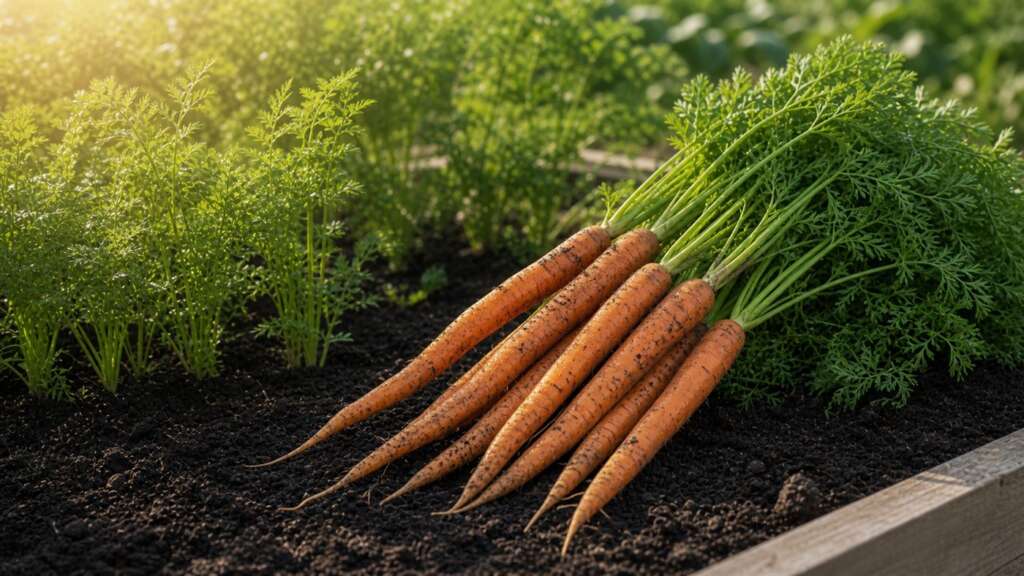
Imperator 58 is a long, slender, classic-orange heirloom carrot grown for sweet, crisp roots and an old-fashioned market-carrot look. Because Imperator types reach noticeably longer than Nantes or Chantenay carrots, success depends almost entirely on what happens before sowing: deep, loose, stone-free soil and a patient, evenly moist seedbed during germination.
Quick How-to
Direct sow Imperator 58 outdoors in cool to mild weather, about two to four weeks before your last expected spring frost, with a second sowing in late summer for a fall crop. Cover seed about 1/4 inch deep in finely worked soil and keep the surface evenly moist for the full germination window of roughly 10 to 21 days. Do not transplant, do not let the row crust over, and thin early so roots have room to size up cleanly.
Quick Guide
| Fact | Recommendation |
|---|---|
| Best method | Direct sow only; carrots resent transplanting |
| Sowing depth | About 1/4 inch, covered with fine soil or vermiculite |
| Germination temperature | About 50 to 80 F; steady cool to mild soil works best |
| Days to germination | About 10 to 21 days; often slower in cool soil |
| Light for germination | Cover lightly; seedlings need strong sun once up |
| Spacing | Thin to about 2 to 3 inches apart for long roots |
| Sun | Full sun, ideally 6 or more hours |
| Water | Keep the seedbed evenly moist; do not let the surface crust |
| Days to harvest | About 73 days from sowing in favorable conditions; begin checking roots around day 70 |
| Root size | Long, deep-orange, tapered roots commonly reach about 8 inches in loose, deep soil |
Before You Sow
Imperator 58 rewards thorough soil preparation more than any fertilizer routine. Pick a bed that gets steady sun and dig or fork the soil deep enough to give long taproots a clear run downward. Many growers loosen to roughly 10 to 12 inches for Imperator types, then break up clods and lift out rocks, sticks, and clumps of compost that the root might steer around.
Avoid fresh manure and heavy nitrogen feeding. Both can push lush tops while encouraging forked, hairy, or oddly branched roots. If your soil is heavy, rocky, or shallow, build a raised bed or wide ridge with screened topsoil and a small amount of well-finished compost. Smooth the surface, water the bed once, and let it settle before you place seed.
A few tools make carrots noticeably easier: a fine rose on a watering can or a gentle spray nozzle, a thin layer of vermiculite or sifted compost for covering seed, and a row marker so you can recognize the slow-emerging seedlings before you mistake them for weeds.
Direct Sowing
Make shallow furrows or rake a fine surface and scatter seed thinly along the row. Imperator 58 seeds are small and easy to over-sow; aim for one seed every half inch and accept that you will still thin later. Cover with about 1/4 inch of fine soil or, ideally, a band of vermiculite, which holds moisture and resists crusting better than garden soil.
Water with a gentle spray so seed is not washed into low spots or floated against the edge of the row. From this point until emergence, the single most important job is keeping the top inch of soil consistently damp. A light board, burlap, or row cover laid directly over the row can reduce evaporation, but check daily and remove the cover at the first sign of sprouts so seedlings are not pulled tall in the dark.
For a steady supply, sow short successions every two to three weeks through the cool season. Carrots tolerate light frost, so an early spring sowing followed by a midsummer sowing for fall harvest is a reliable rhythm in most regions.
Why Not to Start Indoors
Indoor starting is not recommended for Imperator 58. Carrots form their main flavor and shape in a single, undisturbed taproot, and lifting a seedling from a cell almost always nicks or bends that root. The result is forking, stubby roots, or oddly twisted shoulders even when the top growth looks fine. The honest path with carrots is patient direct sowing in a well-prepared bed.
Thinning and Spacing
Thinning is where most home gardeners lose the crop without realizing it. Carrot seedlings look small and harmless when crowded, but underground each one is competing for room to widen and lengthen. Begin thinning as soon as seedlings reach about two inches tall, snipping unwanted seedlings at the soil line with small scissors rather than pulling them; pulling can disturb the neighbor you want to keep.
Thin in two passes. The first pass takes the row to roughly one seedling per inch. A week or two later, when leaves begin to touch, thin again to a final spacing of about 2 to 3 inches between plants. For very long Imperator roots in deep, loose soil, the wider end of that range gives cleaner shoulders and reduces twisting.
Soil, Sun, and Water
Full sun produces the sweetest roots and the best size. A little afternoon shade is acceptable in hot regions, but heavy shade leads to thin, pale, slow-growing carrots that never quite size up.
Soil should be loose, well-drained, and free of fresh organic chunks. A pH near neutral, roughly 6.0 to 6.8, suits carrots well. If you must amend before sowing, use a small amount of finished compost worked in deeply, and skip the high-nitrogen blends.
Water deeply and evenly. The most common cause of cracked, woody, or split carrots is a long dry stretch followed by heavy watering. Mulch lightly between rows once seedlings are established to buffer moisture and keep the surface cool. In the seedling stage, lean toward more frequent, gentle watering; once roots are forming, lean toward less frequent, deeper soakings.
Top Mistakes
- Letting the seedbed crust over: Carrot seedlings are tiny and slow. A surface that dries hard between waterings can stop a whole row from emerging even when the seed is fine. Cover with vermiculite or finished compost and keep the top inch consistently damp until you see sprouts.
- Sowing into rocky or shallow soil: Imperator roots cannot reach their full length through rocks, clods, or hardpan. Roots that hit obstacles fork, twist, or stop short. Prepare the bed deeply before sowing; do not try to fix it after.
- Skipping or delaying thinning: Crowded carrots stay small and tangled. Thin in two passes, and use scissors so you do not disturb the keepers.
- Adding fresh manure or heavy nitrogen: This pushes leafy tops at the expense of clean roots and is a leading cause of hairy, forked, or misshapen carrots. Use only well-finished compost in modest amounts.
- Sowing too late into hot weather: Hot, dry soil can stall germination and stress young seedlings. Spring and late-summer-into-fall sowings are more forgiving than midsummer.
Troubleshooting by Symptom
| Symptom | Likely causes | What to do next |
|---|---|---|
| No sprouts after 21 days | Surface crusted, seedbed dried out, seed buried too deeply, or hot dry weather | Re-sow shallowly, cover with vermiculite, and keep the row evenly moist; consider a board or row cover over the seedbed |
| Patchy or thin row | Uneven watering, seed washed by hard spray, or cloddy soil | Smooth the bed before sowing, water with a gentle spray, and overseed thin spots after first emergence |
| Forked or twisted roots | Rocks, clods, fresh manure, compacted soil, or transplant disturbance | Loosen the bed more deeply next season, screen out stones, and avoid raw manure |
| Hairy, fibrous roots | Excess nitrogen, inconsistent moisture, or stress during sizing | Skip high-nitrogen fertilizer, mulch lightly, and water evenly |
| Short, stubby roots | Shallow soil, hardpan, crowding, or harvested too early | Prepare deeper soil, thin earlier and wider, and pull a test root before assuming the crop is done |
| Cracked or split roots | Sudden heavy watering after dry conditions, or over-mature roots in the ground | Water more evenly, mulch to buffer moisture, and harvest on time |
| Green shoulders | Sun exposure on the top of the root as it pushes upward | Hill loose soil or mulch over the shoulders once roots begin to size |
| Leafy tops, small roots | Too much shade or too much nitrogen | Move next sowing to a sunnier bed and reduce fertilizer |
Harvest and Kitchen Use
Begin checking for harvest size at about 70 days, with mature roots commonly ready near day 73 under favorable conditions. Brush soil aside at the shoulder of a likely candidate; if the top of the root looks the diameter you want, gently loosen the soil with a fork before pulling so the long taproot lifts cleanly rather than snapping.
Pull a test root before harvesting the whole row. Flavor sweetens after a few cool nights, so a fall crop left in the ground through light frosts often tastes noticeably better than the same roots harvested warm. For storage, twist or cut the tops off close to the shoulder, brush off loose soil without washing, and keep roots cool, humid, and dark. Refrigerated in a perforated bag, well-cured Imperator carrots can hold their crispness for weeks.
Seed Saving
Carrots are biennial, which means they flower and set seed in their second year rather than the first. To save seed intentionally, leave selected roots in the ground over winter where the climate allows, or lift and store them and replant in spring. The plants will bolt, flower in lacy umbels, and produce seed by late summer.
A practical note: carrots cross readily with other cultivated carrots and with wild carrot, sometimes called Queen Anne’s lace, growing nearby. If neighboring gardens or roadsides have wild carrot in bloom at the same time, saved seed may not come true to the Imperator 58 type. For most home gardeners, growing carrots for harvest is simpler than maintaining an isolated seed crop.
Storing Leftover Seed
Keep unused Imperator 58 Carrot seed in its labeled packet inside a sealed container in a cool, dry, dark indoor location. Avoid garages, sheds, greenhouses, and sunny windowsills, where temperature and humidity swing sharply. Label home-saved seed with the variety and harvest year before storing it.
Container and Small-Space Notes
Imperator 58 is a long carrot, so containers need depth to suit it. Use a pot at least 12 to 14 inches deep with good drainage, and fill with a light, screened potting mix rather than heavy garden soil. Shallow window boxes and small pots produce stunted or bent roots from an Imperator-type seed; for those situations, a shorter carrot variety is the better fit.
Containers dry out faster than the open ground, so check the surface daily during germination and water gently as needed. Once seedlings are established, a thin mulch of fine compost on the surface helps hold moisture between waterings.
FAQ
Why did my carrots come out forked or twisted?
Forking is almost always a soil-structure issue. Rocks, clods, hardpan, fresh manure, and transplant disturbance are the usual causes. Prepare the bed deeper, screen out stones, and skip raw manure.
Can I start Imperator 58 indoors and transplant later?
It is not recommended. Carrots form their shape from a single undisturbed taproot, and moving a seedling almost always damages it. Direct sow into well-prepared soil instead.
My carrot seeds take forever to come up. Is something wrong?
Probably not. Carrot germination is naturally slow, often 10 to 21 days, and cool soil stretches that window further. The most important thing is to keep the seedbed evenly moist for the full window without letting the surface crust.
When should I thin, and how far apart?
Begin thinning as soon as seedlings are large enough to handle, and finish at roughly 2 to 3 inches between plants for Imperator types. Snip with scissors rather than pulling so you do not disturb neighboring roots.
Can I grow Imperator 58 in a container?
Yes, but only in a deep one. Plan on at least 12 to 14 inches of depth with loose, screened mix. Shorter carrot varieties are a better fit for shallow planters.
Do carrots need full sun?
Yes for best size and flavor. Light afternoon shade is fine in hot regions, but heavy shade produces small, pale roots.