
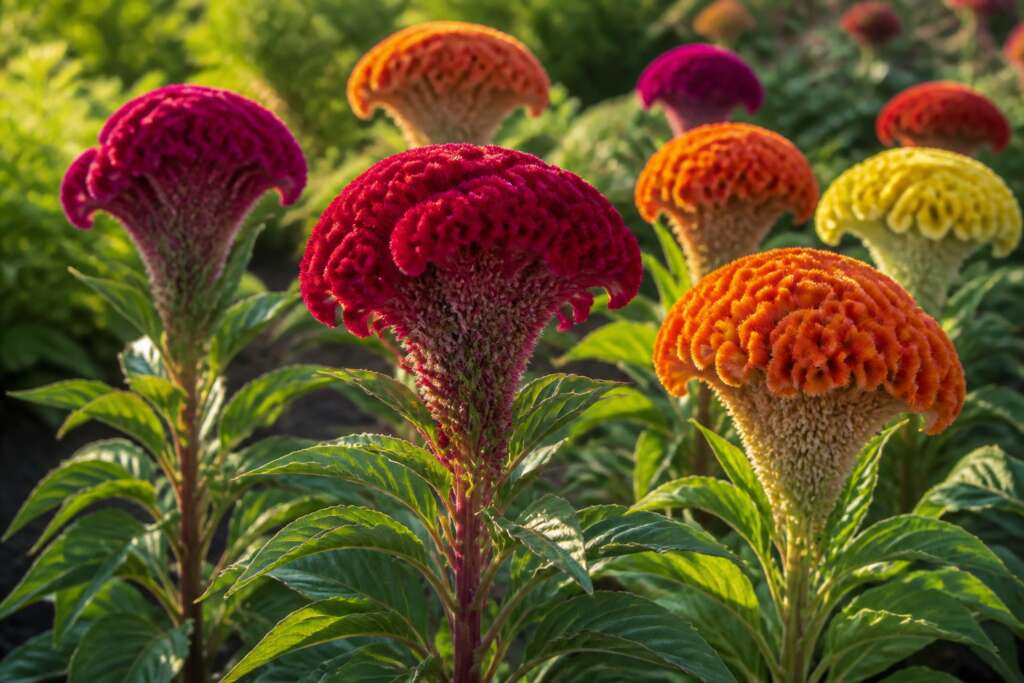
Giant Cockscomb Mix Celosia (Celosia argentea var. cristata) is a warm-season annual grown for its remarkable crested blooms, which fold and ripple like velvet waves in shades of red, gold, orange, pink, and cream. The fasciated comb shape is one of the most distinctive in the garden, drawing immediate attention in beds and borders and holding its structure and color beautifully when dried. Because cockscomb needs genuine warmth to germinate and dislikes transplant stress if handled roughly, success depends on giving seeds the right conditions from the start.
Quick How-to
Start Giant Cockscomb Mix Celosia indoors 6 to 8 weeks before your last expected frost, or direct sow outdoors only after the soil has warmed and frost risk is completely past. Surface sow or cover seeds barely, no more than 1/16 to 1/8 inch deep, because light helps trigger germination. Keep the germination environment warm, around 72 to 80 F. Transplant to the garden after hardening off when nighttime temperatures stay above 55 F. Celosia stalls in cold soil and will not produce the large combs it is capable of if planted out too early.
Quick Guide
| Fact | Recommendation |
|---|---|
| Best method | Start indoors 6 to 8 weeks before last frost; direct sow possible after soil warms |
| Sowing depth | Surface sow or barely cover, 1/16 to 1/8 inch maximum; light required for germination |
| Germination temperature | 72 to 80 F; a heat mat helps |
| Days to germination | About 8 to 14 days |
| Light for germination | Needs light; do not bury seeds |
| Spacing | 6 to 12 inches apart; wider for large comb development |
| Sun | Full sun |
| Water | Evenly moist; avoid waterlogged conditions, especially in early growth |
| Bloom timing | Typically 60 to 90 days from sowing to first comb |
| Plant size | Giant crested types commonly reach about 18 to 36 inches, with height varying across a color mix |
Before You Sow
Cockscomb is sensitive to cold soil and cold air, so timing matters. Starting indoors lets you give seeds the warmth they need while the outdoor season is still too cold. Plan to sow 6 to 8 weeks before your last frost date so that seedlings are ready for transplant when conditions are genuinely warm.
Use a light, well-draining seed-starting mix. Avoid dense soil or old, compacted mix. Plug trays or small cells work well because they allow you to move seedlings with minimal root disturbance, which matters because celosia roots do not like to be torn apart at transplant.
Keep all tools and trays clean. Celosia seedlings can be vulnerable to damping-off if started in wet, poorly ventilated conditions.
Indoor Starting
Surface sow seeds by pressing them gently into the top of moistened seed-starting mix without covering them, or cover with the barest dusting of fine mix, no more than 1/16 inch. Light exposure assists germination; burying seeds deeply reduces emergence.
Maintain a soil temperature of 72 to 80 F throughout germination, using a heat mat if needed. Keep the mix evenly moist but not saturated; standing water around the seed increases the risk of rot. A humidity dome can help retain moisture and warmth, but remove it promptly once sprouts appear to improve airflow.
Once seedlings emerge, give them strong overhead light immediately. Weak light makes cockscomb seedlings stretch and develop thin, weak stems that do not support the heavy combs well. If using a windowsill, place plants as close to the glass as possible or supplement with a grow light.
When seedlings reach 3 to 4 inches tall with good true leaves, they can be hardened off and transplanted. Handle roots with care during transplanting; celosia dislikes having its root ball disturbed.
Hardening Off and Transplanting
Harden off seedlings over 7 to 10 days before moving them outside permanently. Start with an hour or two of sheltered outdoor exposure in mild weather and gradually increase sun and wind exposure each day.
Transplant only when nighttime temperatures are reliably above 55 F and soil has warmed past 60 F. Cold soil is one of the most common reasons celosia stalls after transplanting; even mild nights can set plants back by weeks if they were moved out too early. After transplanting, water in well and provide a little protection from wind for the first few days.
Soil, Sun, and Water
Giant Cockscomb Mix Celosia performs best in full sun, with 6 or more hours of direct light daily. Partial shade results in stretched, thin growth and undersized combs. In hot climates, a little shelter from the most intense afternoon heat can help in midsummer, but the priority is sun over protection.
Soil should drain well and be reasonably fertile. Celosia tolerates average garden soil but benefits from a light incorporation of compost at planting time. Avoid overfeeding with nitrogen; too much causes leafy growth at the expense of flower development. A balanced slow-release fertilizer at planting is usually enough.
Water consistently to keep soil evenly moist but not wet. Waterlogged conditions, especially early in the season or in cool weather, can quickly cause root problems. Once plants are established and growing actively in warm conditions, they have moderate drought tolerance.
Top Mistakes
- Starting outdoors before the soil has warmed: Celosia planted in cold soil stalls completely and may never reach its potential. Wait until the soil registers at least 60 F before moving plants out or sowing directly.
- Burying seeds too deeply: Light exposure helps celosia germinate. Even a quarter-inch of soil can significantly slow or prevent emergence. Surface sow or use only the lightest possible covering.
- Letting indoor seedlings stretch: Warm germination temperatures need to be paired with very strong light. Cockscomb seedlings that grow tall and weak before transplanting produce soft, floppy plants that cannot hold up the large combs.
- Rough transplanting: Celosia does not recover quickly from root damage. Use individual cells rather than open flats, water thoroughly before removing seedlings, and handle the root ball as a unit without breaking it apart.
- Overwatering in cool conditions: Damp, cold soil is the primary trigger for damping-off and root rot in young celosia plants. Keep the growing medium moist but well-drained, and avoid watering in the cool of the evening.
Troubleshooting by Symptom
| Symptom | Likely causes | What to do next |
|---|---|---|
| No sprouts after 14 days | Soil too cold, seeds buried, surface dried, or poor germination conditions | Check that soil temperature is 72 to 80 F; surface sow replacement seeds and keep the mix evenly moist |
| Seedlings are very tall and thin | Insufficient light during germination and early growth | Move immediately to a much brighter position or add supplemental lighting; thin if crowded |
| Plants stall after transplant | Cold soil, cold nights, root disturbance, or transplant shock | Protect from cool nights, water consistently, and wait; plants may resume growth once warmth stabilizes |
| Small or few combs | Cool temperatures, too little sun, excess nitrogen, or plants root-bound before transplant | Ensure full sun, warm conditions, and adequate spacing; reduce nitrogen feeding |
| Stems collapse at or near the soil | Damping-off, overwatering in cool conditions, or poor drainage | Remove affected plants, improve drainage and airflow, and avoid watering late in the day |
| Yellowing lower leaves | Overwatering, nutrient deficiency, or root compaction | Reduce watering frequency, check drainage, and apply a balanced fertilizer if soil is poor |
Harvest and Dried Flower Use
For fresh arrangements, cut cockscomb stems when the combs are fully developed and showing their best color. Stems can last up to a week in a vase with fresh water if cut ends are kept clean.
Cockscomb excels as a dried flower. For drying, harvest combs when they are at their peak color, before they begin to fade or develop any signs of decline. Remove leaves from the lower stem, and hang stems upside down individually or in small loose bunches in a dark, well-ventilated location. Airflow is more important than speed of drying; damp or still conditions can cause mold. Dried combs hold their shape and color for months to years, making them one of the most long-lasting materials in dried arrangements.
Seed Saving
Celosia argentea var. cristata can cross freely with other celosia types (including plume celosia) if they are grown nearby, so saved seed from a mix will likely produce varied offspring. To save seed from a specific color or comb form, isolate the plant well from other celosia types during bloom. Allow comb heads to dry completely on the plant. Cut the whole comb, place it in a paper bag, and shake or rub gently to release the tiny seeds. Dry thoroughly before storage. The cristata fasciation trait is partially heritable but not perfectly stable, so some variation in comb form is normal.
Storing Leftover Seed
Keep unused Giant Cockscomb Mix Celosia seed in its labeled packet inside a sealed container in a cool, dry, dark indoor location. Avoid garages, sheds, greenhouses, and sunny windowsills, where temperature and humidity swing sharply. Label home-saved seed with the variety and harvest year before storing it.
FAQ
Why do my celosia plants not have the large combs shown in photos?
Large cockscomb combs require warm temperatures, full sun, adequate spacing, and a long enough season after transplant. Plants that were put out too early in cold soil, grown in partial shade, or crowded together typically produce much smaller combs. Ensure the full conditions are met from the start.
Can I direct sow Giant Cockscomb Mix Celosia outdoors?
Yes, but only once the soil has warmed past 60 F and nighttime temperatures are reliably above 55 F. Earlier direct sowing in cool soil is unlikely to produce results. In short-season climates, indoor starting is strongly recommended.
Is cockscomb the same as plume celosia?
No. Cockscomb (Celosia argentea var. cristata) has the distinctive brain-like crested comb. Plume celosia (Celosia argentea var. plumosa) produces feathery, upright flame-shaped flower clusters. They are related but visually very different; keep them separate if you want to save true-to-type seed.
How long do dried cockscomb combs last?
Properly dried combs can last for many years in indoor arrangements if kept out of direct sunlight and high humidity, which can cause fading and softening. They are among the most durable of dried flowers.