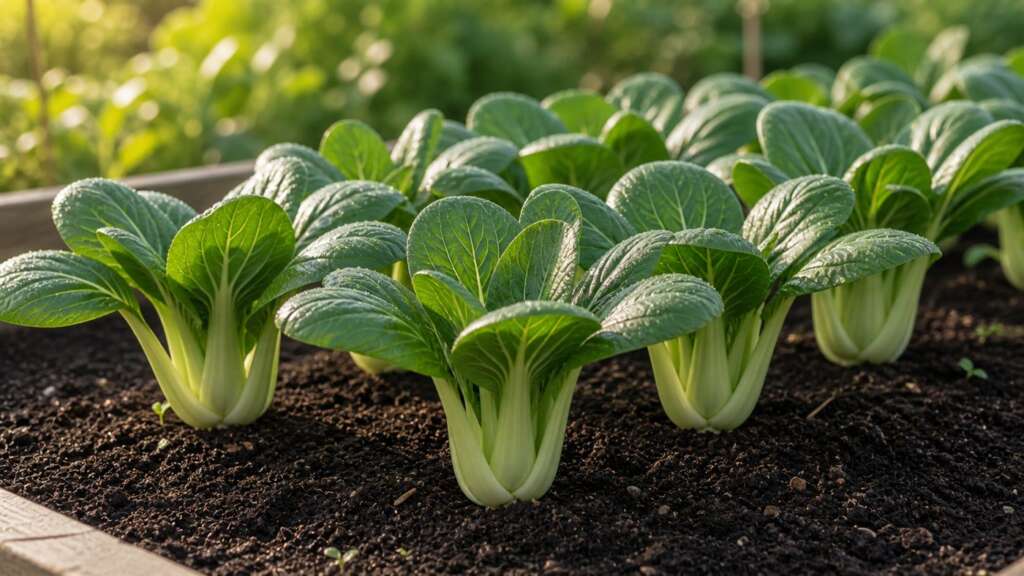
Extra Dwarf Bok Choy is a compact cool-season Asian green grown for tender white stems, mild green leaves, and quick turnaround in small spaces. Because the mature plant stays short, often only a few inches tall, it suits raised beds, shallow containers, window boxes, and tight succession plantings. Like other brassicas, it performs best when it can grow steadily in cool weather without drought, crowding, or sudden heat.
Quick How-to
Direct sow Extra Dwarf Bok Choy in cool spring or late-summer soil, or start seedlings indoors a few weeks ahead for an early transplant. Cover seed lightly, about 1/4 inch deep, and keep the surface evenly moist until sprouts appear in roughly 4 to 10 days at 60 to 75 F. Thin promptly to give each plant room to size up, and harvest while leaves are still tender, before warm weather pushes the plant to bolt.
Quick Guide
| Fact | Recommendation |
|---|---|
| Best method | Direct sow in cool weather; indoor start works for early transplants |
| Sowing depth | About 1/4 inch |
| Germination temperature | About 60 to 75 F for steady emergence |
| Days to germination | About 4 to 10 days |
| Light for germination | Cover lightly; strong light immediately after sprouting |
| Spacing | About 4 to 6 inches for this dwarf type; closer if harvesting young |
| Sun | Full sun in cool weather; light afternoon shade in warm months |
| Water | Even soil moisture; avoid dry-wet swings |
| Harvest | Often about 30 to 50 days for compact heads, with baby leaves ready earlier |
| Plant size | Extra-compact rosettes commonly finish about 2 to 6 inches tall, depending on spacing and harvest stage |
Before You Sow
Bok choy rewards a little preparation. Loosen the top few inches of soil, break up clods, and rake the surface smooth so tiny seed sits at an even depth. A bed with steady moisture and moderate fertility usually produces the cleanest, fastest greens. Heavy clay that puddles or coarse sand that dries out quickly both tend to slow this crop down.
If you are sowing in a container, choose a pot with drainage holes and a light potting mix. Because the dwarf form stays small, even a window box or 6 to 8 inch deep planter can grow a useful crop, but shallow containers dry out fast in warm weather and need closer attention to watering.
Plan the season carefully. Bok choy is a brassica, and brassicas bolt under heat stress, long days, and irregular moisture. Spring sowings should go in as soon as the soil can be worked so plants size up before summer arrives. Fall sowings often produce the cleanest, sweetest harvest because temperatures cool as plants mature.
Flea beetles and cabbage caterpillars target young brassica leaves. Have lightweight row cover ready to lay over the bed right after sowing or transplanting; it is far easier to keep these pests off than to remove them once a colony is established.
Direct Sowing
Direct sowing is the most straightforward path for this dwarf variety because the plants are small enough to mature in place without needing a transplant. Water the bed lightly before sowing so the seed does not wash deeper than intended. Scatter or space seed thinly, cover with a thin layer of fine soil or seed-starting mix, and press gently for good soil contact.
Keep the seedbed evenly moist until the first sprouts appear. A fine mist or gentle watering can helps avoid crusting and prevents seed from drifting into low spots. If the surface dries and forms a crust before emergence, lightly mist twice a day or cover with a thin layer of row cover until sprouts break through.
Because Extra Dwarf Bok Choy matures quickly, succession sowing is the easiest way to keep a steady supply. Sow a small row or block every 10 to 14 days during the cool season rather than planting one large batch that all matures at once.
Indoor Starting
Indoor starting is optional but useful if you want an early jump on the spring window or if outdoor beds are not yet workable. Sow into clean cells about 3 to 4 weeks before your intended transplant date. Cover lightly, keep the mix evenly moist, and provide strong overhead light as soon as the first sprouts show.
Keep seedlings cool and bright rather than warm and shaded. Warm indoor conditions paired with weak light are the most common reason brassica starts grow tall and floppy. Thin to one seedling per cell once true leaves appear so each plant has room to build a compact root system.
Transplant before seedlings become rootbound. Bok choy resents check, the slowdown a stressed seedling experiences after disturbance, and check often shows up later as premature bolting or stunted heads.
Transplanting and Spacing
Harden off indoor starts for 5 to 7 days before planting out. Begin with a sheltered, shaded spot and short outdoor visits, then gradually add direct sun and breeze. Transplant on a cool, overcast day if possible, and water thoroughly right after planting so roots settle in without an air gap.
For the dwarf form, space plants about 4 to 6 inches apart in all directions for small mature heads. If you plan to harvest very young as baby greens, sow more thickly and pull every other plant as you go. Crowded plants may still grow, but they tend to produce narrow stems and weaker leaves, and they are more vulnerable to pest pressure because airflow is poor.
Soil, Sun, and Water
Use fertile, well-drained soil enriched with finished compost. Bok choy is a moderately heavy feeder, but excess nitrogen pushes soft, watery leaves that are more attractive to pests and less flavorful. Steady, balanced fertility is better than a single heavy push.
In cool spring or fall conditions, give the bed full sun, which means at least six hours of direct light. As the season warms, light afternoon shade can buy a few extra days of tender harvest before plants bolt.
Water is the single biggest lever for quality. Aim for evenly moist soil throughout the short life of the crop. Drought stress, even briefly, is enough to trigger bolting or to toughen leaf midribs. Mulch with a thin layer of straw or shredded leaves once seedlings are established to help hold moisture and keep soil temperatures even.
Hydroponic Growing
Extra Dwarf Bok Choy is one of the best bok choy types for small hydroponic systems because it finishes quickly without a large canopy. Grow it in NFT, deep-water culture, or a compact raft system. Start one seed per inert plug and set the plug so the crown remains above the water or nutrient film.
Use a complete leafy-green nutrient around EC 1.5 to 2.0 mS/cm and keep pH near 6.5 to 7.0. Check EC before pH and maintain a clean, shaded, aerated reservoir. Cool to moderate temperatures support compact heads; heat, root stress, or interrupted flow can trigger bolting even at a small size.
Space plants about 5 to 6 inches apart for whole mini heads. Give strong overhead light so the petioles stay short and the rosette remains balanced. Harvest the entire head at the base once it fills; holding it for extra size sacrifices the dwarf form and raises the chance of a flower stalk.
Soft brown tissue at the crown means the plug is too wet or air is not reaching the center. Brown leaf edges can follow high EC or fast growth with poor airflow. A suddenly stretched center is bolting, not a lighting correction that can be reversed, so harvest and restart under cooler, steadier conditions.
Top Mistakes
- Sowing into warm weather: Bok choy bolts under heat. Aim for a clear cool-season window in spring or late summer rather than fighting summer temperatures.
- Letting the seedbed dry: Tiny seed sits in the top layer of soil and dries out fast. Check the surface daily until sprouts appear and keep it evenly moist.
- Skipping early thinning: Crowded seedlings look fine for a week or two and then stall together. Thin to final spacing before leaves overlap.
- Ignoring flea beetles: Pinhole damage on young leaves is the classic sign. Set row cover at sowing rather than waiting for visible damage.
- Letting plants sit past prime: Mature bok choy holds in cool weather but declines quickly once heat arrives. Harvest on time rather than hoping for more size.
Troubleshooting by Symptom
| Symptom | Likely causes | What to do next |
|---|---|---|
| No sprouts after 10 days | Seed buried too deep, soil surface dried, soil crusted, or soil too cold or too hot | Resow shallowly into a freshly raked surface, keep evenly moist, and aim for cool to mild conditions |
| Patchy germination | Uneven watering, seed washed into low spots, or inconsistent depth | Pre-moisten the bed before sowing, water gently, and cover with a thin even layer of fine soil |
| Pinhole damage on young leaves | Flea beetles | Cover the bed with lightweight row cover from sowing through early growth; remove only if needed for harvest |
| Chewed leaves with green caterpillars | Cabbage worms or loopers | Inspect undersides of leaves, handpick caterpillars, and use row cover to block egg-laying moths |
| Seedlings tall and pale | Weak light, excess warmth indoors, or crowded trays | Move under stronger light, lower indoor temperatures, and thin to one plant per cell |
| Seedlings collapse at the soil line | Overly wet mix, poor airflow, damping-off conditions | Improve airflow, water less often, use fresh seed-starting mix for restarts, and avoid saturated trays |
| Plants bolt before forming heads | Heat, long days, drought stress, or transplant check | Shift the next sowing to a cooler window, water more consistently, and avoid disturbing roots at transplant |
| Tough or bitter leaves | Heat, drought, or overmature plants | Harvest earlier, water consistently, and try a fall sowing for cooler finishing weather |
| Yellow lower leaves | Overwatering, poor drainage, or low nitrogen | Check drainage, ease back on watering if soil stays soggy, and side-dress with a balanced amendment if growth has stalled |
Harvest
Extra Dwarf Bok Choy can be harvested at several stages. For baby greens, snip individual outer leaves once they are a few inches long and let the center keep producing. For small whole heads, cut the entire plant at the soil line when leaves and stems feel firm and the base has filled out, often around 30 to 45 days from sowing depending on weather.
Harvest in the cool part of the day when leaves are crisp. Rinse, shake dry, and refrigerate in a loose bag or a ventilated container. Bok choy is best used within several days of harvest while the stems are still snappy. If a few plants begin to send up a flower stalk, harvest them right away; the tender bud stems are still pleasant lightly cooked, but quality fades quickly.
Container and Small-Space Notes
This crop is well suited to containers and small raised beds. A 6 to 8 inch deep planter or window box can support a row of dwarf plants spaced 4 inches apart. Use a quality potting mix rather than garden soil, and check moisture daily in warm weather. Containers warm up faster than the ground, so move pots into morning sun and afternoon shade once temperatures climb.
For balcony or patio gardeners, dwarf bok choy pairs well with lettuces, radishes, and other quick cool-season crops in the same trough, as long as spacing is respected.
Seed Saving
Saving true-to-type seed from bok choy is an advanced project. The plant is biennial in habit, often needing a cool period to flower, and it crosses readily with other Brassica rapa relatives such as turnip, Chinese cabbage, and many Asian greens. Without isolation distance or controlled pollination, saved seed is unlikely to match the parent. For most home gardeners, growing harvestable heads is simpler than managing the isolation required for a controlled seed crop.
Storing Leftover Seed
Keep unused Extra Dwarf Bok Choy seed in its labeled packet inside a sealed container in a cool, dry, dark indoor location. Avoid garages, sheds, greenhouses, and sunny windowsills, where temperature and humidity swing sharply. Label home-saved seed with the variety and harvest year before storing it.
FAQ
Can I grow Extra Dwarf Bok Choy in a container?
Yes. This is one of the best brassicas for pots because the mature plant stays small. Use a container with drainage, a light potting mix, and watch moisture more closely than you would in the ground.
Should I soak the seed before planting?
Soaking is not necessary. Bok choy germinates quickly when sown shallowly into a moist seedbed at cool to mild temperatures.
Is this variety good for baby greens?
Yes. Because the plant stays compact, it works well sown thickly and harvested young as tender greens, or thinned and grown to small whole heads.
Can I grow it in summer?
It is possible in cool-summer climates or with afternoon shade, but most gardeners get better results from spring and late-summer sowings. Heat is the most reliable trigger for bolting and bitterness.
Do I really need row cover?
Row cover is the single most effective defense against flea beetles, which are the most common pest of young bok choy. If your garden has had flea beetle pressure before, plan to cover from sowing through early growth.