
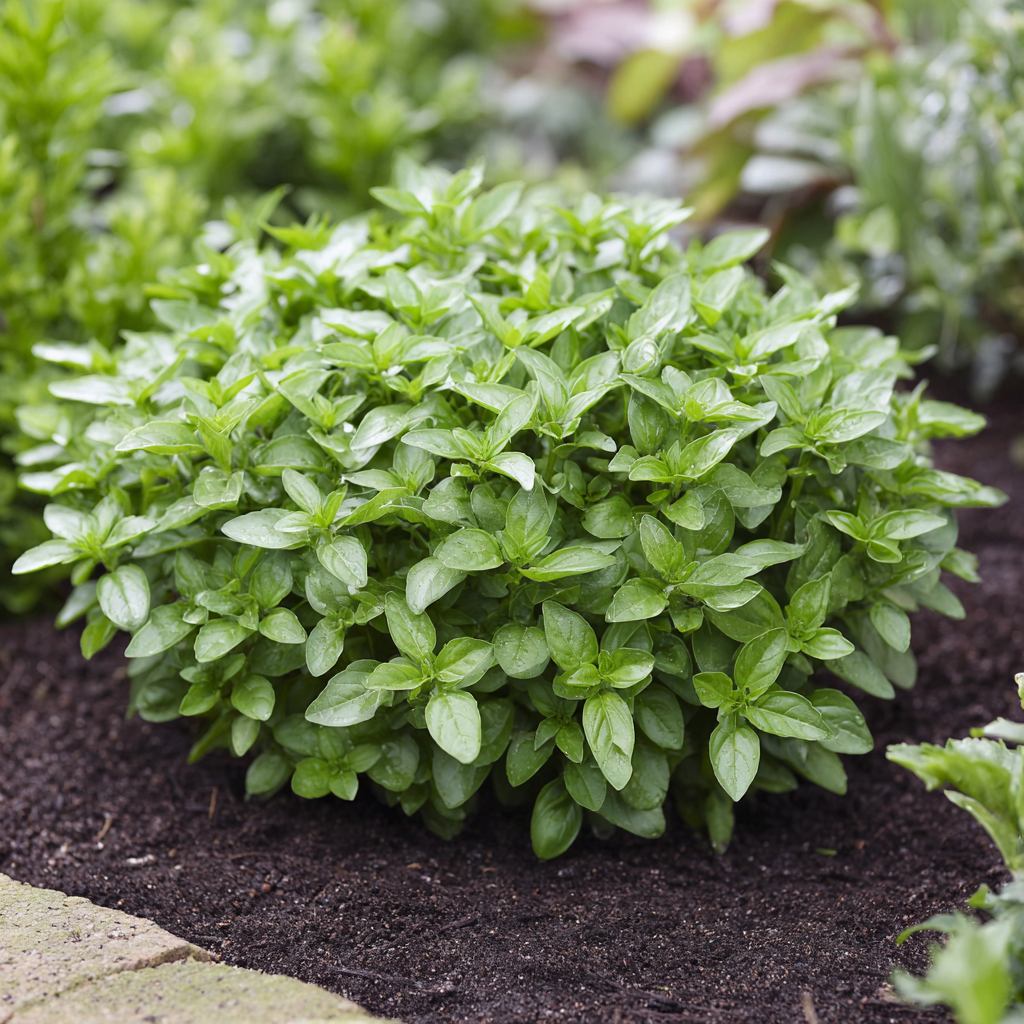
Dwarf Greek Basil is one of the most satisfying basils to grow in small spaces. Where standard Genovese basil grows tall and open, dwarf Greek basil forms a tidy, naturally rounded globe – typically 8 to 12 inches tall and equally wide – covered in hundreds of tiny, intensely aromatic leaves. It fits neatly on a windowsill, in a small container on a balcony, or at the front edge of an herb bed without crowding its neighbors. The compact habit means less pinching is needed to maintain shape, though regular harvesting keeps the plant tidy and productive.
Like all sweet basils, Dwarf Greek Basil is a warm-season tender annual. It needs warm soil to germinate, warm air to thrive, and protection from any frost or cold snap. Start seeds once temperatures are reliably warm, and never expose seedlings to cold.
Quick How-to
Start Dwarf Greek Basil seeds indoors 4 to 6 weeks before the last frost, or direct sow outdoors once soil has warmed to at least 65 F. Sow seeds about 1/4 inch deep in moist, warm seed-starting mix. Germination takes 5 to 14 days at 70 to 85 F. Move seedlings into strong light as soon as they sprout. Transplant after hardening off when nighttime temperatures are reliably above 50 F. Pinch the growing tips once plants have 4 to 6 sets of leaves to encourage bushy growth, and harvest regularly to keep the plant tidy and delay flowering.
Quick Guide
| Fact | Recommendation |
|---|---|
| Best method | Indoor start 4 to 6 weeks before last frost; direct sow in warm soil |
| Sowing depth | About 1/4 inch |
| Germination temperature | 70 to 85 F; cooler temperatures slow or prevent germination |
| Days to germination | 5 to 14 days in warm conditions |
| Light for germination | Cover seed; strong light needed as soon as seedlings emerge |
| Spacing | 8 to 12 inches apart; naturally compact, so closer spacing possible in containers |
| Sun | Full sun; 6 to 8 hours minimum |
| Water | Consistently moist but well-drained; do not allow roots to sit in standing water |
| Harvest timing | Begin harvesting once plant has 4 to 6 sets of leaves; harvest regularly through summer |
| Plant size | 8 to 12 inches tall and wide; naturally globe-shaped |
Before You Sow
Basil is a heat-loving herb that must not be rushed into cold conditions. The most common cause of basil failure is exposure to cold – cold soil, cold nights, or cold water on the leaves. Prepare the planting space in a warm, sunny location before sowing.
For container growing, choose a pot at least 6 to 8 inches deep with good drainage holes. Use a quality potting mix – avoid heavy, moisture-retaining mixes that stay wet. A mix with good drainage and moderate fertility suits dwarf Greek basil well.
Indoor Starting
Sow seeds in a moist seed-starting mix about 1/4 inch deep. Cover lightly and press gently for soil contact. Keep the tray in a warm location – basil germinates best between 70 and 85 F. A heat mat helps maintain consistent soil warmth. Use a humidity dome during germination, but remove it as soon as seedlings emerge to prevent disease and allow good airflow.
Move seedlings into strong overhead light immediately upon emergence. Basil in weak light becomes pale, stretched, and less flavorful. A grow light positioned 4 to 6 inches above the seedlings for 14 to 16 hours per day produces the compact, sturdy transplants that establish well outdoors.
Thin to one plant per cell once seedlings show their first true leaves.
Direct Sowing
Direct sowing works well once soil is genuinely warm – 65 F or above, and nighttime temperatures are reliably above 50 F. Sow seeds thinly in a prepared bed, cover about 1/4 inch deep, and keep evenly moist. In warm conditions, germination is quick (5 to 10 days). Thin to 8 to 12 inches apart once seedlings are 3 inches tall.
Transplanting
Harden off indoor-started basil seedlings for 5 to 7 days before transplanting outside. Do this gradually: start with a sheltered spot out of direct afternoon sun and wind, then increase exposure each day. Basil is sensitive to transplant stress in cool or windy conditions.
Plant basil at the same depth as the cell. Water in with warm (not cold) water. Protect transplants if a cold front arrives in the first week after planting; even temperatures below 50 F at night can cause leaf damage and set plants back.
Soil, Sun, and Water
Dwarf Greek Basil needs full sun – at least 6 to 8 hours of direct light per day. In partial shade, plants produce fewer leaves, become leggy, and lose much of their characteristic aromatic intensity. The compact globe habit that makes this variety distinctive is most apparent in full sun with adequate warmth.
Soil should be moderately fertile, loose, and well-drained. Avoid overly rich beds that push excessive lush, soft growth; moderate fertility produces better-flavored, more aromatic leaves. pH around 6.0 to 7.0 is appropriate.
Water at the base of the plant rather than wetting foliage, which can encourage fungal issues in warm, humid conditions. Allow the top inch of soil to dry slightly between waterings – basil likes moisture but strongly dislikes waterlogged roots. Container-grown plants may need daily watering in warm weather.
Pinching and Shaping
Dwarf Greek Basil’s naturally globe habit reduces – but does not eliminate – the need for pinching. Once plants have 4 to 6 sets of leaves, pinch out the growing tip just above a leaf node to encourage bushier branching. Pinch again when side branches produce 4 to 6 more leaf pairs. This simple practice multiplies the number of growing tips and keeps the globe shape tidy.
When flower buds appear – small spikes emerging from the branch tips – remove them promptly. Flowering redirects the plant’s energy away from leaf production and changes the flavor of the leaves, making them less sweet and more bitter. Pinching flower buds as they appear extends the productive leaf-harvest period significantly.
Hydroponic Growing
Dwarf Greek Basil grows well hydroponically when warmth, light, and airflow are steady. Its naturally tight mound fits small systems and should not be mistaken for stunting. A compact NFT channel, deep-water site, or well-sized passive jar can work as long as the reservoir stays stable. Start seed in a clean inert plug and transfer once roots reach the outside and the seedling has two sets of true leaves. Keep the plug moist but leave the stem base above the solution so the crown does not remain waterlogged.
Use a complete hydroponic nutrient formulated for herbs or leafy crops. Basil performs well around EC 1.0 to 1.6 mS/cm and pH 5.5 to 6.0. Check EC before pH, top up with plain water as plants drink, and refresh the reservoir on a regular schedule. Basil dislikes a cold root zone: hold the solution near the upper 60s to low 70s F when possible, while keeping it shaded and well aerated.
Space plants about 6 inches apart and harvest small tips evenly around the mound. Light pinching preserves the rounded habit; cutting deeply into old bare stems slows recovery. Provide strong overhead light and gentle air movement. A stretched plant with long gaps between leaves needs more light; pale new growth can come from pH drift rather than a shortage of fertilizer. Do not respond by sharply increasing nutrient strength until both pH and EC have been checked.
A mound that opens and stretches needs stronger overhead light. Crowded interior leaves can yellow even when nutrients are correct, so thin harvests through the canopy and maintain airflow. Healthy roots are light colored and smell fresh. Dark, slippery roots, sudden wilt in a full reservoir, or a sour smell call for cooler water, more oxygen, and a clean system. Remove flower buds promptly unless seed is the goal, because flowering shifts energy away from tender leaf production and changes flavor.
Top Mistakes
- Sowing or transplanting into cold conditions: Any exposure to cold – soil below 60 F, air below 50 F at night, or cold water – stresses basil and causes leaf yellowing, blackening, and growth stalling. Wait until conditions are genuinely warm before planting outdoors.
- Inconsistent or overhead watering: Wet foliage combined with warm temperatures encourages Fusarium wilt and other fungal problems in basil. Water at soil level and allow the top inch to dry between waterings.
- Allowing plants to flower without removing buds: Once basil fully flowers and sets seed, leaf production slows significantly and flavor changes. Regular pinching of flower buds is the most important maintenance task for a productive basil plant.
- Too little light indoors or in containers: Basil in low-light conditions becomes pale, stretched, and weakly flavored. If growing on a windowsill, ensure it gets direct sun for 6 or more hours – a south-facing window is ideal. Supplement with a grow light if needed.
Troubleshooting by Symptom
| Symptom | Likely causes | What to do next |
|---|---|---|
| No sprouts after 10 to 14 days | Soil too cool, overwatering, or seeds buried too deep | Confirm soil warmth (at least 70 F); reduce watering to moist not saturated; resow at 1/4-inch depth |
| Seedlings are pale and stretched | Insufficient light or overly warm with weak light | Move under grow lights or into a south-facing window immediately; thin if crowded |
| Leaves turn black or dark brown at edges | Cold damage, cold water on leaves, or frost exposure | Protect from cold; water only with room-temperature water; remove damaged leaves and allow plant to recover |
| Plant wilts despite moist soil | Fusarium wilt (fungal) or root rot from overwatering | Check roots; soggy black roots indicate overwatering; Fusarium causes sudden internal wilting – remove affected plants and do not replant basil in the same spot |
| Leaves lose flavor and become bitter | Plant flowering or beginning to set seed | Pinch all flower spikes immediately; harvest leaf tips regularly to reset the plant |
| Globe shape opens and becomes leggy | Insufficient light, heat stress, or insufficient pinching | Increase light, pinch growing tips, and remove flower buds; very leggy plants may be cut back by one-third to restart |
Harvest and Use
Begin harvesting Dwarf Greek Basil by snipping 2 to 3 inches of stem tips, removing the tip just above a leaf node. This doubles as pinching – each cut produces two new branches. Harvest frequently, even if you are not using all the leaves immediately. Regular light harvesting is more productive than infrequent heavy cutting.
The tiny leaves of dwarf Greek basil are particularly suited for whole-leaf use – scattered on pizza, in caprese salads, or as a garnish where small, whole leaves look attractive. Because the leaves are small, they are often used whole rather than chopped. The flavor is sweet, slightly peppery, and very similar to standard sweet basil.
Use fresh basil immediately after harvesting for the best flavor. Store short-term by placing stems in a glass of water at room temperature (not refrigerated). Basil turns black when refrigerated and loses flavor quickly.
Seed Saving
Basil cross-pollinates readily with other Ocimum basilicum varieties. To save true-to-type seed, grow only one basil variety at a time, or isolate plants significantly. Allow selected plants to flower fully and let seed heads brown and dry on the plant. Harvest seed spikes before they shatter, and dry indoors on a screen. Thresh gently and store seeds in a cool, dark, sealed container.
Storing Leftover Seed
Keep unused Dwarf Greek Basil seed in its labeled packet inside a sealed container in a cool, dry, dark indoor location. Avoid garages, sheds, greenhouses, and sunny windowsills, where temperature and humidity swing sharply. Label home-saved seed with the variety and harvest year before storing it.
FAQ
What makes Dwarf Greek Basil different from standard Genovese basil?
Dwarf Greek Basil forms a naturally compact, globe-shaped plant with very small leaves, while Genovese basil grows taller and more open with large leaves. Both are sweet basils (Ocimum basilicum) with similar flavor, but the dwarf type is better suited to containers, windowsills, and small-space gardens where a tidy, self-contained plant is preferred.
Can I grow Dwarf Greek Basil on a windowsill year-round?
Yes, with adequate light. A south-facing window that receives 6 or more hours of direct sun works in summer. In winter, when light levels drop, supplement with a grow light for best results. Keep plants away from cold drafts and never let the pot sit on a cold windowsill in winter.
How often should I water Dwarf Greek Basil in a container?
In warm weather, a container plant may need watering daily. Check by pressing a finger into the top inch of the potting mix – if it is dry, water thoroughly until water runs from the drainage holes, then allow it to dry slightly before watering again. Never allow the pot to sit in standing water.
Does Dwarf Greek Basil need to be fertilized?
Light feeding through the growing season supports leaf production. A balanced liquid fertilizer at half strength every 3 to 4 weeks is sufficient. Avoid heavy nitrogen feeding, which pushes rapid, soft growth with less flavor intensity.