
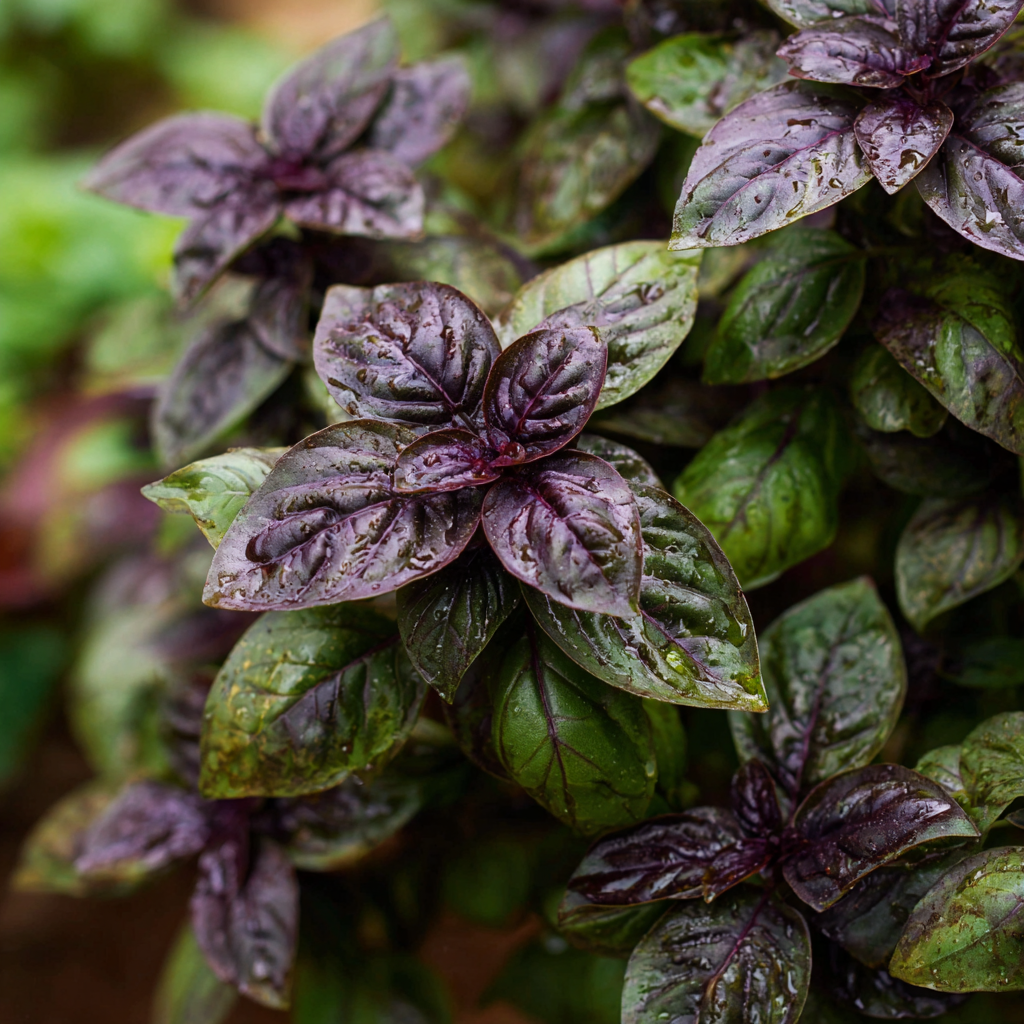
Dark Opal Basil is a purple-leaved culinary basil grown for its deep burgundy foliage, mild clove-and-anise aroma, and ornamental contrast in the herb bed. It is a warm-season annual that follows the same general rules as green basil, but its richest color and best flavor come from strong light, warm soil, steady moisture, and regular pinching once plants are established.
Quick How-to
Start Dark Opal Basil indoors about 4 to 6 weeks before your last expected spring frost, or direct sow outdoors once nights are reliably warm and soil has warmed through. Sow seed barely covered to about 1/4 inch deep into moist seed-starting mix and keep the surface warm, ideally around 70 to 80 F. Expect germination in about 5 to 10 days under steady warmth. Thin or transplant to about 8 to 12 inches apart, grow in full sun, pinch the growing tip once the plant has several leaf pairs, and harvest stem tips regularly to keep plants bushy and productive.
Quick Guide
| Fact | Recommendation |
|---|---|
| Best method | Indoor start for a head start, or direct sow once nights are warm |
| Sowing depth | Barely cover to about 1/4 inch |
| Germination temperature | About 70 to 80 F is ideal; cooler mix slows or stalls germination |
| Days to germination | Often about 5 to 10 days under steady warmth |
| Light for germination | Cover seed lightly; provide strong overhead light as soon as sprouts appear |
| Spacing | Thin or transplant to about 8 to 12 inches apart |
| Sun | Full sun for the deepest purple color and best flavor |
| Water | Even moisture; avoid soggy mix and avoid letting plants wilt hard |
| Harvest | Cut stem tips above a pair of leaves once plants have 4 to 6 leaf pairs |
| Plant size | Bushy annual commonly reaching about 18 to 24 inches tall under good garden conditions |
Before You Sow
Dark Opal is both edible and ornamental, so think about placement before you plant. The purple foliage carries real visual weight, and it looks especially good at the front of a bed, along a path, or beside silver-leaved or chartreuse companions. In a container, it pairs naturally with green basil for kitchen contrast.
Like all basil, this variety dislikes cold soil, cold wind, and damp shade. Pick a sunny spot with at least 6 to 8 hours of direct light and soil that drains freely. If your garden soil is heavy clay, work in compost or grow in raised beds or pots instead. For indoor starting, gather clean cells or trays, fresh seed-starting mix, and labels. Pre-moisten the mix until it feels like a wrung-out sponge so the tiny seed sits in even contact rather than dry pockets.
A heat mat is helpful for basil. Steady bottom warmth is the single biggest factor in fast, even germination. A bright south-facing window alone is rarely enough for sturdy seedlings; plan for a grow light or shop fixture positioned close to the trays.
Indoor Starting
Sow Dark Opal Basil seed about 1/8 to 1/4 inch deep. Press the surface gently for soil contact and mist or bottom-water so you do not wash the seed deeper. Cover the tray with a humidity dome or loose plastic to hold moisture until sprouts appear, and place it on a heat mat or in the warmest reliable spot you have.
Once you see the first green loops breaking the surface, remove the dome, reduce or remove the heat mat, and move seedlings under strong light immediately. Tomato-style mistakes apply here too: warmth without bright light produces tall, pale, weak seedlings that never fully recover. Keep the light a few inches above the leaves and run it for long days.
Young Dark Opal seedlings often look more green or bronze than purple at first. That is normal. The deeper burgundy color develops as the plants put on true leaves and as light intensity increases. Do not assume something is wrong if the cotyledons and first leaves are not yet richly colored.
When plants have at least one or two pairs of true leaves and feel sturdy, thin to one strong seedling per cell by snipping the weaker ones at the soil line. Crowded basil seedlings stretch and rarely catch up. Pot up into a larger cell or small pot if roots fill the original container before outdoor weather is ready.
Direct Sowing
In warm-summer regions, Dark Opal can be direct sown once the soil has warmed through and night temperatures are reliably mild. Cold soil simply will not germinate basil well, so wait rather than gambling on an early sowing.
Rake the bed smooth, water it the day before sowing, then scatter or place seed thinly and cover with a fine, even layer of soil or seed-starting mix. Mist the surface to settle the seed without washing it away. Keep the top half inch of soil consistently moist until you see seedlings, which usually takes about a week in warm conditions. Thin in stages to a final spacing of about 8 to 12 inches apart, eating or transplanting the thinnings.
Hardening Off and Transplanting
Indoor-grown plants need a gradual transition before they go outside for good. Over about 7 to 10 days, set seedlings outdoors in sheltered shade for an hour or two, then increase sun exposure and time outside each day. Skip days that are cold, windy, or stormy. The goal is leaves that look slightly tougher and stems that stiffen up before you commit to planting out.
Transplant after frost danger has fully passed and night temperatures stay comfortably mild. A chilly night will not always kill a young basil, but it can blacken leaves, stall growth, and cost you weeks of recovery. Set plants at the same depth they grew in the cell, water them in, and protect them with a cloche or row cover if a surprise cool night arrives in the first week.
Soil, Sun, and Water
Dark Opal performs best in full sun and loose, well-drained soil with moderate fertility. A bed amended with finished compost is usually enough. Avoid heavy doses of high-nitrogen fertilizer; soft, oversized leaves come at the cost of color depth, aroma, and flavor concentration.
Water consistently. Basil dislikes both bone-dry soil and constantly saturated roots. Aim for the soil to feel moist a finger-knuckle down and let only the very top layer dry between waterings during hot weather. Water at soil level when possible rather than wetting leaves late in the day, since damp foliage going into a cool night can invite leaf spot problems.
A light mulch of straw or shredded leaves after the soil has warmed helps even out moisture and keeps soil from splashing onto low leaves during heavy rain.
Pinching and Pruning
Pinching is the single best habit for basil. Once a young plant has about four to six leaf pairs, snip the very top growing tip just above a leaf pair. The plant responds by branching at the next set of nodes, which doubles the harvest points. Repeat this on each new branch as it lengthens, and you build a low, full, bushy plant instead of one tall stalk that bolts early.
Harvesting and pinching are the same action. Whenever you cut stem tips for the kitchen, cut just above a pair of leaves so the plant has a clean place to branch from.
Hydroponic Growing
Dark Opal Basil grows well hydroponically when warmth, light, and airflow are steady. Its purple pigment develops best under strong light; greenish leaves usually reflect light level or warm growth, not a mislabeled plant. NFT and deep-water culture both work, but give the branching canopy room so shaded leaves do not stay damp. Start seed in a clean inert plug and transfer once roots reach the outside and the seedling has two sets of true leaves. Keep the plug moist but leave the stem base above the solution so the crown does not remain waterlogged.
Use a complete hydroponic nutrient formulated for herbs or leafy crops. Basil performs well around EC 1.0 to 1.6 mS/cm and pH 5.5 to 6.0. Check EC before pH, top up with plain water as plants drink, and refresh the reservoir on a regular schedule. Basil dislikes a cold root zone: hold the solution near the upper 60s to low 70s F when possible, while keeping it shaded and well aerated.
Space plants about 8 inches apart and pinch above a leaf pair once several nodes have formed. Repeated tip harvest keeps the plant bushy and exposes new purple foliage to light. Provide strong overhead light and gentle air movement. A stretched plant with long gaps between leaves needs more light; pale new growth can come from pH drift rather than a shortage of fertilizer. Do not respond by sharply increasing nutrient strength until both pH and EC have been checked.
If color fades while growth remains vigorous, improve light before changing the nutrient mix. Dark leaf spots and dropped lower leaves often follow cool wet foliage or crowded airflow. Healthy roots are light colored and smell fresh. Dark, slippery roots, sudden wilt in a full reservoir, or a sour smell call for cooler water, more oxygen, and a clean system. Remove flower buds promptly unless seed is the goal, because flowering shifts energy away from tender leaf production and changes flavor.
Top Mistakes
- Sowing into cold soil. Basil seed sits and sulks below about 65 to 70 F. Wait for warmth indoors and out.
- Weak light after germination. Warmth plus dim light is the classic recipe for stretched, pale purple seedlings that fall over.
- Skipping the first pinch. A leggy single-stem plant produces far less than a pinched, branched bush.
- Letting plants flower early. Once basil sets flower buds, leaf production slows and the flavor begins to shift. Pinch buds out unless you want pollinator forage or seed.
- Cold transplants. Putting basil out on a chilly week to gain a few days almost always costs more than it saves.
Troubleshooting by Symptom
| Symptom | Likely causes | What to do next |
|---|---|---|
| No sprouts after 10 to 14 days | Mix too cold, seed buried too deep, dry surface, or saturated tray | Add bottom heat, keep the surface consistently moist, and resow shallowly if needed |
| Seedlings collapse at the soil line | Damping-off from cool, wet, stagnant conditions | Improve airflow, water from below, use fresh seed-starting mix, and reduce watering frequency |
| Seedlings are tall, thin, and pale | Not enough light, too much warmth held on after germination, or crowded trays | Move lights closer, lengthen the light period, remove the heat mat, and thin to one plant per cell |
| Leaves look more green than purple | Insufficient light, very young growth, or cool growing conditions | Move plants into stronger, longer light and wait for new mature leaves; color deepens with sun and warmth |
| Leaves blacken or turn translucent after transplant | Cold night exposure or wind chill | Cover with cloche or row cover, wait for warmer nights, and pinch off damaged tips once new growth resumes |
| Lower leaves yellow while upper leaves look fine | Overwatering, poor drainage, or root stress | Let the top inch dry between waterings and check that pots and beds drain freely |
| Plant suddenly sends up flower spikes | Heat stress, long days, or simply maturity | Pinch flower spikes off promptly to redirect energy into leaves |
| Small holes or chewed edges in leaves | Slugs, snails, Japanese beetles, or grasshoppers depending on region | Inspect at dawn or dusk, hand-pick pests, and reduce mulch directly against stems if slugs are active |
| Brown or dark spots on leaves with yellow halos | Bacterial leaf spot encouraged by wet foliage and cool nights | Water at soil level, improve spacing and airflow, and remove affected leaves |
Container and Small-Space Notes
Dark Opal Basil is well suited to containers and mixed herb planters. Choose a pot at least 8 to 10 inches across with drainage holes, fill with a quality potting mix, and place where the plant gets full sun for most of the day. Containers dry out faster than beds, so check moisture daily in hot weather. Group Dark Opal with green basils, parsley, or thyme for an attractive and useful kitchen-door planter.
Harvest and Kitchen Use
Harvest stem tips in the morning, when leaves are most aromatic and turgid. Take cuttings often once plants are established; frequent light harvests keep plants branching and productive far longer than waiting and then stripping a plant. Use the leaves fresh for color and aroma in salads, vinegars, infused oils, garnishes, pestos blended with green basil, and as a finishing herb on tomato and stone-fruit dishes. The purple color makes a particularly striking herb vinegar.
Dark Opal can be dried, but like most basils it loses much of its punch when dried. Freezing chopped leaves in oil or making pesto and freezing it preserves flavor better than air-drying.
Seed Saving
For home seed saving, let a few healthy plants flower, fade, and form dry seed heads on the stem. Cut the stalks once the calyxes are brown and crisp, finish drying indoors on a paper-lined tray, then crumble the heads and separate the small black seeds from the chaff.
Basil varieties of the same species cross readily when grown near each other. If you also grow Genovese, Thai, or other Ocimum basilicum types nearby, saved seed may not come fully true to type. For most home gardens, growing Dark Opal for leaves and flowers is simpler than maintaining a dedicated isolation planting.
Storing Leftover Seed
Keep unused Dark Opal Basil seed in its labeled packet inside a sealed container in a cool, dry, dark indoor location. Avoid garages, sheds, greenhouses, and sunny windowsills, where temperature and humidity swing sharply. Label home-saved seed with the variety and harvest year before storing it.
FAQ
Is Dark Opal Basil edible?
Yes. It is a culinary basil grown for both kitchen use and ornamental color, with a mild clove-and-anise note alongside the familiar basil aroma.
Why is my purple basil not very purple?
Color in Dark Opal develops with strong light, warm growing conditions, and mature leaves. Seedlings often look more green or bronze at first, and plants grown in partial shade tend to stay greener. Move plants into the sunniest spot you have and judge color by mature foliage rather than the first leaves.
Can I grow Dark Opal Basil indoors year-round?
Yes, if you provide strong grow lights set close to the plants for long days. A dim window alone usually produces leggy plants with washed-out color. Keep the room warm, water steadily, and pinch often.
Should I pinch off the flowers?
Yes, if you are growing the plant for leaves. Pinching flower buds as soon as you see them redirects energy back into foliage. Leave flowers on a plant or two if you want pollinator forage or want to try saving seed.
Will Dark Opal Basil come back next year?
No. It is treated as an annual in almost all home gardens and is killed by the first frost. Plan to sow it again each spring.