
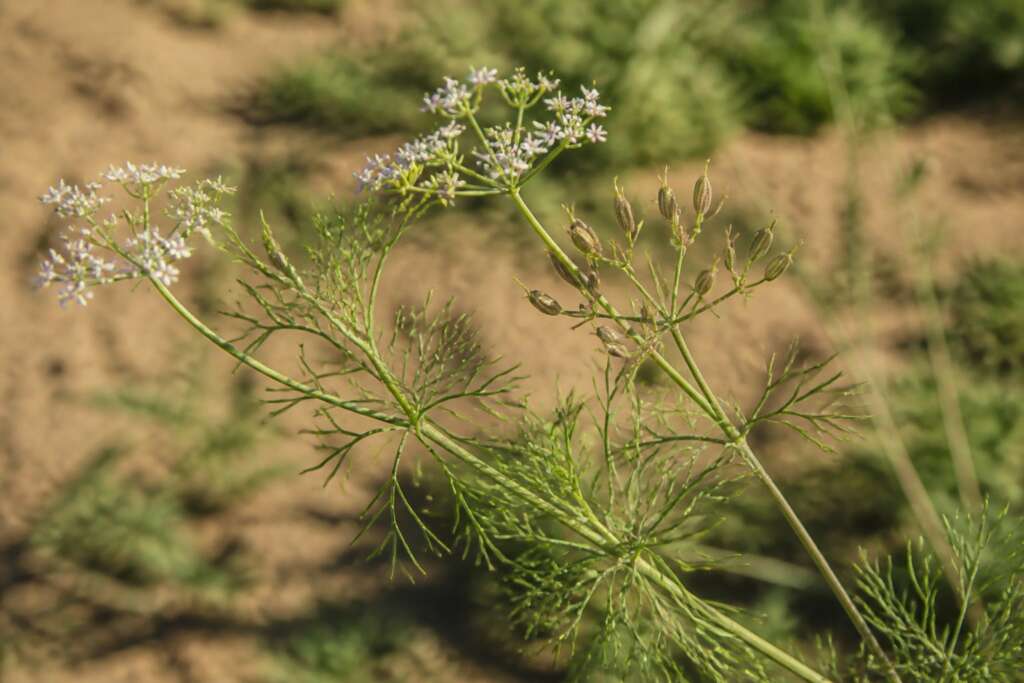
Cumin (Cuminum cyminum) is a slender annual herb in the carrot family, grown for its aromatic seeds — the familiar spice used across South Asian, Middle Eastern, Mexican, and North African cooking. The plant itself is modest in stature, reaching 8 to 12 inches tall with fine, feathery foliage and small white flowers that produce the ridged brown seeds. What cumin is not modest about is its season requirements: it needs approximately 100 to 120 frost-free days of warm weather to mature a useful seed harvest, making it a genuinely challenging crop for short-season or cool-climate gardeners. This guide is honest about that constraint while giving you the best approach to succeed.
Quick How-to
In warm climates with a long frost-free season, direct sow cumin seeds into warm soil after the last frost. In short-season areas (fewer than 120 warm days), start seeds indoors 4 to 6 weeks before the last frost date and transplant carefully once nighttime temperatures are reliably above 50 F. Sow about 1/4 inch deep; germination takes 7 to 14 days in warm soil. Harvest the seed heads when the foliage yellows and seeds begin to dry on the plant.
Quick Guide
| Fact | Recommendation |
|---|---|
| Best method | Direct sow in warm climates; indoor start for short seasons |
| Sowing depth | About 1/4 inch |
| Germination temperature | 68 to 86 F optimum; 50 F minimum |
| Days to germination | 7 to 14 days in warm soil |
| Light for germination | Cover seed; no special light requirement for germination |
| Spacing | Thin to 4 to 8 inches apart |
| Sun | Full sun; heat is essential |
| Water | Moderate; drought tolerant once established, but needs moisture to germinate |
| Season length | ~100 to 120 frost-free days from sowing to seed harvest |
| Plant size | 8 to 12 inches tall; slender, fine-leaved stems |
Season Length Honesty
Cumin is one of the most season-demanding herbs a home gardener can attempt. It originates in the eastern Mediterranean and requires a long, hot, dry period to mature seeds properly. Growers in USDA zones 9 to 11, the deep South, and similar hot-summer climates with long frost-free windows are best positioned to grow cumin as a straightforward crop.
If you are in a short-season climate (less than 120 frost-free days) or a region with cool, cloudy summers, cumin will still grow, but you should plan for:
- Indoor starting 4 to 6 weeks ahead to extend the effective season.
- Selecting the warmest, most sheltered south-facing spot available.
- The possibility that a cold or wet summer will produce little to no seed even with the best preparation.
This is not a reason to avoid trying cumin — many northern gardeners succeed, especially in hot years — but it is useful to know before the season begins.
Before You Sow
Cumin resents root disturbance, so whether direct sowing or starting indoors, use biodegradable pots or soil blocks to minimize transplant shock. Standard cell trays are workable if you disturb the root ball as little as possible.
Choose the sunniest, most heat-retaining spot in the garden. Raised beds, south-facing walls, and beds with dark or mulched soil that absorbs heat all help extend the effective warm season for cumin. Avoid heavy clay soils that stay wet after rain.
Indoor Starting
Start cumin seeds in biodegradable pots or soil blocks 4 to 6 weeks before your last expected frost. Sow 2 to 3 seeds per pot about 1/4 inch deep, keep warm (68 to 86 F), and maintain even moisture. Germination typically takes 7 to 14 days. Thin to one plant per pot once seedlings have true leaves.
Place seedlings in strong light immediately after germination. Cumin seedlings need heat and light; weak, cool conditions produce spindly plants that struggle after transplanting.
Harden off for 7 to 10 days before transplanting outdoors once nighttime temperatures are reliably above 50 F and the soil is warm. Transplant carefully into the prepared bed, disturbing roots as little as possible. Water in well and protect from any late-season cold snaps.
Direct Sowing
In warm climates, direct sow cumin once soil has warmed to at least 65 F and all frost danger has passed. Prepare a fine, smooth seedbed. Sow seeds in clusters of 3 to 4 per spot, about 1/4 inch deep, spaced 4 to 8 inches apart. Cover gently and water with a fine spray. Keep the seedbed evenly moist until germination. Thin to one plant per spacing point once seedlings are 2 inches tall.
Soil, Sun, and Water
Cumin needs full sun and well-drained, relatively lean soil. Rich, heavily amended beds can push excessive leafy growth at the expense of seed production. Sandy or loamy soil with reasonable fertility works well. Avoid waterlogged or compacted conditions — cumin’s shallow root system is sensitive to anaerobic soil conditions.
Water regularly through establishment and during flowering. Once plants are established, cumin shows reasonable drought tolerance; excessive irrigation during seed maturation can delay ripening and drying. As the plant approaches maturity, reduce watering and allow conditions to become slightly drier.
Top Mistakes
- Growing cumin in a short-season climate without indoor starting: Without adequate season length, cumin will flower but may not fully ripen seeds before the first fall frost. Indoor starting is essential in climates with fewer than 120 frost-free days.
- Sowing into cold soil: Cumin germinates poorly in cold soil and may rot before sprouting. Wait for soil temperatures of at least 60 to 65 F before direct sowing, or use indoor starting to bridge the gap.
- Disturbing roots at transplanting: Cumin is sensitive to root disturbance. Rough transplanting causes wilting, stalling, and poor establishment. Biodegradable pots or careful cell transplanting minimizes this risk.
- Watering heavily during seed ripening: Excess moisture during the final weeks of seed development delays drying and can cause mold on the seed heads. Ease off irrigation once seeds begin to color and the foliage starts to yellow.
- Harvesting too early: Cumin seeds need to be fully dry and brown on the plant before harvest. Premature harvesting produces pale seed with weaker flavor. Wait for the whole plant to look spent and dry before cutting seed heads.
Troubleshooting by Symptom
| Symptom | Likely causes | What to do next |
|---|---|---|
| No sprouts after 14 days | Soil too cold, seed sown too deep, or surface dried out | Check soil temperature; ensure 1/4-inch depth; keep surface moist; warm the bed with row cover if needed |
| Seedlings wilt after transplanting | Root disturbance, transplant shock, or cold soil | Water gently, protect from wind and direct afternoon sun for 3 to 5 days, and avoid cold soil temperatures |
| Plants flower but produce no seeds | Season too short, temperatures too cool during flowering, or pollination failure | Ensure adequate warmth; try indoor starting next season for a longer effective window |
| Seed heads mold before drying | Excess moisture or poor airflow during maturation | Reduce irrigation, harvest seed heads early and dry indoors on a screen in a warm, airy space |
| Plants look stunted and yellowish | Poor drainage, compacted soil, or insufficient sun | Improve drainage, move to a sunnier warmer location next season; side-dress lightly with balanced fertilizer if growth is very poor |
| Foliage collapses before seeds ripen | Early frost | Cover plants immediately; if frost is imminent, harvest seed heads and dry indoors even if not fully ripe |
Harvest and Use
Cumin is ready to harvest when the entire plant begins to yellow and the seed heads brown and dry on the stem. The small, ridged seeds should be firm and dry, not soft or green. Cut the seed heads with a few inches of stem, bundle loosely, and hang or lay on a screen in a warm, dry indoor location for 1 to 2 weeks to complete drying.
Thresh gently by rubbing the heads between your palms over a clean cloth or container. Winnow lightly to remove chaff. Store cured cumin seeds in a sealed jar away from heat, light, and moisture.
Freshly harvested cumin has a more complex, brighter flavor than seeds that have sat in a jar for years. Use within 1 to 2 years of harvest for the best culinary results; whole seeds retain flavor longer than ground.
Seed Saving
Cumin is open-pollinated and sets seed freely on the plant. For seed saving, allow the best-formed plants to go to full maturity and dry completely before harvesting. Because cumin is an insect-pollinated umbellifer and can cross with other cumin plants nearby, isolate by at least 200 feet or grow only one variety at a time for reliable true-to-type seed.
After threshing, dry the seed thoroughly and label it with the variety and harvest year. Keep culinary and planting portions in separate labeled containers so seed intended for a future sowing is not accidentally used in the kitchen.
Storing Leftover Seed
Keep unused Cumin seed in its labeled packet inside a sealed container in a cool, dry, dark indoor location. Avoid garages, sheds, greenhouses, and sunny windowsills, where temperature and humidity swing sharply. Label home-saved seed with the variety and harvest year before storing it.
FAQ
Can I grow cumin in a short-season climate like the northern US or Canada?
It is possible but challenging. You need a minimum of 100 to 120 frost-free days, and cumin prefers warm, dry summers. Start seeds indoors 4 to 6 weeks early, choose the hottest spot in your garden, and be prepared for variable results depending on summer weather. Some seasons will produce a satisfying harvest; others with a cool or wet summer will produce little seed even with good technique.
How do I know when cumin seeds are ready to harvest?
The plant will look spent — foliage yellowing and falling back, seed heads turning brown, and the seeds becoming dry and firm rather than soft. If you are not sure, pick one head and rub it: dry, fragrant cumin seeds are ready. Soft or pale green seeds need more time.
Can I use cumin seeds from the grocery store as planting seed?
Use cumin seed sold for planting so the sowing and germination guidance in this guide applies to the material in hand. Culinary cumin is packaged for food use rather than horticultural use.
Does cumin need a lot of water?
Moderate moisture during establishment and flowering, then a drier period during seed maturation. Cumin originates in dry, hot climates and does not tolerate waterlogged conditions. Good drainage is more important than irrigation volume.