
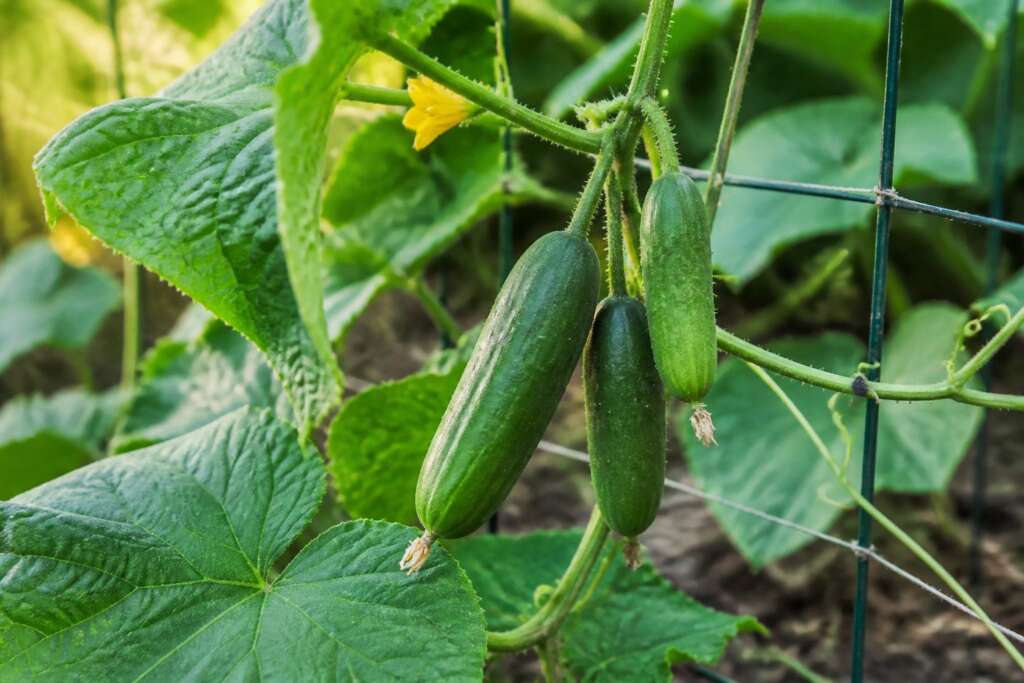
Cucumber is a fast-growing warm-season vine that rewards warm soil, undisturbed roots, steady moisture, successful pollination, and frequent picking. This is a species-level guide for seed whose cultivar was not specified. Fruit shape, slicing or pickling use, days to harvest, vine length, disease resistance, and whether a variety can set fruit without pollination all depend on the cultivar, so use any variety details printed on your packet alongside this guide.
Quick How-to
Direct sow cucumbers after frost danger has passed and soil is at least about 70 F. Plant 1/2 to 1 inch deep, keep the seed zone evenly moist, and expect germination in roughly 3 to 10 days under warm conditions. Thin rather than pulling crowded roots apart, give vining plants a trellis or enough ground space, and remove insect row cover when female flowers appear. Water consistently through flowering and fruit fill, then harvest while fruit is firm and before it becomes oversized or yellow.
Quick Guide
| Fact | Recommendation |
|---|---|
| Best method | Direct sow in warm soil; a short indoor start is optional |
| Sowing depth | 1/2 to 1 inch |
| Germination temperature | About 70 to 95 F; cold wet soil greatly slows emergence |
| Days to germination | Often 3 to 10 days in warm soil |
| Light for germination | Cover seed; give seedlings full light after emergence |
| Spacing | About 12 inches apart on a trellis; wider for hills or unsupported vines |
| Sun | Full sun, at least 6 to 8 hours |
| Water | Deep, consistent moisture; avoid repeated drought and flooding |
| Support | Trellis vining types for airflow and straighter, easier-to-find fruit |
| Harvest | Cultivar dependent; pick frequently at the intended eating size |
Before You Sow
Wait for genuinely warm conditions. Cucumbers planted into cold, wet soil may decay before they emerge, and chilled transplants often sit still even when daytime air feels pleasant. Measure soil temperature in the planting zone if spring weather is variable. A week of patience usually costs less time than replacing a failed early sowing.
Choose a sunny, well-drained bed and work in finished compost. Decide how vines will grow before planting. Install a trellis now if you plan to grow vertically; posts driven beside established roots cause unnecessary damage. If the packet identifies a compact bush cultivar, it may need less support, but it still needs airflow and room around the leaves.
Do not infer fruit use from the generic word cucumber. Slicers, picklers, compact container types, thin-skinned varieties, and specialty shapes reach their best eating stage at different sizes. The packet or cultivar guide should supply that missing detail.
Direct Sowing
For a trellised row, sow two seeds at each position 1/2 to 1 inch deep, then thin to one healthy plant about 12 inches apart. For hills, sow several seeds in a low, broad mound and thin to two or three plants, leaving enough room between hills for the mature vines. A hill is not a steep pile; it is simply a raised planting area that warms and drains readily.
Water gently after sowing and keep the seed zone moist, not waterlogged. If both seeds emerge, snip the weaker seedling at soil level. Pulling intertwined seedlings can disturb the roots of the plant you intend to keep.
Successive sowings can extend harvest where summers are long, but later plants often face heavier insect and disease pressure. Leave enough time for the stated cultivar to mature before cool nights return.
Optional Indoor Start
Cucumbers grow quickly and dislike root disturbance, so start indoors only 2 to 4 weeks before transplanting. Use individual biodegradable or easy-release pots, sow one or two seeds per pot, and provide strong light immediately after emergence. Thin to one plant without separating roots.
Harden seedlings gradually for about a week. Transplant after frost and after the soil has warmed, handling the root ball as one piece. A large, flowering cucumber held too long indoors is usually a worse transplant than a small plant with two or three true leaves.
Trellising, Flowers, and Pollination
A sturdy trellis keeps fruit off the soil, improves airflow, and makes daily harvest easier. Guide young vines toward the support; their tendrils will take over once they find it. Use soft ties only if needed and leave room for stems to expand.
Many ordinary cucumbers make male flowers first. Those early blossoms can drop without fruit and do not mean the plant has failed. Female flowers have a tiny cucumber-shaped ovary behind the petals. Unless the cultivar is labeled parthenocarpic, pollen must move from male to female flowers for good fruit development.
Remove insect-excluding row cover when female flowers begin opening so bees can reach them. If flowers are abundant but small fruits yellow and fall, hand-pollinate in the morning with a freshly opened male flower or a small brush while you work on improving pollinator access.
Soil, Sun, and Water
Cucumbers need full sun, fertile soil, and good drainage. Roots are relatively shallow, so plants can wilt quickly in dry heat. Water deeply at the base whenever the upper soil begins to dry, and mulch after soil is warm to slow evaporation. Avoid a routine of severe wilting followed by flooding.
Consistent moisture matters most during flowering and fruit fill. Drought stress can reduce fruit set, contribute to bitterness, and produce narrow or misshapen fruit. Water on the soil when possible; dry leaves and good spacing slow the spread of several foliar diseases. Do not compensate for poor soil or crowding with repeated high-nitrogen feeding, which can make a dense leaf canopy without solving fruit-set problems.
Top Mistakes
- Planting by the calendar instead of soil temperature: Cold wet soil delays germination and invites decay. Wait until the seed zone is warm and frost risk is over.
- Starting indoors too early: Rootbound, flowering transplants suffer more disturbance and may stall. Keep the indoor period short.
- Forgetting to thin: Several plants in one tight spot compete for water and create a dense, disease-prone canopy. Snip extras while seedlings are small.
- Leaving row cover on through flowering: The same barrier that blocks cucumber beetles can also block bees. Remove it when female flowers need pollination unless the cultivar is confirmed parthenocarpic.
- Watering only after vines wilt severely: Repeated drought interrupts fruit development and may make fruit bitter or misshapen. Keep moisture steady.
- Allowing hidden fruit to overmature: One oversized yellowing cucumber diverts energy into seed. Search under leaves and harvest frequently.
Troubleshooting by Symptom
| Symptom | Likely causes | What to do next |
|---|---|---|
| No seedlings after 10 days | Cold soil, saturated soil, seed too deep, crusting, or seed decay | Check soil temperature and drainage; resow 1/2 to 1 inch deep when the bed is warm |
| Seedling collapses at the soil line | Damping-off favored by wet mix, cool conditions, crowding, or poor airflow | Remove failed seedlings, improve airflow and drainage, and restart in clean mix without overwatering |
| Flowers appear but no cucumbers form | Only male flowers are open, pollinators are excluded, heat stress, or cultivar biology | Wait for female flowers, remove row cover, and support bee access; hand-pollinate if needed |
| Tiny fruit turns yellow and drops | Incomplete pollination, temperature stress, or a heavily stressed plant | Hand-pollinate fresh flowers, steady soil moisture, and avoid spraying when bees are active |
| Fruit is hooked or narrow at one end | Incomplete pollination or interrupted water supply during early growth | Improve pollination and maintain even moisture; harvest misshapen fruit while tender |
| Fruit tastes bitter | Drought, heat, overmaturity, or genetic tendency | Water consistently, harvest younger, and choose a less bitter cultivar if stress correction does not help |
| White powder spreads across older leaves | Powdery mildew, often favored by dense growth and late-season conditions | Improve airflow, remove badly affected leaves, water at soil level, and use resistant cultivars in future plantings |
| Plant wilts suddenly while soil is moist | Bacterial wilt associated with cucumber beetles, severe root damage, or stem injury | Inspect for beetles and stem damage; remove plants that remain collapsed and control beetles early in the next planting |
| Leaves have holes and scarred edges | Cucumber beetles or other chewing insects | Inspect mornings, use row cover before flowering, and remove crop debris that shelters pests |
Harvest and Kitchen Use
Harvest size must match the cultivar. Pickling types are often collected small, while slicers are allowed to grow longer, but every cucumber is best while firm, evenly colored, and still tender. Yellowing skin, enlarged hard seeds, and a dull swollen shape indicate overmaturity.
Check vines daily during peak production. Cut the stem with scissors or pruners rather than twisting and pulling on the vine. Frequent harvest encourages continued flowering and prevents hidden fruit from maturing seed. Cool fruit promptly after picking; cucumbers lose moisture and crispness when left in sun.
Seed Saving
First confirm whether the cultivar is open-pollinated. Seed saved from an F1 hybrid will not reliably reproduce the parent. Cucumbers cross with other Cucumis sativus cultivars, including other slicers and picklers, but they do not cross with squash, pumpkins, or common melons.
For true-to-type seed, isolate varieties or hand-pollinate selected flowers. Leave seed fruit on the vine far beyond eating maturity until it becomes large, softening, and yellow or brown according to type. Scoop out seeds and surrounding pulp, ferment briefly in water, rinse away empty seed and pulp, then dry seed thoroughly before storage. Never use a normal eating-stage cucumber as the source of mature seed.
Storing Leftover Seed
Keep unused Cucumber seed in its labeled packet inside a sealed container in a cool, dry, dark indoor location. Avoid garages, sheds, greenhouses, and sunny windowsills, where temperature and humidity swing sharply. Label home-saved seed with the variety and harvest year before storing it.
FAQ
Why does my cucumber plant have flowers but no fruit?
The first flowers are often male. Look for female flowers with a small ovary behind the petals. If both are present, make sure row cover is removed and bees can reach the bed; hand-pollinate if visits are scarce.
Should cucumbers grow on a trellis?
Most vining cultivars benefit from one. Trellising improves airflow, keeps fruit cleaner and straighter, and makes hidden cucumbers easier to find. Compact bush cultivars can grow without a tall support.
Can I grow cucumber in a container?
Yes, especially a compact cultivar. Use a large container with drainage, provide support if the plant vines, and expect to water more often than an in-ground bed during hot weather.
Why are my cucumbers bitter?
Drought, heat, overmaturity, and cultivar genetics can all contribute. Keep water steady and harvest at the intended size. If fruit remains bitter under good care, choose a cultivar known for mild flavor next season.
How many cucumber plants do I need?
Yield varies widely by cultivar, weather, pollination, and harvest frequency. A few healthy, frequently picked vines can produce heavily, so begin with the space you can trellis, water, inspect, and harvest consistently.
Can cucumbers cross with zucchini or watermelon?
No. Cucumbers cross with other cultivars of Cucumis sativus, not with zucchini, pumpkins, or watermelon. Seed savers still need to separate different cucumber varieties from one another.