
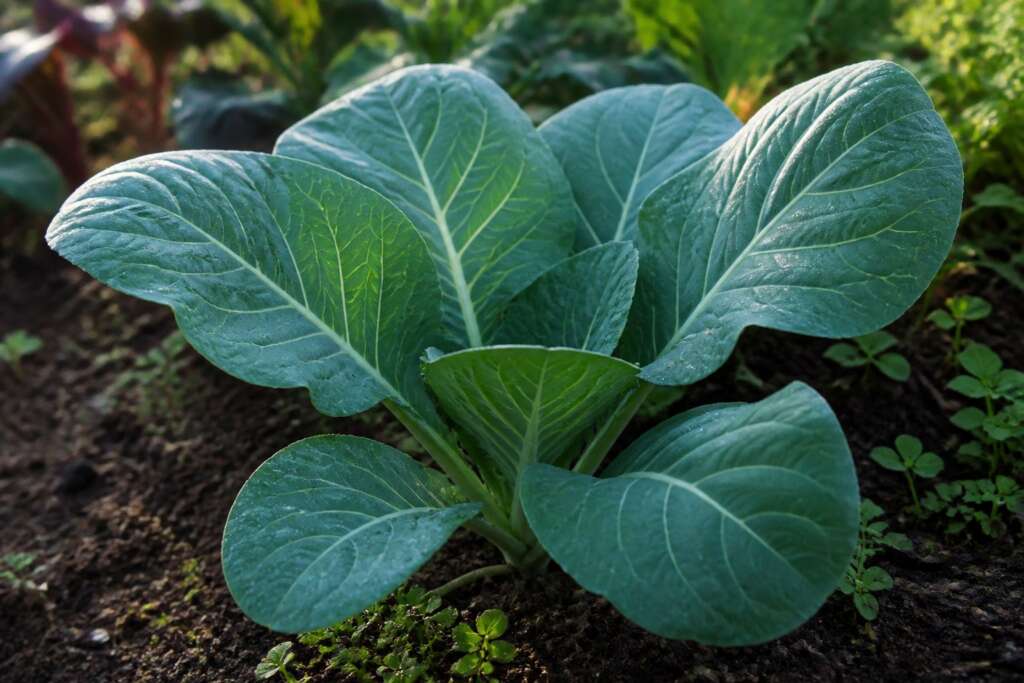
Champion is an open-pollinated collard with a compact, short-stemmed habit and broad, wavy blue-green leaves. It is valued for hardiness, productive leaf harvests, and resistance to bolting compared with many older collards. Plants are commonly ready for a substantial harvest in about 60 to 75 days, depending on temperature, spacing, and whether you pick young leaves or wait for full plants.
Quick How-to
Sow Champion collards 1/4 to 1/2 inch deep in early spring or late summer, either directly in the garden or indoors 4 to 6 weeks before transplanting. Keep the seedbed evenly moist and expect seedlings in about 5 to 10 days. Thin full-size plants to 12 to 18 inches apart, give them full sun and steady water, and protect young leaves from cabbageworms and flea beetles. Harvest the oldest outer leaves first while leaving the center growing point intact.
Quick Guide
| Fact | Recommendation |
|---|---|
| Best method | Direct sow or start indoors 4 to 6 weeks before transplanting |
| Sowing depth | 1/4 inch indoors; about 1/2 inch outdoors |
| Germination temperature | About 50 to 85 F; emergence is quickest in moderately warm soil |
| Days to germination | Usually 5 to 10 days |
| Light for germination | Cover seed; give bright light immediately after emergence |
| Spacing | 12 to 18 inches for full plants; closer for a one-time baby-leaf harvest |
| Sun | Full sun; light afternoon shade can help in hot climates |
| Water | Even moisture, usually about 1 inch per week, adjusted for soil and weather |
| Harvest | Pick outer leaves as needed or cut a young stand for baby greens |
| Maturity | Approximately 60 to 75 days, depending on conditions and harvest stage |
Before You Sow
Champion is a cool-season crop, but it tolerates more warmth than many other brassica greens. For the sweetest and most tender harvest, aim for active growth during mild weather. Spring sowings should mature before sustained summer heat; late-summer sowings can produce through fall and, in many regions, into winter.
Choose fertile, well-drained soil and remove weeds before sowing. Collards make a wide leaf canopy, but their feeder roots remain relatively shallow, so a loose surface and a mulch layer after plants establish are useful. When cabbage-family pests are predictable, place hoops and insect-excluding row cover over the bed immediately after sowing or transplanting. Waiting until leaves are already chewed misses most of the benefit.
Champion is distinct from Vates and Georgia Southern. All are collards, but they differ in plant habit, leaf form, maturity, and regional performance. Use the named guide for the seed in your packet rather than treating those cultivar names as interchangeable.
Direct Sowing
Sow outdoors about 1/2 inch deep. For full plants, place two or three seeds every 12 to 18 inches and thin to the strongest seedling after true leaves appear. You may also sow a straight row more closely, then thin in stages and eat the removed seedlings.
For baby leaves, sow a short band with seeds about an inch apart and harvest the stand while leaves are young. Crowding is acceptable for this one-time cut, but plants intended to mature need room. A densely sown bed left too long develops small leaves, poor airflow, and heavy competition for water.
Keep the top layer of soil consistently moist through emergence. A fine spray or watering wand is less likely to wash seed out of position. Once seedlings are established, shift from frequent surface sprinkling to deeper watering that moistens the active root zone.
Indoor Starting and Transplanting
Start seeds in clean cells 4 to 6 weeks before the outdoor planting date. Sow one or two seeds per cell about 1/4 inch deep in pre-moistened seed-starting mix. After germination, thin to one seedling and provide strong overhead light. Cool, bright growing conditions make sturdier collard transplants than warm rooms and weak windows.
Harden plants over 7 to 10 days before transplanting. Gradually introduce outdoor sun and wind, and do not let the small root balls dry. Set transplants at the same depth they grew in the cell, space them 12 to 18 inches apart, and water immediately. Champion’s compact habit is useful in a home bed, but it still needs space for broad leaves.
Soil, Sun, and Water
Full sun produces the strongest growth. In hot southern gardens, a little afternoon shade can extend spring leaf quality, but dense shade makes plants thin and slow. Collards prefer fertile, well-drained soil with plenty of organic matter and a pH around 6.0 to 7.0.
Maintain rapid, uninterrupted growth for tender leaves. Collards are leafy crops and use nitrogen, but more is not always better. Compost before planting and a measured side-dressing after establishment are safer than repeated heavy feeding. Excess soluble fertilizer can burn roots, promote overly soft growth, or add salts to containers.
Water deeply enough to moisten several inches of soil, then water again as the upper layer begins to dry. Champion’s roots occupy the upper soil profile, so plants respond quickly to drought. Mulch reduces evaporation and soil splash, but keep it slightly away from the stem.
Protecting the Leaves
The part you eat is also the part cabbageworms, loopers, flea beetles, aphids, and slugs target. Check both sides of leaves at least twice a week. Small caterpillars and clusters of eggs are easier to remove before holes spread across the plant.
Lightweight insect-excluding cover is especially effective when installed before pests arrive. Secure every edge so insects cannot enter underneath. Collards do not need insect pollination for leaf production, so the cover can remain in place if it provides enough room, light, and airflow.
Top Mistakes
- Sowing a fall crop too late: Collards tolerate frost, but tiny plants grow slowly in short, cold days. Allow enough time for a useful canopy before winter growth nearly stops.
- Leaving mature plants at baby-leaf spacing: Close sowing works for a quick young harvest. Full Champion plants need 12 to 18 inches or they compete for water and remain undersized.
- Letting shallow soil dry repeatedly: Drought makes leaves tougher, slows recovery after harvest, and encourages uneven growth. Mulch and water the root zone consistently.
- Removing the center crown: Cutting the growing point ends cut-and-come-again production. Take the oldest outer leaves and leave the central cluster intact.
- Installing row cover after damage appears: Row cover prevents insects from reaching the crop; it does not remove pests already beneath it. Inspect plants before covering and secure the edges immediately.
- Overfeeding to force larger leaves: Heavy nitrogen cannot correct crowding, heat, or dry roots. Use moderate fertility and solve the actual limiting condition.
Troubleshooting by Symptom
| Symptom | Likely causes | What to do next |
|---|---|---|
| Seedlings do not emerge evenly | Seedbed dried, seed was too deep, surface crusted, or soil was very cold | Keep sowing depth shallow, soften crust gently, maintain even moisture, and resow gaps |
| Seedlings are long and pale | Weak indoor light, excess warmth, or crowding | Increase overhead light, thin to one per cell, and grow seedlings cooler after emergence |
| Leaves remain small and growth is slow | Crowding, dry soil, low fertility, compacted roots, or cold conditions | Correct spacing and moisture first; side-dress modestly if soil is genuinely deficient |
| Many tiny round holes appear | Flea beetles feeding on young leaves | Protect seedlings with secured row cover and keep plants growing steadily until they can outgrow light damage |
| Ragged holes and dark pellets on leaves | Cabbageworm or looper feeding | Search leaf undersides and the center, remove caterpillars, and exclude new egg-laying adults |
| Leaves curl around sticky clusters | Aphids concentrated on new growth | Rinse colonies from sturdy plants, remove badly infested leaves, and encourage beneficial insects |
| Lower leaves yellow one at a time | Normal aging, prolonged wet soil, or nitrogen shortage | Remove old leaves; check drainage and overall growth before adding fertilizer |
| A central stalk begins elongating | Bolting triggered by maturity, warming weather, or stress | Harvest promptly; edible quality declines as flowering advances, then plan an earlier or fall sowing |
Harvest and Kitchen Use
For a continuing harvest, begin with clean outer leaves once they reach a useful size. Snap or cut them near the stem without injuring the crown. Take only a portion of the canopy at one time so the plant can keep photosynthesizing. Return every few days as new outer leaves mature.
A young, closely sown patch can be cut several inches above the soil for baby greens. Regrowth is possible if crowns remain, but it is less predictable than picking leaves from well-spaced plants. Cool weather and light frost often make collard flavor milder and sweeter because cold changes the balance of sugars in the leaves.
Champion leaves can be braised, sauteed, added to soups, or used young in mixed greens. Harvest in the cool morning, rinse, dry, and refrigerate promptly. Leaves left oversized through hot weather become firmer and need longer cooking.
Seed Saving
Champion is open-pollinated, but producing true-to-type seed is a two-season project. Collards are biennial and normally flower after winter cold. They cross readily with other Brassica oleracea crops, including cabbage, kale, broccoli, cauliflower, kohlrabi, and Brussels sprouts. A home gardener must isolate flowering plants or use controlled pollination, and should save from several healthy, characteristic plants rather than a single survivor.
Select productive plants with Champion’s compact habit and broad blue-green leaves. Carry them through winter where climate allows, or use an appropriate root-storage method in severe climates. In the second season, allow flower stalks and pods to mature. Harvest when pods turn tan but before they shatter, finish drying under cover, and thresh carefully.
Storing Leftover Seed
Keep unused Champion Collard Greens seed in its labeled packet inside a sealed container in a cool, dry, dark indoor location. Avoid garages, sheds, greenhouses, and sunny windowsills, where temperature and humidity swing sharply. Label home-saved seed with the variety and harvest year before storing it.
FAQ
What makes Champion different from other collards?
Champion is known for a relatively compact, short-stemmed plant with broad, wavy blue-green leaves, good hardiness, productivity, and resistance to bolting. Vates and Georgia Southern have their own habits and maturity patterns, so keep cultivar labels with the plants.
Can Champion collards survive frost?
Established collards tolerate frost well, and cool weather often improves flavor. Hardiness depends on plant size, wind exposure, duration of cold, soil moisture, and local conditions; young seedlings and container plants are less protected than established in-ground plants.
Can I grow Champion in a container?
Yes. Use one plant in a large container with drainage and enough soil volume to buffer water and temperature changes. Check moisture more often than you would in a garden bed.
How do I keep collards producing?
Harvest the oldest outer leaves, leave the central growing point untouched, water after substantial harvests, and keep pest damage under control. Avoid stripping every mature leaf at once.
Why are my collard leaves tough or bitter?
Heat, drought, oversized old leaves, and slow stressed growth all reduce tenderness. Pick younger leaves, maintain moisture, and schedule the main crop for cooler weather.
Do I need to remove row cover for pollination?
No. You are harvesting leaves, not pollinated fruit, so insect-excluding cover can remain over the crop as long as plants have room and adequate airflow.