
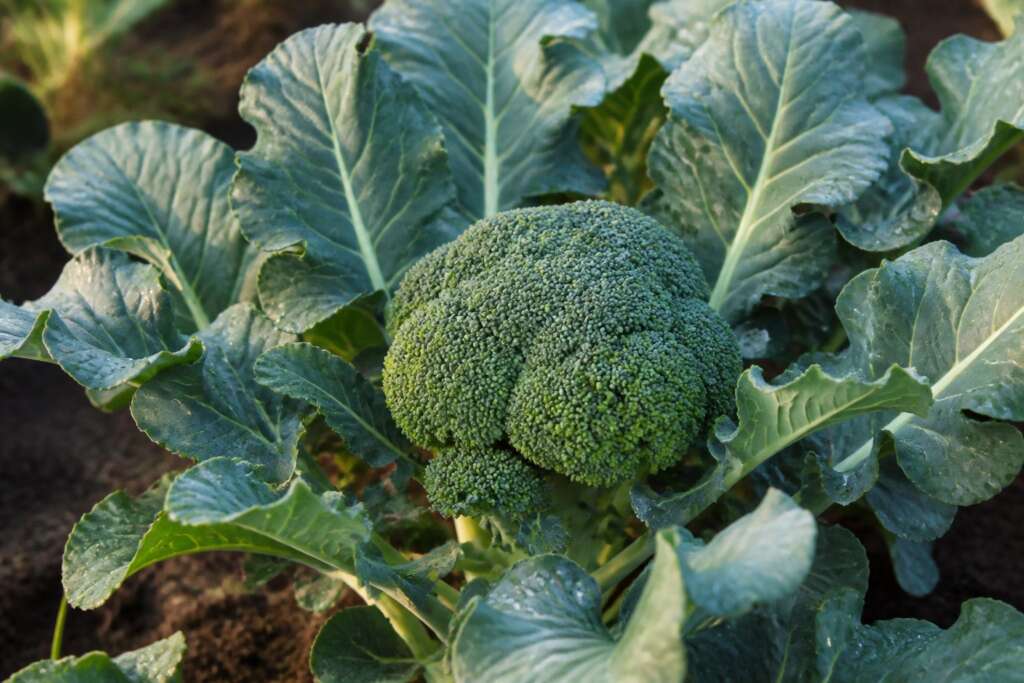
Broccoli is a cool-season brassica grown for its tight central flower head and, on many varieties, smaller side shoots after the main harvest. This guide covers ordinary heading broccoli when the exact cultivar is not known. Maturity time, head size, side-shoot production, and heat tolerance differ by cultivar, but every broccoli planting benefits from the same foundation: steady early growth, fertile soil, consistent moisture, and a harvest window that arrives before sustained heat.
Quick How-to
Start broccoli indoors 4 to 6 weeks before transplanting, or direct sow a fall crop where the season is long enough. Sow 1/4 to 1/2 inch deep, keep the mix evenly moist, and expect germination in roughly 5 to 10 days. Move seedlings into strong light immediately. Harden them off before planting 18 to 24 inches apart in full sun. Keep growth steady with even water and moderate feeding, protect young plants from cabbage-family pests, and cut the central head while its buds are tight and green.
Quick Guide
| Fact | Recommendation |
|---|---|
| Best method | Start indoors for a spring crop; transplant or direct sow for fall |
| Sowing depth | 1/4 to 1/2 inch |
| Germination temperature | About 60 to 85 F; steady room-temperature warmth works well |
| Days to germination | Usually 5 to 10 days |
| Light for germination | Seed may be covered; give seedlings bright light as soon as they emerge |
| Spacing | 18 to 24 inches between plants; 24 to 36 inches between rows |
| Sun | Full sun, at least 6 hours |
| Water | Consistent moisture; roughly 1 to 1.5 inches per week from rain and irrigation |
| Harvest | Cut when the head is firm and buds remain tight, before yellow flowers open |
| Days to harvest | Cultivar dependent; use the packet estimate and count transplant days correctly |
Before You Sow
Plan broccoli around cool weather rather than a fixed nationwide date. Spring plants need enough time to make a head before regular hot days arrive. Fall plants need enough time to mature before severe winter cold stops growth. Your local frost dates and the cultivar’s stated days to maturity are better guides than the calendar alone.
Choose a bed that did not recently hold broccoli, cabbage, kale, cauliflower, collards, or Brussels sprouts when another location is available. Rotation helps interrupt pest and disease cycles. Work finished compost into well-drained soil, remove large clods, and install row-cover supports before planting if flea beetles, cabbageworms, or root maggots are common in your garden.
This is not a broccoli raab or romanesco guide. Broccoli raab is harvested for leafy shoots and buds, while romanesco makes a distinctive spiraled head. Their timing and harvest habits are different enough to deserve their own instructions.
Indoor Starting
Fill clean cells with pre-moistened seed-starting mix. Sow one or two seeds per cell 1/4 to 1/2 inch deep, cover lightly, and water gently. Keep the mix evenly moist but not saturated. Once seedlings emerge, remove any humidity cover and place them under bright overhead light. Thin to one strong seedling per cell after true leaves appear.
Broccoli seedlings grow best when they are bright and relatively cool. Warm rooms combined with weak window light produce long, soft stems. If roots fill the cells well before transplant time, move plants into slightly larger containers rather than leaving them crowded and repeatedly wilted.
Direct Sowing for Fall
Direct sowing works especially well for fall broccoli where summer heat will not prevent establishment. Count backward from the expected harvest period using the packet’s maturity estimate, then add time for germination and slower autumn growth. Sow several seeds at each final position and thin to the strongest plant, or sow a short nursery row and move small seedlings while roots are still compact.
Summer seedbeds can dry within hours. A thin layer of fine compost, shade cloth held above the soil, or a board removed as soon as sprouts appear can help preserve surface moisture. Do not leave a solid cover over emerged seedlings.
Hardening Off and Transplanting
Harden seedlings over 7 to 10 days. Begin with a few sheltered hours outdoors, then gradually increase sun, wind, and time outside. A plant moved directly from indoor conditions into a bright, breezy bed may wilt, scorch, or stop growing.
Transplant when seedlings are sturdy and have several true leaves, before they become rootbound. Set them at the same depth they grew in the cell, firm soil around the root ball, and water thoroughly. Space most heading broccoli 18 to 24 inches apart. Close spacing may produce smaller heads; wider spacing gives leaves and roots more room but does not compensate for poor timing or heat.
Soil, Sun, and Water
Broccoli performs best in full sun and fertile, well-drained soil with a slightly acidic to neutral pH. It is a moderate to heavy feeder, but the goal is continuous balanced growth, not a sudden surge of soft leaves. Compost incorporated before planting and a modest side-dressing after plants establish are usually more useful than repeated heavy fertilizer.
Keep moisture consistent from transplanting through head formation. Drought, waterlogging, or repeated dry-wet cycles can interrupt growth and reduce head quality. Water at soil level when practical and mulch after the soil has settled to limit evaporation and soil splash. Avoid cultivating deeply around established plants because broccoli has many roots near the soil surface.
Temperature and Head Formation
Broccoli heads form best during cool, moderate weather. Small heads that appear prematurely, often called buttoning, usually follow a period of stress: oversized or rootbound transplants, exposure of young plants to prolonged cold, nutrient shortage, drought, or another check in growth. Once a plant buttons, it will not later make a full central head.
Bolting is different. A bolting plant elongates and opens yellow flowers, often after heat or because the head was left past its harvest stage. Watch plants frequently as heads begin to size; the ideal harvest can pass quickly in warm weather.
Top Mistakes
- Using the packet maturity number as days from sowing without checking: Many broccoli estimates are counted from transplanting. Add the indoor seedling period when planning the full season.
- Holding transplants too long: Crowded, rootbound, or frequently wilted seedlings can button after planting. Transplant sturdy young plants on schedule.
- Planting into the wrong temperature window: Spring broccoli that matures in heat may make loose heads or bolt. Fall broccoli planted too late may never size up before growth stops.
- Allowing uneven moisture: A dry spell during rapid growth or head formation reduces head size and can make plants more vulnerable to stress.
- Waiting for a supermarket-sized head: Head size depends on cultivar and conditions. Harvest when buds are tight rather than waiting until flowers begin to separate.
- Ignoring leaf undersides: Cabbageworms and loopers often begin feeding where they are hard to see. Early inspection is far easier than rescuing a badly damaged plant.
Troubleshooting by Symptom
| Symptom | Likely causes | What to do next |
|---|---|---|
| No emergence after 10 to 14 days | Seed too deep, seedbed dried, saturated mix, or temperature stress | Check the top half-inch, correct moisture, and resow shallowly in fresh mix if seed has rotted |
| Seedlings are tall and weak | Insufficient light, too much indoor warmth, or crowding | Move strong light close overhead, thin promptly, and keep seedlings cooler after emergence |
| Seedlings wilt after transplanting | Incomplete hardening, dry root ball, wind, or damaged roots | Water deeply, provide brief afternoon shade, and protect from strong wind while roots establish |
| A tiny head forms on a small plant | Buttoning after cold, root stress, drought, or nutrient shortage | Harvest what forms; adjust seedling age and protect steady growth on the next planting |
| Head is loose or leafy | Warm weather during head development or excess nitrogen | Harvest promptly; choose an earlier spring or better-timed fall window next season |
| Head begins showing yellow | Flower buds are opening because the head is overmature or heat accelerated development | Cut immediately; open flowers are edible, but quality will not return to a tight head |
| Round holes or ragged leaf damage | Flea beetles on small seedlings; cabbageworms or loopers on larger leaves | Inspect both leaf surfaces, hand-pick caterpillars, and use insect-excluding row cover before pests arrive |
| Plant suddenly wilts despite moist soil | Root injury, root disease, or severe stem/root pest damage | Check the crown and roots; remove collapsing plants and avoid moving contaminated soil to healthy brassicas |
Harvest and Side Shoots
Cut the central head when it feels firm and the individual buds are still small, tight, and green. Use a clean knife and leave several inches of stem. Do not wait for the head to loosen or show yellow petals. Morning harvest helps preserve crisp quality during warm weather.
After the main head is removed, keep the plant watered and watch the leaf joints. Many heading varieties produce smaller side shoots for several weeks. Cultivar genetics and weather determine how generous that second harvest will be, so it should be treated as a useful bonus rather than a guaranteed yield.
Seed Saving
Broccoli is a biennial that normally flowers after a cold period. It readily crosses with other varieties of the same species, including many cabbages, kales, cauliflower, collards, kohlrabi, and Brussels sprouts. Saving true-to-type seed therefore requires isolation, multiple healthy parent plants, and carrying selected plants through winter or storing and replanting them where winters are too severe.
The cultivar for this guide is unknown, and a hybrid source would not reproduce true to type. Confirm that your seed is an open-pollinated variety before investing in the two-season process. Let mature seed pods dry on the plant as conditions allow, then finish drying under cover before threshing and storage.
Storing Leftover Seed
Keep unused Broccoli seed in its labeled packet inside a sealed container in a cool, dry, dark indoor location. Avoid garages, sheds, greenhouses, and sunny windowsills, where temperature and humidity swing sharply. Label home-saved seed with the variety and harvest year before storing it.
FAQ
Is broccoli better started indoors or direct sown?
Indoor starting is usually the most dependable method for spring because it gives plants a head start while garden soil is still cold. Direct sowing is practical for fall crops when you can keep a summer seedbed moist and still allow enough cool growing time.
Why did my broccoli make only a small head?
First consider cultivar genetics, then look for a check in growth. Rootbound transplants, prolonged cold when plants were young, drought, poor fertility, crowding, or heat during head formation can all reduce head size.
Can I eat broccoli leaves and stems?
Yes. Healthy leaves and peeled tender stems are edible. Their texture is firmer than the flower head, so they are often chopped and cooked slightly longer.
Should I remove row cover when broccoli flowers?
Broccoli is harvested before its flowers open and does not need pollinators to make the edible head. Insect-excluding cover may remain in place if it allows enough room, light, airflow, and access for care.
Will broccoli grow back after I cut the main head?
It will not make a second central head, but many varieties develop edible side shoots. Keep the plant healthy and harvest those shoots while their buds remain tight.
Can I grow broccoli in a container?
Yes, one plant can grow in a large container with excellent drainage. Container soil dries quickly, so consistent watering and enough root volume are essential for forming a useful head.