
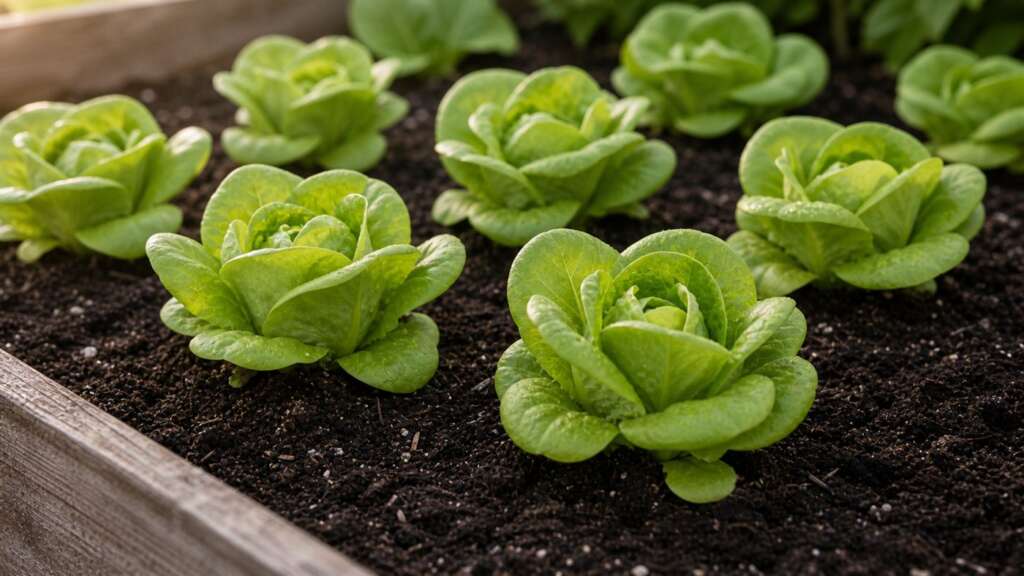
Tom Thumb is a heirloom miniature butterhead (bibb-type) lettuce grown for its small, tender heads of soft green leaves. Each head is roughly the size of a tennis ball, often described as a single-serving lettuce, which makes Tom Thumb a natural fit for containers, small raised beds, window boxes, and tight succession plantings. Like other lettuces, it is a cool-season crop that performs best when it can germinate in cool soil, grow under mild conditions, and reach the table before summer heat triggers bitterness or bolting.
Quick How-to
Sow Tom Thumb lettuce in early spring as soon as the soil can be worked, and again in late summer for a fall crop. Cover seed very lightly, about 1/8 inch, and keep the surface evenly moist until germination. Expect sprouts in roughly 7 to 10 days when soil is in the cool to mild range, often faster in ideal conditions. Thin or transplant to about 4 to 6 inches apart because the heads stay small. Harvest whole heads when they feel filled out but still tender, typically around 45 to 55 days from sowing.
Quick Guide
| Fact | Recommendation |
|---|---|
| Best method | Direct sow preferred; indoor start 3 to 4 weeks before transplanting works well for early or fall crops |
| Sowing depth | About 1/8 inch; barely cover the seed |
| Germination temperature | About 55 to 70 F is ideal; cooler is fine, hotter soil can stall germination |
| Days to germination | About 7 to 10 days in cool soil, sometimes sooner |
| Light for germination | Light can help; do not bury seed deeply |
| Spacing | Thin to about 4 to 6 inches apart for whole heads |
| Sun | Full sun in cool weather; light afternoon shade once temperatures climb |
| Water | Steady, even moisture; never let small plants wilt |
| Harvest | Baby leaves in about 25 to 30 days; compact whole heads in roughly 45 to 55 days |
| Plant size | Compact butterhead, small heads suited to containers and tight spacing |
Before You Sow
Pick a spot that gets full sun in spring and fall, and consider how that same spot will look once the weather warms. Lettuce is forgiving about soil so long as it drains well and holds even moisture, but it does not enjoy compacted ground or heavy clay that bakes in the sun. Loosen the top few inches, rake the surface smooth, and break up clods so the small seed has good contact and seedlings do not have to fight to emerge.
Water the bed before sowing rather than after. A pre-moistened surface keeps tiny seed from washing into low spots or sinking too deep when you water it in. Label the row at planting time. Lettuce seedlings can look similar to other young greens, and Tom Thumb in particular is small enough that you will want to keep track of where it is.
Because Tom Thumb stays compact, it is one of the easier lettuces to slot into a container, a window box, the front edge of a bed, or the spaces between slower-growing vegetables. Plan around its short stature rather than trying to give it the spacing of a full-size romaine.
Direct Sowing
Direct sowing is the most natural method for Tom Thumb because lettuce sprouts quickly in cool soil and prefers not to be disturbed. Sprinkle seed thinly along a shallow furrow or scatter across a small patch, then cover with a fine dusting of soil or seed-starting mix, about 1/8 inch. Press gently for soil contact and water with a soft spray so the seed is not displaced.
Keep the surface evenly moist until you see green. A dry crust on top can prevent emergence even when the layer below is damp, so check the seedbed once or twice a day during warm or windy weather. Once seedlings have one or two true leaves, thin gradually. Pull or snip the weaker seedlings so the strongest ones stand 4 to 6 inches apart. The thinnings themselves are an early salad.
Sow small successions every two to three weeks during the cool window rather than one large planting. Tom Thumb matures quickly and does not hold for long once it peaks, so a steady trickle of small sowings keeps you in fresh heads.
Indoor Starting
Indoor starting is optional but useful for getting an early jump on spring or for staging a tidy fall crop. Sow 3 to 4 weeks before your intended transplant date, using individual cells or small pots with fresh seed-starting mix. Cover the seed lightly, keep the mix evenly moist, and place the tray somewhere cool and bright as soon as sprouts appear.
Lettuce seedlings stretch quickly when they are warm and underlit. A bright window can work in mild conditions, but a simple shop light or grow light kept close to the seedlings tends to produce sturdier transplants. Aim for cool and bright rather than warm and shaded.
Transplant outdoors after a short hardening-off period of about five to seven days, gradually exposing seedlings to sun, breeze, and outdoor temperatures. Move them out before they become rootbound; lettuce that has spent too long in a cell can sulk after transplanting or jump straight toward bolting once it feels stressed.
Transplanting and Spacing
Set Tom Thumb transplants at the same depth they grew in the cell, not deeper, since burying the crown can cause rot. Water in gently and keep the root zone consistently moist through the first week. Because the heads stay small, a spacing of about 4 to 6 inches is usually plenty; wider spacing wastes garden room without producing larger heads.
In containers, choose a pot at least 6 inches deep with good drainage. A 10- to 12-inch round pot can comfortably hold three or four Tom Thumb plants, and a window box can carry a tidy row. Containers dry faster than the ground, so plan to water them more often, especially as plants size up.
Soil, Sun, and Water
Lettuce likes a fertile, well-drained soil with steady moisture. A light compost amendment before sowing is usually enough; heavy nitrogen pushes soft, floppy growth and can shorten the cool window before bolting. Full sun is ideal in spring and fall. As the season warms, afternoon shade from a taller crop or a piece of shade cloth can stretch the harvest by keeping leaves cooler.
Water at the soil level when possible to keep foliage drier and reduce fungal pressure. Even moisture is the single most important factor for tender, mild-tasting leaves. Plants that wilt repeatedly, then get drenched, tend to turn bitter and bolt sooner. A thin layer of mulch once seedlings are established helps buffer moisture and keeps the root zone cool.
Top Mistakes
- Sowing too deeply: Lettuce seed is small and needs to be barely covered. Burying it past about 1/4 inch delays or prevents emergence.
- Sowing into heat: Lettuce germination drops sharply as soil warms past about 75 to 80 F. If spring slipped by, wait for the fall window rather than fighting summer.
- Letting the surface dry between waterings: Tiny seed and shallow roots are unforgiving of dry-wet swings. Keep the top layer evenly moist until plants are well established.
- Skipping the thin: Crowded Tom Thumb plants stay leafy but never form their characteristic small heads. Thin early, even when it feels wasteful.
- Waiting too long to harvest: Tom Thumb is bred to peak as a tender mini-head. Holding it for extra size usually trades tenderness for toughness or triggers bolting.
Troubleshooting by Symptom
| Symptom | Likely causes | What to do next |
|---|---|---|
| No sprouts after 10 to 14 days | Seed buried too deep, surface dried out, soil too warm, or seed disturbed by heavy watering | Resow shallowly into a pre-moistened seedbed, mist gently, and shade the bed lightly if temperatures are climbing |
| Patchy germination | Uneven seed depth, dry pockets, soil crust, or water washing seed into low spots | Smooth the bed before sowing, cover with a thin even layer, and water with a fine spray |
| Tall, pale, floppy seedlings | Weak light indoors, too much warmth, or crowded trays | Move lights closer, lower the temperature, and thin to one seedling per cell |
| Seedlings collapse at the soil line | Overly wet mix, poor airflow, or damping-off conditions | Improve airflow, water less often and from below, and start fresh in clean mix if the problem repeats |
| Leaves taste bitter | Heat, drought stress, or plants held too long | Harvest earlier, water more consistently, and shift to fall sowings as the weather warms |
| Plants bolt (send up a flower stalk) early | Heat, long days, sudden temperature swings, or root stress | Use succession sowings, provide afternoon shade in warm spells, and harvest at the first sign of stretching |
| Heads stay small and loose | Crowding, irregular moisture, or low fertility | Thin to 4 to 6 inches, water evenly, and side-dress lightly with compost if soil is lean |
| Holes in leaves or slime trails | Slugs and snails, especially in damp shaded beds | Water in the morning so leaves dry by evening, remove hiding places, and use a slug control suited to edible gardens |
Timing and Climate Notes
Treat Tom Thumb as a cool-window crop. In most regions that means an early spring planting once the soil can be worked, then a return engagement in late summer for fall harvest. In mild-winter climates, fall through early spring is the easiest growing window, and a fall sowing can sometimes overwinter under light protection.
If you are not sure when to start, your last spring frost date and first fall frost date are the most useful anchors. Aim to have plants up and growing during the cool weeks before and after each date, and avoid sowing into the hottest stretch of summer. Short, repeated sowings outperform one large planting because they keep mature heads moving through your kitchen instead of bolting in unison.
Container and Small-Space Notes
Tom Thumb earns its place in small spaces. A single 12-inch pot can hold a handful of heads; a long window box can produce a tidy salad row. Use a quality potting mix, not garden soil, and make sure the container has drainage. Containers warm faster in the sun and dry out more quickly than in-ground beds, so check moisture daily once plants size up.
Indoors under lights, Tom Thumb can be grown year-round for baby leaves or small heads. Keep the lights close, the room cool, and the airflow gentle but steady. Hydroponic and self-watering setups suit this variety well because it appreciates the consistent moisture they provide.
Hydroponic Growing
Tom Thumb is an especially practical hydroponic lettuce because its compact heads need less horizontal space than full-size butterheads. It works in deep-water culture, nutrient-film technique, and flood-and-drain systems. Germinate one seed per clean inert plug, keeping the plug evenly damp rather than waterlogged. Transfer it once roots show outside the plug and true leaves are forming, with the plant crown held above the nutrient solution.
Use a complete leafy-green hydroponic nutrient. A useful target range is EC 1.2 to 1.8 mS/cm and pH 6.0 to 7.0. Measure at a consistent time each day and correct EC before adjusting pH. Add plain water to replace what plants use, and refresh the reservoir periodically so sodium and unbalanced nutrients do not accumulate unnoticed.
Keep the reservoir shaded, clean, and well oxygenated. Cool-season lettuce performs best when the solution stays in the 60s to low 70s F; prolonged warmth reduces dissolved oxygen and encourages both root trouble and bolting. Pale, firm roots with a fresh smell are normal. Brown slime, a sour odor, or plants that wilt despite wet roots call for a reservoir check: lower the temperature, restore aeration, clean the equipment, and remove badly damaged roots or plants.
Allow enough headroom for air to move around each compact head. Tom Thumb can be planted closer than larger lettuces, but leaves should not stay pressed together and wet. Brown inner leaf edges can be tipburn caused by rapid growth and weak calcium movement. Improve airflow, keep temperatures moderate, and check that EC is within range before adding extra nutrients.
Harvest and Kitchen Use
You can harvest Tom Thumb in two ways. For baby greens, snip outer leaves while leaving the growing point intact, and the plant will keep producing for a while. For whole heads, cut at the base once the head feels filled out but still tender, often around 45 to 55 days from sowing. The leaves are soft, mildly sweet, and well suited to simple salads, lettuce wraps, or as a tender bed for grilled fish or roasted vegetables. Because each head is small, it is easy to harvest exactly what you need for a meal.
Refrigerate harvested heads unwashed in a loose bag or container, and rinse just before serving. Tom Thumb does not store as long as crisper lettuce types, so plan to use it within a few days for the best texture.
Seed Saving
Lettuce is mostly self-pollinating, with low rates of crossing between varieties. To save seed, let a few of your strongest plants bolt and flower instead of harvesting them. Small yellow flowers will eventually produce fluffy seed heads similar to a dandelion. Collect when the fluff appears and the seed pulls free easily, then finish drying indoors before storing. Label the variety and year. If you grow multiple lettuce varieties close together, expect minor variation in saved seed unless you separate them.
Storing Leftover Seed
Keep unused Tom Thumb Lettuce seed in its labeled packet inside a sealed container in a cool, dry, dark indoor location. Avoid garages, sheds, greenhouses, and sunny windowsills, where temperature and humidity swing sharply. Label home-saved seed with the variety and harvest year before storing it.
FAQ
Why did my lettuce fail in summer?
Heat above roughly 75 to 80 F sharply reduces lettuce germination and pushes mature plants to bolt. The fix is timing rather than effort: sow during the cool windows of spring and fall, and use shade or succession sowings to stretch the season at the edges.
Can I grow Tom Thumb in containers?
Yes, it is one of the best lettuces for containers because the heads stay small. Use a pot at least 6 inches deep with drainage, space plants about 4 to 6 inches apart, and water more often than you would in the ground.
Should I thin Tom Thumb seedlings?
Yes. Crowded plants compete for light, water, and root space, and the heads stay loose instead of forming. Thin early to 4 to 6 inches apart and eat the thinnings as baby greens.
Can I harvest baby leaves instead of whole heads?
Yes. Snip outer leaves while leaving the small central growing point in place, and the plant will keep producing for a while. For the classic Tom Thumb experience, though, let at least some plants form full mini-heads.
Is Tom Thumb good for indoor or hydroponic growing?
It is well suited to both. Its compact habit, quick maturity, and preference for steady moisture make it a natural fit for grow-light setups, hydroponic towers, and self-watering planters.