
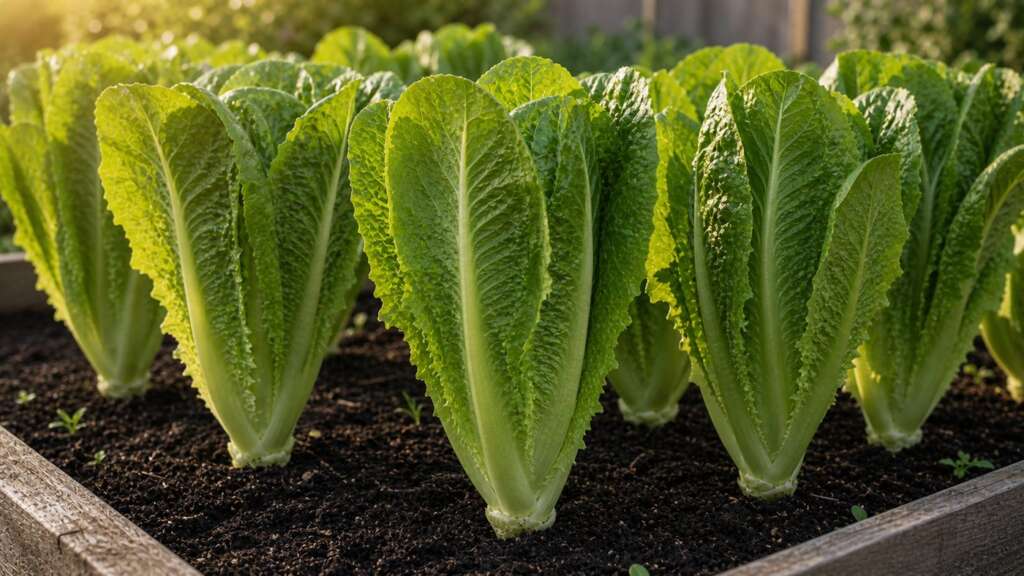
Parris Island Cos is a classic heirloom romaine grown for tall, upright heads with crisp green outer leaves and pale, sweet hearts. Like most lettuce, it is a cool-season leafy green that performs best in spring and fall, in mild-winter gardens, or under afternoon shade when summer heat arrives. The variety has a reputation for being slower to bolt than many romaines, which gives home gardeners a useful extra week or two of harvest in borderline weather.
Quick How-to
Sow Parris Island Cos when soil is cool, about 4 to 6 weeks before your last spring frost, and again as summer heat fades for a fall crop. Cover seed very lightly, no more than about 1/8 inch, and press for soil contact. Keep the surface evenly moist and aim for soil between roughly 55 and 70 F. Seedlings usually emerge in about 7 to 10 days in cool soil, faster in mild conditions. Thin in stages and harvest at the leaf, heart, or full-head stage depending on how you plan to eat it.
Quick Guide
| Fact | Recommendation |
|---|---|
| Best method | Direct sow in cool weather; indoor starting works for an earlier first cutting |
| Sowing depth | About 1/8 inch; surface sow with a fine covering |
| Germination temperature | About 55 to 70 F; germination drops off above the mid-70s F |
| Days to germination | About 7 to 10 days under cool, moist conditions |
| Light for germination | Light exposure can aid germination; do not bury seed deeply |
| Spacing | Thin to about 10 to 12 inches apart for full heads; closer for baby-leaf cuttings |
| Sun | Full sun in cool weather; afternoon shade once temperatures climb |
| Water | Even, steady moisture; avoid wilt-soak cycles |
| Days to harvest | About 60 to 75 days for full romaine heads; baby leaves can be cut sooner |
| Plant size | Upright romaine head, commonly around 10 to 12 inches tall when mature |
Before You Sow
Romaine is one of the more forgiving lettuces for home gardens, but the seed itself is small and easily mishandled. Prepare a fine, smooth seedbed and water it before sowing so that small seeds do not wash down into cracks or get buried by later watering. In containers, use a light potting mix and a pot with drainage; in the ground, work in a thin layer of finished compost if the bed is lean.
Timing matters as much as soil. Lettuce germinates best in cool conditions, and Parris Island Cos is no exception. Aim for spring sowings while nights are still chilly and afternoons are mild, and start your fall succession once the worst of summer heat is fading. In mild-winter climates, a late fall sowing can carry plants into winter harvests with simple frost protection.
Direct Sowing
Direct sowing is the simplest path for romaine. Mark a shallow furrow with the edge of a hand tool, sprinkle seed thinly, and cover with just a dusting of fine soil or seed-starting mix. Press lightly so seed makes contact with the soil. Water with a gentle spray; a heavy stream will move seed around and create patchy stands.
Keep the surface evenly moist until germination. The top layer of soil is what feeds and waters the emerging seedling, so a dry crust during the first week is the most common cause of poor stands. In bright, breezy weather, a light cover of row fabric or shade cloth can help hold moisture and moderate soil temperature during germination.
Begin thinning as soon as you can tell true seedlings from cotyledons. Two rounds of thinning usually work well: an early pass to about 2 to 3 inches apart for baby cuttings, then a later pass to the final 10 to 12 inches for full heads. Thinned seedlings are excellent in salads, so nothing is wasted.
Indoor Starting
Indoor starting buys you earlier transplants and a more uniform stand. Sow about 3 to 4 weeks before you plan to transplant out. Use clean cells with seed-starting mix, sow one to three seeds per cell at about 1/8 inch deep, and thin to the strongest seedling after true leaves appear.
Keep trays cool and brightly lit. Romaine seedlings get leggy quickly under warm, dim conditions; a bright shop light or grow light a few inches above the canopy keeps stems compact. A warm spot is helpful for the first day or two of germination, but move trays off heat as soon as you see green so seedlings do not stretch.
Harden off seedlings over about 7 to 10 days before planting out. Start with sheltered shade and short outdoor visits, then build up to full sun and wind. Transplant before plants become rootbound; lettuce that sits too long in small cells often stalls or bolts prematurely once it hits the garden.
Transplanting and Spacing
Transplant on a cool, overcast afternoon when possible. Set plants at the same depth they grew in their cells, water in well, and protect from intense midday sun for the first day or two if the weather is bright. For full romaine heads, space plants about 10 to 12 inches apart in rows roughly 12 to 18 inches apart. For a cut-and-come-again leaf planting, you can plant much closer and harvest by shearing.
Mulch with a thin layer of straw or fine compost once plants have established a few true leaves. Mulch holds moisture, keeps roots cool, and reduces splash that can muddy lower leaves.
Soil, Sun, and Water
Romaine likes fertile, well-drained soil rich in organic matter, with a steady supply of moisture. Lettuce roots are shallow, so the top several inches of soil are what really matter. Compost worked in before planting is usually enough; if growth is sluggish on poor soil, a light side-dressing of a balanced fertilizer can help.
Full sun is best during cool spring and fall conditions. As temperatures climb, partial afternoon shade becomes an advantage rather than a compromise. Plants that get morning sun and afternoon relief often stay sweet longer than plants in baking all-day sun.
Water is the single biggest lever for romaine quality. Aim for even moisture from germination through harvest. Drying out and then soaking the bed is what produces bitter leaves, tip burn on the inner leaves, and rapid bolting once stress accumulates. A finger-test rule works well: if the top inch of soil feels dry, water deeply rather than lightly.
Hydroponic Growing
Parris Island Cos romaine is a strong hydroponic candidate because its tall upright leaves make a substantial head without the broad spread of a butterhead. Deep-water culture or a sturdy NFT channel works best; provide enough vertical clearance under lights for a mature romaine head. Start one seed in a clean inert plug, keep the plug damp rather than submerged, and move it into the system when roots show at the plug edge and the first true leaves are opening. Keep the crown above the nutrient solution; a constantly wet stem invites rot even when the roots look healthy.
Use a complete hydroponic nutrient made for leafy greens. A practical target is EC 1.2 to 1.8 mS/cm and pH 6.0 to 7.0. Check both at a consistent time, correct nutrient strength before adjusting pH, and replace the solution periodically instead of endlessly adding concentrate. Keep the reservoir shaded, clean, and well oxygenated. Lettuce roots perform best when the solution stays in the 60s to low 70s F; warmer water holds less oxygen and increases the chance of slimy roots and premature bolting.
Allow about 8 to 10 inches between plants and keep the light even from edge to edge. The upright canopy can look uncrowded at the top while the bases are packed tightly, so check airflow near the crown. Pick outer leaves for an extended harvest or cut the entire head when the ribs are crisp and the center has filled. Do not hold a mature head in warm conditions waiting for extra size. Give the canopy steady airflow without aiming a hard fan directly at tender leaves. Under lights, keep the fixture close enough to prevent stretching while preserving a dark period each day. Raise or dim the light if leaf edges bleach or curl upward.
A narrow, floppy head points to weak light; a tall center points to heat and bolting. Brown inner margins can develop before they are visible outside, so keep air moving through the center and avoid high EC. Pale, firm roots with a fresh smell are normal. Brown slime, sour odor, or wilting while roots are wet points to warm solution, weak aeration, light entering the reservoir, or poor sanitation. Brown inner leaf edges are often tipburn caused by fast growth and weak calcium movement; improve airflow, moderate the temperature, and verify EC before adding more fertilizer.
Top Mistakes
- Sowing too deeply: Lettuce seed needs to be near the surface. Burying it more than about 1/4 inch slows or prevents germination, especially in heavy soils.
- Letting the seedbed crust over: A dry, crusty top layer can stall sprouts that have already begun to grow. Light, frequent surface watering during the first week is more useful than a single deep soak.
- Sowing into summer heat: Lettuce germination drops off sharply when soil warms above the mid-70s F, and seedlings that do emerge often bolt before forming heads. Push spring sowings early and pause through the hottest weeks.
- Skipping thinning: Crowded romaine grows tall, narrow, and floppy instead of forming dense hearts. Thin in stages so each plant has room and airflow.
- Inconsistent watering: Wilt-and-soak cycles drive bitterness, tip burn, and premature bolting. Aim for steady moisture rather than rescue watering.
Troubleshooting by Symptom
| Symptom | Likely causes | What to do next |
|---|---|---|
| No sprouts after about 10 to 14 days | Seed buried too deep, dry surface crust, or soil too warm (thermodormancy above about 75 to 80 F) | Resow shallowly into freshly raked soil, water gently and often, and try again when soil cools; pre-chilling seed in the refrigerator for a day or two can help in warm weather |
| Patchy or thin stand | Seed washed into low spots, uneven covering, or surface dried during the first few days | Smooth the bed before sowing, cover with just a dusting of fine mix, and mist the surface lightly until plants emerge |
| Tall, pale, leggy seedlings | Not enough light, indoor warmth, or crowding | Move under stronger overhead light, lower the temperature, and thin promptly to one plant per cell |
| Seedlings collapse at the soil line | Damping-off from overly wet, poorly ventilated trays | Use clean mix and trays, water from below when possible, and improve airflow with a small fan |
| Bitter leaves | Heat stress, drought stress, or harvesting past prime | Harvest in the morning, water more evenly, provide afternoon shade, and pick at the intended size rather than waiting longer |
| Plants bolt (send up a flower stalk) before heading | Lengthening days combined with heat, drought, or transplant stress | Switch to succession sowing every 2 to 3 weeks, time plantings for cooler windows, and remove bolting plants once leaves turn bitter |
| Tip burn on inner leaves | Uneven moisture and rapid growth in warm weather affecting calcium movement in the plant | Keep watering steady, mulch to buffer soil moisture, and avoid heavy nitrogen pushes during heat |
| Heads stay small and loose | Crowding, low fertility, or heat shortening the growing window | Thin to full spacing, side-dress with a light feeding, and plan future sowings for cooler stretches |
| Holes chewed in leaves | Slugs, snails, cabbage loopers, or earwigs | Hand-pick at dusk, set out shallow beer traps for slugs, and lift mulch back from stems if slug pressure is high |
| Slimy, collapsed lower leaves | Soil splash and poor airflow in wet weather | Mulch under plants, water at soil level, and harvest outer leaves to open up the canopy |
Harvest
Parris Island Cos is flexible at harvest. You can shear the entire planting at a few inches tall for baby leaves, pick outer leaves over time for ongoing cut-and-come-again use, or wait for full upright heads with firm hearts.
For full heads, harvest when the plant stands roughly 10 to 12 inches tall and the center has tightened into a recognizable romaine heart. Cut just above the soil line with a sharp knife in the morning, when leaves are coolest and most crisp. Wash, spin dry, and refrigerate promptly; properly chilled romaine holds well for over a week.
Watch for the first signs of bolting, a sudden vertical stretch from the center of the plant. Once a plant begins to bolt, leaf flavor turns bitter quickly, and it is usually better to harvest the whole head right away than to wait.
Seed Saving
Lettuce is mostly self-pollinating, though low rates of crossing can occur between varieties grown close together. To save seed, allow a few healthy, true-to-type plants to bolt, flower, and form fluffy seed heads. The plant will send up a tall stalk with many small yellow flowers, followed by tufted seeds resembling miniature dandelion puffs.
Seed ripens unevenly over several weeks. The easiest method is to check stalks daily once flowering ends, then either tap mature seed into a paper bag or cut whole stalks when most heads have fluffed and finish drying indoors. Clean by rubbing seed heads between your hands and winnowing chaff away. Label with variety and year, and store cool, dry, dark, and sealed.
Storing Leftover Seed
Keep unused Parris Island Cos Romaine Lettuce seed in its labeled packet inside a sealed container in a cool, dry, dark indoor location. Avoid garages, sheds, greenhouses, and sunny windowsills, where temperature and humidity swing sharply. Label home-saved seed with the variety and harvest year before storing it.
FAQ
Is Parris Island Cos heat tolerant?
It is more heat tolerant than many romaines and is often described as slow to bolt, but it is still a cool-season leafy green. Expect best quality from spring and fall sowings, and plan on afternoon shade or row cover if you push it into early summer.
Should I soak romaine seed before sowing?
Soaking is not necessary in most conditions. If you are sowing into warm soil and want to nudge germination, you can pre-chill the seed in the refrigerator for a day or two while it sits on a damp paper towel. Sow as soon as you see the first sign of sprouting.
Can I grow Parris Island Cos in containers?
Yes. A pot at least 8 to 10 inches deep with good drainage will support several plants for baby greens or a single full head. Container plants dry out faster than in-ground plants, so check moisture daily in warm weather.
How do I get a longer harvest from one packet?
Use succession sowing. Sow a small block every 2 to 3 weeks in spring until heat sets in, then pause and resume sowings as cool weather returns in late summer or early fall. Combining baby-leaf and full-head plantings extends the season further.
Why is my lettuce bitter even though it looks healthy?
Bitterness in lettuce usually comes from heat and water stress, not from anything wrong with the plant. Try harvesting earlier in the day, watering more evenly, and moving the next sowing to a cooler window or a shadier spot.