
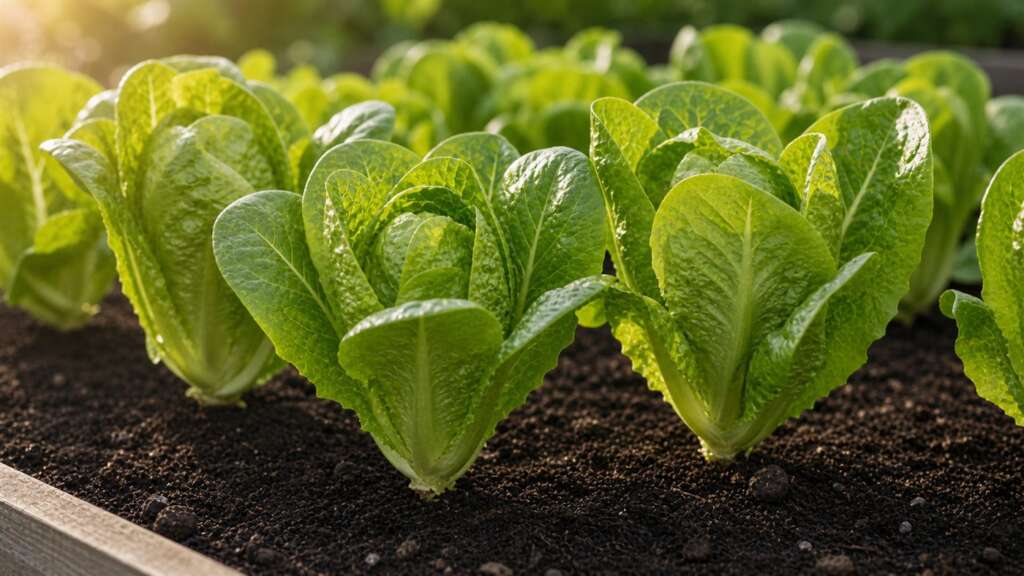
Little Gem is a small, sweet mini romaine that forms tidy single-serving heads, usually around 5 to 6 inches tall, with crisp pale-green hearts. It is grown as a cool-season annual and rewards shallow sowing, steady moisture, and timing that keeps it out of midsummer heat. The plant is small enough for raised beds, borders, and roomy containers, and quick enough that most gardeners can fit two or three successions into a single cool window.
Quick How-to
Sow Little Gem in spring as soon as the soil can be worked, and again in late summer for a fall crop. Direct sow about 1/8 inch deep, barely covered, into a finely raked seedbed, or start indoors 3 to 4 weeks before transplanting. Keep the seed zone consistently moist and on the cool side, ideally around 60 to 70 F. Expect sprouts in about 2 to 10 days. Thin gradually to 6 to 8 inches between plants for full hearts, and harvest before summer heat triggers bolting.
Quick Guide
| Fact | Recommendation |
|---|---|
| Best method | Direct sow into cool soil; indoor starts work well for early or transplanted crops |
| Sowing depth | About 1/8 inch; press in lightly rather than burying |
| Germination temperature | About 60 to 70 F; cool soil is better than hot |
| Days to germination | About 2 to 10 days |
| Light for germination | Light can aid germination; cover only thinly |
| Spacing | Thin to about 6 to 8 inches apart for full mini heads |
| Sun | Full sun in cool weather; afternoon shade once temperatures climb |
| Water | Even, steady moisture; avoid drought-soak cycles |
| Harvest | Baby leaves in about 30 days; compact full hearts in roughly 50 to 65 days |
| Plant size | Compact mini-romaine heads commonly about 5 to 8 inches tall |
Before You Sow
Little Gem rewards a little prep work because the seed is small and the seedlings are delicate at first. Rake the bed smooth, break up clods, and remove stones or debris that could trap seed at uneven depths. Lettuce is a light feeder, but a thin layer of finished compost worked into the top inch of soil helps with both moisture retention and tilth.
Water the bed lightly before sowing so the seed lands on already-damp soil rather than dust. This single habit prevents the most common stand failures, where surface water washes tiny seed into low spots or buries it too deeply. Label rows clearly; young lettuce can be hard to tell apart from weed seedlings during the first week.
If you are sowing into a container, choose a pot at least 6 to 8 inches deep with drainage and use a light potting mix rather than dense garden soil. Containers dry faster than ground beds, so plan on more frequent watering as the weather warms.
Direct Sowing
Direct sowing is the most natural method for Little Gem because it skips the transplant stress that small lettuces sometimes resent. Sprinkle seed thinly along a shallow furrow, cover with a fine dusting of soil or seed-starting mix, and tamp gently to ensure soil contact. A light scattering of vermiculite over the row helps keep the surface from crusting during dry spells.
Water with a gentle spray or a watering can with a fine rose so the seed is not washed loose. Keep the top quarter inch of soil consistently moist until you see sprouts. Once seedlings show their first true leaves, thin in stages: first to about 3 inches apart, then to a final 6 to 8 inches as plants develop. The thinnings are tender baby greens and worth eating.
For a steady kitchen supply, sow a short row every two to three weeks through the cool part of the season rather than one large planting all at once.
Indoor Starting
Indoor starts are useful for the earliest spring planting, for filling a defined garden plan, or for getting a head start before fall. Sow 3 to 4 weeks before your target transplant date in cell trays or small pots. Cover seed lightly, mist to settle, and place under bright overhead light as soon as germination begins.
Lettuce seedlings want cool, bright conditions, not a warm, dim windowsill. Aim for daytime temperatures in the 60s F and avoid leaving trays on heat mats once seedlings appear. A small fan running on low improves stem strength and reduces damping-off risk.
Harden off over 5 to 7 days before transplanting: short outdoor visits at first, gradually building toward a full day in sun and breeze. Transplant on a cloudy afternoon or in the evening when possible, water in well, and shade newly set plants for a day or two if the sun is strong.
Transplanting and Spacing
Set Little Gem transplants at the same depth they grew in their cells, never deeper. Burying the crown invites rot. Space plants 6 to 8 inches apart in all directions for full hearts, or as close as 4 to 5 inches if you plan to harvest some young as loose-leaf and let others mature.
After transplanting, keep the root zone moist for the first week while roots reach into surrounding soil. A light straw or shredded leaf mulch laid between plants once they are established helps moderate soil temperature and keeps splashing soil off the lower leaves.
Soil, Sun, and Water
Little Gem prefers fertile, well-drained soil with a neutral to slightly acidic pH. Heavy clay holds too much water in cool weather; very sandy soil dries too fast for steady leaf production. Compost amendment helps both extremes.
Full sun produces the most compact, sweetest hearts during cool weather. As temperatures climb into the 80s F, afternoon shade from a taller crop, a shade cloth panel, or even a row cover on hoops can extend the season by several weeks. Even moisture matters more than total water volume. Aim for soil that stays consistently damp a couple of inches down rather than wet-then-dry cycles, which trigger bitterness and tip burn.
Side-dress lightly with compost or a balanced organic fertilizer once heads begin to form if growth seems slow, but skip heavy nitrogen, which can produce loose, floppy heads instead of tight hearts.
Hydroponic Growing
Little Gem is a strong hydroponic candidate because its small upright romaine-style head uses less horizontal room than full-size romaine. NFT, deep-water culture, and compact passive systems are all practical when roots have enough reservoir volume. Start one seed in a clean inert plug, keep the plug damp rather than submerged, and move it into the system when roots show at the plug edge and the first true leaves are opening. Keep the crown above the nutrient solution; a constantly wet stem invites rot even when the roots look healthy.
Use a complete hydroponic nutrient made for leafy greens. A practical target is EC 1.2 to 1.8 mS/cm and pH 6.0 to 7.0. Check both at a consistent time, correct nutrient strength before adjusting pH, and replace the solution periodically instead of endlessly adding concentrate. Keep the reservoir shaded, clean, and well oxygenated. Lettuce roots perform best when the solution stays in the 60s to low 70s F; warmer water holds less oxygen and increases the chance of slimy roots and premature bolting.
Start with 6 to 8 inches between sites. Its upright leaves tolerate closer spacing than broad butterheads, but the base and center still need moving air so moisture does not collect between leaves. Cut compact heads as soon as they feel filled, or remove a few outer leaves while keeping the center intact. A short succession every couple of weeks gives better quality than holding mature plants in the system. Give the canopy steady airflow without aiming a hard fan directly at tender leaves. Under lights, keep the fixture close enough to prevent stretching while preserving a dark period each day. Raise or dim the light if leaf edges bleach or curl upward.
If the plants stretch instead of making tight vertical leaves, strengthen the light and check temperature. Browning at the inner margins is a cue to improve airflow and moderate growth, not automatically to add calcium. Pale, firm roots with a fresh smell are normal. Brown slime, sour odor, or wilting while roots are wet points to warm solution, weak aeration, light entering the reservoir, or poor sanitation. Brown inner leaf edges are often tipburn caused by fast growth and weak calcium movement; improve airflow, moderate the temperature, and verify EC before adding more fertilizer.
Top Mistakes
- Sowing too deeply. Little Gem seed is small and needs to be near the surface. Burying it 1/2 inch or more is one of the most common reasons for poor germination.
- Letting the surface crust. A dried, hardened surface can block tiny seedlings even when seed has germinated below. Mist gently and consider a thin vermiculite cover during dry spring weather.
- Sowing too late into heat. Lettuce that germinates as soil moves past 75 F tends to sprout unevenly, bolt early, and develop bitter leaves. Move the planting window earlier in spring and later in summer for a fall crop.
- Crowding the row. Unthinned plants compete for light and air, produce small loose heads, and stay damp at the base, which invites rot. Thin in stages and eat the thinnings.
- Inconsistent watering. Drought followed by deep watering produces tip burn, bitterness, and sometimes split heads. A steady rhythm is more important than volume.
Troubleshooting by Symptom
| Symptom | Likely causes | What to do next |
|---|---|---|
| No sprouts after 10 days | Seed buried too deep, surface dried out, soil too warm, or soil crusted | Resow shallowly, mist to keep the surface evenly moist, and shade the row during warm spells |
| Patchy stand | Uneven sowing depth, surface washed by heavy watering, or hot patches in the bed | Smooth the bed before sowing, water gently with a fine spray, and consider a light vermiculite topdress |
| Seedlings tall and pale | Weak light, warm indoor temperatures, or crowding | Move under stronger overhead light, lower the ambient temperature, and thin promptly |
| Seedlings collapse at the soil line | Overly wet mix, poor airflow, or damping-off | Reduce watering, improve airflow, use fresh seed-starting mix, and avoid saturated trays |
| Heads stay small or loose | Crowding, low fertility, or heat stress | Thin to full spacing, side-dress lightly with compost, and provide afternoon shade in warm weather |
| Leaves turn bitter | Heat, drought, or overmature plants | Harvest earlier in the day, water more consistently, and sow successions to keep young plants coming |
| Brown crispy leaf tips (tip burn) | Irregular moisture or rapid growth in hot weather | Even out watering, mulch lightly, and shift sowings to cooler windows |
| Plants shoot up a tall stalk | Bolting from heat or long days | Harvest immediately; the leaves will only get more bitter, and resow when weather cools |
| Slug or snail damage at the base | Damp mulch, dense planting, or shaded ground | Pull mulch back from crowns, water in the morning, and use traps or barriers as needed |
Germination Diagnostics
If a sowing is slow to come up, work through the variables in order rather than changing everything at once.
Start with depth. Scrape back the soil over a small section of the row and look for the seed. If it is more than about a quarter inch down, it is probably buried too deeply for this crop. Resow shallowly in a fresh stretch of row.
Next check temperature. Push a finger into the soil to the second knuckle. If it feels warm rather than cool, the bed may have moved past the comfortable range for lettuce. Shade the row, mulch the surface lightly, and water in the morning to drop the soil temperature.
Then check moisture. The top quarter inch should feel like a wrung-out sponge, not muddy and not powdery. A light mist twice a day during dry weather is usually enough; heavy soakings tend to drive seed too deep and crust the surface.
Finally, after emergence, check light and airflow. Seedlings that sprout well but then stretch, pale, or fall over usually need stronger light, more space, or less standing moisture around their stems.
Timing and Climate Notes
Little Gem is a cool-window crop. In most temperate regions, spring sowings can begin as soon as the soil can be worked, often 2 to 4 weeks before the last frost, and continue at two-week intervals until daytime temperatures reach the upper 70s F. Pause through midsummer in hot climates, then resume sowing in late summer for a fall harvest that often produces the sweetest hearts of the year.
In mild winter regions, fall and winter sowings under simple protection can extend the harvest for months. In hot, humid climates, lean on early spring and fall windows and use afternoon shade aggressively at the edges of the season.
Container and Small-Space Notes
Little Gem is one of the best lettuces for containers because the heads stay small and tidy. A 10- to 12-inch pot can hold one full head, and a long planter box can hold a row spaced 6 inches apart. Use a quality potting mix, ensure drainage holes are clear, and plan to water more frequently than in-ground beds, especially as plants size up.
Containers heat up faster than soil in the ground, so consider light-colored pots and partial afternoon shade when the season warms. A weekly half-strength liquid feed keeps growth steady without pushing the loose, floppy growth that heavy fertilizer can cause.
Harvest and Kitchen Use
You can harvest Little Gem at three stages. Pull thinnings for baby greens once seedlings have a few true leaves. Cut outer leaves from growing plants for cut-and-come-again harvest. Or wait until heads feel firm at the base, usually around 50 to 65 days from sowing, and cut the entire head just above the soil line with a sharp knife.
Little Gem hearts are prized for their sweet crunch and the way the inner leaves stay crisp under warm dressings. They are excellent for halved-and-grilled preparations, Caesar salads, and as edible cups for fillings. Harvest in the cool of the morning for the best texture, and refrigerate promptly.
Seed Saving
Lettuce is mostly self-pollinating, with low rates of crossing between varieties, so home gardeners can usually save reasonably true seed if they grow only one variety at a time or separate varieties by 10 to 20 feet. Allow a few of the strongest, latest-bolting plants to send up flower stalks, bloom, and form fluffy seed heads. Seed matures unevenly over several weeks.
Harvest by shaking dry seed heads into a paper bag every few days, or cut whole stalks once most flowers have set seed and finish drying indoors. Clean the seed by rubbing between your hands and winnowing the chaff away. Store labeled with the variety and year.
Storing Leftover Seed
Keep unused Little Gem Lettuce seed in its labeled packet inside a sealed container in a cool, dry, dark indoor location. Avoid garages, sheds, greenhouses, and sunny windowsills, where temperature and humidity swing sharply. Label home-saved seed with the variety and harvest year before storing it.
FAQ
Why did my lettuce bolt so quickly?
Bolting is triggered by heat and long day length. Once daytime temperatures move into the 80s F, lettuce shifts toward producing a flower stalk regardless of how it is watered. Sow earlier in spring, use afternoon shade at the edges of the cool window, and plan a fall succession when days are shortening and cooling.
Can I grow Little Gem in containers?
Yes. The compact head habit makes it well suited to pots and planter boxes. Use a container at least 6 to 8 inches deep with drainage, a quality potting mix, and a watering routine that prevents the soil from drying out completely between waterings.
Should I soak lettuce seed before planting?
Soaking is generally unnecessary and can make tiny seed harder to handle. Shallow sowing into a moist, finely raked bed gives reliable results without a pre-soak.
What spacing gives the best full hearts?
About 6 to 8 inches between plants in all directions tends to produce well-formed mini heads. Closer spacing works for baby leaf harvests, but full hearts need room for light and airflow.
Can I harvest baby leaves instead of waiting for heads?
Yes. Cut outer leaves a few at a time from the growing plant, or shear the whole row a couple of inches above the crown and let it regrow once or twice before the plant exhausts itself.