
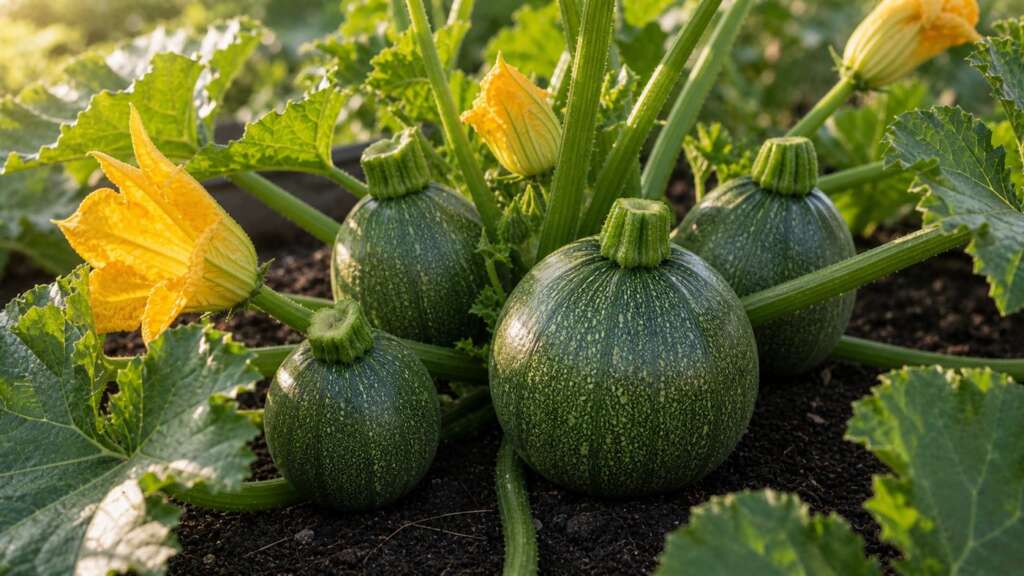
Round Zucchini is a warm-season summer squash grown for tender, ball-shaped fruits that are picked young and used much like ordinary zucchini. The plants are typically compact and bushy rather than sprawling, and the round shape makes the fruit easy to hollow out for stuffing, slice into thick rounds for the grill, or harvest at golf-ball size for whole-roasted sides. Like other Cucurbita pepo varieties, it grows fast once the soil is warm and rewards a gardener who plants at the right moment and harvests on time.
Quick How-to
Direct sow Round Zucchini outdoors after the last spring frost, once daytime soil has warmed to roughly 65 to 70 F or above. Plant seed about 1/2 to 1 inch deep in fertile, well-drained soil, in full sun. Expect germination in about 5 to 10 days when soil is warm. Thin to the strongest seedling per hill or station, water deeply and consistently, and start harvesting once fruit is roughly tennis-ball to baseball size for the best texture and flavor. Indoor starting is optional and usually short, only about 2 to 4 weeks before transplant.
Quick Guide
| Fact | Recommendation |
|---|---|
| Best method | Direct sow after soil warms; brief indoor start works in short seasons |
| Sowing depth | About 1/2 to 1 inch |
| Germination temperature | About 70 to 95 F; aim for at least 65 to 70 F soil before sowing |
| Days to germination | About 5 to 10 days in warm soil |
| Light for germination | Cover seed; provide strong light immediately after sprouting |
| Spacing | About 24 to 36 inches between plants, with 36 to 48 inches between rows |
| Sun | Full sun, ideally 8 or more hours |
| Water | Deep, even moisture; avoid soggy crowns and dry-wet swings |
| Days to harvest | About 45 to 55 days from sowing under warm, steady conditions |
| Plant size | Bushy summer-squash habit, typically 2 to 3 feet tall and 3 to 4 feet wide |
Before You Sow
Round Zucchini is a warm-weather crop that resents cold, wet seedbeds. Wait for stable warmth rather than gambling on an early planting; squash seed sown into cold soil often rots in place instead of sprouting. A simple rule of thumb is that the soil should feel warm to the back of your hand a few inches down, and overnight lows should be reliably mild.
Choose a sunny, fertile spot with good drainage. Squash are moderately heavy feeders, so working a few inches of compost or aged manure into the bed before planting pays off later in steadier growth and better fruit set. Avoid spots where last year’s squash, pumpkins, or cucumbers struggled with disease, since some soilborne pressures can linger. If your soil is heavy clay, raised beds or mounded hills warm earlier in spring and drain faster after rain.
Plan the space too. Even a bush-type round zucchini fills out wider than beginners expect, with large leaves that shade the ground around the plant. Crowding looks fine at the seedling stage and becomes a serious problem once leaves overlap, because shaded, stagnant canopies are where mildew and pest issues take hold.
Direct Sowing
Direct sowing is the most reliable method for Round Zucchini in most gardens. Once frost danger is past and the soil is warm, plant in hills or stations: drop two or three seeds about 1/2 to 1 inch deep, cover with fine soil, and press gently for good seed-to-soil contact. Water the area in thoroughly and keep the surface from drying or crusting until seedlings break through.
When the seedlings have their first true leaves, thin to the strongest single plant per hill or station. This step feels harsh on tender sprouts but is the difference between a productive plant and a crowded clump that never reaches full size. Snip extras at the soil line with scissors rather than pulling, which can disturb the roots of the keeper.
For a longer harvest window, plant a small second sowing about 3 to 4 weeks after the first. A young, vigorous plant often outproduces an older one that is starting to slow down.
Indoor Starting
Indoor starting is optional for Round Zucchini and is most useful in short-season climates or when you want a few placed plants. Sow about 2 to 4 weeks before your intended transplant date, no longer. Squash dislike being held indoors and will stall or transplant poorly if they become rootbound.
Use individual pots or large cells, since the seedlings grow fast and the roots are sensitive to disturbance. Cover seed about 1/2 to 1 inch deep, keep the mix evenly moist and warm, and move sprouts under strong light as soon as they emerge. Weak overhead light is the main reason squash seedlings become tall and floppy in just a few days.
Harden off gradually over 5 to 7 days, then transplant carefully, keeping the rootball intact. Plant at the same depth as in the pot, water in well, and protect young transplants from cold nights and wind for the first week or two.
Soil, Sun, and Water
Full sun, fertile soil, and consistent moisture are the three big levers for Round Zucchini. Plants grown in part shade tend to stretch, flower less, and struggle with mildew. Soil that is rich in organic matter holds moisture better and supports the steady growth that summer squash needs to keep setting fruit.
Water deeply rather than in light surface sprinkles. The goal is even moisture down through the root zone, so the plant is not swinging between drought stress and saturation. Watering at the base of the plant, with drip irrigation or a careful watering wand, keeps leaves drier and reduces disease pressure compared with overhead sprinklers. A layer of mulch applied after the soil has warmed helps hold moisture, smooths out wet-dry cycles, and keeps low-hanging fruit cleaner.
Avoid heavy nitrogen feeding once the plant is established. Too much nitrogen pushes lush, leafy growth at the expense of flowers and fruit, and dense leaves also trap humidity inside the canopy.
Pollination Notes
Round Zucchini, like other Cucurbita pepo squash, produces separate male and female flowers on the same plant. Female flowers have a small ball-shaped ovary at the base; male flowers sit on a thin straight stem. Early in the season, plants often open mostly male flowers first, which can be confusing if you expect fruit right away. Female flowers follow within a week or two, and fruit set begins once both are open at the same time and pollinators are active.
If small fruits start to grow and then yellow and shrivel within a few days, the most common cause is incomplete pollination rather than a plant problem. You can hand-pollinate by transferring pollen from a freshly opened male flower to the center of a female flower in the morning, using the male flower itself or a small soft brush. Encouraging bees with nearby flowering plants and avoiding pesticide use during bloom also helps.
Top Mistakes
- Sowing into cold soil: Squash seed often rots before sprouting when soil is below the comfort range. Wait for stable warmth rather than rushing the calendar.
- Skipping the thinning step: Two or three seedlings left to share one station look fine for a week, then compete for light, water, and root space. Thin early to the strongest plant.
- Crowding plants: Round summer squash leaves are large, and crowded plants quickly shade each other and trap humidity. Honor the spacing even if seedlings look small at first.
- Watering shallow and often: Light sprinkles wet only the surface and encourage shallow roots. Water deeply and less frequently so the root zone stays evenly moist.
- Letting fruit get oversized: Round Zucchini is best picked young. Oversized fruit develops tougher skin and larger seeds, and leaving big fruit on the plant signals it to slow new production.
Troubleshooting by Symptom
| Symptom | Likely causes | What to do next |
|---|---|---|
| Seed fails to sprout | Cold soil, overwatering, planted too deep, or rodent or insect predation | Wait for warmer soil before resowing, plant at the shallower end of the depth range, and avoid keeping the bed saturated |
| Seedlings collapse at the soil line | Damping-off from overly wet, cool conditions or poor airflow | Use fresh seed-starting mix indoors, improve airflow, and water less frequently; indoors, water from below when possible |
| Small fruits yellow and shrivel | Incomplete pollination, especially early in the season or in cool weather | Wait for female flowers and pollinator activity; hand-pollinate in the morning if needed |
| Leaves develop white powdery patches | Powdery mildew, encouraged by crowding, shade, or overhead watering | Improve spacing and airflow, water at the soil level, and remove the worst-affected leaves |
| Plants wilt during the day but recover at night | Heat stress on a hot day with adequate soil moisture | Usually not a watering problem; deep-water in the early morning and mulch to moderate soil temperature |
| Plants wilt and do not recover | Dry soil, root damage, squash vine borer, or bacterial wilt | Check soil moisture first; if soil is moist, inspect the base of the stem for borer entry holes and frass |
| Fruit is tough or seedy | Harvested too late | Pick at tennis-ball to baseball size for the best texture; check plants every day or two during peak production |
Harvest and Kitchen Use
Round Zucchini is at its best when harvested young, typically when fruit is somewhere between a golf ball and a baseball in size, with skin that is still tender and easily pierced by a thumbnail. At this stage the flesh is mild and creamy and the seeds are small and tender. Fruit left to grow much larger develops a tougher skin, drier flesh, and larger seeds, though oversized fruit is still usable for stuffing, grating, or baking.
Cut fruit from the plant with a sharp knife or pruners, leaving a short stub of stem attached. Pulling fruit off by hand can damage the stem and the plant. During peak production, check every day or two; round zucchini can size up surprisingly fast in warm weather.
In the kitchen, the round shape makes this variety especially well suited to stuffing: slice off the top, hollow out the center, fill, and bake. Smaller fruits are also excellent halved and grilled, sliced into thick rounds for sautéing, or roasted whole.
Seed Saving
Round Zucchini is a Cucurbita pepo variety, which means it can cross with other C. pepo squash growing nearby, including most summer squash, acorn-type winter squash, pumpkins, and many gourds. Seed saved from a plant that has crossed will still grow, but the next generation may not produce true-to-type round fruit.
If you want to save seed, isolate plants from other C. pepo varieties or hand-pollinate and bag female flowers. Allow selected fruit to ripen well past the eating stage, until the rind hardens and the fruit turns dull or yellowish, then let it cure off the plant for a few weeks before scooping out and rinsing the seed. Dry seed thoroughly on a screen out of direct sun, then label with variety and year.
Storing Leftover Seed
Keep unused Round Zucchini seed in its labeled packet inside a sealed container in a cool, dry, dark indoor location. Avoid garages, sheds, greenhouses, and sunny windowsills, where temperature and humidity swing sharply. Label home-saved seed with the variety and harvest year before storing it.
FAQ
When can I plant Round Zucchini outdoors?
Wait until after your last spring frost and until the soil itself has warmed to roughly 65 to 70 F. Air temperature alone is not a reliable signal; cold soil is the most common reason early squash plantings fail.
Do I need more than one plant for pollination?
One plant can produce fruit on its own because it carries both male and female flowers, but having two or three plants nearby tends to improve pollination and overall yield, especially early in the season.
Why are my first flowers not producing fruit?
Early in the season, squash plants often open male flowers first. Female flowers, which have a tiny ball-shaped ovary at the base, follow within a week or two. Fruit set begins once both flower types are open at the same time and pollinators are visiting.
Can I grow Round Zucchini in a container?
Yes, in a large container. A single plant usually needs at least a 5- to 7-gallon pot, full sun, and consistent watering. Smaller pots dry out fast and limit the plant’s productivity.
What size should I pick the fruit?
For the most tender flesh and best flavor, harvest when fruit is roughly tennis-ball to baseball size. Larger fruit is still edible but develops a tougher skin and larger seeds.