
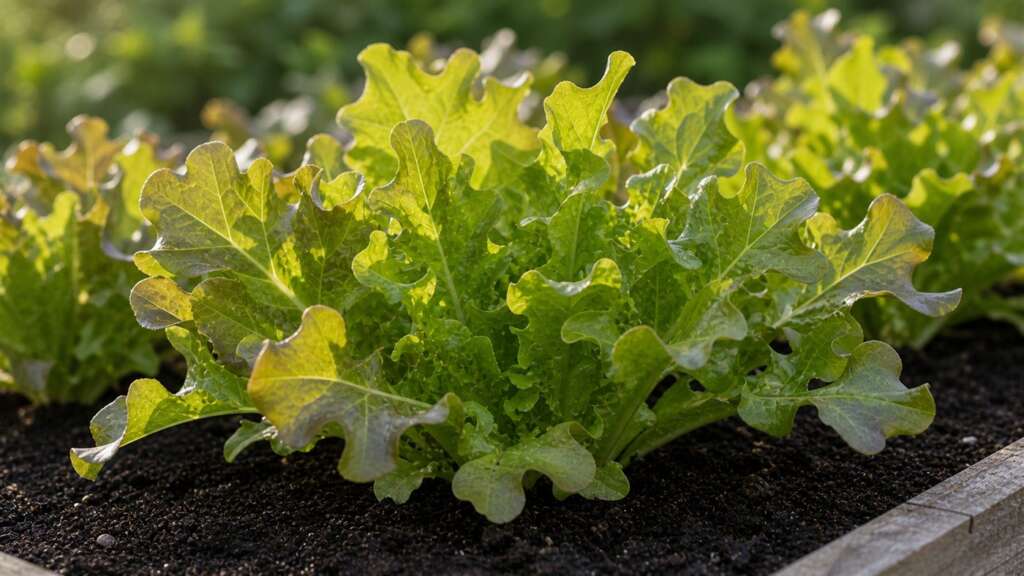
Oakleaf lettuce is a loose-leaf variety prized for its tender, oak-shaped leaves, mild flavor, and quick turn from seed to salad bowl. It is a cool-season crop that performs best in spring and fall, and it is among the most forgiving lettuces for gardeners new to leafy greens.
Quick How-to
Sow oakleaf lettuce in cool weather: early spring as soon as the soil can be worked, or late summer into fall for a cool-season harvest. Surface sow or cover the seed very lightly, no more than about 1/8 inch, because light helps germination. Keep the soil cool and evenly moist, ideally around 55 to 70 F, and expect sprouts in 2 to 10 days. Begin cutting baby leaves at about 25 to 35 days, or wait for fuller loose heads.
Quick Guide
| Fact | Recommendation |
|---|---|
| Best method | Direct sow preferred; indoor starting works for early transplants |
| Sowing depth | Surface sow or cover very lightly, about 1/8 inch |
| Germination temperature | About 55 to 70 F is ideal; above 80 F germination drops sharply |
| Days to germination | About 2 to 10 days under cool, moist conditions |
| Light for germination | Light aids sprouting; do not bury seed deeply |
| Spacing | Thin 2 to 4 inches for baby leaf, 8 to 12 inches for full plants |
| Sun | Full sun in cool weather; afternoon shade in heat |
| Water | Steady, even moisture for tender leaves and slow bolting |
| Harvest | Baby leaves at about 25 to 35 days; full loose rosettes around 50 to 60 days |
| Plant habit | Loose-leaf rosette with lobed, oak-shaped leaves |
Before You Sow
Lettuce is responsive to small details. Cool soil, shallow sowing, and an even seedbed do more for success than fertilizer or special timing tricks. Oakleaf grows fast and rewards attentive watering more than heavy feeding.
Prepare a fine, level surface free of clods and debris. Lettuce seed is very small, so a smoothly raked bed lets you place seed at consistent depth across the row. Water the bed before sowing so the seed is not washed deeper by the first irrigation. For containers, choose a pot at least 6 inches deep with drainage holes and use a light, well-draining mix.
Label the row or container when you sow. Lettuce seedlings can be easy to confuse with young weeds at first, and you do not want to thin the wrong plants.
Direct Sowing
Direct sowing is the simplest and most reliable approach for oakleaf lettuce. Scatter seed thinly along a row or station-sow small pinches, then press gently or cover with a dusting of fine soil, vermiculite, or seed-starting mix. Stay at or below 1/8 inch deep. Lettuce seed germinates best with some light reaching it, so deep burial is more likely to fail than a near-surface sowing.
Water with a fine spray to settle the seed without dislodging it. Keep the top layer evenly moist until seedlings emerge; a dry, crusted surface can block germination even when the soil beneath feels damp. In warm weather, a thin layer of straw, burlap, or shade cloth helps keep the surface cool and prevents crusting. Remove any covering as soon as sprouts appear.
Once seedlings have a few true leaves, thin in stages. For baby-leaf rows, spacing of about 2 to 4 inches is enough. For larger loose plants, thin to 8 to 12 inches. The thinnings themselves are a tender first harvest.
Indoor Starting
Indoor starting is optional but useful for an earlier transplant or a more controlled stand. Sow 3 to 5 weeks before your intended transplant date in clean cells filled with seed-starting mix. Surface sow or barely cover, and keep the mix cool. Lettuce can refuse to germinate above about 80 F, so a warm seedling mat meant for tomatoes can work against you here.
Provide bright overhead light as soon as sprouts appear. Lettuce seedlings stretch quickly under weak light or excess warmth. Aim for cool and bright rather than warm and shaded. Transplant after hardening off, while seedlings are still young and compact; older, rootbound lettuce transplants often stall or bolt soon after planting out.
Transplanting and Spacing
Harden off seedlings over about 5 to 7 days by setting them outdoors in sheltered shade and gradually increasing sun and breeze. Transplant during cool weather and water the cells well an hour before moving so the root ball holds together. Set transplants at the same depth they grew in the cell; lettuce does not benefit from being buried like tomatoes, and a buried crown can rot.
Space based on how you plan to harvest:
- Baby leaf or cut-and-come-again rows: 2 to 4 inches
- Full loose plants: 8 to 12 inches
Water in gently and shade newly placed transplants for a day or two if the sun is intense.
Soil, Sun, and Water
Lettuce grows best in fertile, well-drained soil with steady moisture. A bed amended with finished compost is usually plenty; very rich nitrogen pushes soft, weak growth that is more prone to disease and can shorten the harvest window.
Sun preferences shift with the season. In cool spring or fall weather, full sun produces the best leaves. As days lengthen and warm, afternoon shade helps slow bolting and keeps leaves tender. A spot that receives morning sun and dappled afternoon shade is often ideal as the season heats up.
Water consistently. Lettuce roots stay relatively shallow, so the top few inches of soil should not dry out completely. A light mulch once plants are established holds moisture and keeps the root zone cooler. Avoid heavy overhead watering late in the day; wet leaves overnight can encourage fungal issues.
Hydroponic Growing
Oakleaf lettuce is a strong hydroponic candidate because its open rosette and deeply lobed leaves are naturally suited to repeated leaf harvest. It performs cleanly in NFT or deep-water culture; passive systems also work if the reservoir is large enough to remain stable. Start one seed in a clean inert plug, keep the plug damp rather than submerged, and move it into the system when roots show at the plug edge and the first true leaves are opening. Keep the crown above the nutrient solution; a constantly wet stem invites rot even when the roots look healthy.
Use a complete hydroponic nutrient made for leafy greens. A practical target is EC 1.2 to 1.8 mS/cm and pH 6.0 to 7.0. Check both at a consistent time, correct nutrient strength before adjusting pH, and replace the solution periodically instead of endlessly adding concentrate. Keep the reservoir shaded, clean, and well oxygenated. Lettuce roots perform best when the solution stays in the 60s to low 70s F; warmer water holds less oxygen and increases the chance of slimy roots and premature bolting.
Give mature rosettes about 7 to 9 inches so the lobed leaves do not overlap into a damp mat. Handle the delicate foliage gently when checking roots or moving lids. Take the oldest outside leaves first and leave the center growing, or cut the whole plant while the rosette is tender. Small frequent harvests reduce canopy crowding. Give the canopy steady airflow without aiming a hard fan directly at tender leaves. Under lights, keep the fixture close enough to prevent stretching while preserving a dark period each day. Raise or dim the light if leaf edges bleach or curl upward.
Thin leaves wilt quickly when pumps stop or solution levels fall, so Oakleaf is a useful early warning crop. Restore flow or water level before raising nutrient strength; wilt with wet roots usually means oxygen or root-health trouble. Pale, firm roots with a fresh smell are normal. Brown slime, sour odor, or wilting while roots are wet points to warm solution, weak aeration, light entering the reservoir, or poor sanitation. Brown inner leaf edges are often tipburn caused by fast growth and weak calcium movement; improve airflow, moderate the temperature, and verify EC before adding more fertilizer.
Top Mistakes
- Sowing too deeply: Lettuce seed needs light and shallow contact with soil. Burying it more than 1/8 inch is one of the most common reasons for poor germination.
- Sowing into heat: Lettuce can stall or refuse to germinate when soil rises above about 80 F. In warm spells, sow in cooler hours, use shade, or wait for fall.
- Letting the surface crust: A dry, cracked top layer can trap tiny seedlings. Keep the seedbed evenly moist and consider a thin mulch or shade cloth over the row until emergence.
- Waiting too long to harvest: Leaves grow tougher and more bitter past their prime, and plants holding too long are more likely to bolt. Pick at the intended size rather than waiting for maximum.
- Skipping succession sowing: A single planting produces one window of good harvest. Smaller sowings every 2 to 3 weeks keep tender leaves coming.
Troubleshooting by Symptom
| Symptom | Likely causes | What to do next |
|---|---|---|
| No sprouts after 10 to 14 days | Seed buried too deep, soil too warm, or dry crust on the surface | Resow at or near the surface, water gently, and keep the seedbed cool and consistently moist |
| Patchy germination | Uneven depth, dry pockets, soil crusting, or seed washed into low spots | Smooth the bed before sowing, water with a fine spray, and cover the row lightly until emergence |
| Tall, pale, leggy seedlings | Weak light, too much warmth indoors, or overcrowding | Move under stronger overhead light, lower the temperature, and thin promptly |
| Seedlings collapse at the soil line | Overly wet mix, poor airflow, or damping-off conditions | Improve airflow, water less often, use fresh seed-starting mix indoors, and avoid saturated trays |
| Bitter leaves | Heat, drought stress, or harvesting past prime | Grow in cooler weather, water steadily, mulch lightly, and harvest at the intended size |
| Bolting (central stalk rising) | Heat, long days, or accumulated stress | Harvest the whole plant promptly, shift to shadier siting, and switch to succession sowings |
| Plants stay small | Crowding, dry soil, or low fertility | Thin to recommended spacing, water more consistently, and top-dress with a light compost layer |
Germination Diagnostics
If sprouts are slow or patchy, troubleshoot in this order before assuming the seed is at fault. First, depth. Lettuce seed should be at or barely below the surface. Even a half inch of soil can be too much, and seed buried that deep may absorb moisture but lack the energy to push leaves up.
Second, temperature. Lettuce germinates best between 55 and 70 F. Above about 80 F, germination drops and becomes erratic. Indoor heat mats meant for tomatoes can keep lettuce trays too warm. If your indoor space runs hot, try the coolest room in the house, or wait and direct sow outdoors.
Third, moisture. The top quarter inch of soil should feel like a wrung-out sponge: evenly damp but not shiny wet. Crusted, dry surfaces can stop emergence even when seed below has imbibed water. A light covering of vermiculite or a board laid over the row until sprouts appear can keep the surface ideal.
Fourth, check light and airflow after emergence. Pale, stretched, or fallen seedlings usually point to weak light, too much warmth indoors, overcrowding, or persistently wet mix. Move the tray into stronger overhead light, improve airflow, and let the surface approach damp rather than saturated before watering again.
Timing and Climate Notes
Treat oakleaf lettuce as a cool-window crop. Spring sowings can start as soon as the soil can be worked and continue until daytime temperatures consistently climb into the 80s F. Fall sowings begin about 6 to 8 weeks before the first expected fall frost; cool nights and shortening days produce some of the best-tasting lettuce of the year.
In mild winter regions, oakleaf can overwinter with light row-cover protection for spring harvest. In hot summer regions, plan a summer pause and resume sowing in late summer. When heat is unavoidable, use afternoon shade, mulch the bed, and harvest young leaves before heat pushes the plants to bolt.
Container and Small-Space Notes
Oakleaf lettuce adapts well to containers, raised beds, and balcony gardens. Use a pot at least 6 inches deep with drainage, fill with a quality potting mix, and surface sow a small pinch of seed per section. Thin promptly. Containers dry out faster than open ground, so check moisture daily in warm weather and move the pot into afternoon shade as temperatures climb.
A wide, shallow planter sown densely makes an excellent cut-and-come-again salad bowl. Trim leaves above the growing point with scissors, leaving about an inch of stem so the plant can regrow.
Harvest and Kitchen Use
Oakleaf lettuce can be harvested at any size. For baby leaves, begin cutting outer leaves about 25 to 35 days after sowing, leaving the central growing point intact for continued production. For fuller loose plants, wait until the rosette has filled out but the leaves still feel tender, typically around 50 to 60 days. Harvest before a central flower stalk begins to rise or the leaves develop a bitter edge.
Harvest in the cool of the morning when leaves are crisp. Rinse, dry, and refrigerate promptly. Freshly harvested oakleaf holds for several days in a sealed container with a paper towel to absorb excess moisture.
Watch for bolting, a central stalk rising up from the rosette. Once a lettuce starts bolting, leaves quickly turn bitter. Harvest the whole plant at the first sign of a stretching center and move on to the next succession.
Seed Saving
Lettuce is largely self-pollinating, with low rates of crossing between varieties grown nearby. To save oakleaf seed, allow a few healthy, true-to-type plants to bolt, flower, and form seed heads. The plant sends up a tall stalk topped with small yellow flowers, followed by fluffy white pappuses similar to dandelion.
Harvest when most seed heads on a plant have dried and seeds release easily. Cut the stalks, finish drying indoors on a tray or paper, then rub gently to release the seed and winnow away the chaff. Label with the variety name and year before storing.
Storing Leftover Seed
Keep unused Oakleaf Lettuce seed in its labeled packet inside a sealed container in a cool, dry, dark indoor location. Avoid garages, sheds, greenhouses, and sunny windowsills, where temperature and humidity swing sharply. Label home-saved seed with the variety and harvest year before storing it.
FAQ
Why did my lettuce fail in summer?
Lettuce often refuses to germinate above about 80 F and quickly bolts once days lengthen and heat sets in. For summer attempts, shade the bed, sow during cooler weather windows, or plan a fall sowing instead.
Can oakleaf lettuce be grown in containers?
Yes. A pot at least 6 inches deep with drainage holes and a quality potting mix produces excellent oakleaf, particularly for cut-and-come-again harvest. Containers need more frequent watering than open ground.
Should lettuce be thinned?
Yes. Crowded seedlings compete for light and air, develop weak stems, and produce smaller leaves. Thin in stages and harvest the thinnings as baby greens.
How do I keep lettuce from turning bitter?
Bitterness usually traces to heat, drought stress, or harvesting too late. Grow in cool weather, water consistently, mulch lightly, and pick leaves before plants start to bolt.
Can I harvest just the outer leaves?
Yes. The cut-and-come-again approach lets the plant keep growing. Trim outer leaves an inch or so above the crown and leave the central growing point intact.