
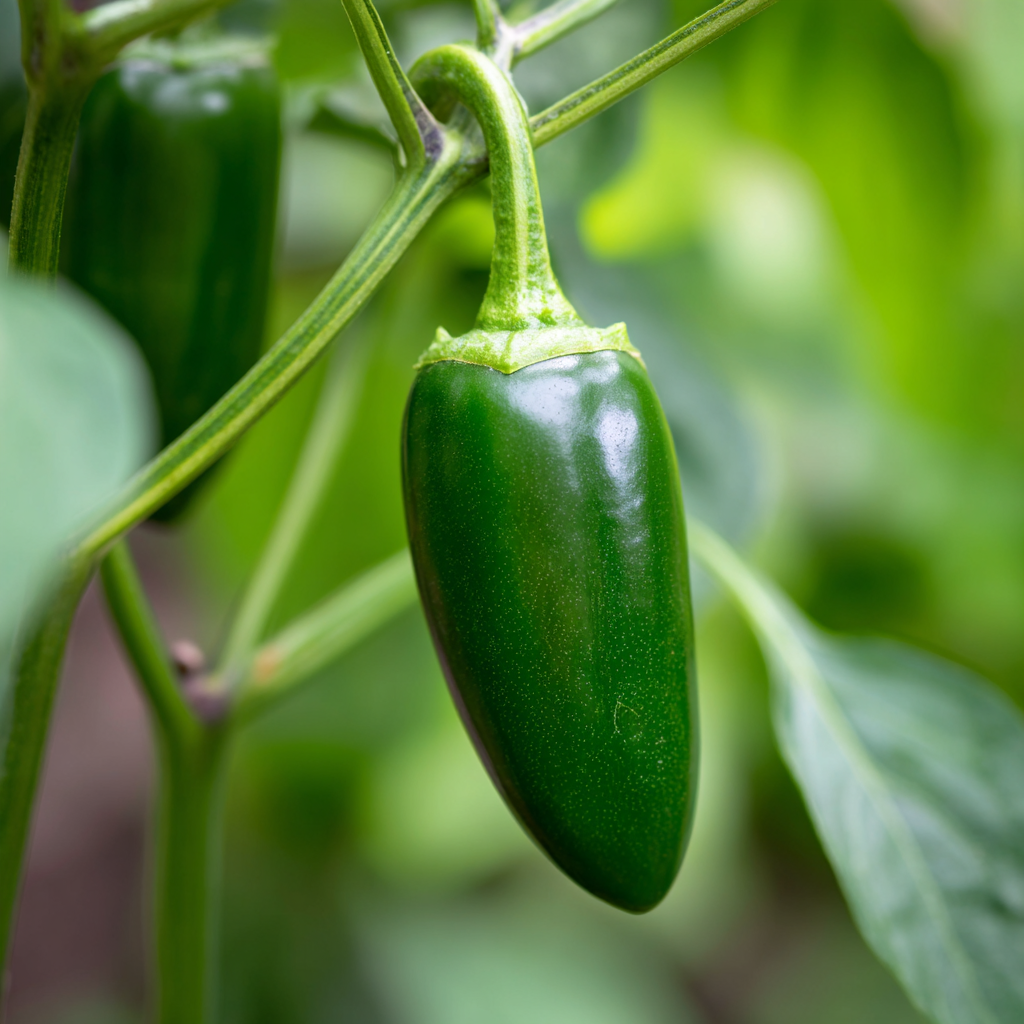
Early Jalapeno is the jalapeno for gardeners who want classic medium-hot jalapeno flavor but have a shorter or cooler growing season to work with. Where a standard jalapeno strain might need 72 to 80 days from transplant, Early Jalapeno is bred to produce ripe green peppers in around 65 to 68 days, getting usable fruit to the table before summer fades. The plants are compact and productive, the fruit has the familiar jalapeno shape and medium heat, and the earlier maturity also allows a second planting or a longer harvest window in regions where summer is reliably long. Starting seeds indoors at the right time and giving seedlings genuine warmth for germination are the two most important factors for success.
Quick How-to
Start Early Jalapeno seeds indoors 8 to 10 weeks before your last expected spring frost. Sow about 1/4 inch deep in moist seed-starting mix and keep the mix at 80 to 85 F with a heat mat for reliable germination. Move seedlings under strong light as soon as they emerge. After hardening off over 10 to 14 days, transplant when nighttime temperatures stay above 55 F and soil is warm.
Quick Guide
| Fact | Recommendation |
|---|---|
| Best method | Start indoors, then transplant |
| Sowing depth | About 1/4 inch |
| Germination temperature | 80 to 85 F; heat mat essential |
| Days to germination | About 7 to 14 days at 80-85 F |
| Light for germination | Cover seed; strong light needed immediately after sprouting |
| Spacing | 12 to 18 inches apart; rows 24 to 30 inches apart |
| Sun | Full sun, at least 6 to 8 hours daily |
| Water | Consistent moisture; about 1 inch per week during fruit development |
| Harvest | About 65 to 68 days from transplant at green stage |
| Plant size | Compact, upright; 18 to 24 inches tall |
Before You Sow
Early Jalapeno’s advantage over standard jalapeno strains is only realized when seeds are started on time. Count back 8 to 10 weeks from your last expected frost date and mark that as your sowing window. In regions where summer is short, starting closer to 10 weeks before last frost gives you the largest and most productive transplants.
Use pre-moistened seed-starting mix and have a seedling heat mat ready before you sow. Pepper seeds — including jalapenos — germinate poorly without adequate bottom heat. At room temperature, germination can take 3 or more weeks and be uneven. At 80 to 85 F with steady moisture, most seeds sprout in 7 to 14 days. A heat mat is one of the simplest improvements a pepper grower can make.
Indoor Starting
Sow seed about 1/4 inch deep in moist seed-starting mix. Maintain warmth at 80 to 85 F under the tray. A humidity dome helps retain surface moisture during the wait, but vent it slightly daily and remove it completely as soon as seedlings emerge to prevent damping-off.
Move seedlings under strong overhead light immediately after sprouting — pepper seedlings that germinate in warmth but low light become stretched and pale, and they rarely develop the strong stem structure that performs well outdoors. Use a grow light at 14 to 16 hours per day or the brightest available window.
When true leaves appear, transplant into 3- to 4-inch containers if roots are filling the cell. Set plants at the same depth they were growing at; unlike tomatoes, peppers do not benefit from deep planting. Water carefully, letting the top of the mix dry slightly between waterings to build root depth and prevent waterlogged conditions.
Hardening Off and Transplanting
Harden off over 10 to 14 days, starting with very brief exposure to filtered shade and building gradually to full outdoor sun and breeze. Early Jalapeno, like all peppers, responds poorly to abrupt transition outdoors and can drop leaves or stall when moved out too quickly.
Transplant only when nights are consistently above 55 F — pepper growth essentially pauses in cold conditions, and there is no benefit to rushing. Space plants 12 to 18 inches apart in rows 24 to 30 inches apart. Water in at planting and mulch around the base once soil is warm. Mulch moderates soil temperature and moisture through summer, which helps fruit set and development.
Soil, Sun, and Water
Early Jalapeno prefers fertile, well-drained soil with a pH around 6.0 to 6.8. Work in compost before planting and avoid high-nitrogen fertilizers once plants are in the ground, as excess nitrogen pushes leafy growth at the expense of fruit. A balanced fertilizer at transplant and again at first flower is usually adequate.
Full sun is important for productive plants. Early Jalapeno plants in partial shade will grow but produce fewer peppers and ripen them more slowly — partly defeating the early-season advantage of this variety.
Water consistently, targeting about 1 inch per week from rain and irrigation combined during active fruit development. Even soil moisture through flowering and fruit fill reduces flower drop and produces better-sized peppers. Pepper roots do not tolerate prolonged wet conditions, so ensure good soil drainage and water at the base rather than overhead.
Top Mistakes
- Germinating without a heat mat: At room temperature, pepper seeds germinate slowly, unevenly, or not at all. A heat mat at 80 to 85 F transforms germination speed and uniformity. This single step makes the largest practical difference in an early indoor start.
- Transplanting in cool weather: The earlier maturity of this variety cannot compensate for planting into cold conditions. Nights below 55 F stall growth and can set the season back by weeks. Wait for genuine warmth.
- Spacing too closely: At 12 to 18 inches apart, airflow between plants is adequate. Tighter spacing creates humid conditions that favor fungal diseases and makes managing plants more difficult.
- Stopping harvest too early: Early Jalapeno produces steadily through the season. Regular harvesting of mature green peppers encourages the plant to continue setting new flowers and fruit. Leaving peppers on the plant until they turn red is fine, but doing so signals the plant that seed-setting is complete and can slow new fruit production.
- Forgetting to mulch: Mulch around pepper plants moderates summer soil temperature and reduces moisture swings. These two factors — steady warmth and steady moisture — have a direct effect on fruit set and the size of the final harvest.
Troubleshooting by Symptom
| Symptom | Likely causes | What to do next |
|---|---|---|
| No sprouts after 2 to 3 weeks | Germination temperature too low, seed too deep, or surface drying out | Confirm heat mat at 80-85 F; keep mix evenly moist; resow at 1/4 inch depth |
| Very slow or patchy germination | Inadequate bottom heat or moisture variation during germination | Increase heat mat setting; cover with humidity dome to stabilize surface moisture |
| Seedlings pale and lanky indoors | Insufficient light, excess heat without enough light, or crowded cells | Move under grow lights; extend light period to 14-16 hours; thin to one plant per cell |
| Plants barely grow after transplanting | Cold soil or air temperature, transplant shock, or inadequate hardening | Protect with row cover at night; wait for nights above 55 F before transplanting |
| Flowers drop before setting fruit | Temperature extremes, drought stress, or nutrient imbalance | Water consistently; wait for nighttime temperatures to stabilize above 55 F and below 75 F |
| Peppers are small or pale | Insufficient sun, water stress, or excess nitrogen | Ensure full sun; water consistently; reduce nitrogen feeding during fruit development |
| Wilting during the day despite moisture | Heat stress (common in very hot afternoons), or root issues from poor drainage | Shade briefly at peak heat if needed; check drainage; do not overwater |
Harvest and Kitchen Use
Early Jalapeno peppers are typically harvested at the dark green stage, when fruit is firm, glossy, and has reached its mature length of about 3 to 3-1/2 inches. At this stage, the heat is medium — around 2,500 to 5,000 Scoville Heat Units — and the flavor is fresh and bright. Peppers allowed to ripen to red on the plant develop a somewhat sweeter, slightly milder character.
Cut peppers from the plant with scissors or a sharp knife rather than pulling, which risks breaking branches. Harvest regularly; once a plant reaches full production, checking it every few days during warm weather prevents peppers from overripening on the vine.
Early Jalapeno peppers are used in salsas, pickled for nachos and tacos, stuffed and grilled, chopped into cornbread, or used fresh. They are also a good candidate for home canning and dehydrating.
Seed Saving
Early Jalapeno is an open-pollinated variety suitable for seed saving. Peppers cross-pollinate readily with other Capsicum annuum varieties through insect visits, including bells, Anaheims, and other jalapenos. For reliable true-to-type results, isolate by at least 300 to 500 feet from other C. annuum varieties, or cage and hand-pollinate selected plants.
Save seed from fully ripe red fruit that has remained on the plant until the skin begins to wrinkle slightly. Slice open the fruit, scrape out seeds, and dry spread on a non-stick surface for 1 to 2 weeks in a well-ventilated area. Seeds that snap cleanly are fully dry. Store cool, dry, and dark in a sealed container.
Storing Leftover Seed
Keep unused Early Jalapeno Pepper seed in its labeled packet inside a sealed container in a cool, dry, dark indoor location. Avoid garages, sheds, greenhouses, and sunny windowsills, where temperature and humidity swing sharply. Label home-saved seed with the variety and harvest year before storing it.
FAQ
What makes Early Jalapeno different from standard jalapeno varieties?
Early Jalapeno is selected for quicker maturity — roughly 65 to 68 days from transplant compared to 70 to 80 or more days for many standard strains. The fruit characteristics, heat level, and flavor are similar to standard jalapenos, but the earlier maturity is useful in shorter seasons or when a longer harvest window is the goal.
How hot are Early Jalapeno peppers?
Medium heat, typically in the range of 2,500 to 5,000 Scoville Heat Units, though individual variation exists and growing conditions (especially drought stress) can nudge heat levels up or down somewhat.
Can I direct sow Early Jalapeno seeds outdoors?
Not reliably in most climates. Peppers need soil warmth well above 60 F for germination and a long season to produce fruit. Direct sowing outdoors is only practical in genuinely warm climates with a long frost-free season, and even there, indoor starting gives a meaningful head start.
How many jalapeno peppers can I expect from one plant?
A well-grown Early Jalapeno plant in full sun, consistent moisture, and a warm season can produce 25 to 50 peppers or more over the course of the season. Regular harvesting keeps production going; leaving fruit to over-ripen and seed on the plant can reduce ongoing fruit set.