
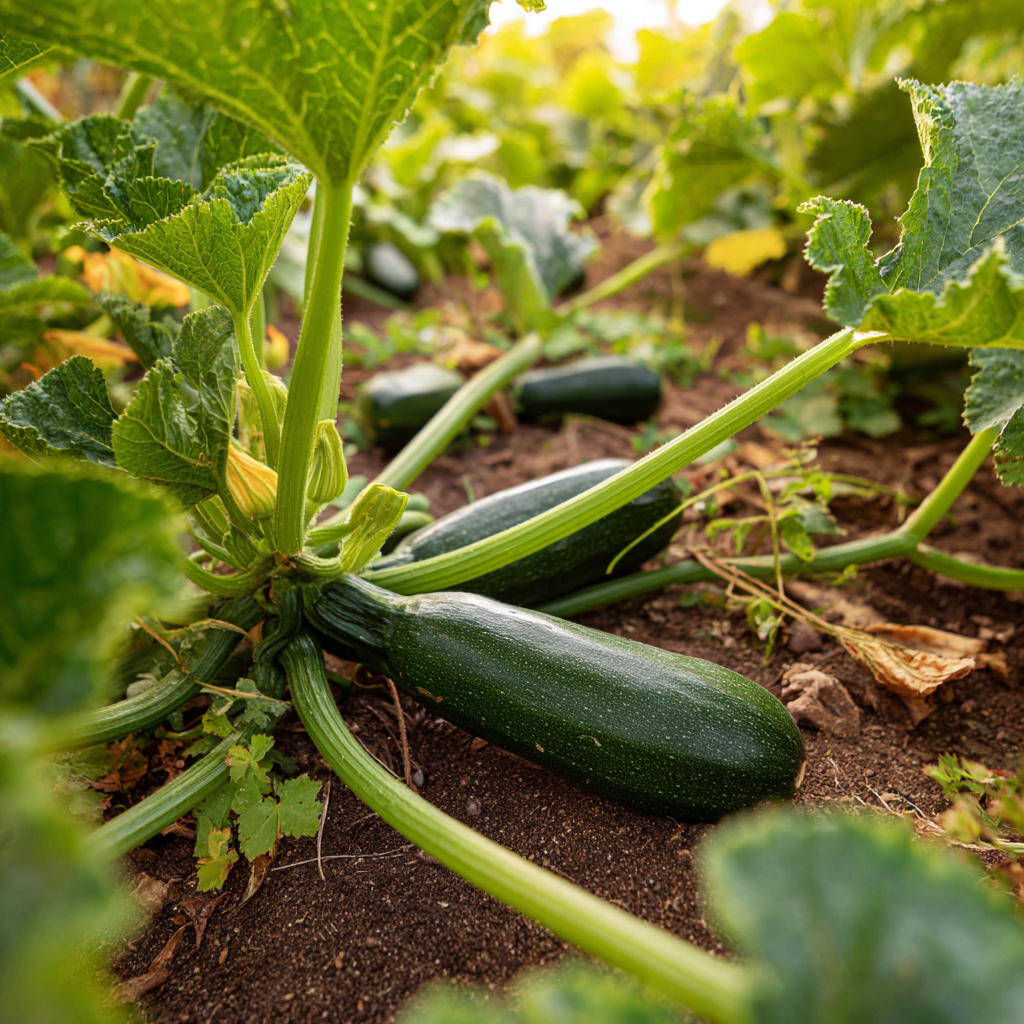
Dark Green Zucchini is a productive warm-season summer squash grown for straight, tender, glossy green fruit. Like other zucchini, it is fast and generous once the soil warms, but it rewards gardeners who give it room, steady water, pollinator access, and frequent picking. Started at the right time, a single plant can keep a household in zucchini for weeks.
Quick How-to
Direct sow Dark Green Zucchini outdoors after the last frost has passed and the soil has warmed to at least 65 to 70 F. Plant seed 1/2 to 1 inch deep, two or three seeds per spot, and thin to the strongest seedling once true leaves appear. Expect germination in about 5 to 10 days in warm soil. Space bush plants roughly 24 to 36 inches apart in full sun, water deeply at the base of the plant, and begin harvesting fruit young, when zucchini are about 6 to 8 inches long.
Quick Guide
| Fact | Recommendation |
|---|---|
| Best method | Direct sow after soil warms; a short indoor start is optional |
| Sowing depth | About 1/2 to 1 inch |
| Soil temperature | At least 65 F; 70 to 85 F is faster and more reliable |
| Days to germination | About 5 to 10 days in warm soil |
| Light for germination | Cover seed with soil; light is not needed until sprouts emerge |
| Spacing | About 24 to 36 inches between bush plants |
| Sun | Full sun, ideally 8 or more hours |
| Water | Deep, even watering at the base of the plant |
| Days to harvest | Often about 45 to 55 days from sowing in warm, steady conditions |
| Plant size | Compact bush habit compared with vining squash; broad leaves still need room |
Before You Sow
Zucchini is a heavy feeder with big leaves, so the site matters as much as the seed. Choose a sunny bed with fertile, well-drained soil and enough open space for a mature plant to spread its canopy without crowding tomatoes, peppers, or beans nearby. Work an inch or two of finished compost into the top several inches of soil before planting. Avoid planting where squash, cucumbers, melons, or pumpkins struggled with pests or disease the prior year, since several cucurbit problems linger in the soil and on debris.
If your soil is cold and slow to drain in spring, build a low mound or wide raised hill where you plan to sow. The mounded soil warms a few degrees faster than flat ground and drains better after spring rain, both of which help zucchini seed germinate cleanly. Pre-water the bed the day before sowing so the seed lands on moisture rather than dry powder.
Zucchini does not transplant as easily as tomatoes or peppers because its roots dislike disturbance. Direct sowing is the simplest and most reliable approach for most gardens. Indoor starting is only worth the trouble in short-season areas where every extra week matters.
Direct Sowing
Wait for steady warmth. Zucchini seed planted into cold, wet ground often fails to emerge, or sprouts weakly and stalls. The soil thermometer is more trustworthy than the calendar, especially in a cool spring. Once the soil holds above about 65 F at sowing depth and nights are mild, you are ready.
Sow two or three seeds per spot, 1/2 to 1 inch deep, then firm the soil gently so seeds make good contact. If you are planting a row, group seeds in clusters at the spacing above rather than one continuous line; this makes thinning simpler. Water in with a gentle spray so seed does not wash out of place. Keep the surface evenly moist, not soggy, until you see sprouts.
When seedlings have one or two true leaves, thin each cluster to the single strongest plant. Snip extras at the soil line with scissors rather than pulling them, which can disturb the remaining seedling’s roots. Crowded zucchini compete for light, and the loser usually drags down the winner.
For a continuous supply, consider a second small sowing about three to four weeks after the first. Younger plants often outproduce older ones once midsummer powdery mildew arrives.
Indoor Starting (Optional)
If your growing season is short, you can start Dark Green Zucchini indoors about 2 to 3 weeks before your target transplant date. Any longer and the seedlings risk becoming rootbound, which sets them back more than a direct sowing would have. Use a 3- to 4-inch pot rather than a small cell so roots have room.
Sow one or two seeds per pot, 1/2 to 1 inch deep, in fresh seed-starting mix. Keep the mix warm and evenly moist; a heat mat speeds germination noticeably. As soon as sprouts emerge, give them strong overhead light to prevent stretching. Thin to one seedling per pot.
Harden off for about 7 to 10 days before transplanting, starting in dappled shade and gradually increasing sun and outdoor time. Transplant after frost danger is fully past and the soil is warm, handling the root ball as little as possible. Water in well and shade young transplants for a day or two if conditions are hot and bright.
Soil, Sun, and Water
Full sun produces the strongest plants and the best fruit set. In partial shade, expect leggier growth, fewer female flowers, and a slower harvest. Fertile, well-drained soil with steady moisture is the other half of the equation.
Water deeply and consistently. Zucchini’s big leaves transpire a lot of water on hot days, and uneven watering is a common trigger for misshapen fruit, blossom end rot symptoms, and powdery mildew flare-ups. A good rhythm is a thorough soaking once or twice a week rather than daily sprinkles, adjusted for heat and rain. Water at the base of the plant where possible, since wet foliage is more prone to disease.
Mulch with straw, shredded leaves, or grass clippings once the soil is warm. Mulch keeps soil temperature steady, holds moisture, and reduces splash that can spread leaf disease. A light side-dressing of compost or balanced fertilizer when flowering begins helps sustain production, but avoid heavy nitrogen pushes, which can produce a forest of leaves at the expense of fruit.
Pollination Basics
Zucchini produces separate male and female flowers on the same plant. Male flowers usually appear first, sometimes for a week or more before any females open, which can worry new growers who expect immediate fruit. Female flowers are easy to identify by the small immature zucchini behind the bloom; males sit on a plain slender stem.
Pollen moves from male to female flowers with the help of bees and other pollinators. If fruit is repeatedly aborting at thumb size, pollination is often the bottleneck. You can hand pollinate by picking a freshly opened male flower in the morning, peeling back the petals, and brushing the pollen-loaded center directly onto the center of an open female flower. One male can pollinate several females.
Top Mistakes
- Sowing into cold soil. Zucchini seed needs warmth to germinate cleanly. Cold, damp soil often leads to rot or weak sprouts. Wait for steady warmth even if it means starting a week or two later.
- Crowding plants. Those broad leaves need airflow, light, and room for pollinators to reach the flowers. Crowded zucchini are slower, less productive, and more prone to powdery mildew.
- Letting fruit get oversized. A baseball bat zucchini may impress the neighbors, but it signals the plant to slow flowering. Pick young and often.
- Inconsistent watering. Cycles of bone-dry then drenched soil cause misshapen fruit, blossom end rot symptoms, and stress that opens the door to disease.
- Skipping mulch. Bare soil under zucchini bakes, dries out fast, and splashes onto leaves during rain. A simple mulch layer prevents several problems at once.
Troubleshooting by Symptom
| Symptom | Likely causes | What to do next |
|---|---|---|
| Seeds fail to emerge or rot in the ground | Soil was too cold and wet at sowing, seed was buried too deep, or the bed crusted over | Wait for warmer soil, resow 1/2 to 1 inch deep, and keep the surface evenly moist without saturating the bed |
| Small fruit yellows, shrivels, and drops at the tip | Incomplete pollination, often from low bee activity or extreme heat | Encourage pollinators with nearby flowers, hand pollinate in the morning, and water evenly through hot spells |
| Fruit is misshapen, pinched, or curled | Partial pollination, uneven watering, or nutrient stress | Maintain steady moisture, hand pollinate questionable blooms, and side-dress lightly if growth looks weak |
| White powdery patches on leaves | Powdery mildew, common in humid weather and on crowded plants | Space plants well, water at the base, remove the most affected leaves, and consider resistant varieties next season |
| Whole plant wilts suddenly despite moist soil | Squash vine borer tunneling in the main stem, or bacterial wilt spread by cucumber beetles | Inspect the lower stem for a small hole and frass, slit the stem to remove the borer if found, manage cucumber beetles early, and rotate cucurbits next year |
| Holes chewed in leaves, ragged feeding damage | Cucumber beetles, squash bugs, or caterpillars | Scout daily, hand pick adults and egg clusters from leaf undersides, and use row cover until flowering begins |
| Dark, sunken patch at the blossom end of the fruit | Blossom end rot symptoms tied to irregular calcium uptake during dry-wet swings | Mulch, water deeply on a steady schedule, and avoid damaging shallow roots when weeding |
| Plant produces only male flowers for a long stretch | Normal early-season pattern, sometimes extended by cool weather or stress | Wait a week or two; female flowers with tiny fruit behind them usually follow as the plant matures |
| Yellowing older leaves with stunted growth | Nutrient demand outpacing the soil, especially in containers | Side-dress with compost or a balanced fertilizer, and water it in well |
Harvest and Kitchen Use
Start checking for ready fruit about a week after the first female flowers set. Pick Dark Green Zucchini young, at roughly 6 to 8 inches long and an inch or two thick, while the skin is still glossy and tender. A young zucchini snaps cleanly from the stem with a sharp knife or pruners; sawing usually means it has been waiting too long.
Harvest every day or two during peak production. Frequent picking is the single most effective way to keep a zucchini plant flowering, and it also catches fruit before it turns into a seedy club. If a giant slips past you, pull it off anyway. Leaving mature fruit on the plant slows everything else down.
In the kitchen, Dark Green Zucchini is mild and versatile: sliced into rounds for the grill, grated for fritters and quick breads, spiralized for noodles, or sauteed with garlic and olive oil. The blossoms themselves are edible and can be stuffed or battered; pick male flowers if you want to preserve fruit production from the females.
Seed Saving
Saving zucchini seed is straightforward in principle but tricky in practice because Cucurbita pepo crosses readily with other C. pepo squash, including many summer squash, acorn types, delicata, pumpkins, and some gourds. Without isolation by distance or hand pollination with bagged flowers, saved seed often produces unpredictable offspring the following year.
If you want to save seed anyway, let one or two fruits grow well past eating size on the plant until the skin hardens and turns dull. Cure the mature fruit indoors for a few weeks, then scoop out the seed, rinse it clean of pulp, and dry it thoroughly on a plate or screen out of direct sun. Label with the variety name and year. For most home gardeners, starting each season with fresh, known seed is simpler and more predictable.
Storing Leftover Seed
Keep unused Dark Green Zucchini seed in its labeled packet inside a sealed container in a cool, dry, dark indoor location. Avoid garages, sheds, greenhouses, and sunny windowsills, where temperature and humidity swing sharply. Label home-saved seed with the variety and harvest year before storing it.
Container Growing
Dark Green Zucchini can grow in a large container, though it will never quite match an in-ground plant. Use a pot of at least 10 to 15 gallons with good drainage and a quality potting mix enriched with compost. Container soil dries out faster and loses nutrients with every watering, so plan on more frequent watering, often daily in hot weather, and a regular light feeding once flowering begins.
Place the pot in full sun with enough open space around it for the broad leaves and for bees to reach the flowers. One healthy plant per pot is the right number; doubling up in a single container will only hold both plants back.
FAQ
Can I grow Dark Green Zucchini in a container?
Yes. Use a large pot, at least 10 to 15 gallons, with good drainage and full sun. Container plants need more frequent watering and a light feeding once flowering starts.
Why do I only see male flowers on my plant?
A run of male flowers first is normal for zucchini, especially early in the season. Female flowers, recognizable by the tiny fruit behind the bloom, usually follow within a week or two as the plant matures.
Do I need more than one zucchini plant for pollination?
Not necessarily. A single zucchini plant produces both male and female flowers, so one plant can set fruit on its own. That said, more flowers and more pollinator visits generally improve fruit set, and a second plant offers a small buffer if pests damage the first.
How do I tell when a zucchini is ready to pick?
Pick when the fruit is about 6 to 8 inches long and the skin is glossy and tender. Smaller is almost always better for flavor and texture, and frequent picking keeps the plant producing.
What is the white powder on my zucchini leaves?
That is most likely powdery mildew, a common late-summer fungal issue on cucurbits. Improve airflow with proper spacing, water at the base of the plant rather than overhead, and remove the most affected leaves. Mildew rarely kills the plant, but it slows production.