
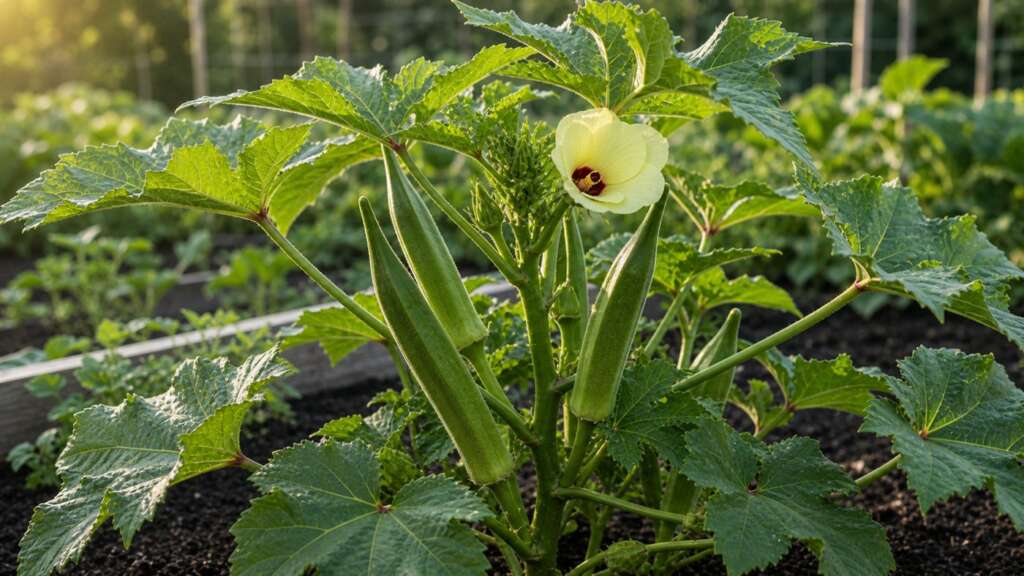
Clemson Spineless Okra is a classic Southern heirloom vegetable grown for tender green pods used in gumbos, stews, frying, pickling, and roasting. It is a warm-season crop that wants real heat to grow well, so the most important decision is not how you sow but when. Plant after the soil is genuinely warm, give the plants full sun, and pick the pods young to keep production steady through the season.
Quick How-to
Direct sow Clemson Spineless Okra outdoors after all danger of frost has passed and the soil has warmed to at least 65 to 70 F, ideally warmer. Sow about 1/2 to 1 inch deep, cover firmly for good soil contact, and keep the seedbed evenly moist until emergence. Expect germination in about 5 to 14 days when soil sits in the 75 to 90 F range. In short-season climates, start seed indoors 4 to 6 weeks before transplanting and move plants out only after nights are mild and the bed has warmed.
Quick Guide
| Fact | Recommendation |
|---|---|
| Best method | Direct sow when soil is warm; indoor start possible 4 to 6 weeks before transplanting |
| Sowing depth | About 1/2 to 1 inch |
| Germination temperature | Best around 75 to 90 F; cool soil delays or fails germination |
| Days to germination | About 5 to 14 days under warm conditions |
| Light for germination | Cover seed; strong light needed immediately after sprouting |
| Spacing | About 12 to 18 inches between plants, with 3 to 4 feet between rows |
| Sun | Full sun, ideally 8 or more hours |
| Water | Even, deep watering; tolerates some dryness once established |
| Harvest | Begin checking for tender pods about 55 to 60 days after planting |
| Plant size | Tall, often 4 to 6 feet at maturity in a long warm season |
Before You Sow
Okra rewards patience. The seed will germinate fine in warm conditions and sit unhappily in cool ones, so the single biggest favor you can do this crop is to wait. A bed that feels comfortable in light clothing at dawn is closer to ready than one that still feels damp and chilly at midday. If you have a soil thermometer, take readings at the depth you plan to sow, in the morning, over several days. Look for steady readings above 65 F before direct sowing.
Choose the sunniest spot you have. Okra will tolerate ordinary garden soil, but it grows best in loose, well-drained ground with moderate fertility. Heavy clay is workable if you mound the row a few inches to improve drainage and warmth. Mix in compost before planting if your soil is tired, but avoid loading the bed with high-nitrogen amendments, which can push tall leafy plants that flower late.
Many gardeners soak okra seed for 12 to 24 hours in room-temperature water before sowing to soften the hard seed coat. This is optional and not always necessary, but it can shorten the wait to emergence. Drain and sow promptly; do not let soaked seed sit and ferment.
Direct Sowing
Direct sowing is the most natural method for Clemson Spineless Okra because the plants resent root disturbance. Once the soil is reliably warm, draw a shallow furrow, drop seed every few inches at the target depth of 1/2 to 1 inch, and firm the soil over the row. Water gently so seed is not washed out of place.
Keep the seedbed evenly moist, like a wrung-out sponge, until seedlings appear. A crusted, sun-baked surface can stop small seedlings from breaking through. If your soil tends to crust, a light cover of compost or fine mulch over the row helps the surface stay friable. Once seedlings have two or three true leaves, thin to one plant every 12 to 18 inches. Crowded okra produces tall, leggy plants with reduced pod set.
In areas with long, hot summers, you can stagger plantings two or three weeks apart for a steadier harvest, though one well-timed planting usually carries a household through the season.
Indoor Starting
Indoor starting is useful in cooler regions or when the spring is unreliable. Sow about 1/2 inch deep in deep cells or small pots, not shallow trays. Okra develops a long taproot quickly, and shallow containers will check growth and increase transplant shock.
Use fresh seed-starting mix, pre-moistened so seed placement is even. A heat mat under the tray helps emergence, with the mix held in the 80 to 90 F range. Remove the heat mat once seedlings are up and growing. Provide strong overhead light from day one. Weak light is the most common reason indoor okra seedlings stretch and lean.
Keep the indoor period short. Four to six weeks is generally enough. Tall, rootbound okra transplants often stall in the garden for weeks while younger, sturdier plants pass them. Pot up only if roots clearly fill the cell and the weather is still too cold to plant out.
Hardening Off and Transplanting
Harden off seedlings over 7 to 10 days before planting. Begin with an hour or two of sheltered shade and gradually increase sun, breeze, and time outdoors. Transplant on a calm, mild day once frost danger has passed and the soil has warmed.
Disturb the root ball as little as possible. Slide each seedling out by squeezing the cell, set it at the same depth it grew indoors, firm the soil around the roots, and water in well. Space plants 12 to 18 inches apart with rows about 3 feet apart so you have room to walk and pick once plants reach full size.
If a cold night sneaks back in after transplanting, cover plants temporarily with a row cover or upturned bucket. Even a single chilly night can set okra back noticeably.
Soil, Sun, and Water
Full sun is non-negotiable for productive okra. Partial shade produces tall plants with few pods. Soil should drain well; okra dislikes standing water around its roots.
Water deeply and less often rather than shallowly every day. The aim is a soil profile that stays evenly moist a few inches down without being soggy. Once plants are established and the weather is hot, okra tolerates short dry stretches better than many vegetables, but consistent moisture during flowering and pod set improves yield and pod quality.
Mulch after the soil has fully warmed. A two- to three-inch layer of straw, shredded leaves, or compost conserves moisture, smooths out wet-dry cycles, and keeps weeds down. Avoid mulching too early in cool soil; you want the bed warm before locking in moisture.
Feed lightly. A side-dressing of balanced compost or a moderate fertilizer once plants begin flowering can support a long harvest. Heavy nitrogen pushes leaves at the expense of pods.
Top Mistakes
- Sowing into cool soil. This is the most common reason okra disappoints. Seed sits in cold wet ground, rots or germinates unevenly, and surviving seedlings sulk for weeks. Wait for steady warmth.
- Letting pods grow too large. Pods left on the plant for even a few extra days become tough, fibrous, and inedible. They also signal the plant to slow new flowering. Pick young, pick often.
- Starting indoors too early or in shallow trays. Long indoor stints in small cells produce rootbound transplants that struggle for weeks after planting out.
- Crowding plants. Okra grows tall and full when given room. Crowded stands produce leggy plants, reduced airflow, and lower pod yields.
- Overfeeding with nitrogen. Lush green plants with sparse pods almost always trace back to too much nitrogen in the bed.
Troubleshooting by Symptom
| Symptom | Likely causes | What to do next |
|---|---|---|
| No sprouts after 14 days | Soil too cold, seed buried too deep, dry pockets, or saturated soil rotting the seed | Check soil temperature, resow at 1/2 to 1 inch only after soil reaches the warm range, and keep moisture even |
| Patchy, uneven germination | Crusted surface, inconsistent depth, or uneven watering | Smooth the bed before sowing, cover seed evenly, and water gently to avoid washing seed |
| Seedlings tall, pale, and leaning | Insufficient light indoors or too much warmth after germination | Move under stronger light, reduce heat, and increase airflow |
| Plants stall after transplant | Cool soil, root disturbance, or wind exposure | Protect from cold nights, water in well, and give plants time once warmth returns |
| Flower buds drop without pods | Heat extremes, drought stress, or sudden temperature swings | Maintain even moisture, mulch the bed, and wait for steadier weather |
| Pods short, tough, or twisted | Pods left on too long, drought stress, or inconsistent watering | Pick more often, water deeply during dry stretches, and mulch to even out moisture |
| Yellowing lower leaves | Cold spell, waterlogged soil, or nitrogen deficiency in poor soil | Improve drainage, hold off watering if soil is already wet, and side-dress lightly if soil is depleted |
| Plants tall but few flowers | Too much shade, excess nitrogen, or immature plants in a cool season | Choose a sunnier site, ease off nitrogen, and give the plant time once heat arrives |
Germination Diagnostics
If okra is slow to come up, work through the likely causes in order. First check soil temperature at sowing depth; okra simply will not perform in cool ground. Next check depth, because seed sown deeper than about an inch can struggle to push through, especially in heavy soil. Then check moisture: the top inch should feel evenly damp, not waterlogged and not dusty. If the surface crusted during a hot afternoon, loosen it gently with a rake or hand cultivator and keep the row evenly moist.
Harvest
Clemson Spineless Okra starts flowering in midsummer and produces pods continuously through the hot months. Harvest pods when they are about 2 to 4 inches long and still tender enough to slice easily with a knife. A pod that flexes slightly is good; a pod that snaps stiffly is already getting fibrous.
During peak season, plan to pick every one to two days. Pods grow surprisingly fast in heat, and a missed day can leave you with a row of oversized, woody pods. Cut with pruners or a sharp knife rather than tugging; the stems are tough and the plant resents being yanked.
Some gardeners react to the fine hairs on okra plants. Long sleeves and gloves make picking more comfortable, especially in humid weather. Pods store well in the refrigerator for several days, and surplus pods can be sliced and frozen, pickled, or dried for soups.
Seed Saving
Clemson Spineless is an open-pollinated heirloom, so seed saved from healthy plants should grow true when not crossed. Okra is largely self-pollinating, but bees do visit the flowers and varieties grown close together can cross. For reliable seed, isolate from other okra varieties by distance or grow only one variety in a season.
Leave a few pods on selected plants to mature fully. Mature seed pods turn brown, dry, and brittle, and the seeds rattle inside. Harvest before pods split open in the field, finish drying indoors in a single layer, and shell out the seed. Discard small, shriveled, or damaged seeds. Store in a labeled, airtight container with the variety and year.
Storing Leftover Seed
Keep unused Clemson Spineless Okra seed in its labeled packet inside a sealed container in a cool, dry, dark indoor location. Avoid garages, sheds, greenhouses, and sunny windowsills, where temperature and humidity swing sharply. Label home-saved seed with the variety and harvest year before storing it.
FAQ
Should I soak okra seed before planting?
Soaking for 12 to 24 hours in room-temperature water can soften the seed coat and speed emergence. It is helpful but not required. Sow promptly after draining; do not let soaked seed dry out or ferment.
Why is my okra not growing?
The most common reason is cool soil. Okra essentially pauses until the ground warms into the comfortable range, then grows quickly. If plants are in place but not advancing, check soil temperature, moisture consistency, and sun exposure before adjusting anything else.
When should I harvest okra pods?
Pick while pods are tender, usually around 2 to 4 inches long, and easy to cut. Pods that have become stiff or woody should be removed and composted so the plant keeps producing.
Can okra grow in containers?
Yes, in large containers. A 5-gallon or larger pot per plant, in full sun with steady watering, can produce a useful harvest. Smaller containers limit root volume and pod production.
Does Clemson Spineless really have no spines?
The variety is bred for nearly spineless pods, which makes picking easier than many older okra types. The plants themselves still have fine hairs that some gardeners find irritating, so gloves and long sleeves are worth keeping handy.