
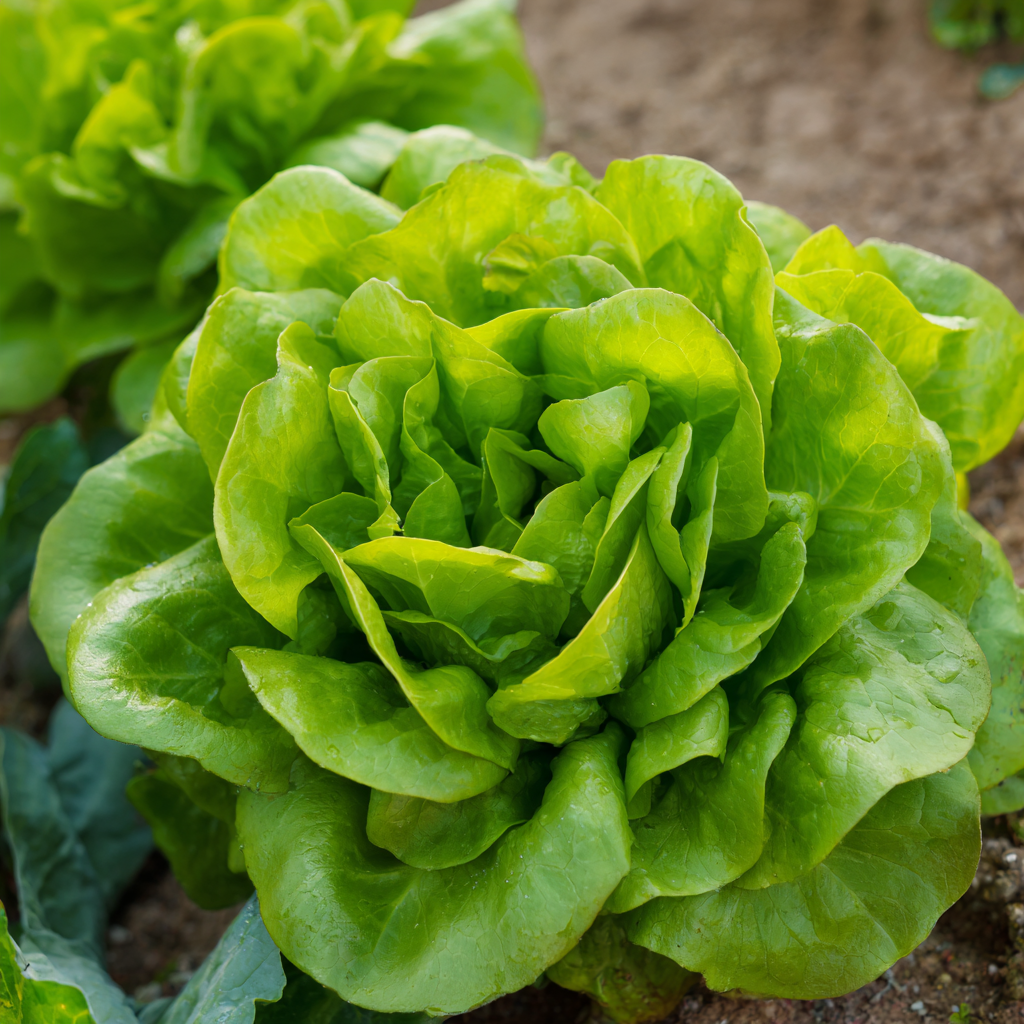
Butter King is a distinct butterhead lettuce cultivar known for large, loosely folded heads, tender green outer leaves, and a pale, mild center. It won All-America Selections recognition in 1966 and can be harvested young for baby leaves or allowed to form a full head. Although it holds better than many delicate lettuces as spring warms, it is still a cool-season crop and gives its sweetest, most succulent growth before sustained heat arrives.
Quick How-to
Sow Butter King outdoors in early spring as soon as the soil can be worked, then sow again in late summer for a fall crop. Press seeds into a smooth seedbed and cover only 1/8 to 1/4 inch deep. Keep the surface consistently moist until seedlings emerge, usually in 7 to 14 days when soil is around 55 to 65 F. Thin or transplant plants to 8 to 12 inches apart for full heads. Give them full sun in cool weather, afternoon shade as temperatures rise, and steady water so growth never stalls.
Quick Guide
| Fact | Recommendation |
|---|---|
| Crop type | Cool-season annual butterhead lettuce |
| Best method | Direct sow or transplant young starts |
| Sowing depth | 1/8 to 1/4 inch; do not bury deeply |
| Germination temperature | Best around 55 to 65 F; broadly successful from about 40 to 75 F |
| Days to germination | Usually 7 to 14 days |
| Light during germination | Cover very lightly; a shallow planting gives emerging seedlings access to light |
| Final spacing | 8 to 12 inches for full heads; closer only for baby-leaf harvest |
| Sun | Full sun in cool weather; afternoon shade is useful as weather warms |
| Water | Keep evenly moist from sowing through harvest, without saturated soil |
| Time to harvest | Baby leaves in roughly 25 to 35 days; full heads commonly in about 55 to 75 days |
| Mature form | Large, loose butterhead with tender green leaves and a softly folded center |
Before You Sow
Choose the planting window before choosing the bed. Butter King grows most evenly when daytime weather is mild and nights are cool. Spring seed can go out two to three weeks before the average last frost because established lettuce tolerates light frost. For fall harvest, count backward about 60 to 75 days from the first hard freeze and add another week or two for slower growth as days shorten. In climates with mild winters, fall and winter sowings may be more dependable than spring sowings.
Prepare a fine, level surface. Lettuce seed is small, and large clods create dry pockets and uneven planting depths. Work finished compost into poor soil, but avoid fresh manure or a heavy dose of fertilizer immediately before sowing. Butter King needs enough fertility to make broad leaves, yet excessive nitrogen can produce overly soft growth that is more attractive to aphids and more vulnerable to rot.
If the forecast calls for hot soil, cool the bed with a thorough watering the evening before sowing. Shade cloth placed above the bed can reduce surface heating, but it should not rest on emerging seedlings. A fresh sowing every 10 to 14 days is more useful than one large planting because lettuce quality changes quickly with temperature.
Direct Sowing
Draw a shallow furrow no more than 1/4 inch deep, place seed thinly, and cover with sifted soil or fine compost. Firm the surface gently so each seed touches moist soil. Water with a fine rose or gentle spray; a hard stream can wash the light seed into clumps or bury it too deeply.
The uppermost layer must stay damp throughout germination. In dry weather, check it morning and evening. A thin layer of clean burlap or lightweight row cover can slow evaporation, but remove any opaque covering as soon as the first seedlings appear. Lettuce germination declines sharply in hot soil, especially above about 80 to 85 F. When a midsummer sowing fails, repeated watering cannot always overcome heat inhibition. Sow in a cooler location, shade the bed, or start seed indoors where the temperature is controlled.
Thin once seedlings have two or three true leaves. For whole Butter King heads, leave the strongest plants 8 to 12 inches apart. Snip extras at soil level if pulling them would disturb nearby roots. For baby greens, plants can remain closer and be cut while young, but a dense stand will not form the broad, folded heads that distinguish this cultivar.
Indoor Starting and Transplanting
Start seed indoors four to five weeks before the intended transplant date when you want an earlier crop or when outdoor soil is too warm for dependable germination. Sow one or two seeds per cell, cover barely, and keep the mix moist. Remove extra warmth after emergence and provide bright overhead light. Cool, bright conditions make compact plants; warmth combined with weak light makes lettuce stretch quickly.
Transplant when seedlings have four to six true leaves and a firm root plug. Harden them off over several days, beginning with a protected hour or two outdoors and gradually increasing sun and wind exposure. Set plants at the same depth they grew in the cell. Burying the crown can trap moisture among the leaves and encourage rot. Water immediately and shade spring transplants briefly if the day turns unexpectedly hot.
Soil, Sun, and Water
Butter King performs best in fertile, well-drained soil with plenty of organic matter and a slightly acidic to neutral pH. Its roots are shallow, so compacted soil and weed competition reduce growth quickly. Use mulch only after seedlings are established; a thin layer helps keep soil cool and evenly moist, while a thick wet layer pressed against the crown can harbor slugs and rot.
Give plants at least six hours of sun during cool weather. In warmer regions, morning sun followed by light afternoon shade extends tenderness and delays stress. Deep shade produces thin leaves and loose plants, but relentless late-day heat can be equally damaging.
Water often enough that the root zone never becomes bone dry. Apply water at soil level early in the day when possible. Repeated drought followed by heavy watering can split growth, scorch leaf edges, and make heads bitter. At the same time, constantly saturated soil excludes air from the roots and favors damping-off and bottom rot. Aim for soil that feels evenly damp, not muddy.
Managing Heat, Pests, and Head Quality
Butter King’s relative heat tolerance is useful, but it does not turn the plant into a hot-weather vegetable. Long days and rising temperatures eventually trigger bolting: the center elongates, flavor grows bitter, and a flower stalk forms. Harvest promptly when a head is full rather than waiting for it to become firm like iceberg lettuce. Succession sowing, afternoon shade, and consistent irrigation extend the season more effectively than extra fertilizer.
Inspect the undersides and folded centers for aphids. A strong but controlled stream of water can dislodge small colonies. Slugs and snails leave irregular holes and shiny trails, especially in damp, mulched beds. Remove hiding places, water in the morning, and handpick after dusk. Floating row cover protects young plants from many chewing insects, but secure the edges and remove or vent it when temperatures rise.
Hydroponic Growing
Butter King is a strong hydroponic candidate because its soft butterhead leaves form a broad, moderately dense head. Use deep-water culture or a wide NFT channel that can carry the mature root mass without backing up flow. Start one seed in a clean inert plug, keep the plug damp rather than submerged, and move it into the system when roots show at the plug edge and the first true leaves are opening. Keep the crown above the nutrient solution; a constantly wet stem invites rot even when the roots look healthy.
Use a complete hydroponic nutrient made for leafy greens. A practical target is EC 1.2 to 1.8 mS/cm and pH 6.0 to 7.0. Check both at a consistent time, correct nutrient strength before adjusting pH, and replace the solution periodically instead of endlessly adding concentrate. Keep the reservoir shaded, clean, and well oxygenated. Lettuce roots perform best when the solution stays in the 60s to low 70s F; warmer water holds less oxygen and increases the chance of slimy roots and premature bolting.
Allow about 8 to 10 inches between sites so the outer wrapper leaves are not pressed against neighboring heads. Keep the center dry and airy; crowding creates a humid pocket where decay and tipburn start. You can take a few outside leaves, but the best shape comes from letting the center fill and cutting the head before heat causes it to loosen. Give the canopy steady airflow without aiming a hard fan directly at tender leaves. Under lights, keep the fixture close enough to prevent stretching while preserving a dark period each day. Raise or dim the light if leaf edges bleach or curl upward.
A head that stays flat and open usually needs stronger light or more space. Check rapid inner growth for tipburn and reduce heat or excessive EC rather than pouring in calcium blindly. Pale, firm roots with a fresh smell are normal. Brown slime, sour odor, or wilting while roots are wet points to warm solution, weak aeration, light entering the reservoir, or poor sanitation. Brown inner leaf edges are often tipburn caused by fast growth and weak calcium movement; improve airflow, moderate the temperature, and verify EC before adding more fertilizer.
Top Mistakes
- Confusing Butter King with Buttercrunch: They are separate cultivars. Label rows clearly and keep seed lots separate if you grow both.
- Burying the seed too deeply: Lettuce seedlings have limited energy. A 1/8- to 1/4-inch cover is enough; deep seed often emerges late or not at all.
- Trying to germinate in hot soil: Soil above roughly 80 to 85 F can suppress germination. Shift the sowing window or start seed in a cooler place.
- Letting shallow roots dry out: Even a brief dry period can slow head formation and increase bitterness. Check beds and containers frequently.
- Crowding plants intended for heads: Dense lettuce makes useful baby leaves, but full Butter King heads need 8 to 12 inches of room and moving air.
- Waiting for an iceberg-firm head: Butter King naturally forms a softer, loosely folded butterhead. Harvest when it is full and tender, before the center elongates.
Troubleshooting by Symptom
| Symptom | Likely causes | What to do next |
|---|---|---|
| Few or no seedlings after 14 days | Soil too hot, seed buried deeply, or surface dried | Check soil temperature, resow shallowly, and maintain steady surface moisture |
| Seedlings fall over at the soil line | Damping-off from saturated mix, stale air, or crowded cells | Remove affected seedlings, improve airflow, use clean mix, and water without leaving trays soggy |
| Plants are pale and barely growing | Low fertility, compacted or cold soil, damaged roots, or waterlogging | Check drainage and soil condition, side-dress lightly only if nutrients are deficient, and keep roots evenly moist |
| Leaf edges turn brown or papery | Heat, drought, fertilizer salt, or tipburn during rapid growth | Water consistently, avoid excess fertilizer, improve airflow, and harvest stressed heads promptly |
| Center rises on a tall stem | Bolting caused by heat, long days, age, or drought stress | Harvest immediately; plant the next crop earlier, later, or in afternoon shade |
| Leaves taste bitter | Heat, bolting, age, or repeated moisture stress | Harvest in the cool morning, use younger leaves, and time the next sowing for cooler weather |
| Ragged holes and slime trails | Slugs or snails feeding at night | Remove damp hiding places, water early, handpick after dark, and use an appropriate barrier if pressure continues |
| Sticky curled leaves with tiny insects | Aphids clustered in protected folds | Rinse colonies away, remove badly infested leaves, encourage beneficial insects, and avoid excess nitrogen |
Harvest and Kitchen Use
For baby leaves, cut the largest outer leaves when they are several inches long and leave the center intact for another light harvest. For a whole head, wait until the plant has a broad rosette and a full, softly folded center, then cut at soil level with a clean knife. Harvest early in the morning, when leaves are cool and hydrated.
Cool the lettuce soon after cutting. Wash away grit, drain thoroughly, and refrigerate with enough humidity to prevent wilting but not so much trapped water that leaves decay. Butter King’s tender leaves suit salads, sandwiches, wraps, and lettuce cups. The mild inner leaves are best used fresh rather than cooked heavily.
Seed Saving
Butter King is an annual lettuce and is largely self-pollinating. To keep a home seed lot true to type, separate flowering lettuce varieties by about 10 to 20 feet and select several healthy plants that show the expected large, tender butterhead form. Do not harvest those plants for full heads. Let them bolt and produce branched flower stalks.
Seeds mature over time rather than all at once. When the small flower heads develop pale, feathery tufts, mature seed is ready beneath them. Pick dry heads by hand or bend branches into a paper bag and shake. Repeat collection every few days, then dry the material in a protected, airy place. Rub gently to free the seeds, screen or winnow away chaff, and store only fully dry seed. Label the cultivar and harvest year so Butter King remains distinct from Buttercrunch and other butterheads.
Storing Leftover Seed
Keep unused Butter King Lettuce seed in its labeled packet inside a sealed container in a cool, dry, dark indoor location. Avoid garages, sheds, greenhouses, and sunny windowsills, where temperature and humidity swing sharply. Label home-saved seed with the variety and harvest year before storing it.
FAQ
Is Butter King the same lettuce as Buttercrunch?
No. Both are butterhead lettuces, but they are distinct named cultivars with separate histories and growth traits. Keep their seed and garden labels separate.
Can Butter King grow through summer?
It can hold quality longer than some delicate butterheads, especially with afternoon shade and steady water, but sustained heat will eventually reduce germination, increase bitterness, and trigger bolting. In hot climates, spring and fall are still the dependable seasons.
Can I grow Butter King in a container?
Yes. Use a pot with drainage that is at least 6 to 8 inches deep and wide enough to give each full-size plant about 8 to 12 inches of space. Containers dry faster than garden beds, so check moisture daily in warm or windy weather.
Should I harvest outer leaves or the whole head?
Either method works. Taking a few outer leaves extends harvest, while cutting the whole plant when the center is full gives the classic butterhead experience. Do not remove so many outer leaves that the plant can no longer support growth.