
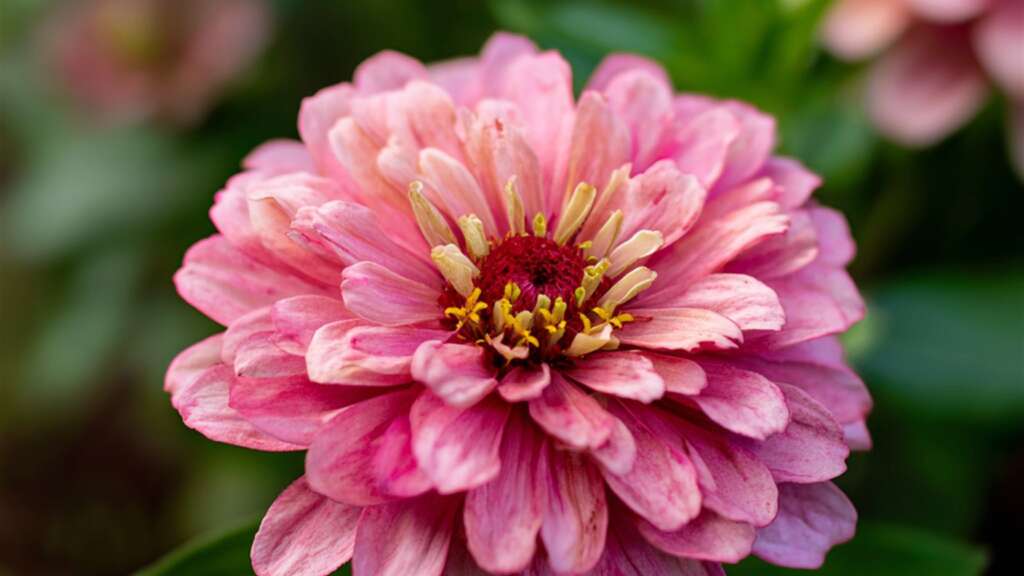
Blushing Bride Zinnia is a warm-season annual grown for its soft blush-to-cream blooms, long cutting window, and easy summer pollinator activity. Like other Zinnia elegans, it rewards patience at the start of the season: it does its best work when the soil is genuinely warm, the days are bright, and the bed has enough airflow to keep foliage dry between waterings.
Quick How-to
Sow Blushing Bride Zinnia outdoors after your last spring frost, once soil has warmed to roughly 70 to 80 F. Cover seed about 1/4 inch deep, keep the surface evenly moist, and expect sprouts in about 5 to 10 days under warm conditions. Thin or space plants 9 to 12 inches apart in full sun. Once stems are sturdy, pinch the growing tip to encourage branching, then cut or deadhead regularly through summer to keep new blooms forming until frost.
Quick Guide
| Fact | Recommendation |
|---|---|
| Best method | Direct sow after frost; short indoor start is also fine |
| Sowing depth | About 1/4 inch |
| Germination temperature | About 70 to 80 F soil for steady emergence |
| Days to germination | About 5 to 10 days under warm conditions |
| Light for germination | Cover seed lightly; bright light needed immediately after sprouting |
| Spacing | About 9 to 12 inches apart |
| Sun | Full sun, ideally 6 or more hours |
| Water | Deep, even watering at the base; keep foliage as dry as practical |
| Bloom timing | About 60 to 75 days from sowing |
| Plant size | Branching summer annual, commonly about 30 to 40 inches tall |
Before You Sow
Blushing Bride is a warm-season flower, so the planting decision is really about temperature, not the calendar. Cool spring soil, even when nights feel mild, can leave zinnia seed sitting still or rotting. Wait until daytime soil temperatures stay reliably in the warm range and overnight lows are no longer threatening frost.
Choose a sunny, open bed with good airflow. Zinnia foliage handles full sun easily, but it dislikes sitting damp under crowded leaves. A bed against a fence with no breeze, or a tight corner where sprinklers hit the leaves every evening, will encourage mildew later in the season even when everything else is right. If the soil is heavy or slow to drain, work in some compost before sowing to loosen the top few inches.
Rake the seedbed smooth, break up clods, and water lightly before sowing. A soft, level surface makes it easier to place seed at an even depth so the row emerges together rather than in scattered patches.
Direct Sowing
Direct sowing is the most natural approach for Blushing Bride Zinnia in most home gardens. Once frost danger has passed and the soil is warm, place seed about 1/4 inch deep, cover with fine soil, and firm gently for good seed-to-soil contact. Water in with a soft spray rather than a hard stream so the seed is not washed deeper than intended.
Keep the top layer of soil consistently moist until you see sprouts. Warm soil dries quickly, especially on breezy spring days, so a brief check each morning is usually enough to catch a dry surface before it stalls germination. Once seedlings have a true set of leaves beyond the first rounded seed leaves, thin to the wider spacing in the quick guide. It feels harsh to remove healthy seedlings, but crowded zinnias produce thin stems, weaker flowers, and far more mildew later.
Indoor Starting
A short indoor start is useful when you want a tidy front-of-bed planting, a head start in a short-season garden, or a way to skip the early-season slug pressure that can shred direct-sown seedlings. Sow about 3 to 4 weeks before your transplant date in cells or small pots of fresh seed-starting mix. Zinnias dislike sitting in trays too long, so do not start them earlier than that just to feel productive.
Cover seed about 1/4 inch deep and keep the mix evenly moist and warm until germination. As soon as sprouts appear, give them strong overhead light. A bright window is rarely enough by itself; pale, stretched seedlings are usually the result of weak light combined with too much warmth. Keep airflow gentle but consistent so the stems are stimulated to thicken rather than stretch.
When seedlings have a true set of leaves and the roots have begun to hold the cell together, they are ready for hardening off. Avoid letting a tray sit until roots are circling and the lower leaves are yellowing; a tray that has stalled indoors usually transplants poorly.
Hardening Off and Transplanting
Move seedlings outside gradually over about 7 to 10 days before planting them in the bed. Start with a sheltered, partly shaded spot for a couple of hours, then increase sun exposure, wind, and time outside a little each day. Skipping this step is a common reason transplants sit and sulk after planting; sun and wind can scorch tender indoor-grown foliage in a single afternoon.
Transplant on a calm, mild day or in the late afternoon. Plant at the same depth the seedling sat in its cell, keep the root ball intact, and water in well so soil settles around the roots. Space plants at the wider end of the range if you tend to grow lush gardens with overhead watering, and at the closer end if you plan to use drip irrigation and stake or cage the planting.
Soil, Sun, and Water
Blushing Bride Zinnia performs best in full sun, in soil that drains well but holds enough moisture to support steady growth. Average garden fertility is usually plenty. A bed that was lightly amended with compost in spring rarely needs extra fertilizer, and pushing too much nitrogen can produce big leafy plants with fewer, weaker blooms.
Water deeply rather than briefly. A long, slow soak that wets the root zone is more useful than a daily light sprinkle that only dampens the surface. Wherever possible, water at soil level using drip line, a soaker hose, or a careful watering can rather than overhead sprinklers. Wet foliage that stays wet into the evening is one of the main triggers for powdery mildew on zinnias, and Blushing Bride is no exception.
Once plants are several inches tall and clearly established, pinching the growing tip just above a leaf pair encourages branching from below. This single step usually doubles or triples the number of stems a plant produces and improves the overall bloom count for the season. It feels counterintuitive to cut a healthy young plant, but the result is fuller, sturdier, and more productive.
A light layer of mulch around the base after the soil has fully warmed helps moderate soil moisture, keeps mud from splashing onto the lower leaves during heavy rain, and reduces weed pressure. Keep mulch pulled back slightly from the main stem.
Top Mistakes
- Sowing into cool spring soil. Zinnia seed needs real warmth. Planting too early often produces patchy emergence or seeds that rot before sprouting.
- Crowding plants for a fuller look at first. Crowded zinnias trap humidity in their foliage, lean toward the light, and mildew earlier in the season. Thin honestly.
- Watering from above, especially late in the day. Overhead watering that leaves foliage wet overnight is the most common preventable cause of mildew on home-garden zinnias.
- Letting spent blooms stay on the plant. Once a flower starts forming seed, the plant slows down on producing new buds. Regular cutting and deadheading keeps the show going.
- Skipping the early pinch. Without a pinch, some seedlings put their energy into a single tall stem instead of a branching plant.
Troubleshooting by Symptom
| Symptom | Likely causes | What to do next |
|---|---|---|
| Seed sits with no emergence after 10 to 14 days | Soil too cool, seed buried too deep, surface dried and crusted, or overly wet mix | Wait for warmer soil, resow at about 1/4 inch into a freshly raked surface, and keep the top layer evenly moist |
| Patchy stand with gaps along the row | Uneven sowing depth, hard rain after sowing, soil crusting, or slug damage on emerging tips | Smooth the bed before sowing, water gently, and check for slug trails near gaps in early morning |
| Seedlings are tall, thin, and pale | Too little light indoors, too much heat without strong light, or crowded cells | Move under stronger overhead light, reduce extra heat after sprouting, and thin to one seedling per cell |
| Seedlings collapse at the soil line | Overly wet mix, poor airflow, or damping-off conditions on an indoor tray | Improve airflow, water less often, use fresh mix for any restarts, and avoid sitting trays in standing water |
| White powdery patches on leaves | Powdery mildew, encouraged by humidity, overhead watering, and crowded plants | Space plants properly, water at soil level, remove the worst-affected leaves, and improve airflow around the planting |
| Lower leaves yellow and drop while top still looks fine | Natural aging of lower foliage under heavy bloom load, dry soil at depth, or splash from overhead watering | Water more deeply and less often, mulch the base, and remove tattered lower leaves for airflow |
| Plants stretch tall and lean | Not enough direct sun, wind exposure on tall stems, or skipping the early pinch | Pinch young plants to force branching, stake taller stems if needed, and choose a sunnier spot next season |
| Lots of leaves, few flowers | Too much shade, excess nitrogen, or buds being lost to early frost damage | Move to a sunnier spot next round, avoid high-nitrogen feeding, and protect early plantings if a late cold snap threatens |
| Blooms small or short-stemmed | Crowded planting, dry soil during bud formation, or stems cut too short for the plant size | Thin honestly, water deeply during budding, and cut stems long down to a healthy leaf node |
Bloom and Cutting Care
Blushing Bride Zinnia produces its best stems for arrangements when it is cut regularly. As a general rule, cut more than you think you should; cutting is deadheading, and the plant responds by sending up more buds rather than slowing down.
For a sturdy cut stem, use the wiggle test: hold the stem about 6 to 8 inches below the bloom and gently shake your hand side to side. A stem that flops at the neck is not ready and will not hold well in a vase. A stem that stays fairly stiff when you wiggle it is mature enough to cut and will continue opening in water. Cut just above a leaf pair lower on the plant so the next set of branches can grow from that node.
For garden display alone, deadheading works the same way. Snip off fading blooms at a leaf pair rather than just plucking the dead petals. This keeps the plant tidy and signals it to keep producing.
Seed Saving
Blushing Bride Zinnia can be grown for home seed saving, but a few cautions apply. Zinnia elegans is insect-pollinated and can cross with other Z. elegans varieties grown nearby, so saved seed from a mixed bed often produces a wider range of colors and forms in the next generation than the original packet. If you want seed that resembles the parent, separate Blushing Bride from other zinnias by distance, or grow only this variety in the bed.
Let chosen flower heads stay on healthy plants until they dry naturally on the stem and the petals become papery. Collect heads on a dry day, finish drying them indoors on a paper plate or screen for another week or two, then rub the dried heads gently to release the seed. Label seed with variety name and year before storing.
For most home gardeners, starting with a named commercial mix is simpler than seed saving and produces a more predictable color story; saving seed is most rewarding when you enjoy the experiment.
Storing Leftover Seed
Keep unused Blushing Bride Zinnia seed in its labeled packet inside a sealed container in a cool, dry, dark indoor location. Avoid garages, sheds, greenhouses, and sunny windowsills, where temperature and humidity swing sharply. Label home-saved seed with the variety and harvest year before storing it.
Container and Small-Space Notes
Blushing Bride Zinnia grows well in larger containers given full sun, good drainage, and airflow. Use a pot at least 10 to 12 inches across with drainage holes, and resist the urge to crowd several plants into a small container for a fuller look at planting time. One or two well-spaced zinnias in a pot will outperform four crammed plants by midsummer because they will not strangle each other’s airflow.
Containers dry out faster than garden beds, so check moisture daily in hot weather and water deeply when the top inch begins to dry. A light feeding partway through the season can help, but go easy; container zinnias respond better to consistent water than to heavy fertilizer.
FAQ
Can I direct sow Blushing Bride Zinnia outdoors?
Yes. Direct sowing is the most common method. Wait until your last spring frost has passed and the soil has warmed, then sow about 1/4 inch deep into a smooth, prepared bed.
How do I get more blooms from my zinnia plants?
Give them full sun, thin them honestly to the recommended spacing, pinch young plants once to encourage branching, and cut or deadhead regularly. Plants that are allowed to keep mature seed heads will slow down on new bud production.
Why are my zinnia leaves turning white and powdery?
That is powdery mildew, which is common on zinnias in humid weather, on overhead-watered plantings, or in crowded beds with weak airflow. Water at soil level, space plants properly, remove the worst leaves, and accept that some end-of-season mildew is normal even in well-managed plantings.
Should I pinch Blushing Bride Zinnia?
Pinching the growing tip once, when seedlings are several inches tall and have a few sets of true leaves, usually leads to a fuller, more productive plant. Cut just above a leaf pair so two new branches develop from that node.