
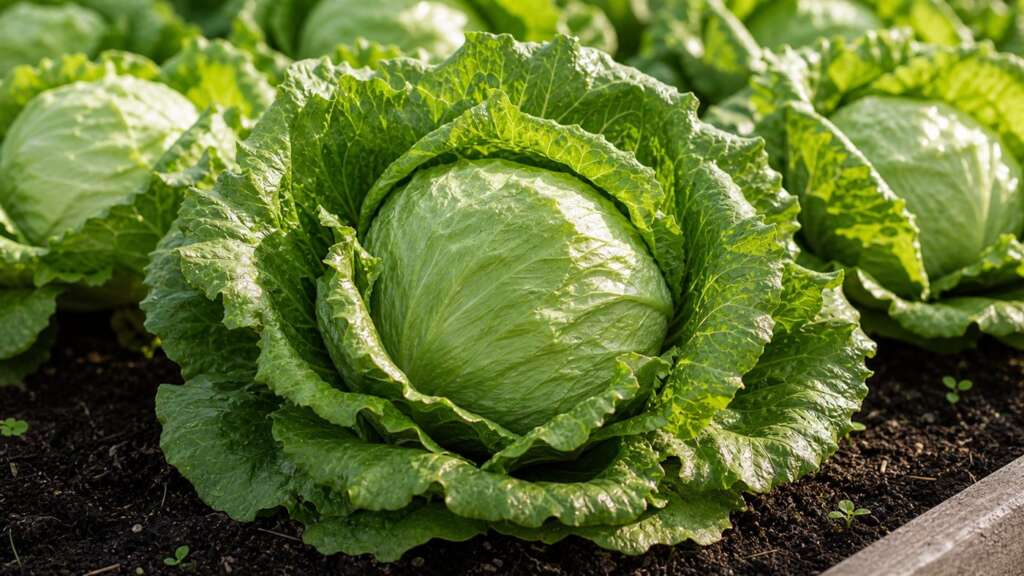
Iceberg lettuce is a crisphead-type lettuce grown for tight, crunchy heads of mild, pale green leaves. It is a cool-season vegetable that rewards patience: small seed sown shallowly, steady moisture, cool conditions, and a long enough cool window for heads to fill out before summer heat sets in. With the right timing, it is one of the most satisfying salads to grow at home, and even partial successes give you tender leaves and loose hearts well before any head forms.
Quick How-to
Sow iceberg lettuce in early spring as soon as the soil can be worked, or in late summer for a fall crop where the season cools reliably. Surface sow or cover very lightly, about 1/8 inch, and keep the seedbed evenly moist and cool until seedlings appear. Germination is usually quick, often 2 to 10 days when soil sits in the cool to mild range. For full heads, give plants steady moisture, full sun in cool weather, and roughly 10 to 14 inches between final plants so each one has room to round up.
Quick Guide
| Fact | Recommendation |
|---|---|
| Best method | Direct sow in cool soil, or start indoors 3 to 5 weeks before transplanting for a head start |
| Sowing depth | Surface sow or cover very lightly, about 1/8 inch |
| Germination temperature | Best in cool to mild soil, often quoted around 55 to 70 F; high heat can suppress germination |
| Days to germination | About 2 to 10 days under cool, moist conditions |
| Light for germination | Light is helpful; do not bury seed deeply |
| Spacing | Thin or transplant to about 10 to 14 inches apart so each plant can form a firm head |
| Sun | Full sun in cool weather; light afternoon shade as the season warms |
| Water | Even, steady moisture; avoid dry-wet swings that stress heading plants |
| Harvest timing | Baby leaves in about 25 to 35 days; firm heads often around 70 to 85 days, depending on strain and weather |
| Plant size | Forms a compact, low rosette that closes into a dense crisphead at maturity |
Before You Sow
Iceberg is more demanding than leaf lettuce because it needs time to head up while temperatures stay cool. Start by choosing a sunny bed with fertile, well-drained soil that holds moisture without staying soggy. Work in finished compost if the bed is lean, rake the surface smooth, and break up clods so tiny seed does not fall into deep cracks.
Pre-moisten the seedbed before sowing. Lettuce seed is small and easily displaced; a watered, settled surface gives you a more even stand than dry soil hit with a hard spray after sowing. If you are sowing into containers or seed trays, use fresh, lump-free seed-starting mix, clean cells, and a label. Map your planting window backward from the season: iceberg needs the bulk of its growth to finish in cool weather, so a late spring sowing into rising heat rarely heads well.
Indoor Starting
Indoor starting is useful when spring is short, when slugs and birds make direct sowing risky, or when you want a placed, even stand of transplants. Sow 3 to 5 weeks before your intended transplant date. Press seed onto the surface of moist mix and barely cover, then mist gently.
Keep the tray cool and bright. Warm windowsills and weak light are the single most common reason indoor lettuce seedlings stretch and flop. As soon as sprouts appear, give them strong overhead light and air movement. Aim for sturdy, compact seedlings rather than tall ones. Transplant before roots circle the cell and before any check from cramped roots delays heading. Iceberg, in particular, dislikes a stressful start.
Direct Sowing
Direct sowing is the simplest path in a cool, even spring or fall. Scatter seed thinly along a shallow furrow or in small clusters, cover with a dusting of fine soil or sifted compost, and firm gently for good seed-to-soil contact. Water with a fine spray so seed is not washed into low spots.
Keep the surface evenly moist until emergence. If the top crusts in sun and wind, tender seedlings can struggle to push through. A very light cover of finely shredded straw or floating row cover helps hold humidity, moderates surface temperature, and screens hungry birds. Begin thinning as soon as plants have one or two true leaves: first to a few inches, then to final spacing for heading once you can see which seedlings are strongest. Use the thinnings as baby greens; nothing is wasted.
Transplanting and Thinning
Harden off indoor-grown seedlings over about 7 to 10 days. Start with a couple of hours in dappled outdoor shade and gradually increase sun, wind, and time outside. Transplant on a cool, overcast day if possible, water in well, and shield young plants from harsh sun for a day or two after planting.
Final spacing matters more for iceberg than for loose-leaf types. Crowded plants can produce leaves but rarely close up into firm crispheads. Aim for roughly 10 to 14 inches between mature plants. Disturb roots as little as possible during the move; iceberg responds to stress by bolting prematurely or making loose, leafy rosettes instead of tight heads.
Soil, Sun, and Water
Iceberg likes fertile, moisture-retentive soil with steady, even watering. Compost worked in before planting usually carries plants through, with a light side-dressing partway through the season if leaves look pale. Avoid heavy nitrogen pushes late in the cycle; soft, lush leaves are more prone to disease and tipburn, and they can interfere with clean head formation.
Give full sun while temperatures are cool. As the season warms, a half day of sun or light afternoon shade can buy more time before bolting. The watering principle is simple: keep the root zone evenly moist, never bone dry and never waterlogged. Iceberg is shallow-rooted, so it dries out faster than many vegetables and reacts quickly when moisture is uneven. A light mulch of straw or fine compost after plants are established helps hold soil moisture and keeps the lower leaves cleaner.
Hydroponic Growing
Iceberg lettuce is a strong hydroponic candidate because it can be grown without soil but asks more of the system than loose-leaf lettuce because it must build a large, dense head. Choose deep-water culture or a generously sized channel with dependable circulation; small countertop holes are usually too close together for finished heads. Start one seed in a clean inert plug, keep the plug damp rather than submerged, and move it into the system when roots show at the plug edge and the first true leaves are opening. Keep the crown above the nutrient solution; a constantly wet stem invites rot even when the roots look healthy.
Use a complete hydroponic nutrient made for leafy greens. A practical target is EC 1.2 to 1.8 mS/cm and pH 6.0 to 7.0. Check both at a consistent time, correct nutrient strength before adjusting pH, and replace the solution periodically instead of endlessly adding concentrate. Keep the reservoir shaded, clean, and well oxygenated. Lettuce roots perform best when the solution stays in the 60s to low 70s F; warmer water holds less oxygen and increases the chance of slimy roots and premature bolting.
Provide roughly 10 to 12 inches between plants, strong overhead light, and air movement across the head. Keep conditions cool from start to finish, since warm nights and warm solution produce loose heads and increase internal tipburn. Cut when the head feels firm for its size but before the center stretches. Outer leaves can be removed if damaged, but repeated leaf harvest works against heading. Give the canopy steady airflow without aiming a hard fan directly at tender leaves. Under lights, keep the fixture close enough to prevent stretching while preserving a dark period each day. Raise or dim the light if leaf edges bleach or curl upward.
Iceberg is sensitive to fast, uneven growth. Hollow or loose heads point to heat, weak light, or crowding; brown hidden margins point to poor calcium movement. Stabilize temperature, airflow, and EC before changing the nutrient formula. Pale, firm roots with a fresh smell are normal. Brown slime, sour odor, or wilting while roots are wet points to warm solution, weak aeration, light entering the reservoir, or poor sanitation. Brown inner leaf edges are often tipburn caused by fast growth and weak calcium movement; improve airflow, moderate the temperature, and verify EC before adding more fertilizer.
Top Mistakes
- Burying seed too deep. Lettuce seed is small and light-responsive. Press it into the surface or cover with only the thinnest dusting of soil; deeply buried seed often fails to emerge or sprouts weakly.
- Sowing into a warming bed. Iceberg is a cool-season crop. Late sowings that finish in heat tend to bolt, turn bitter, or refuse to head. Catch the early or late edge of the season instead of the middle of it.
- Letting the surface dry between waterings. A dry, crusted surface is the most common cause of patchy stands. Light, frequent watering until emergence beats heavy soaking on a dry bed.
- Skipping the thin. Crowded iceberg makes leaves, not heads. Thinning to proper spacing early – and treating the thinnings as a salad – is what allows individual plants to fill out.
- Waiting too long to harvest. Mature heads sitting in warming weather can turn bitter, crack, or bolt. Cut at the right firmness rather than at the largest possible size.
Troubleshooting by Symptom
| Symptom | Likely causes | What to do next |
|---|---|---|
| No sprouts after 10 to 14 days | Seed buried too deep, surface dried and crusted, or soil too warm and dormancy set in | Resow shallowly, mist often, and shade the seedbed if temperatures are climbing |
| Patchy or thin stand | Uneven watering, seed washed into low spots, or birds and slugs feeding on emerging seedlings | Smooth the bed before sowing, water with a fine spray, and cover with light row cover until established |
| Seedlings are tall, pale, and floppy | Weak light, warm indoor temperatures, or crowded trays | Move under stronger light, cool the growing area, and thin or pot up promptly |
| Seedlings collapse at the soil line | Overly wet mix, poor airflow, or damping-off conditions | Water more sparingly, increase airflow, and use fresh seed-starting mix for any restarts |
| Leaves turn bitter | Heat stress, drought, or plants past peak | Harvest earlier, keep moisture even, and shift the next sowing to cooler weather |
| Plants bolt before heading | Heat, lengthening days, transplant shock, or interrupted watering | Sow earlier or later in the season, water consistently, and disturb roots as little as possible |
| Heads stay loose or small | Crowding, low fertility, irregular moisture, or rising heat as plants matured | Thin to full spacing, side-dress lightly, and aim future sowings at a cooler finishing window |
| Brown, papery edges on inner leaves (tipburn symptoms) | Fast growth combined with uneven moisture and high heat | Maintain steady moisture, avoid heavy late-season nitrogen, and shade lightly during hot spells |
Timing and Climate Notes
Iceberg rewards two windows in most climates: an early spring sowing that finishes before summer, and a late summer sowing that matures into the cool, shortening days of fall. Fall crops are often the most forgiving because conditions move toward cool rather than away from it. In mild-winter regions, iceberg can also be grown through the cool months.
If your spring warms quickly, lean on transplants and shade cloth, choose the most heat-tolerant strain available, and accept that some sowings will be eaten as baby leaves rather than full heads. Succession sowing every two to three weeks during the cool window gives you a steady supply and a backup if one planting bolts.
Container and Small-Space Notes
Iceberg adapts to containers if the pot is roomy enough for a full head and the watering routine is steady. A container at least 8 to 10 inches deep with reliable drainage, one plant per pot or a single head per cluster in a wider planter, will produce a respectable crisphead. Containers heat and dry faster than garden soil, so check moisture daily once plants are sized up, and move pots into afternoon shade as temperatures climb.
Harvest and Storage
Harvest baby leaves at any point by snipping outer leaves above the growing point, or shear the entire young rosette for cut-and-come-again salads. For full heads, squeeze gently from the side: a ready iceberg feels firm but not rock-hard, and the wrapper leaves still look fresh. Cut the head at the base with a sharp knife in the cool of the morning.
Rinse and dry the leaves, then store loosely wrapped in the refrigerator. Iceberg holds well for a week or more when chilled and not crushed. Do not wait for maximum size; over-mature heads can split, develop a milky bitterness, or shoot a flower stalk through the center.
Seed Saving
Lettuce is largely self-pollinating, with low rates of crossing between varieties grown close together. To save seed, let a few healthy plants bolt and flower fully. Heads of crisphead types sometimes need help opening for the flower stalk to emerge cleanly; a shallow vertical cut across the top of a tight head can release the stalk if it appears stuck.
Allow the small yellow flowers to mature into fluffy seed heads. Collect over several visits as seed ripens unevenly, finish drying indoors out of direct sun, and clean by rubbing the heads and winnowing the chaff. Label with variety and year. Saved seed from healthy, late-bolting parents tends to perform best.
Storing Leftover Seed
Keep unused Iceberg Lettuce seed in its labeled packet inside a sealed container in a cool, dry, dark indoor location. Avoid garages, sheds, greenhouses, and sunny windowsills, where temperature and humidity swing sharply. Label home-saved seed with the variety and harvest year before storing it.
FAQ
Why is iceberg lettuce harder than leaf lettuce?
Iceberg has to form a tight, dense head, which takes a longer stretch of cool, even conditions than loose-leaf types. Leaf lettuces forgive heat and crowding much better. If your season is short or hot, leaf and butterhead types are usually easier; iceberg shines when you can offer a long cool window.
Why won’t my iceberg form a head?
The most common reasons are heat, crowding, irregular moisture, or transplant stress. Plants that experience any of these often grow leaves but never close up. Sow earlier or later in the cool season, thin to full spacing, water steadily, and try not to disturb the roots when moving transplants.
Can I grow iceberg in containers?
Yes, in a deep, roomy pot with good drainage and steady watering. Plan on one head per pot for full crispheads, and shift containers into light shade as temperatures rise.
Should I soak iceberg lettuce seed before sowing?
Soaking is generally not needed. Better results usually come from shallow sowing, gentle watering, and keeping the surface cool and moist. In very warm weather, a brief overnight soak followed by chilling can sometimes coax dormant seed to sprout, but the surer fix is to wait for cooler soil.
Can I harvest before the head forms?
Yes. Outer leaves and thinnings make excellent salad greens long before any head develops. Treat early thinnings as a first harvest, not a loss.