
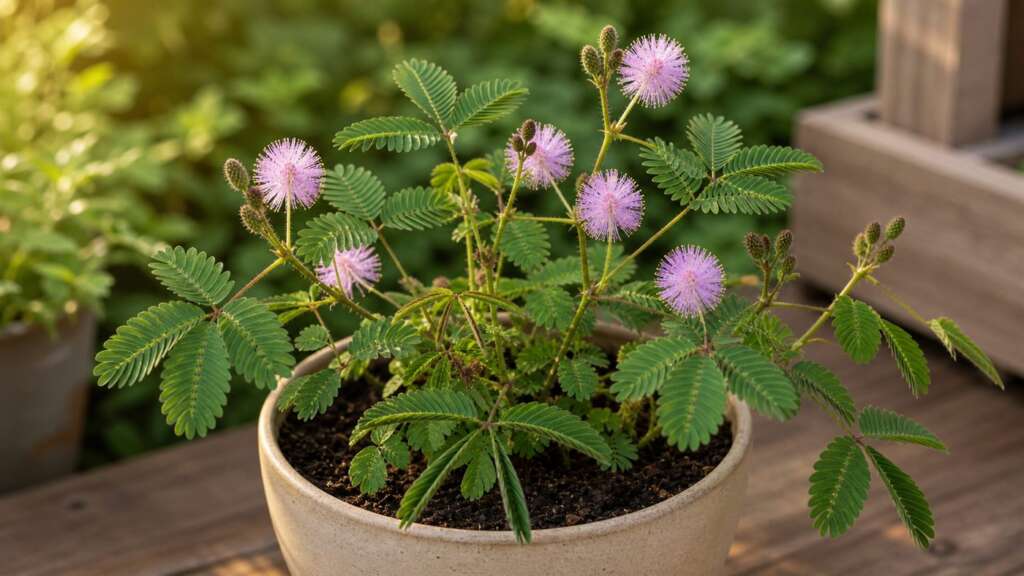
Sensitive Plant, Mimosa pudica, is a warm-loving tropical ornamental grown for its small pink puffball flowers and, more famously, its fern-like leaves that fold shut within seconds of being touched or jostled. It is most often raised as a houseplant, a container curiosity, or a warm-season annual outdoors, and it does best when started indoors with steady warmth, gentle moisture, and bright light from the moment seedlings appear.
Quick How-to
Start Sensitive Plant indoors any time of year if you can give it warmth and bright light, or 6 to 8 weeks before your last expected spring frost if you plan to move it outdoors. The seed has a hard coat, so most gardeners either nick the shell lightly with a file or soak the seed in warm water for several hours before sowing. Cover seed about 1/8 to 1/4 inch deep in a light, well-draining mix, keep the mix near 70 to 85 F, and expect germination in roughly 7 to 21 days. Move sprouts under strong light immediately, water carefully, and avoid cold drafts.
Quick Guide
| Fact | Recommendation |
|---|---|
| Best method | Start indoors warm; transplant out or grow on as a houseplant |
| Pre-sow treatment | Lightly nick or sand the hard seed coat, or soak seed in warm water overnight |
| Sowing depth | About 1/8 to 1/4 inch |
| Germination temperature | About 70 to 85 F is ideal |
| Days to germination | About 7 to 21 days; sometimes faster with scarification |
| Light for germination | Cover lightly; provide strong overhead light as soon as seedlings emerge |
| Spacing | About 8 to 12 inches apart in beds; one plant per 4 to 6 inch container |
| Sun | Bright indirect light to full sun once acclimated |
| Water | Even moisture; allow the top of the mix to dry slightly between waterings |
| Bloom | Small pink puffball flowers under good light and warmth |
| Plant size | Commonly 12 to 18 inches tall in containers, with more growth possible outdoors in tropical climates |
Before You Sow
Sensitive Plant is a tropical species that asks for warmth from start to finish. Cool roots and cold nights are the biggest reasons new growers see slow or uneven germination, so plan to sow when you can give the seed reliably warm conditions, either with a sunny indoor space or a seedling heat mat.
Use a fresh, light seed-starting mix that drains freely. A blend with peat or coco coir plus perlite works well; avoid heavy garden soil, which can stay soggy around small seed. Pre-moisten the mix so it feels like a wrung-out sponge before you sow, and choose small cells or 3 to 4 inch pots so the roots are not sitting in a large volume of constantly wet media.
The seed coat is naturally hard, which protects the seed in the wild but slows the absorption of water in cultivation. Two simple options can speed and even out germination:
- Warm-water soak. Place seed in a small dish of warm (not hot) water and let it soak for several hours, up to overnight. Sow promptly after soaking.
- Light scarification. Gently nick the seed coat with a small file or rub it briefly between two pieces of fine sandpaper. The goal is to thin the coat, not to cut into the inner seed.
If you would rather skip these steps, sowing untreated seed still works; expect a slower, more uneven start.
Indoor Starting
Sow seed about 1/8 to 1/4 inch deep in pre-moistened mix and press the surface gently for good seed-to-soil contact. Cover the tray with a humidity dome or a sheet of plastic wrap to hold moisture during germination, and set the tray somewhere consistently warm. A heat mat set to roughly 75 to 80 F is helpful in cool homes.
Check daily for moisture and emerging sprouts. As soon as you see green, take the cover off and move the seedlings under strong overhead light. A bright south-facing window can work in summer, but in most homes a simple LED grow light positioned a few inches above the seedlings produces sturdier plants than a window alone. Long days of bright light, around 14 to 16 hours, prevent the stretched, pale stems that haunt warmth-loving seedlings raised in dim conditions.
Water from below when possible by setting the tray in a shallow dish of water for a few minutes, then drain. This keeps the surface from crusting and reduces fungal pressure on tender stems. Pot up to a slightly larger container once roots fill the starter cell or when seedlings have two or three sets of true leaves. Handle young plants by the leaves or root ball rather than by the thin stem.
Direct Sowing
In USDA zones where nights stay reliably mild and soil is genuinely warm, Sensitive Plant can be direct sown after all frost danger is past. Wait until the soil itself feels warm to the touch in the morning, not just the air. Loosen the bed, rake the surface smooth, and sow shallowly with a light cover of fine soil. Keep the seedbed evenly moist until sprouts appear, then thin to roughly 8 to 12 inches apart.
For most growers outside tropical climates, indoor starting is the more reliable path. Cool spring soil is the most common reason direct-sown Mimosa pudica refuses to move.
Transplanting and Spacing
Harden off indoor-grown seedlings over 7 to 10 days before moving them outside. Begin with an hour or two of sheltered shade and gradually extend their time outdoors and their exposure to sun and breeze. Cold nights below about 55 F will check growth, so wait for stable warm nights before planting out.
Set plants at the same depth they grew in their pot, water in gently, and space them roughly 8 to 12 inches apart for a small mass planting. In containers, one plant per 4 to 6 inch pot is a comfortable starting size; move up to a larger pot once roots fill the original. Note that the stems carry small prickles, so handle plants with care when potting up or staking.
Soil, Sun, and Water
Sensitive Plant prefers a light, well-drained mix with moderate fertility. Heavy clay, soggy bottoms, and pots without drainage are the conditions it likes least. Outdoors, a sunny spot with afternoon protection from intense heat works well in hot-summer climates; indoors, a bright window paired with a grow light is reliable.
Water when the top of the mix begins to dry. The plant tolerates a brief dry period better than it tolerates standing water. A light feeding with a balanced, diluted liquid fertilizer every few weeks during active growth is plenty; heavy feeding tends to produce soft growth with less of the compact form that shows off the folding leaves.
Sensitive Plant also responds to day length and temperature with normal nighttime leaf folding, separate from the touch response. This is part of its natural rhythm and not a sign that anything is wrong.
Top Mistakes
- Sowing into cold mix. Below roughly 70 F the seed sits without moving, often long enough to attract mold. Use a heat mat or wait for warmer indoor conditions.
- Skipping pre-sow treatment and then giving up early. Untreated seed can germinate, but it may take the full 3 weeks or longer. A soak or light scarification often shortens and evens out the timing.
- Weak light after sprouting. Warmth without strong overhead light produces tall, pale seedlings that flop. Bright light should arrive the same day the first sprouts do.
- Constant wet feet. Seedlings and mature plants both rot quickly in saturated mix. Let the surface dry slightly between waterings and use pots with drainage.
- Touching the leaves constantly. The fold-and-reset response uses real plant energy. Frequent handling tires the plant and can reduce vigor over time.
Troubleshooting by Symptom
| Symptom | Likely causes | What to do next |
|---|---|---|
| No sprouts after 2 to 3 weeks | Mix too cool, seed coat not breached, dry pockets, or saturated media | Confirm warmth near 75 to 80 F, soak or lightly scarify a fresh batch, and keep the mix evenly moist |
| Patchy emergence | Uneven depth, cloddy mix, or dry surface crust | Pre-moisten the mix, sow at a consistent shallow depth, and water gently from below |
| Tall, pale, leggy seedlings | Not enough light, warmth without strong light, or crowded cells | Move under stronger overhead light, reduce excess heat after germination, and thin to one plant per cell |
| Seedlings collapse at the soil line | Overly wet mix, poor airflow, or damping-off conditions | Improve airflow, water from below, use fresh mix for restarts, and avoid saturated trays |
| Leaves do not close when touched | Cold, low light, recently watered, dehydrated, or already folded for the night | Move into warmer, brighter conditions, check moisture, and give the plant time to reset between touches |
| Leaves yellow and drop | Overwatering, cold drafts, or sudden change in light | Let the mix dry slightly, move away from cold windows, and re-acclimate to brighter light gradually |
| Few or no flowers | Not enough light, young plant, or excess nitrogen | Give brighter light, be patient with first-year plants, and ease off heavy feeding |
| Plant gets woody and tired | Natural aging or repeated stress | Treat as a short-lived ornamental and start a fresh batch from seed each year |
Germination Diagnostics
If your Sensitive Plant seed is slow to wake up, work through the variables in order rather than changing everything at once. First check temperature: a thermometer in the mix is more useful than guessing from the room temperature. Cool roots are the single most common cause of stalled germination here.
Next check the seed coat. A batch that has not been soaked or scarified will simply take longer; if a week has passed with no movement, you can lift a seed, soak or lightly nick it, and tuck it back into the tray. Moisture is the third checkpoint: the surface should feel evenly damp, never shiny wet and never dusty dry. Finally check light and airflow once sprouts appear. Strong overhead light arriving on day one keeps the small stems short and sturdy and reduces the damping-off pressure that thrives in still, humid air.
Container and Small-Space Care
Sensitive Plant is genuinely well suited to small pots and indoor life, which is part of why it is so popular as a curiosity. A 4 to 6 inch pot with drainage, a light potting mix, and a bright spot is enough to grow a tidy specimen for a desk, classroom, or sunny windowsill. Rotate the pot a quarter turn every few days so the plant grows evenly toward the light rather than leaning.
In summer, container plants can spend time outdoors in dappled sun or morning sun once nights are mild. Bring them back inside well before the first cool nights of fall; chilly outdoor temperatures will check growth quickly. Watch for spider mites and aphids on indoor plants, especially in dry winter air, and rinse foliage gently with lukewarm water if pests appear.
Bloom and Use Notes
Healthy plants produce small, fluffy pink to lavender pompom flowers, usually after a few months of strong growth. The blooms are charming, but most people grow this species for the foliage response rather than for cut flowers. Enjoy the leaf movement in moderation; constant prodding stresses the plant, while occasional gentle touches make a fine demonstration of how alive plants really are.
Sensitive Plant is grown strictly as an ornamental. It is not a food crop, and the foliage and seeds should be kept away from curious pets and small children who might chew on them.
Seed Saving
After flowering, plants form small clusters of bristly seed pods that ripen from green to brown. Let the pods dry on the plant until they are fully brown and brittle, then clip them on a dry day and finish drying indoors on a paper plate. Crush gently to release seed, separate from chaff, and store in a labeled paper envelope inside a sealed jar. Wear light gloves when handling stems and pods because of the small prickles.
If you live in a warm climate, be aware that Mimosa pudica can self-seed freely outdoors and is considered weedy or invasive in some tropical and subtropical regions. Grow it in containers or harvest pods before they shatter if local conditions favor escape.
Storing Leftover Seed
Keep unused Sensitive Plant seed in its labeled packet inside a sealed container in a cool, dry, dark indoor location. Avoid garages, sheds, greenhouses, and sunny windowsills, where temperature and humidity swing sharply. Label home-saved seed with the variety and harvest year before storing it.
FAQ
Do I need to scarify or soak Sensitive Plant seed?
Not strictly, but a warm-water soak of several hours or a very light nick of the seed coat usually produces faster and more even germination. Either method is fine; choose whichever feels easier with your batch size.
Why are the leaves not closing when I touch them?
The most common reasons are cold conditions, low light, dehydration, recent watering, or simply that the plant has already folded for the night. Move it to a warmer, brighter spot, check the moisture, and give it a few minutes between touches to reset.
Can I grow Sensitive Plant indoors year-round?
Yes. A bright window, supplemental grow light in winter, steady warmth, and careful watering will keep a plant going as an indoor ornamental. Plants tend to get a little woody after a year or two, so many growers start a fresh batch from seed each spring.
Is Sensitive Plant safe around pets and children?
Treat it as an ornamental and keep it out of reach of pets and small children who might chew on the foliage or seeds. The prickles on the stems are another reason to handle with care.
Will it survive outdoors over winter?
Only in frost-free tropical and subtropical climates. In cooler regions it is grown as a warm-season annual or brought indoors before nights drop below about 55 F.